

RCEP Green Packaging Mutual Recognition Takes Effect
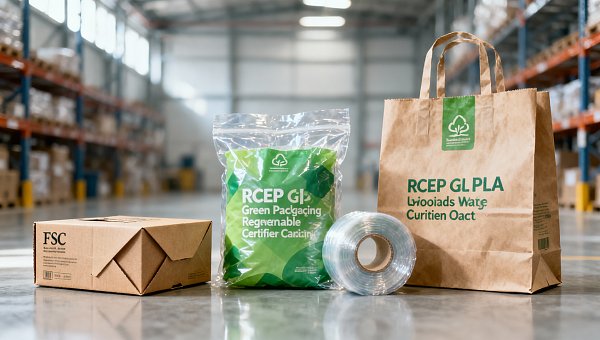
On April 24, 2026, the RCEP Green Packaging Mutual Recognition Protocol officially entered into force, enabling certified eco-friendly packaging products from China—including biodegradable plastic bags, bamboo pulp molded trays, and FSC-certified corrugated boxes—to receive exemption from retesting and priority clearance at customs in Australia, New Zealand, Japan, and South Korea. This development directly affects export-oriented packaging manufacturers, consumer goods brands, logistics service providers, and upstream material suppliers operating across RCEP markets.
Event Overview
On April 24, 2026, the RCEP Secretariat jointly issued the RCEP Green Packaging Mutual Recognition Protocol with customs authorities of China, Australia, New Zealand, Japan, and South Korea. The Protocol recognizes Chinese eco-friendly packaging products compliant with GB/T 37645—2019 as meeting equivalent environmental and safety requirements in all five jurisdictions. As a result, such products are now eligible for免于重复检测 (exemption from redundant testing) and prioritized customs release. A total of 127 Chinese packaging enterprises have completed official qualification registration under the scheme; average customs clearance time has improved by 68%.
Impact on Specific Industry Segments
Direct Exporters (e.g., FMCG, electronics, cosmetics brands)
These companies increasingly rely on sustainable packaging to meet overseas EPR obligations and retailer sustainability criteria. With mutual recognition in place, their China-sourced green packaging now faces fewer technical barriers at destination ports—reducing delays, inspection-related costs, and documentation complexity when shipping to Australia, New Zealand, Japan, or South Korea.
Raw Material Suppliers (e.g., biopolymer producers, bamboo pulp mills, FSC-certified paperboard mills)
Upstream suppliers benefit indirectly but significantly: demand for GB/T 37645–compliant inputs is likely to rise as downstream converters align production with the new protocol. However, this does not automatically extend certification to raw materials themselves—only finished packaging items bearing verified compliance are covered.
Contract Packaging & Converter Manufacturers
Manufacturers producing certified items for export must ensure traceability, batch-level conformity documentation, and alignment with GB/T 37645–2019 specifications—not just general ‘eco-friendly’ claims. The 127 registered enterprises represent an early cohort; broader participation requires formal备案 (registration) with competent Chinese authorities and verification against national standards.
Distribution & Logistics Service Providers
Third-party logistics firms handling cross-border shipments of green packaging must update internal customs classification protocols and coordinate with clients on updated declaration codes and supporting documents (e.g., GB/T 37645 test reports, registration certificates). Delays may still occur if declarations omit required identifiers—even where physical compliance is confirmed.
Supply Chain Certification & Compliance Services
Consultancies and labs supporting packaging compliance now face increased demand for GB/T 37645–2019 testing, documentation review, and registration support. However, the Protocol itself does not designate or accredit third-party verifiers—certification remains tied to nationally recognized testing institutions and administrative registration.
Key Points for Enterprises and Practitioners to Monitor and Act On
Track official implementation guidance from national customs and market supervision authorities
The Protocol establishes a framework—but detailed operational rules (e.g., acceptable test report formats, validity periods, digital submission channels) are being rolled out nationally. Companies should monitor announcements from China’s General Administration of Customs (GACC), Australia’s ABF, Japan’s NAC, and equivalent bodies in NZ and KR.
Verify eligibility of specific product categories and export destinations
Only three product types are explicitly named in current public information: biodegradable plastic bags, bamboo pulp molded trays, and FSC-certified paper boxes. Other ‘green’ packaging (e.g., compostable films, molded fiber egg cartons without FSC linkage, recycled-content board without full GB/T 37645 validation) is not yet covered. Eligibility also applies only to the five signatory countries—not the full RCEP membership.
Distinguish between policy signal and operational readiness
While the Protocol entered force on April 24, 2026, real-world adoption depends on frontline customs system updates and staff training. Early adopters report smoother processing—but inconsistent application has been observed at some minor ports. Companies should treat initial shipments as pilot cases and retain full documentation for at least six months.
Prepare supply chain documentation and internal alignment ahead of volume scaling
Eligible exporters need to maintain product-specific compliance records (including test reports referencing GB/T 37645–2019 clauses), registration proof, and clear labeling linking each shipment to its certified batch. Internal alignment across procurement, QA, logistics, and export compliance teams is critical—especially where multi-tier subcontracting occurs.
Editor Perspective / Industry Observation
This development is best understood as a procedural milestone—not an immediate market access expansion. Analysis来看, it reflects growing alignment among RCEP economies on environmental standard interoperability, but does not replace national regulatory requirements (e.g., Japan’s JIS Z 7270, Australia’s AS 5810) for domestic sale or non-RCEP exports. From industry角度看, the Protocol lowers transactional friction for a narrow, pre-qualified set of packaging solutions—yet offers little relief for innovators developing next-generation materials outside the current GB/T 37645 scope. Current更值得关注的是 how quickly participating customs administrations integrate the mutual recognition logic into automated risk assessment systems—and whether registration becomes a de facto prerequisite for preferential treatment beyond the initial 127 firms.
It is not yet a harmonized standard, nor a substitute for local compliance. Rather, it functions as a trusted verification layer—validating that certain Chinese-made items meet baseline environmental performance expectations shared across five jurisdictions.
Conclusion
The RCEP Green Packaging Mutual Recognition Protocol marks the first multilateral agreement to formally recognize national eco-packaging standards across major Asia-Pacific economies. Its practical value lies not in broadening product eligibility, but in streamlining customs treatment for a defined subset of verified items. For affected stakeholders, the Protocol is better interpreted as a targeted efficiency mechanism—one requiring active registration, precise documentation, and close attention to national implementation—not a blanket simplification of green trade rules.
Source Attribution
Main source: Official joint announcement by the RCEP Secretariat and customs authorities of China, Australia, New Zealand, Japan, and South Korea, dated April 24, 2026.
Additional detail: Publicly disclosed list of 127 registered Chinese enterprises and reported average clearance time improvement (68%), as cited in the announcement.
Note: Implementation details—including digital submission platforms, port-level enforcement consistency, and future expansion to additional packaging types or RCEP members—remain subject to ongoing observation and official updates.
Recommended News
 China’s 10-Dept AI Export Ethics Review Rule Takes EffectChina’s new 10-dept AI export ethics rule mandates algorithmic bias review for AI hardware bound for the EU, US, Canada, Japan & SK—key for smart cameras, voice assistants & industrial vision exporters.
 Red Sea Detour Now Standard: $1,850 TEU Premium on Asia-Europe RoutesRed Sea detour premium now standard: $1,850/TEU surcharge embedded in Asia-Europe freight rates — vital intel for exporters, importers & logistics teams.
 RCEP Green Packaging Mutual Recognition Takes EffectRCEP Green Packaging Mutual Recognition takes effect Apr 22, 2026—streamline exports to AU, NZ, JP, KR with GB/T 37629–2019 certified molded fiber & PLA packaging.
 Mexico NOM-019-SCFI-2026 Effective: EMC Certification Required for Auto Electronics ExportsEMC certification is now mandatory for auto electronics exports to Mexico under NOM-019-SCFI-2026. Ensure compliance for rearview mirrors, radar sensors & T-Box units—avoid shipment delays and order cancellations.
") TÜV Rheinland Updates CE Requirements for Servo Drives (PLd + EMC Joint Validation)TÜV Rheinland now mandates joint PLd + EMC validation for servo drives under CE marking—learn how this impacts certification timelines, lab selection, and EU market access.
TÜV Rheinland Updates CE Requirements for Servo Drives (PLd + EMC Joint Validation)TÜV Rheinland now mandates joint PLd + EMC validation for servo drives under CE marking—learn how this impacts certification timelines, lab selection, and EU market access. Vietnam Suspends SASO Mutual Recognition for Chinese Irrigation EquipmentVietnam suspends SASO mutual recognition for Chinese irrigation equipment—urgent compliance updates for drip tapes & PE pipes (HS 8424.89/3917.39). Act now to avoid delays.
 FDA Finalizes AI Diagnostic Device Rules for ImportersFDA finalizes AI diagnostic device rules for importers: New bias assessment mandate impacts ultrasound, glucose analyzers & dermatoscopes. Act now to ensure U.S. market access.
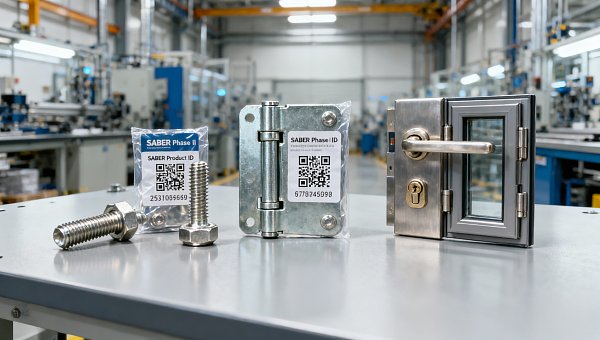
 SABER Phase II Live: Saudi Building Hardware Requires Digital Type Test Reports & PIDSABER Phase II is live: Building hardware exports to Saudi Arabia now require digital type test reports & a mandatory, immutable Product ID (PID). Act now to avoid customs delays!
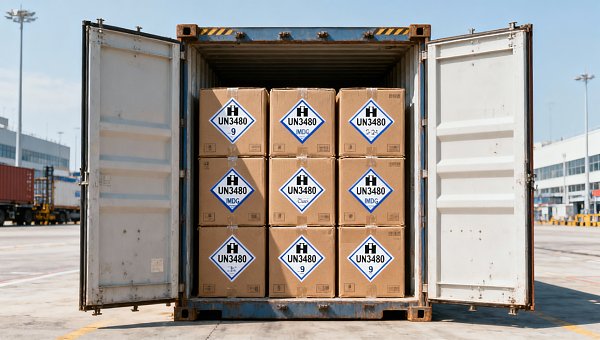
 IMDG Code 41-24 Enforced: UN3480 Lithium Battery Labeling Mandatory from Apr 2026IMDG Code 41-24 enforcement starts Apr 2026: UN3480 lithium battery labeling & ISO 17363 docs are now mandatory—avoid port rejections!
 CBAM Carbon Tax Launch: Low CBAM Reporting Rate Among Chinese ExportersCBAM Carbon Tax is live—only 36.8% of Chinese exporters reported. Discover why, which industries are at risk, and how to secure EU market access now.
 China’s 10 Agencies Issue AI Export Ethics Review RulesChina’s 10 agencies launch AI export ethics rules—mandating bias reviews for visual inspection, warehouse AI & defect detection systems. Stay compliant & competitive.
 RCEP Green Packaging Mutual Recognition Takes EffectRCEP Green Packaging Mutual Recognition is now in effect—unlock faster customs clearance in Australia, NZ, Japan & Korea for GB/T 37659–2019-certified eco-packaging.
 Mexico NOM-019-SCFI-2026 Effective Apr 10, 2026: EMC Certification Required for Automotive ElectronicsNOM-019-SCFI-2026 EMC certification is now mandatory for automotive electronics entering Mexico — act before the July 1, 2026 customs ban.
 Red Sea Rerouting Normalized, EBA at $1,850/TEURed Sea rerouting normalized with EBA fixed at $1,850/TEU—learn how this structural shift impacts Asia-Europe freight costs, lead times & supply chain strategy.
 FDA AI Diagnostic Device Draft Rules: Bias Assessment for ImportsFDA AI diagnostic device draft rules require bias assessment for imports—learn how portable ultrasound, glucose, and dermatoscopic AI devices are affected & what to do next.
") TÜV Rheinland Updates CE Requirements for Servo Drives (PLd + EMC)TÜV Rheinland updates CE requirements for servo drives: PLd (ISO 13849-1) + EMC immunity (IEC 61000-6-2 Ed.4) now mandatory together — act now to avoid EU market delays!
TÜV Rheinland Updates CE Requirements for Servo Drives (PLd + EMC)TÜV Rheinland updates CE requirements for servo drives: PLd (ISO 13849-1) + EMC immunity (IEC 61000-6-2 Ed.4) now mandatory together — act now to avoid EU market delays! SABER Phase II Launch: Building Hardware Must Submit Digital Type Test Reports & Unique Product IDSABER Phase II now mandates digital type test reports & unique product IDs for building hardware—fasteners, scaffolding, door/window components. Ensure compliance to avoid customs rejection & SCOC delays.
 Vietnam Suspends SASO Mutual Recognition for Chinese Irrigation EquipmentVietnam suspends SASO mutual recognition for Chinese irrigation equipment—TCVN testing now mandatory. Act now to avoid 8–12 week delays and customs holdups.
 IMDG Code 41-24 Enforced: UN3480 Lithium Battery Labeling UpdateIMDG Code 41-24 enforcement starts April 2026: UN3480 lithium battery labeling updates are mandatory for global maritime shipments — avoid port delays, detention & penalties.
 EU CBAM Enters Full Enforcement on Jan 1, 2026EU CBAM full enforcement starts Jan 1, 2026 — mandatory quarterly reporting & certificate purchases for batteries, steel, cement, aluminum, fertilizers & chemicals. Act now to ensure EU market access.
 EU CBAM Carbon Tariff Starts Oct 2026 for Chinese Battery, Cement, Chemical ExportsEU CBAM carbon tariff hits Chinese battery, cement & chemical exports from Oct 2026 — mandatory emissions reporting starts now. Avoid €98/t default fees.















Popular Tags
Global Trade Insights & Industry
Our mission is to empower global exporters and importers with data-driven insights that foster strategic growth.
Search News
Popular Tags
Industry Overview
The global commercial kitchen equipment market is projected to reach $112 billion by 2027. Driven by urbanization, the rise of e-commerce food delivery, and strict hygiene regulations.