

Which Business Intelligence Platform Fits a Growing Team?
Choosing the right business intelligence platform can define how quickly a growing team turns data into action. From evaluating reporting depth and integration flexibility to comparing costs across tools used in sectors as varied as sustainable fashion brands, auto detailing services, and online trade platform operations, decision-makers need a solution that scales with both complexity and opportunity.
For most growing teams, the best business intelligence platform is not the one with the most advanced dashboard features. It is the one that your team can adopt quickly, connect to existing systems without heavy rework, govern reliably, and still afford as data volume, users, and reporting needs expand. In practice, that means balancing usability, integration, collaboration, security, and total cost of ownership rather than chasing feature lists alone.
If your team is evaluating BI tools right now, the most important question is simple: which platform helps your organization make faster, better decisions without creating a reporting bottleneck six months later? That is the standard this guide uses.
What a Growing Team Really Needs From a Business Intelligence Platform
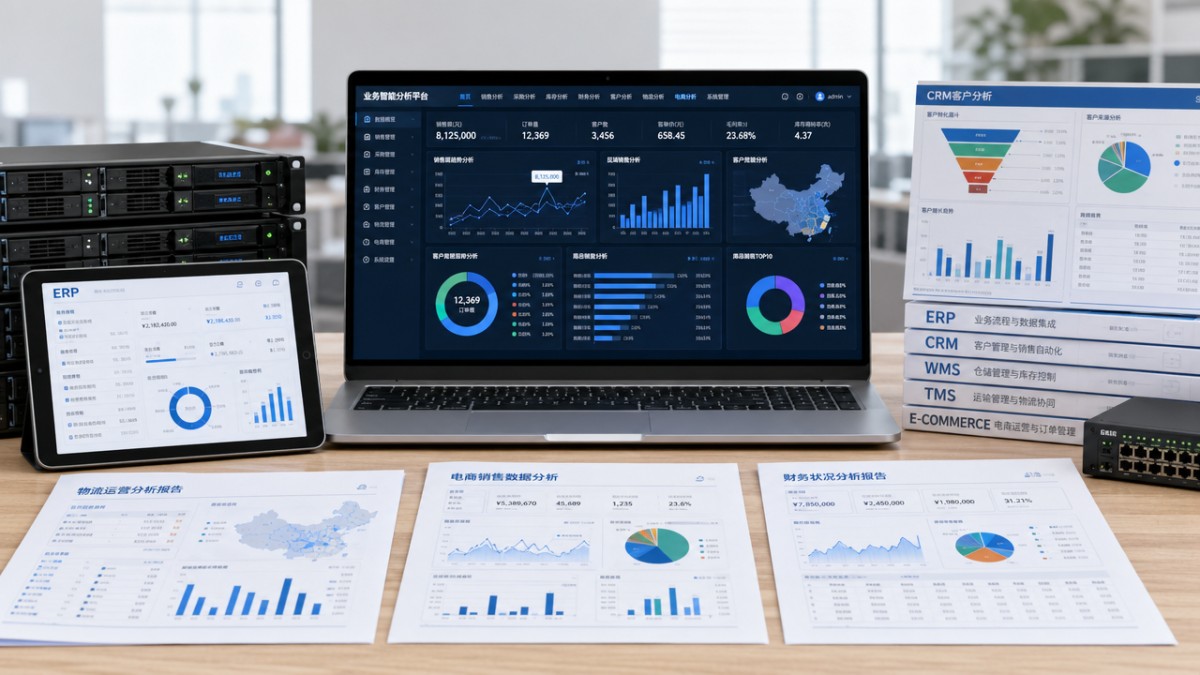
Searchers looking for the right business intelligence platform usually want practical guidance, not theory. They are often comparing tools for a fast-growing company or a business unit that has outgrown spreadsheets, static reports, or disconnected data sources. Their goal is typically to find a platform that works for current needs while remaining suitable as the organization adds more users, departments, and data sources.
For this audience, the biggest concerns usually include:
- Ease of adoption: Can non-technical users build or read reports without constant help from analysts?
- Scalability: Will the platform still perform well when data volume and reporting complexity increase?
- Integration: Can it connect to ERP, CRM, ecommerce, finance, trade, logistics, or operational systems already in use?
- Governance: Can the business standardize KPIs, permissions, and version control?
- Cost: What will it actually cost when more users, connectors, storage, and support are needed?
- Business value: Will it reduce reporting delays, improve visibility, and support better decisions across teams?
That is why the strongest evaluation framework is not “which BI platform is the most powerful?” but rather “which BI platform fits our team size, data maturity, and growth path?”
Start With Your Team Stage, Not the Vendor Demo
A common mistake is choosing a tool based on a polished demo designed for enterprise-scale analytics when the real organization still needs clean, dependable reporting and faster visibility into daily operations.
A growing team should first define its current operating stage:
- Early growth stage: Teams need quick dashboards, basic reporting, and easy self-service access.
- Cross-functional stage: Multiple departments need shared metrics, role-based access, and cross-source analysis.
- Scaling stage: The company needs stronger data modeling, governance, automation, and performance optimization.
If your business is still relying heavily on manual exports, fragmented spreadsheets, or ad hoc report requests, a highly complex platform may slow adoption. If your organization already has data engineers, formal metric definitions, and multiple business units, a simpler tool may become restrictive too quickly.
The right fit depends on whether your biggest problem is accessibility, consistency, or scale.
How to Compare BI Platforms in a Way That Reflects Real Operations
When comparing business intelligence platforms, decision-makers should move beyond generic comparisons and use operational criteria. The following factors are the most useful in real buying decisions.
1. Reporting depth and dashboard usability
Can frontline users, managers, and executives all use the same environment effectively? Some platforms are excellent for analyst-led reporting but less accessible for non-technical teams. Others offer simpler visual exploration but weaker customization.
Look for:
- Interactive dashboards
- Drill-down and filtering capabilities
- Scheduled reporting
- Mobile access if field teams or distributors need visibility
- Clear user experience for non-specialists
2. Data integration flexibility
For businesses in trade, manufacturing, distribution, retail, or services, reporting often depends on combining data from several systems. A useful BI platform should support cloud apps, databases, files, APIs, and possibly custom connectors.
Ask whether the platform can connect to:
- CRM and sales systems
- ERP and finance software
- Inventory and logistics tools
- Ecommerce or marketplace data
- Marketing and web analytics sources
- External industry intelligence datasets
If integration is difficult or expensive, the platform may look affordable at first but become costly in implementation.
3. Collaboration and governance
As teams grow, inconsistent definitions become a major risk. One department may define revenue differently from another. Operations and finance may report different numbers for the same period. A good BI platform should help standardize metrics and manage access.
Important capabilities include:
- Role-based permissions
- Shared datasets or semantic models
- Version control for reports
- Data lineage and auditability
- Centralized KPI definitions
4. Performance at scale
Fast-growing teams often underestimate how quickly dashboard performance becomes a problem. Reports that work well with one region, one team, or one year of data can become slow once usage expands.
Test for:
- Refresh speed
- Query performance
- Concurrency with multiple users
- Support for larger datasets
- Caching and optimization options
5. Total cost of ownership
License price alone rarely tells the whole story. Real costs can include setup, training, premium connectors, infrastructure, embedded analytics, administration, and external consulting.
A lower-cost platform can become expensive if it requires constant expert intervention. A premium tool can still be cost-effective if it reduces reporting delays and supports more users without rework.
Which Platform Type Fits Different Growth Scenarios?
Not every growing team needs the same kind of BI environment. In broad terms, business intelligence platforms usually fit into a few practical categories.
Self-service focused BI tools
These work well for teams that need speed, dashboarding, and broad user adoption. They are often a good fit for commercial teams, operators, and managers who want direct access to performance data.
Best for: businesses moving beyond spreadsheets, small to mid-sized organizations, fast dashboard deployment.
Enterprise-grade analytics platforms
These are more suitable for organizations with complex governance needs, multiple business units, stronger IT involvement, or advanced modeling requirements.
Best for: larger operations, regulated environments, multi-country reporting, formal data governance.
Embedded and developer-oriented BI solutions
These make sense when a company needs analytics inside a customer portal, partner platform, or SaaS product. For trade platforms or information portals, this can be highly relevant.
Best for: digital products, partner ecosystems, customer-facing reporting.
For example, a sustainable fashion brand may prioritize inventory, supplier, and campaign reporting with easy collaboration across merchandising and operations. An auto detailing service chain may care more about location performance, staff productivity, bookings, and customer retention. An online trade platform may need multi-source aggregation, audience analytics, content performance, and advertiser reporting. Each scenario needs BI, but not necessarily the same BI architecture.
Questions Procurement and Business Leaders Should Ask Before Buying
To make a sound decision, procurement teams, technical evaluators, and business stakeholders should align on a shortlist of buying questions:
- What decisions will this platform improve in the next 3 to 12 months?
- Who are the actual users: analysts, managers, executives, sales teams, operational staff, or external partners?
- How many data sources must be connected in phase one?
- Do we need self-service reporting, governed reporting, or both?
- What internal skills do we already have for setup and maintenance?
- How quickly do we need value from implementation?
- What risks matter most: poor adoption, cost overrun, weak governance, or limited scalability?
These questions matter more than broad market rankings because they connect tool choice to business outcomes.
Common Mistakes Growing Teams Make When Choosing a BI Platform
Several selection errors appear repeatedly across industries:
- Buying for future complexity only: Teams choose a platform that is too advanced for current users, leading to low adoption.
- Ignoring data quality: No BI tool can fix inconsistent source data by itself.
- Underestimating change management: Training, KPI alignment, and internal ownership are critical.
- Comparing features without workflows: A long feature matrix does not show how people will actually use the platform.
- Skipping a pilot: Real-world testing with business data often reveals integration and usability issues early.
The best evaluation process includes a trial or proof of concept using your own data, your real reporting needs, and representative users from both business and technical teams.
A Practical Shortlist Framework for Final Decision-Making
If your team is down to two or three options, use a weighted scorecard based on business priorities. A simple framework can include:
- Usability: How easily can non-technical users work with it?
- Integration: How well does it connect to current and planned systems?
- Governance: Can it support consistent reporting across departments?
- Scalability: Will it still fit within two years of growth?
- Implementation effort: How much time and support are required?
- Total cost: What is the realistic full cost over time?
- Vendor fit: Does the provider offer support, roadmap clarity, and industry relevance?
This approach helps shift the decision from subjective preference to business-fit evaluation.
Final Verdict: What Fits a Growing Team Best?
The best business intelligence platform for a growing team is usually the one that combines fast adoption, dependable integration, scalable reporting, and manageable cost. If your organization is still building reporting discipline, prioritize usability and fast implementation. If your business already operates across multiple departments, markets, or systems, place more weight on governance, modeling, and long-term scalability.
In other words, choose the platform that matches your growth stage and operating reality, not just the one with the strongest marketing claims. A good BI decision should give your team clearer visibility now while reducing the risk of expensive replatforming later.
For information-driven businesses, exporters, importers, distributors, and cross-border commercial teams, the right BI platform can do more than visualize numbers. It can strengthen forecasting, improve operational response, support partner reporting, and turn fragmented data into a competitive advantage. That is the real benchmark for fit.
Recommended News
 MIIT Launches Space-Based Computing & Power-Compute CoordinationMIIT launches space-based computing & power-compute coordination—boosting modular IDC exports, liquid-cooled servers, and solar-powered data centers for arid regions.
 Tangshan Iron Tower Smart Base Processes 600K Tons Steel AnnuallyTangshan Iron Tower Smart Base processes 600K tons steel annually—42× faster angle steel marking, API-enabled traceability for Belt and Road infrastructure projects.
 Q1 2026 Lithium Battery Export Prices Rise 11.3% for ESSQ1 2026 Lithium Battery Export Prices Rise 11.3% for ESS — $128/kWh amid UL 9540A costs, freight normalization & surging demand in Vietnam, Germany, Australia.
 China Launches 'Model-Data Resonance' Initiative for AI+Manufacturing InteroperabilityChina's 'Model-Data Resonance' initiative launches AI+Manufacturing interoperability standard—key for global buyers, OEMs & integrators seeking seamless smart factory integration.
 China's First Embodied AI Robot Export Liability Insurance Launched in GuangxiChina's first Embodied AI Robot Export Liability Insurance launched in Guangxi—covers AI decision errors, data breaches & third-party harm for robotics, medtech & security exporters.
 State Grid’s $680M Embodied AI Equipment Procurement LaunchesState Grid’s $680M embodied AI equipment procurement demands IEC 62443 & GB/T 38925 compliance—unlock global infrastructure bids now.
 RCEP Green Packaging Mutual Recognition Extended to AU, NZ, JP, KRRCEP green packaging mutual recognition now extends to AU, NZ, JP, KR — unlock faster customs clearance & 22% lower inspection costs for GB/T 38727-2020-compliant sustainable food packaging exports from China.
 Tangshan Beijiao Thermal Power Unit 1 A-Check StartsTangshan Beijiao Thermal Power Unit 1 A-Check starts Apr 2026 — urgent demand for domestic industrial valves, high-temp sensors & fire-resistant cables. Act now to secure Q3 2026 supply.
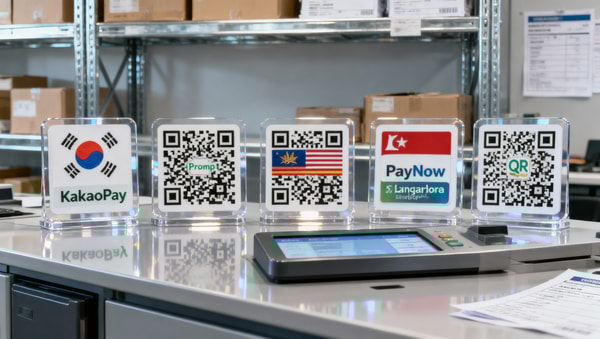
 WeChat Pay Integrates QR Codes from 5 Countries for Cross-Border B2B PaymentsWeChat Pay integrates QR codes from 5 countries for cross-border B2B payments—faster T+0 settlement, 35% lower fees, and seamless USD 50K transactions.
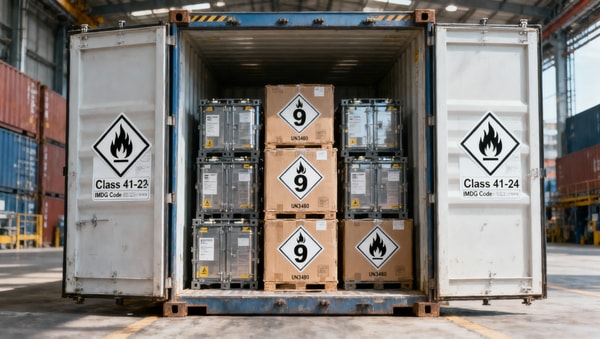
 IMDG Code 41-24 Enforces New UN3480 Labeling for Lithium BatteriesIMDG Code 41-24 mandates new UN3480 labeling for lithium batteries from 29 April 2026 — avoid shipment rejection. Act now to ensure compliance.
 China-France Nuclear Cooperation Advances at Beijing ExpoChina-France nuclear cooperation advances: mutual recognition for nuclear-grade seals, cables & radiation monitors boosts export readiness for suppliers targeting EU and BRI projects.
 Vietnam’s 4 Provinces Seek AI Tourism Tech in NanningAI tourism tech in demand: Vietnam’s 4 provinces seek AI-guided terminals, multilingual interpretation, AI-CCTV & smart ticketing in Nanning—key opportunity for B2G exporters.
 Q1 2026 China Power Market Trading Up 25.6%: Smart Meters, Storage Export Demand RisesSmart meters, energy storage exports surge as China’s Q1 2026 power market trading jumps 25.6% — key signal for global manufacturers & channel partners.
 China First Country with 5M+ Active Invention PatentsChina first country with 5M+ active invention patents—key for buyers in AI, solar, lithium battery & energy storage. Discover IP implications for sourcing, compliance & supplier vetting.
 Shenneng Etorkeqi Green Ammonia Project: Deionized Water Station OperationalShenneng Etorkeqi Green Ammonia Project’s deionized water station is now operational—ISO 8502-3 compliant, fully integrated, and a key milestone for global green hydrogen developers and exporters.
 China Launches 'Model-Data Resonance' Initiative for AI+Manufacturing InteroperabilityModel-Data Resonance initiative boosts AI+manufacturing interoperability—learn how GB/T XXXX–2026 aligns with VDI 2182 & ISA-95 for smoother global factory deployments.
 China’s First Embodied AI Robot Insurance Launched in GuangxiChina’s first embodied AI robot insurance launched in Guangxi—key for robotics exporters, AI hardware makers & global compliance teams. CE-recognized, EU/UK/AU-ready.
 IMDG Code 41-24 Enforced: UN3480 Lithium Battery Labeling Now MandatoryIMDG Code 41-24 is now mandatory: UN3480 lithium battery labeling, documentation & packaging rules are enforced globally as of 28 April 2026 — avoid port rejections!
 State Grid’s $680M Embodied AI Procurement Signals Export OpportunityEmbodied AI, IEC 61850 & IEC 62443: State Grid’s $680M procurement unlocks export opportunities for compliant industrial robots and smart vision systems in emerging markets.
 IMDG Code 41-24 Enforces UN3480 Class 9 Labeling for Lithium Battery Sea FreightIMDG Code 41-24 mandates UN3480 lithium battery sea freight to display durable Class 9 labels from April 27, 2026—avoid delays & port rejections.
 ESS Key Component Prices Drop ~80%: Quality & Compliance RiseESS key component prices dropped ~80%—but quality & compliance demands surged. Discover how UL 9540A, AS/NZS 5139, and certified BMS/inverters now define market access.



















Popular Tags
Global Trade Insights & Industry
Our mission is to empower global exporters and importers with data-driven insights that foster strategic growth.
Search News
Popular Tags
Industry Overview
The global commercial kitchen equipment market is projected to reach $112 billion by 2027. Driven by urbanization, the rise of e-commerce food delivery, and strict hygiene regulations.