

What keeps procurement cost high even after supplier changes
Switching vendors should reduce procurement cost, yet many buyers still face hidden expenses in logistics, quality control, and fragmented supply chain management solutions. Whether sourcing from an outdoor furniture manufacturer, evaluating a lubricants distributor, or comparing 3D printing quotation options, the real cost often extends beyond unit price. This article explores why procurement cost remains high after supplier changes and how smarter evaluation can improve margins and long-term purchasing performance.
Changing suppliers often fails to lower total procurement cost because price is only one part of the equation. In many cases, the savings negotiated on paper are offset by higher freight, unstable quality, longer lead times, onboarding costs, poor communication, or weak after-sales support. For procurement teams, distributors, and business evaluators, the key question is not simply whether a new supplier is cheaper, but whether the full sourcing model is more efficient, reliable, and scalable.
Why procurement cost stays high even when the new supplier offers a lower price
A supplier change is usually triggered by cost pressure. However, many companies evaluate the switch too narrowly, focusing on unit price or quoted discount while overlooking total cost drivers across the purchasing cycle.
Common reasons procurement cost remains high include:
- Higher logistics expenses: A lower ex-factory price may be offset by longer shipping routes, poor consolidation options, higher minimum order quantities, or costly last-mile delivery.
- Quality inconsistency: New suppliers may meet sample standards but fail to maintain batch-to-batch consistency, resulting in returns, rework, inspection costs, and production delays.
- Longer onboarding time: Auditing, qualification, compliance checks, contract negotiation, ERP setup, and internal training all create transition costs.
- Communication friction: Time zone gaps, slow response, unclear documentation, and limited technical support can increase internal coordination costs.
- Supply chain fragmentation: If buyers must manage multiple suppliers, warehouses, freight agents, and quality checkpoints separately, administrative cost rises fast.
- Hidden payment and compliance risk: Different payment terms, tariffs, certification requirements, and import documentation issues can erode expected savings.
In other words, procurement cost stays high when supplier replacement solves only the visible price problem, not the operational inefficiencies behind it.
What buyers usually miss during supplier comparison
Many sourcing decisions are made under time pressure. Procurement teams compare quotes quickly, shortlist based on nominal savings, and assume the rest can be managed later. That is often where cost leakage begins.
The most frequently overlooked comparison factors are:
- Total landed cost: Buyers should compare freight, duties, packaging, insurance, inland transport, inspection, and warehousing, not just product price.
- Lead time reliability: A supplier with a slightly higher price but consistent delivery may reduce stockouts and emergency buying.
- Defect rate and claim handling: Poor quality does not only affect replacement cost; it also damages downstream sales, brand trust, and distributor relationships.
- Production flexibility: Can the supplier handle rush orders, mixed SKUs, custom requirements, or seasonal fluctuations without major surcharge?
- Data transparency: Buyers need clear order tracking, specification control, revision history, and accountability across the process.
- Service capability: Technical clarification, after-sales support, and problem resolution speed matter as much as the initial quotation.
For example, when comparing an outdoor furniture manufacturer, the lower-cost option may use less durable finishes or weaker packaging, causing breakage in transit. When working with a lubricants distributor, inconsistent stock availability may force urgent spot purchases at higher prices. In a 3D printing quotation comparison, a low quote may exclude finishing, tolerance assurance, tooling adjustments, or remake policies.
Hidden costs that continue after the supplier switch
Even after the contract is signed, hidden costs often keep accumulating. These expenses are rarely visible in early sourcing spreadsheets, but they directly affect procurement performance and margin.
Key post-switch cost drivers include:
- Incoming inspection workload: New suppliers usually require tighter inspection until performance stabilizes.
- Rework and replacement: Products that fail specifications increase labor cost, downtime, and customer service burden.
- Inventory buffer expansion: Uncertain delivery reliability often forces companies to hold more stock, tying up working capital.
- Supplier management overhead: More follow-up calls, corrective action requests, and schedule monitoring consume procurement resources.
- Forecast mismatch: Inflexible suppliers can create overstocks in slow periods and shortages in peak periods.
- System adaptation costs: New item coding, quality standards, contracts, and approval workflows all require internal support.
These hidden costs are especially important in cross-border trade, where customs delays, documentation gaps, and changing regulations add another layer of risk. Businesses that rely on international sourcing should view supplier changes as a supply chain redesign, not a simple vendor substitution.
How procurement teams should evaluate real savings before changing suppliers
If the goal is lower procurement cost, buyers need a broader evaluation framework. The right method is to calculate expected savings against transition cost, service risk, and long-term operating impact.
A practical evaluation approach includes the following steps:
- Measure current total cost baseline: Include product cost, freight, inspection, delays, quality claims, inventory carrying cost, and internal handling time.
- Request apples-to-apples quotations: Ensure the same specifications, Incoterms, packaging standards, lead times, and service scope are used in comparison.
- Score suppliers beyond price: Use a weighted scorecard for quality stability, responsiveness, capacity, compliance, delivery performance, and technical support.
- Estimate transition cost: Add onboarding, audits, sample approvals, testing, documentation, and system setup.
- Run a pilot order: Test actual production consistency, packaging, logistics coordination, and issue resolution before scaling up.
- Track post-switch KPIs: Measure defect rate, on-time delivery, expedites, claim resolution, and true landed cost over the first three to six months.
This process helps sourcing teams avoid false savings. A supplier that appears 8% cheaper on quote may end up costing more once delays, defects, and internal management effort are included.
What matters most for distributors, agents, and commercial evaluators
For distributors, resellers, and business assessment teams, procurement cost is closely tied to downstream profitability. The issue is not just buying cheaper stock, but protecting sell-through, customer satisfaction, and working capital turnover.
These readers usually care most about:
- Margin predictability: Can the supplier support stable pricing, or will hidden charges and inconsistency eat into resale margin?
- Supply continuity: Can the supplier deliver during peak demand or market disruption?
- Brand risk: Will quality problems hurt customer trust and increase return rates?
- Channel support: Does the supplier provide technical data, marketing assets, product training, and after-sales assistance?
- Growth fit: Can the supplier scale with regional expansion, broader SKUs, or higher compliance expectations?
For commercial evaluators, this means procurement decisions should be judged not only by immediate price reduction but by how they affect revenue quality, service reliability, and market competitiveness over time.
How to lower procurement cost without creating new supply chain problems
The most effective way to reduce procurement cost is to improve sourcing quality, not simply switch vendors more often. Companies that control cost well usually build better supplier intelligence, clearer specifications, and stronger process alignment.
Useful strategies include:
- Consolidate demand where possible: Better volume planning can improve pricing, freight efficiency, and supplier commitment.
- Standardize specifications: Clear technical requirements reduce misunderstanding, rework, and quote variation.
- Strengthen supplier performance monitoring: Use regular scorecards and review meetings instead of reacting only when problems appear.
- Improve cross-functional alignment: Procurement, quality, logistics, and sales should evaluate suppliers together to avoid one-sided decisions.
- Use market intelligence: Industry trend monitoring helps buyers benchmark pricing, identify risk exposure, and spot stronger alternatives earlier.
- Build dual-source or segmented sourcing models: Not every category should depend on a single low-cost supplier.
In global trade environments, access to reliable supplier information and sector-specific intelligence is especially valuable. Buyers who understand market shifts, regional manufacturing changes, and sourcing benchmarks are better positioned to reduce cost without increasing operational risk.
Final takeaway: lower quote does not always mean lower procurement cost
What keeps procurement cost high even after supplier changes is usually not the supplier switch itself, but the incomplete way the switch is evaluated. If buyers focus only on quotation price, they often miss the true cost drivers: logistics, quality variance, delivery instability, management overhead, and risk exposure.
The smarter approach is to compare suppliers based on total landed cost, service reliability, transition effort, and long-term business fit. For procurement professionals, market researchers, and distribution businesses, this creates better decisions, healthier margins, and more resilient supply chains.
In short, changing suppliers can reduce procurement cost, but only when the decision is built on full-cost visibility rather than headline price savings.
Recommended News
 China’s 10-Dept AI Export Ethics Review Rule Takes EffectChina’s new 10-dept AI export ethics rule mandates algorithmic bias review for AI hardware bound for the EU, US, Canada, Japan & SK—key for smart cameras, voice assistants & industrial vision exporters.
 Red Sea Detour Now Standard: $1,850 TEU Premium on Asia-Europe RoutesRed Sea detour premium now standard: $1,850/TEU surcharge embedded in Asia-Europe freight rates — vital intel for exporters, importers & logistics teams.
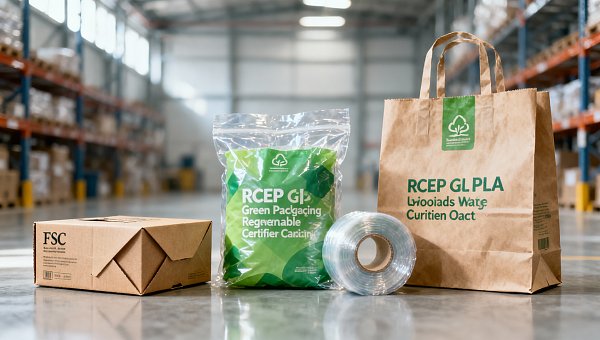
 RCEP Green Packaging Mutual Recognition Takes EffectRCEP Green Packaging Mutual Recognition takes effect Apr 22, 2026—streamline exports to AU, NZ, JP, KR with GB/T 37629–2019 certified molded fiber & PLA packaging.
 Mexico NOM-019-SCFI-2026 Effective: EMC Certification Required for Auto Electronics ExportsEMC certification is now mandatory for auto electronics exports to Mexico under NOM-019-SCFI-2026. Ensure compliance for rearview mirrors, radar sensors & T-Box units—avoid shipment delays and order cancellations.
") TÜV Rheinland Updates CE Requirements for Servo Drives (PLd + EMC Joint Validation)TÜV Rheinland now mandates joint PLd + EMC validation for servo drives under CE marking—learn how this impacts certification timelines, lab selection, and EU market access.
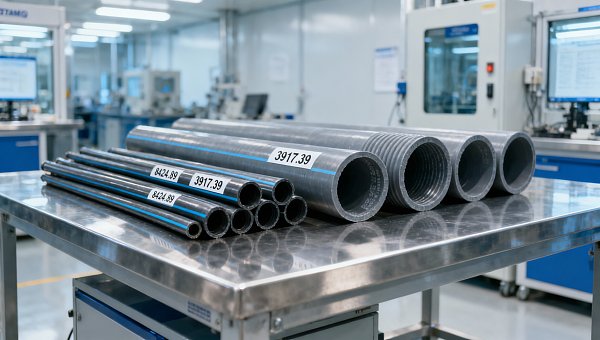
TÜV Rheinland Updates CE Requirements for Servo Drives (PLd + EMC Joint Validation)TÜV Rheinland now mandates joint PLd + EMC validation for servo drives under CE marking—learn how this impacts certification timelines, lab selection, and EU market access. Vietnam Suspends SASO Mutual Recognition for Chinese Irrigation EquipmentVietnam suspends SASO mutual recognition for Chinese irrigation equipment—urgent compliance updates for drip tapes & PE pipes (HS 8424.89/3917.39). Act now to avoid delays.
 FDA Finalizes AI Diagnostic Device Rules for ImportersFDA finalizes AI diagnostic device rules for importers: New bias assessment mandate impacts ultrasound, glucose analyzers & dermatoscopes. Act now to ensure U.S. market access.
 SABER Phase II Live: Saudi Building Hardware Requires Digital Type Test Reports & PIDSABER Phase II is live: Building hardware exports to Saudi Arabia now require digital type test reports & a mandatory, immutable Product ID (PID). Act now to avoid customs delays!
 IMDG Code 41-24 Enforced: UN3480 Lithium Battery Labeling Mandatory from Apr 2026IMDG Code 41-24 enforcement starts Apr 2026: UN3480 lithium battery labeling & ISO 17363 docs are now mandatory—avoid port rejections!
 CBAM Carbon Tax Launch: Low CBAM Reporting Rate Among Chinese ExportersCBAM Carbon Tax is live—only 36.8% of Chinese exporters reported. Discover why, which industries are at risk, and how to secure EU market access now.
 China’s 10 Agencies Issue AI Export Ethics Review RulesChina’s 10 agencies launch AI export ethics rules—mandating bias reviews for visual inspection, warehouse AI & defect detection systems. Stay compliant & competitive.
 RCEP Green Packaging Mutual Recognition Takes EffectRCEP Green Packaging Mutual Recognition is now in effect—unlock faster customs clearance in Australia, NZ, Japan & Korea for GB/T 37659–2019-certified eco-packaging.
 Mexico NOM-019-SCFI-2026 Effective Apr 10, 2026: EMC Certification Required for Automotive ElectronicsNOM-019-SCFI-2026 EMC certification is now mandatory for automotive electronics entering Mexico — act before the July 1, 2026 customs ban.
 Red Sea Rerouting Normalized, EBA at $1,850/TEURed Sea rerouting normalized with EBA fixed at $1,850/TEU—learn how this structural shift impacts Asia-Europe freight costs, lead times & supply chain strategy.
 FDA AI Diagnostic Device Draft Rules: Bias Assessment for ImportsFDA AI diagnostic device draft rules require bias assessment for imports—learn how portable ultrasound, glucose, and dermatoscopic AI devices are affected & what to do next.
") TÜV Rheinland Updates CE Requirements for Servo Drives (PLd + EMC)TÜV Rheinland updates CE requirements for servo drives: PLd (ISO 13849-1) + EMC immunity (IEC 61000-6-2 Ed.4) now mandatory together — act now to avoid EU market delays!
TÜV Rheinland Updates CE Requirements for Servo Drives (PLd + EMC)TÜV Rheinland updates CE requirements for servo drives: PLd (ISO 13849-1) + EMC immunity (IEC 61000-6-2 Ed.4) now mandatory together — act now to avoid EU market delays! SABER Phase II Launch: Building Hardware Must Submit Digital Type Test Reports & Unique Product IDSABER Phase II now mandates digital type test reports & unique product IDs for building hardware—fasteners, scaffolding, door/window components. Ensure compliance to avoid customs rejection & SCOC delays.
 Vietnam Suspends SASO Mutual Recognition for Chinese Irrigation EquipmentVietnam suspends SASO mutual recognition for Chinese irrigation equipment—TCVN testing now mandatory. Act now to avoid 8–12 week delays and customs holdups.
 IMDG Code 41-24 Enforced: UN3480 Lithium Battery Labeling UpdateIMDG Code 41-24 enforcement starts April 2026: UN3480 lithium battery labeling updates are mandatory for global maritime shipments — avoid port delays, detention & penalties.
 EU CBAM Enters Full Enforcement on Jan 1, 2026EU CBAM full enforcement starts Jan 1, 2026 — mandatory quarterly reporting & certificate purchases for batteries, steel, cement, aluminum, fertilizers & chemicals. Act now to ensure EU market access.
 EU CBAM Carbon Tariff Starts Oct 2026 for Chinese Battery, Cement, Chemical ExportsEU CBAM carbon tariff hits Chinese battery, cement & chemical exports from Oct 2026 — mandatory emissions reporting starts now. Avoid €98/t default fees.



















Popular Tags
Global Trade Insights & Industry
Our mission is to empower global exporters and importers with data-driven insights that foster strategic growth.
Search News
Popular Tags
Industry Overview
The global commercial kitchen equipment market is projected to reach $112 billion by 2027. Driven by urbanization, the rise of e-commerce food delivery, and strict hygiene regulations.