

Vietnam Suspends SASO Mutual Recognition for Chinese Irrigation Equipment
Vietnam’s Standard and Quality Authority (STAMEQ) announced on April 24, 2026, the immediate suspension of the SASO mutual recognition agreement with China for agricultural irrigation equipment—including drip tapes, smart sprinkler nozzles, and pump controllers. This development directly affects exporters, manufacturers, and supply chain operators serving the Vietnamese agricultural technology and irrigation markets, as it introduces new compliance requirements with tangible cost and timeline implications.
Event Overview
On April 24, 2026, Vietnam’s Standard and Quality Authority (STAMEQ) issued an urgent notice confirming the suspension of the SASO mutual recognition arrangement for agricultural machinery and irrigation systems previously agreed upon with China. Effective immediately, all Chinese-origin irrigation equipment falling under this category must undergo full local type testing at designated Vietnamese laboratories—such as QUATEST 3—with a reported testing duration of 7–12 working days.
Which Subsectors Are Affected
Direct Exporters & Trading Companies
These entities face newly imposed regulatory barriers: previously accepted SASO-certified products now require redundant Vietnamese type testing. Impact includes increased documentation burden, extended customs clearance timelines (typically +10+ days), and a 35% rise in per-shipment compliance costs.
Manufacturers of Irrigation Components
Producers of drip tapes, smart spray heads, and pump controllers must now plan for additional pre-shipment lead time to accommodate local testing. Product design iterations or minor technical modifications may trigger re-testing—adding uncertainty to production scheduling and inventory planning.
Supply Chain & Logistics Service Providers
Firms offering end-to-end export logistics—including documentation support, lab coordination, and customs brokerage—must update service workflows to integrate mandatory QUATEST 3 submissions. Delays in test report issuance may cascade into container demurrage or storage fees if not proactively managed.
Distributors & Local Market Agents in Vietnam
Local partners responsible for market entry and after-sales support now bear greater responsibility for ensuring conformity prior to import. Stock replenishment cycles are lengthened, affecting just-in-time delivery models and increasing working capital pressure.
What Relevant Enterprises or Practitioners Should Focus On
Monitor official STAMEQ updates and potential phased implementation
Analysis来看, the notice was issued as an “urgent” measure without transitional provisions. However, current more suitable understanding is that STAMEQ may issue further clarifications—for example, grandfathering clauses for already-shipped consignments or exemptions for certain subcategories. Stakeholders should track STAMEQ’s official portal and registered notifications daily.
Prioritize verification of product scope and laboratory assignment
From industry angle, not all irrigation-related items may fall under the suspended scope—only those explicitly classified under “Agri-machinery & Irrigation Systems” per STAMEQ’s latest tariff and standard codes. Companies should cross-check their HS codes and product technical specifications against QUATEST 3’s published testing criteria before initiating applications.
Adjust procurement and shipment planning around 12-working-day testing windows
Observation shows that the 7–12 day testing cycle is stated as typical—not guaranteed. Lab capacity, document completeness, and sample submission timing affect actual turnaround. Exporters should build in minimum 15 calendar days for testing + reporting into shipping schedules, especially for time-sensitive planting season orders.
Prepare bilingual technical dossiers aligned with Vietnamese standards
Analysis indicates QUATEST 3 requires full Vietnamese-language test reports and supporting documentation—including circuit diagrams, material declarations, and firmware version logs. Pre-translating and pre-validating these files reduces administrative rejection risk and avoids resubmission delays.
Editorial Perspective / Industry Observation
This notice is better understood as an operational policy shift—not a trade dispute escalation. From industry perspective, STAMEQ’s move appears focused on strengthening domestic conformity assessment capacity and aligning with ASEAN-wide regulatory harmonization efforts, rather than targeting Chinese suppliers specifically. It signals growing emphasis on localized verification for critical agricultural infrastructure inputs. While not yet indicative of broader bilateral certification suspensions, it warrants close tracking as a potential precedent for other regulated agri-tech categories—especially where safety, water efficiency, or energy performance claims are involved.
Conclusion
This development marks a material tightening of market access conditions for Chinese irrigation equipment in Vietnam—not a temporary procedural hiccup. It reflects a measurable increase in compliance overhead and planning complexity. Current more appropriate interpretation is that it represents a structural adjustment in regulatory execution, requiring sustained adaptation—not short-term workaround strategies.
Information Sources
Main source: Official notice issued by Vietnam Standard and Quality Authority (STAMEQ), dated April 24, 2026.
Note: Ongoing developments—including possible extensions, exemptions, or updated testing protocols—are subject to STAMEQ’s future announcements and remain under observation.
Recommended News
 China’s 10-Dept AI Export Ethics Review Rule Takes EffectChina’s new 10-dept AI export ethics rule mandates algorithmic bias review for AI hardware bound for the EU, US, Canada, Japan & SK—key for smart cameras, voice assistants & industrial vision exporters.
 Red Sea Detour Now Standard: $1,850 TEU Premium on Asia-Europe RoutesRed Sea detour premium now standard: $1,850/TEU surcharge embedded in Asia-Europe freight rates — vital intel for exporters, importers & logistics teams.
 RCEP Green Packaging Mutual Recognition Takes EffectRCEP Green Packaging Mutual Recognition takes effect Apr 22, 2026—streamline exports to AU, NZ, JP, KR with GB/T 37629–2019 certified molded fiber & PLA packaging.
 Mexico NOM-019-SCFI-2026 Effective: EMC Certification Required for Auto Electronics ExportsEMC certification is now mandatory for auto electronics exports to Mexico under NOM-019-SCFI-2026. Ensure compliance for rearview mirrors, radar sensors & T-Box units—avoid shipment delays and order cancellations.
") TÜV Rheinland Updates CE Requirements for Servo Drives (PLd + EMC Joint Validation)TÜV Rheinland now mandates joint PLd + EMC validation for servo drives under CE marking—learn how this impacts certification timelines, lab selection, and EU market access.
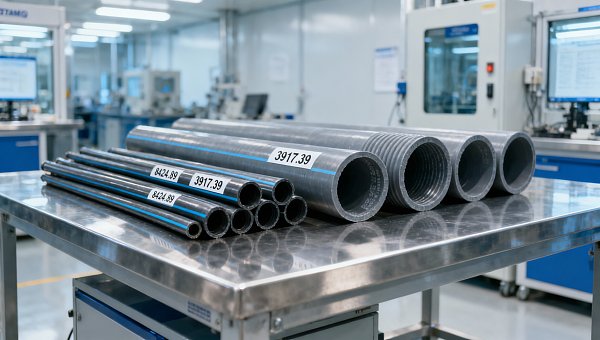
TÜV Rheinland Updates CE Requirements for Servo Drives (PLd + EMC Joint Validation)TÜV Rheinland now mandates joint PLd + EMC validation for servo drives under CE marking—learn how this impacts certification timelines, lab selection, and EU market access. Vietnam Suspends SASO Mutual Recognition for Chinese Irrigation EquipmentVietnam suspends SASO mutual recognition for Chinese irrigation equipment—urgent compliance updates for drip tapes & PE pipes (HS 8424.89/3917.39). Act now to avoid delays.
 FDA Finalizes AI Diagnostic Device Rules for ImportersFDA finalizes AI diagnostic device rules for importers: New bias assessment mandate impacts ultrasound, glucose analyzers & dermatoscopes. Act now to ensure U.S. market access.
 SABER Phase II Live: Saudi Building Hardware Requires Digital Type Test Reports & PIDSABER Phase II is live: Building hardware exports to Saudi Arabia now require digital type test reports & a mandatory, immutable Product ID (PID). Act now to avoid customs delays!
 IMDG Code 41-24 Enforced: UN3480 Lithium Battery Labeling Mandatory from Apr 2026IMDG Code 41-24 enforcement starts Apr 2026: UN3480 lithium battery labeling & ISO 17363 docs are now mandatory—avoid port rejections!
 CBAM Carbon Tax Launch: Low CBAM Reporting Rate Among Chinese ExportersCBAM Carbon Tax is live—only 36.8% of Chinese exporters reported. Discover why, which industries are at risk, and how to secure EU market access now.
 China’s 10 Agencies Issue AI Export Ethics Review RulesChina’s 10 agencies launch AI export ethics rules—mandating bias reviews for visual inspection, warehouse AI & defect detection systems. Stay compliant & competitive.
 RCEP Green Packaging Mutual Recognition Takes EffectRCEP Green Packaging Mutual Recognition is now in effect—unlock faster customs clearance in Australia, NZ, Japan & Korea for GB/T 37659–2019-certified eco-packaging.
 Mexico NOM-019-SCFI-2026 Effective Apr 10, 2026: EMC Certification Required for Automotive ElectronicsNOM-019-SCFI-2026 EMC certification is now mandatory for automotive electronics entering Mexico — act before the July 1, 2026 customs ban.
 Red Sea Rerouting Normalized, EBA at $1,850/TEURed Sea rerouting normalized with EBA fixed at $1,850/TEU—learn how this structural shift impacts Asia-Europe freight costs, lead times & supply chain strategy.
 FDA AI Diagnostic Device Draft Rules: Bias Assessment for ImportsFDA AI diagnostic device draft rules require bias assessment for imports—learn how portable ultrasound, glucose, and dermatoscopic AI devices are affected & what to do next.
") TÜV Rheinland Updates CE Requirements for Servo Drives (PLd + EMC)TÜV Rheinland updates CE requirements for servo drives: PLd (ISO 13849-1) + EMC immunity (IEC 61000-6-2 Ed.4) now mandatory together — act now to avoid EU market delays!
TÜV Rheinland Updates CE Requirements for Servo Drives (PLd + EMC)TÜV Rheinland updates CE requirements for servo drives: PLd (ISO 13849-1) + EMC immunity (IEC 61000-6-2 Ed.4) now mandatory together — act now to avoid EU market delays! SABER Phase II Launch: Building Hardware Must Submit Digital Type Test Reports & Unique Product IDSABER Phase II now mandates digital type test reports & unique product IDs for building hardware—fasteners, scaffolding, door/window components. Ensure compliance to avoid customs rejection & SCOC delays.
 Vietnam Suspends SASO Mutual Recognition for Chinese Irrigation EquipmentVietnam suspends SASO mutual recognition for Chinese irrigation equipment—TCVN testing now mandatory. Act now to avoid 8–12 week delays and customs holdups.
 IMDG Code 41-24 Enforced: UN3480 Lithium Battery Labeling UpdateIMDG Code 41-24 enforcement starts April 2026: UN3480 lithium battery labeling updates are mandatory for global maritime shipments — avoid port delays, detention & penalties.
 EU CBAM Enters Full Enforcement on Jan 1, 2026EU CBAM full enforcement starts Jan 1, 2026 — mandatory quarterly reporting & certificate purchases for batteries, steel, cement, aluminum, fertilizers & chemicals. Act now to ensure EU market access.
 EU CBAM Carbon Tariff Starts Oct 2026 for Chinese Battery, Cement, Chemical ExportsEU CBAM carbon tariff hits Chinese battery, cement & chemical exports from Oct 2026 — mandatory emissions reporting starts now. Avoid €98/t default fees.















Popular Tags
Global Trade Insights & Industry
Our mission is to empower global exporters and importers with data-driven insights that foster strategic growth.
Search News
Popular Tags
Industry Overview
The global commercial kitchen equipment market is projected to reach $112 billion by 2027. Driven by urbanization, the rise of e-commerce food delivery, and strict hygiene regulations.