

Is a Higher Car Batteries Price Worth It for Longer Service Life?
On any online trade platform, buyers often compare car batteries price against expected lifespan, warranty, and total replacement cost. For procurement teams, distributors, and market researchers, the real question is whether paying more delivers measurable value over time. In most cases, the answer is: sometimes—but only when the higher price reflects better battery chemistry, stronger durability under real operating conditions, and lower total cost of ownership. A higher sticker price alone does not guarantee longer service life. The real value depends on usage pattern, climate, vehicle type, warranty support, and supplier reliability.
For B2B buyers and channel partners, the smartest approach is not to ask which battery is cheapest or most expensive, but which option delivers the best service life per dollar, the lowest replacement risk, and the most stable after-sales performance. This article breaks down how to evaluate that trade-off in a practical, procurement-oriented way.
What Is the Real Search Intent Behind Comparing Car Batteries Price?
When users search for terms related to car batteries price and service life, they are usually not looking for a simple retail price list. Their core intent is to understand whether paying more leads to better long-term value. That value is often measured through:
- Longer replacement intervals
- Better cold-start or high-temperature performance
- Lower maintenance or failure rates
- Stronger warranty coverage
- Reduced downtime and customer complaints
- Higher resale or distribution confidence
For procurement professionals, this is essentially a cost-benefit decision. For distributors and agents, it is also a product-positioning question: should they stock budget batteries for price-sensitive markets, or premium models that may generate fewer returns and better customer retention?
Is a Higher Car Batteries Price Usually Worth It?
The short answer is: it can be worth it, but only under the right conditions.
A higher-priced battery is often justified when it provides measurable advantages such as:
- Longer cycle life
- Higher reserve capacity
- Better resistance to vibration and heat
- Improved charge acceptance
- Stronger starting performance in demanding climates
- Lower failure rate across fleets or repeated-use applications
However, some batteries are simply priced higher because of branding, channel markup, or regional supply conditions. If the technical specifications and expected lifespan are not substantially better, the premium may not be justified.
That is why buyers should compare lifecycle value, not just unit cost. A battery that costs 20% more but lasts 40% longer may be a better investment. A battery that costs 35% more but lasts only marginally longer may not be.
What Factors Actually Influence Battery Service Life?
Service life depends on far more than price. Buyers should evaluate the following variables before assuming that a higher cost means longer use:
1. Battery Technology
Different battery types perform differently under different operating conditions:
- Flooded lead-acid batteries are often lower in price but may offer shorter lifespan in demanding applications.
- AGM batteries typically cost more but often provide better cycling performance, vibration resistance, and support for start-stop systems.
- EFB batteries sit between standard flooded and AGM options, often balancing cost and improved durability.
2. Plate Design and Material Quality
Lead purity, plate thickness, separator quality, and manufacturing consistency all influence durability. Two batteries with similar outward specifications may perform very differently over time because of internal build quality.
3. Climate Conditions
In hot regions, battery degradation can accelerate due to electrolyte evaporation and internal corrosion. In cold climates, starting power becomes more critical. A battery priced higher because it is engineered for thermal resilience may offer better value in these markets.
4. Vehicle Application
Passenger cars, light commercial vehicles, heavy-use taxis, logistics fleets, and vehicles with advanced electronics all place different demands on batteries. Premium pricing is more often justified in high-load or high-cycle applications.
5. Charging System Health
Even an expensive battery will underperform if the vehicle’s charging system is unstable. This matters for warranty claims and distributor reputation, especially when product failure is caused by installation or vehicle issues rather than battery quality.
How Should Buyers Judge Whether the Price Premium Makes Financial Sense?
The most useful method is to compare total cost of ownership rather than purchase price alone. A simple evaluation model can include:
- Unit purchase price
- Expected service life in months or cycles
- Warranty length and claim conditions
- Replacement labor or service cost
- Vehicle downtime cost
- Customer complaint or return handling cost
For example:
- Battery A costs $60 and lasts 24 months
- Battery B costs $85 and lasts 42 months
On a monthly basis, Battery A costs about $2.50 per month, while Battery B costs about $2.02 per month before labor and replacement handling are even considered. If Battery B also reduces warranty claims and service interruptions, the premium becomes easier to justify.
For B2B buyers, this calculation becomes even more important when multiplied across fleets, service contracts, or distribution volumes.
Which Questions Matter Most to Procurement Teams and Distributors?
Target readers in sourcing and business evaluation are usually less interested in theory and more focused on risk, margins, and long-term commercial value. Their main questions often include:
Will the battery reduce replacement frequency?
A slightly higher purchase price may be worthwhile if replacement cycles become meaningfully longer, especially in high-volume or commercial use.
Will it reduce after-sales issues?
Frequent early failures can erase margin quickly. Products with stable quality control and clear warranty support often outperform cheaper alternatives commercially.
Is the premium recognized by the market?
In some markets, end users are willing to pay more for reliability and longer warranties. In others, price sensitivity is high and premium positioning may move slowly. Understanding local demand is essential.
Can the supplier support quality claims with data?
Reliable manufacturers or exporters should be able to provide test results, production standards, warranty benchmarks, and application guidance.
Does the product fit the intended channel?
Premium batteries may be suitable for workshops, fleet contracts, and urban vehicle segments with start-stop systems, while economy batteries may still be practical for older vehicles and highly price-driven regions.
When Is Paying More Clearly Worth It?
There are several scenarios where a higher car batteries price is often justified:
- Fleet operations, where downtime is expensive and predictable maintenance matters
- Commercial vehicles, where higher electrical loads and daily use shorten battery life
- Extreme climate markets, where low-end batteries fail faster
- Vehicles with start-stop systems, where AGM or EFB technology is often necessary
- Service-focused distributors, who want to reduce return rates and build reputation
- Longer warranty sales models, where product stability protects profitability
In these cases, the premium is not just about product quality. It is about reducing operational disruption and protecting channel value.
When Might a Higher Price Not Be Worth It?
Paying more may not make sense when:
- The battery is used in low-demand, low-mileage vehicles
- The price increase is mostly due to branding rather than performance
- The distributor serves extremely price-sensitive markets with low premium acceptance
- Warranty coverage is weak or difficult to claim
- The supplier cannot prove consistency in production quality
- The battery is over-specified for the application
In these situations, a mid-range battery with verified quality may offer the best balance between affordability and service life.
What Should Buyers Ask Suppliers Before Making a Decision?
To avoid overpaying or underbuying, procurement teams should ask targeted questions such as:
- What is the expected service life under normal and high-load conditions?
- What battery technology is used, and for which vehicle applications is it recommended?
- What are the cold cranking amps, reserve capacity, and cycle-life benchmarks?
- What is the warranty period, and what are the claim rates?
- Can the supplier provide testing certifications or quality control documentation?
- How stable are lead times and replenishment volumes?
- Are there known performance differences by region or climate?
This supplier dialogue often reveals whether the higher price is backed by genuine value or simply by market positioning.
How Does This Affect Market Positioning for Distributors and Agents?
For channel businesses, battery pricing is not just a sourcing issue; it is a portfolio strategy issue. Carrying only low-cost products can support fast turnover, but it may also increase returns, service friction, and price competition. Offering a mix of economy, mid-tier, and premium batteries can create better market coverage.
A segmented portfolio allows distributors to:
- Serve both price-driven and reliability-driven buyers
- Increase average order value
- Improve margins on premium lines
- Reduce reputational risk from low-quality failures
- Build stronger long-term buyer relationships
For business evaluators and market researchers, this also means that car battery pricing trends should be interpreted alongside warranty patterns, replacement cycles, and vehicle technology shifts—not in isolation.
Final Verdict: Is a Higher Car Batteries Price Worth It for Longer Service Life?
Yes, a higher car batteries price can be worth it for longer service life—but only when the premium is supported by better technology, stronger durability, reliable supplier quality, and lower total lifecycle cost. Buyers should not treat price as a direct proxy for quality. Instead, they should compare real-world performance, warranty value, application fit, and replacement economics.
For procurement teams, the best decision is usually the one that minimizes long-term cost and operational risk, not the one with the lowest upfront spend. For distributors and agents, the right pricing tier depends on target market demand, product positioning, and after-sales strategy. In short, the smarter question is not “Which battery costs more?” but “Which battery creates more value over time?”
Recommended News
 China’s 10-Dept AI Export Ethics Review Rule Takes EffectChina’s new 10-dept AI export ethics rule mandates algorithmic bias review for AI hardware bound for the EU, US, Canada, Japan & SK—key for smart cameras, voice assistants & industrial vision exporters.
 Red Sea Detour Now Standard: $1,850 TEU Premium on Asia-Europe RoutesRed Sea detour premium now standard: $1,850/TEU surcharge embedded in Asia-Europe freight rates — vital intel for exporters, importers & logistics teams.
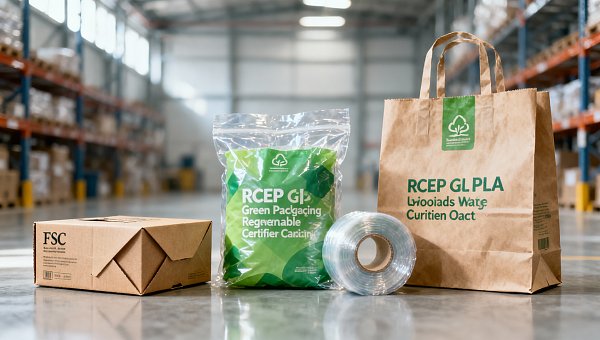
 RCEP Green Packaging Mutual Recognition Takes EffectRCEP Green Packaging Mutual Recognition takes effect Apr 22, 2026—streamline exports to AU, NZ, JP, KR with GB/T 37629–2019 certified molded fiber & PLA packaging.
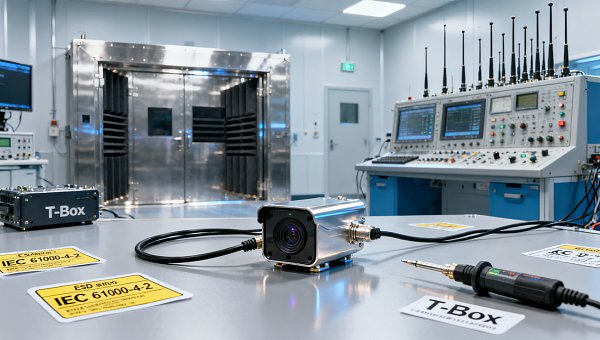
 Mexico NOM-019-SCFI-2026 Effective: EMC Certification Required for Auto Electronics ExportsEMC certification is now mandatory for auto electronics exports to Mexico under NOM-019-SCFI-2026. Ensure compliance for rearview mirrors, radar sensors & T-Box units—avoid shipment delays and order cancellations.
") TÜV Rheinland Updates CE Requirements for Servo Drives (PLd + EMC Joint Validation)TÜV Rheinland now mandates joint PLd + EMC validation for servo drives under CE marking—learn how this impacts certification timelines, lab selection, and EU market access.
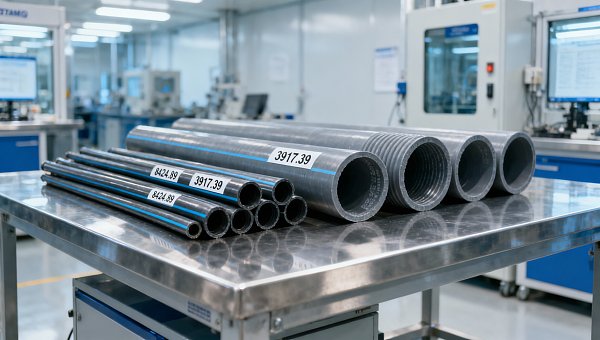
TÜV Rheinland Updates CE Requirements for Servo Drives (PLd + EMC Joint Validation)TÜV Rheinland now mandates joint PLd + EMC validation for servo drives under CE marking—learn how this impacts certification timelines, lab selection, and EU market access. Vietnam Suspends SASO Mutual Recognition for Chinese Irrigation EquipmentVietnam suspends SASO mutual recognition for Chinese irrigation equipment—urgent compliance updates for drip tapes & PE pipes (HS 8424.89/3917.39). Act now to avoid delays.
 FDA Finalizes AI Diagnostic Device Rules for ImportersFDA finalizes AI diagnostic device rules for importers: New bias assessment mandate impacts ultrasound, glucose analyzers & dermatoscopes. Act now to ensure U.S. market access.
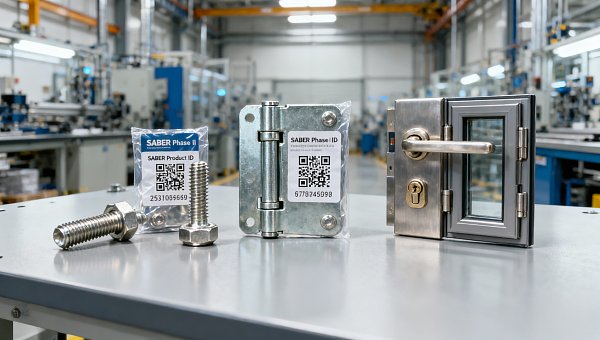
 SABER Phase II Live: Saudi Building Hardware Requires Digital Type Test Reports & PIDSABER Phase II is live: Building hardware exports to Saudi Arabia now require digital type test reports & a mandatory, immutable Product ID (PID). Act now to avoid customs delays!
 IMDG Code 41-24 Enforced: UN3480 Lithium Battery Labeling Mandatory from Apr 2026IMDG Code 41-24 enforcement starts Apr 2026: UN3480 lithium battery labeling & ISO 17363 docs are now mandatory—avoid port rejections!
 CBAM Carbon Tax Launch: Low CBAM Reporting Rate Among Chinese ExportersCBAM Carbon Tax is live—only 36.8% of Chinese exporters reported. Discover why, which industries are at risk, and how to secure EU market access now.
 China’s 10 Agencies Issue AI Export Ethics Review RulesChina’s 10 agencies launch AI export ethics rules—mandating bias reviews for visual inspection, warehouse AI & defect detection systems. Stay compliant & competitive.
 RCEP Green Packaging Mutual Recognition Takes EffectRCEP Green Packaging Mutual Recognition is now in effect—unlock faster customs clearance in Australia, NZ, Japan & Korea for GB/T 37659–2019-certified eco-packaging.
 Mexico NOM-019-SCFI-2026 Effective Apr 10, 2026: EMC Certification Required for Automotive ElectronicsNOM-019-SCFI-2026 EMC certification is now mandatory for automotive electronics entering Mexico — act before the July 1, 2026 customs ban.
 Red Sea Rerouting Normalized, EBA at $1,850/TEURed Sea rerouting normalized with EBA fixed at $1,850/TEU—learn how this structural shift impacts Asia-Europe freight costs, lead times & supply chain strategy.
 FDA AI Diagnostic Device Draft Rules: Bias Assessment for ImportsFDA AI diagnostic device draft rules require bias assessment for imports—learn how portable ultrasound, glucose, and dermatoscopic AI devices are affected & what to do next.
") TÜV Rheinland Updates CE Requirements for Servo Drives (PLd + EMC)TÜV Rheinland updates CE requirements for servo drives: PLd (ISO 13849-1) + EMC immunity (IEC 61000-6-2 Ed.4) now mandatory together — act now to avoid EU market delays!
TÜV Rheinland Updates CE Requirements for Servo Drives (PLd + EMC)TÜV Rheinland updates CE requirements for servo drives: PLd (ISO 13849-1) + EMC immunity (IEC 61000-6-2 Ed.4) now mandatory together — act now to avoid EU market delays! SABER Phase II Launch: Building Hardware Must Submit Digital Type Test Reports & Unique Product IDSABER Phase II now mandates digital type test reports & unique product IDs for building hardware—fasteners, scaffolding, door/window components. Ensure compliance to avoid customs rejection & SCOC delays.
 Vietnam Suspends SASO Mutual Recognition for Chinese Irrigation EquipmentVietnam suspends SASO mutual recognition for Chinese irrigation equipment—TCVN testing now mandatory. Act now to avoid 8–12 week delays and customs holdups.
 IMDG Code 41-24 Enforced: UN3480 Lithium Battery Labeling UpdateIMDG Code 41-24 enforcement starts April 2026: UN3480 lithium battery labeling updates are mandatory for global maritime shipments — avoid port delays, detention & penalties.
 EU CBAM Enters Full Enforcement on Jan 1, 2026EU CBAM full enforcement starts Jan 1, 2026 — mandatory quarterly reporting & certificate purchases for batteries, steel, cement, aluminum, fertilizers & chemicals. Act now to ensure EU market access.
 EU CBAM Carbon Tariff Starts Oct 2026 for Chinese Battery, Cement, Chemical ExportsEU CBAM carbon tariff hits Chinese battery, cement & chemical exports from Oct 2026 — mandatory emissions reporting starts now. Avoid €98/t default fees.

















Popular Tags
Global Trade Insights & Industry
Our mission is to empower global exporters and importers with data-driven insights that foster strategic growth.
Search News
Popular Tags
Industry Overview
The global commercial kitchen equipment market is projected to reach $112 billion by 2027. Driven by urbanization, the rise of e-commerce food delivery, and strict hygiene regulations.