

Car Batteries Price Gaps Explained by Type, Warranty, and Climate
On any online trade platform, car batteries price differences often look confusing at first glance. Yet the real drivers are usually battery type, warranty length, and local climate demands. For procurement teams, distributors, and market researchers, understanding these factors is essential for smarter sourcing, margin planning, and supplier evaluation. This guide breaks down how each element shapes cost and what buyers should compare before making decisions.
For most B2B buyers, the short answer is simple: car battery price gaps are rarely random. Higher prices usually reflect one or more of three factors—more advanced battery chemistry, longer warranty liability, or stronger performance in extreme temperatures. The challenge is that not every premium is justified for every market. A battery that makes sense for cold northern regions, stop-start urban fleets, or warranty-sensitive retail channels may be overpriced for standard applications in mild climates. That is why buyers should compare batteries not only by unit cost, but also by fit-for-market, expected failure rate, warranty exposure, and resale positioning.
What buyers are really trying to understand when comparing car battery prices
When distributors, sourcing teams, and commercial evaluators search for explanations behind car batteries price differences, they are usually not looking for a basic technical definition. They want to know whether a higher-priced battery will create better margins, fewer after-sales claims, or stronger competitiveness in a specific region.
In practice, the most relevant buying questions are:
- Why do visually similar car batteries have very different prices?
- Which battery type is worth paying more for, and in what market?
- How much does warranty length add to supplier cost and channel risk?
- How does hot or cold climate change battery specifications and replacement cycles?
- What should be compared beyond headline price before placing orders?
These are commercial questions as much as technical ones. The real goal is not simply to find the cheapest battery, but to identify the right cost-performance balance for the target customer base.
Battery type is the biggest reason prices vary
The first and most visible driver of car battery pricing is battery type. Different battery technologies are designed for different vehicle electrical loads, usage patterns, and durability expectations. As a result, they carry different production costs and market positions.
Conventional flooded lead-acid batteries are typically the most affordable option. They are widely used in older vehicles and price-sensitive markets. Their lower cost makes them attractive for bulk purchasing, but they may offer shorter service life or weaker performance in demanding conditions compared with upgraded technologies.
Enhanced Flooded Batteries (EFB) sit above standard flooded batteries in price. They are often used in entry-level start-stop vehicles and applications requiring better cycling performance. For buyers serving modern passenger car segments, EFB products can offer a practical middle ground between low cost and improved performance.
Absorbent Glass Mat (AGM) batteries are usually among the higher-priced products in the market. They support vehicles with start-stop systems, greater electrical loads, and more demanding cycling conditions. AGM batteries generally command a premium because they use more advanced internal construction and are marketed toward higher-spec vehicles.
Gel and specialty batteries may also carry premium pricing, depending on niche use cases, durability requirements, or specific mobility applications.
For procurement teams, the key point is this: battery type should be matched to vehicle population and user behavior. If the target market mainly consists of older, conventional passenger cars, paying AGM-level prices may reduce competitiveness. But if the sales channel serves newer vehicles with start-stop systems, under-spec products may lead to returns, complaints, and reputational damage.
Why warranty length often explains hidden price premiums
Warranty is another major factor behind car batteries price gaps, and it is often underestimated by new buyers. A longer warranty is not just a marketing message. It creates real financial exposure for the manufacturer, importer, and distributor.
A battery sold with a 24-month warranty usually carries a different risk profile from one sold with a 12-month warranty. If a supplier offers extended warranty coverage, the price often includes:
- Expected claim reserves
- Stricter quality control costs
- Higher-grade materials or production consistency
- Brand positioning value
- After-sales service infrastructure
For distributors and agents, warranty should be assessed from both a sales and risk perspective. A longer warranty can help close deals and support premium positioning, but only if claim handling is reliable and product quality is stable. Otherwise, a low-priced battery with an attractive paper warranty may create more downstream cost than a higher-priced battery from a dependable supplier.
Buyers should also confirm the exact warranty model. Questions worth asking include:
- Is the warranty free replacement, prorated, or limited?
- Who bears the cost of returns and logistics?
- What testing standard determines warranty eligibility?
- Are climate-related failures treated differently?
- Does the supplier have historical claim-rate data by market?
In B2B battery sourcing, warranty value depends not just on duration, but on enforceability and total service cost.
Climate has a direct impact on battery cost, performance, and replacement demand
Climate is one of the most practical reasons battery prices differ across markets. A battery designed for mild weather does not necessarily deliver the same reliability in extreme cold or intense heat. This affects both manufacturing specifications and commercial suitability.
In cold climates, buyers usually pay more for batteries with stronger cold cranking performance. Low temperatures reduce a battery’s ability to deliver starting power, so specifications such as CCA (Cold Cranking Amps) become especially important. Batteries built for winter-heavy regions often require higher performance thresholds, which can raise costs.
In hot climates, heat accelerates electrolyte evaporation, internal corrosion, and battery degradation. Batteries for these regions may need design features or material quality that better support heat resistance and service life. In some markets, the turnover rate is higher because batteries fail faster in extreme heat, which can influence both pricing strategy and stocking patterns.
Climate also affects channel economics:
- Cold regions may prioritize starting reliability and stronger specifications
- Hot regions may prioritize durability and faster replacement cycles
- Seasonal demand spikes can affect procurement timing and inventory cost
- Regional failure patterns can change warranty exposure
This is why price comparison across countries or platforms can be misleading. Two batteries with the same nominal size may differ significantly in price because they are designed for different temperature realities.
How procurement teams should evaluate whether a higher-priced battery is actually worth it
For business buyers, the most useful decision framework is not “Which battery is cheapest?” but “Which battery creates the best commercial outcome in this sales environment?” A higher purchase price may still be the better deal if it reduces claims, improves sell-through, or fits vehicle requirements more accurately.
Here are the main factors worth comparing before making a sourcing decision:
- Battery type fit: Does the product match the target vehicle parc and electrical system requirements?
- Warranty cost exposure: Is the warranty realistic and financially manageable across your channel?
- Climate compatibility: Has the battery been validated for the actual temperature conditions of the destination market?
- Specification transparency: Are CCA, reserve capacity, Ah rating, and dimensions clearly stated and verifiable?
- Supplier consistency: Can the supplier maintain stable quality across batches?
- Return and failure data: Is there historical evidence of low defect rates?
- Margin positioning: Will the battery be sold as an economy, mid-range, or premium product?
Many pricing mistakes happen when buyers compare only ex-factory cost without accounting for claims handling, dead-on-arrival rates, brand perception, and regional performance. A battery that is 8% cheaper upfront may become more expensive after returns and customer dissatisfaction are included.
What distributors and resellers should compare on supplier listings and quotations
On B2B portals and supplier catalogs, battery offers can appear very similar. To avoid weak comparisons, distributors and sourcing managers should request a structured quotation review instead of relying on headline pricing alone.
A practical checklist includes:
- Battery technology: flooded, EFB, AGM, or specialty
- Rated Ah and CCA performance
- Physical dimensions and terminal configuration
- Applicable vehicle segments
- Warranty terms and claim procedure
- Recommended operating climate
- Cycle life or durability test references
- Certifications and compliance documentation
- MOQ, lead time, and packaging details
- Private label or branding options
For commercial evaluation, buyers should also ask whether the supplier has experience serving similar destination markets. Export-ready battery suppliers with knowledge of local temperature conditions, replacement patterns, and compliance expectations are often more valuable than lower-priced but less specialized vendors.
The best sourcing decision depends on market position, not just product cost
Different channels require different battery strategies. A wholesale buyer supplying price-sensitive repair shops may prioritize conventional lead-acid models with acceptable reliability and strong stock turnover. A distributor targeting modern passenger vehicles may need EFB or AGM products to remain relevant. A retailer in a harsh climate may benefit more from fewer claims and stronger local reputation than from shaving a small amount off purchase cost.
That means car batteries price gaps should be interpreted through a business lens:
- Economy segment: lower upfront cost, tighter margins, higher price sensitivity
- Mid-market segment: balanced performance, moderate warranty expectations, broader vehicle fit
- Premium segment: stronger specs, longer warranty, lower tolerance for failure, higher selling price potential
The smartest buyers align product tier with customer expectations and operating conditions. Overbuying hurts competitiveness. Underbuying creates technical mismatch and after-sales friction.
Conclusion: understand the reason behind the price before judging the battery
Car batteries price gaps are mainly explained by three practical variables: battery type, warranty commitment, and climate suitability. For procurement professionals, market researchers, and distributors, these are not minor technical details—they are the main signals that determine sourcing value, channel risk, and long-term profitability.
Instead of treating all batteries in the same size category as directly comparable, buyers should assess how each product is built, what warranty exposure it carries, and whether it is designed for the real conditions of the target market. In many cases, the better buying decision is not the lowest-cost battery, but the one that delivers the right performance-to-risk ratio for the intended customer base.
When this comparison is done properly, price differences become easier to interpret—and much more useful for strategic sourcing.
Recommended News
 China’s 10-Dept AI Export Ethics Review Rule Takes EffectChina’s new 10-dept AI export ethics rule mandates algorithmic bias review for AI hardware bound for the EU, US, Canada, Japan & SK—key for smart cameras, voice assistants & industrial vision exporters.
 Red Sea Detour Now Standard: $1,850 TEU Premium on Asia-Europe RoutesRed Sea detour premium now standard: $1,850/TEU surcharge embedded in Asia-Europe freight rates — vital intel for exporters, importers & logistics teams.
 RCEP Green Packaging Mutual Recognition Takes EffectRCEP Green Packaging Mutual Recognition takes effect Apr 22, 2026—streamline exports to AU, NZ, JP, KR with GB/T 37629–2019 certified molded fiber & PLA packaging.
 Mexico NOM-019-SCFI-2026 Effective: EMC Certification Required for Auto Electronics ExportsEMC certification is now mandatory for auto electronics exports to Mexico under NOM-019-SCFI-2026. Ensure compliance for rearview mirrors, radar sensors & T-Box units—avoid shipment delays and order cancellations.
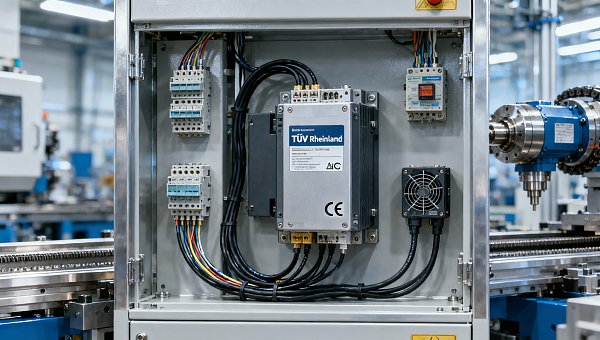
") TÜV Rheinland Updates CE Requirements for Servo Drives (PLd + EMC Joint Validation)TÜV Rheinland now mandates joint PLd + EMC validation for servo drives under CE marking—learn how this impacts certification timelines, lab selection, and EU market access.
TÜV Rheinland Updates CE Requirements for Servo Drives (PLd + EMC Joint Validation)TÜV Rheinland now mandates joint PLd + EMC validation for servo drives under CE marking—learn how this impacts certification timelines, lab selection, and EU market access. Vietnam Suspends SASO Mutual Recognition for Chinese Irrigation EquipmentVietnam suspends SASO mutual recognition for Chinese irrigation equipment—urgent compliance updates for drip tapes & PE pipes (HS 8424.89/3917.39). Act now to avoid delays.
 FDA Finalizes AI Diagnostic Device Rules for ImportersFDA finalizes AI diagnostic device rules for importers: New bias assessment mandate impacts ultrasound, glucose analyzers & dermatoscopes. Act now to ensure U.S. market access.
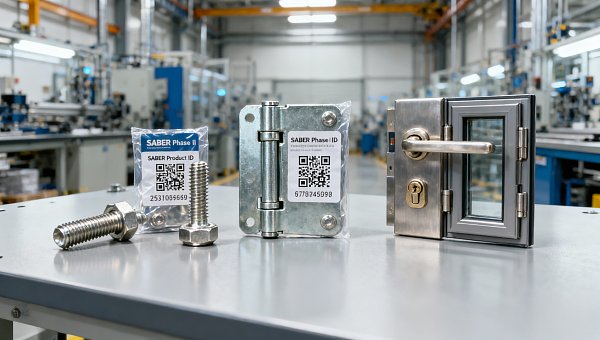
 SABER Phase II Live: Saudi Building Hardware Requires Digital Type Test Reports & PIDSABER Phase II is live: Building hardware exports to Saudi Arabia now require digital type test reports & a mandatory, immutable Product ID (PID). Act now to avoid customs delays!
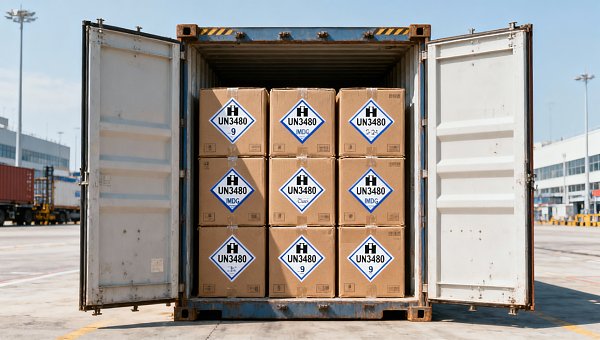
 IMDG Code 41-24 Enforced: UN3480 Lithium Battery Labeling Mandatory from Apr 2026IMDG Code 41-24 enforcement starts Apr 2026: UN3480 lithium battery labeling & ISO 17363 docs are now mandatory—avoid port rejections!
 CBAM Carbon Tax Launch: Low CBAM Reporting Rate Among Chinese ExportersCBAM Carbon Tax is live—only 36.8% of Chinese exporters reported. Discover why, which industries are at risk, and how to secure EU market access now.
 China’s 10 Agencies Issue AI Export Ethics Review RulesChina’s 10 agencies launch AI export ethics rules—mandating bias reviews for visual inspection, warehouse AI & defect detection systems. Stay compliant & competitive.
 RCEP Green Packaging Mutual Recognition Takes EffectRCEP Green Packaging Mutual Recognition is now in effect—unlock faster customs clearance in Australia, NZ, Japan & Korea for GB/T 37659–2019-certified eco-packaging.
 Mexico NOM-019-SCFI-2026 Effective Apr 10, 2026: EMC Certification Required for Automotive ElectronicsNOM-019-SCFI-2026 EMC certification is now mandatory for automotive electronics entering Mexico — act before the July 1, 2026 customs ban.
 Red Sea Rerouting Normalized, EBA at $1,850/TEURed Sea rerouting normalized with EBA fixed at $1,850/TEU—learn how this structural shift impacts Asia-Europe freight costs, lead times & supply chain strategy.
 FDA AI Diagnostic Device Draft Rules: Bias Assessment for ImportsFDA AI diagnostic device draft rules require bias assessment for imports—learn how portable ultrasound, glucose, and dermatoscopic AI devices are affected & what to do next.
") TÜV Rheinland Updates CE Requirements for Servo Drives (PLd + EMC)TÜV Rheinland updates CE requirements for servo drives: PLd (ISO 13849-1) + EMC immunity (IEC 61000-6-2 Ed.4) now mandatory together — act now to avoid EU market delays!
TÜV Rheinland Updates CE Requirements for Servo Drives (PLd + EMC)TÜV Rheinland updates CE requirements for servo drives: PLd (ISO 13849-1) + EMC immunity (IEC 61000-6-2 Ed.4) now mandatory together — act now to avoid EU market delays! SABER Phase II Launch: Building Hardware Must Submit Digital Type Test Reports & Unique Product IDSABER Phase II now mandates digital type test reports & unique product IDs for building hardware—fasteners, scaffolding, door/window components. Ensure compliance to avoid customs rejection & SCOC delays.
 Vietnam Suspends SASO Mutual Recognition for Chinese Irrigation EquipmentVietnam suspends SASO mutual recognition for Chinese irrigation equipment—TCVN testing now mandatory. Act now to avoid 8–12 week delays and customs holdups.
 IMDG Code 41-24 Enforced: UN3480 Lithium Battery Labeling UpdateIMDG Code 41-24 enforcement starts April 2026: UN3480 lithium battery labeling updates are mandatory for global maritime shipments — avoid port delays, detention & penalties.
 EU CBAM Enters Full Enforcement on Jan 1, 2026EU CBAM full enforcement starts Jan 1, 2026 — mandatory quarterly reporting & certificate purchases for batteries, steel, cement, aluminum, fertilizers & chemicals. Act now to ensure EU market access.
 EU CBAM Carbon Tariff Starts Oct 2026 for Chinese Battery, Cement, Chemical ExportsEU CBAM carbon tariff hits Chinese battery, cement & chemical exports from Oct 2026 — mandatory emissions reporting starts now. Avoid €98/t default fees.














Popular Tags
Global Trade Insights & Industry
Our mission is to empower global exporters and importers with data-driven insights that foster strategic growth.
Search News
Popular Tags
Industry Overview
The global commercial kitchen equipment market is projected to reach $112 billion by 2027. Driven by urbanization, the rise of e-commerce food delivery, and strict hygiene regulations.