

Radiators Price vs Quality: Where Buyers Often Misjudge Value
When comparing radiators price, many buyers make the same mistake: they treat the lowest quote as the best deal. In practice, that approach often leads to higher warranty costs, shorter service life, inconsistent heating performance, and supply risk that erodes margin over time. For procurement teams, distributors, and market researchers, the smarter question is not “Which radiator is cheapest?” but “Which radiator delivers the best total value for the intended market, channel, and lifecycle?”
That distinction matters because radiator quality is not always obvious from a price list. Two products may look similar on paper yet differ significantly in material thickness, coating quality, weld consistency, heat output stability, corrosion resistance, certification credibility, and supplier reliability. Buyers who misread that gap often overpay for branding with little practical gain—or, more commonly, underbuy and absorb hidden downstream costs. This article explains where those misjudgments happen, what serious buyers should evaluate, and how to make sourcing decisions that are commercially sound.
What buyers are really searching for when they compare radiators price
Most buyers searching terms like radiators price, radiator quality comparison, or how to choose radiator suppliers are not simply looking for a unit price. Their real intent usually falls into one of four categories:
- Procurement validation: confirming whether a low quote is genuinely competitive or a quality warning sign
- Supplier screening: identifying which manufacturers can meet performance, compliance, and delivery expectations
- Margin protection: understanding how product quality affects after-sales costs, returns, and customer satisfaction
- Market positioning: deciding what quality tier fits a target region, distribution channel, or buyer segment
That means a useful article cannot stay at a surface-level discussion of “cheap vs expensive.” Buyers need a framework for judging value. They want to know where the money goes, which specifications actually matter, and when a higher-priced radiator improves commercial outcomes versus when it simply reflects overhead, branding, or inefficient distribution.
Why low radiators price often looks better than it really is
The most common sourcing error is evaluating a radiator as if it were a commodity with uniform performance. In reality, small differences in manufacturing quality can create major cost differences later.
A low initial price may come from several factors:
- Thinner steel or aluminum
- Lower-grade raw materials
- Less durable internal anti-corrosion treatment
- Weaker welding or brazing consistency
- Lower coating quality
- Loose dimensional tolerances
- Minimal testing or poor traceability
- Weak packaging that increases damage during transport
None of these may be obvious in a quotation sheet. Yet each one can affect product life, leak risk, thermal efficiency, installation ease, and customer complaints. For importers and distributors, the issue is not just product failure—it is the total business disruption caused by replacements, field claims, delayed installations, damaged brand reputation, and strained client relationships.
In many cases, the cheapest radiator does not remain the cheapest once all associated costs are included. This is especially true in export markets where freight, customs, warehousing, and reverse logistics amplify the cost of poor quality.
Where buyers most often misjudge value
There are several recurring blind spots in radiator sourcing decisions. These are the areas where price and quality diverge most sharply.
1. Confusing visual similarity with performance similarity
Two radiators may look almost identical in photos or sample rooms. That does not mean they have the same thermal output, internal durability, pressure tolerance, or finish quality. Many buyers underestimate how much hidden process quality affects real-world use.
2. Overlooking the cost of failure after delivery
A radiator leak, coating defect, or mounting issue is far more expensive after shipment than before purchase. A modest unit saving can disappear quickly once replacement stock, labor claims, and customer compensation are involved.
3. Assuming all certifications are equally meaningful
Some suppliers present compliance documents that are outdated, market-irrelevant, or issued by less credible bodies. Buyers who focus only on whether a document exists—not whether it is applicable and verifiable—can make poor sourcing decisions.
4. Ignoring supplier consistency
A factory may produce an acceptable first batch but fail to maintain the same standard at scale. Price comparisons often miss the importance of process control, batch stability, and quality management discipline.
5. Paying extra for features the market does not value
The reverse mistake also happens. Some buyers choose a premium-priced radiator with technical features or finish upgrades that do not matter in the target market. If end customers are price-sensitive and applications are standard, over-specifying can reduce competitiveness without creating more sales.
Which quality factors actually justify a higher radiator price
Not every higher price is justified—but some quality elements do create real business value. Buyers should know which ones deserve attention.
Material quality and thickness
Material selection directly affects heat transfer, corrosion resistance, structural integrity, and product lifespan. Radiators made with better-grade material and more consistent thickness generally perform more reliably and are less likely to fail under normal operating conditions.
Thermal efficiency and output consistency
Heat output should not be treated as a marketing number alone. Reliable performance data, tested under recognized standards, is essential. A radiator that fails to meet expected output can undermine project specifications and create dissatisfaction even if it never physically fails.
Surface treatment and coating durability
Finish quality affects both appearance and resistance to corrosion, especially in humid or demanding environments. Poor coating can lead to early deterioration, visible defects, and complaints from end users or installers.
Welding, sealing, and pressure integrity
These are core quality indicators. Better process control in welding and sealing reduces leak risk and improves long-term reliability. For distributors, this can mean fewer returns and stronger repeat business.
Testing and quality assurance systems
A higher-priced supplier with robust leak testing, pressure testing, dimensional control, and batch traceability often represents lower operational risk. That matters more than minor price differences in many B2B purchasing decisions.
Packaging and logistics protection
Export-ready packaging is not a minor detail. In international trade, packaging quality directly affects damage rates, arrival condition, and total landed value. A slightly more expensive product with stronger packaging may be the better buy.
How procurement teams should compare radiators price the right way
Professional buyers should move from unit-price comparison to total-value comparison. A practical evaluation framework includes the following dimensions:
- Ex-works or FOB price: baseline cost only
- Technical compliance: heat output, dimensions, pressure rating, materials, finish, standards
- Quality control evidence: inspection records, testing procedures, defect rate history
- Supplier reliability: production capacity, lead time stability, export experience
- Commercial support: warranty terms, claims handling, documentation accuracy
- Logistics performance: packaging, palletization, loading efficiency, damage prevention
- Total risk exposure: likelihood of returns, delays, complaints, or reputational loss
Instead of asking only for a quote, buyers should request a structured comparison pack. That may include product drawings, testing data, coating details, material specs, packaging photos, compliance records, sample evaluation results, and references from comparable markets.
This is especially important for distributors and importers who depend on product consistency. A radiator is not just a product line item; it is part of a service promise to contractors, retailers, and end users.
Questions distributors and importers should ask before choosing a supplier
If the goal is to avoid misjudging value, the right supplier questions matter as much as the right technical specs. Buyers should ask:
- What testing is conducted on every batch, and what is sampled only periodically?
- What is the actual defect or claim rate from export customers?
- How is coating performance verified?
- What material tolerances are controlled during production?
- Can the supplier provide market-specific certifications for target regions?
- What packaging standards are used for sea freight and long-distance transport?
- How are warranty claims handled across borders?
- Can the supplier maintain consistency for repeat orders at larger volumes?
- What lead time performance has been achieved over the last 6 to 12 months?
- What customization options are available without destabilizing quality?
These questions reveal whether a supplier is merely competitive on price or genuinely capable of supporting long-term business growth. For B2B buyers, that distinction is critical.
When paying more makes sense—and when it does not
A higher radiator price is justified when it lowers total cost, reduces supply risk, supports stronger channel reputation, or fits a more demanding application. This is often the case when:
- You serve markets with strict compliance requirements
- You sell through channels where warranty claims are expensive
- You need stable performance across repeat orders
- You are building a higher-trust product portfolio
- You operate in export environments with long supply chains and costly returns
On the other hand, paying more may not be necessary when the specification is basic, the target market is highly price-driven, product turnover is fast, and the supplier can prove acceptable quality at a lower cost tier. The key is evidence. Buyers should not assume that premium price always equals premium value.
The best sourcing decisions align radiator quality with actual market needs. Underbuying creates hidden costs. Overbuying can reduce competitiveness. The right choice sits where performance, reliability, and margin meet.
A practical way to judge radiator value before placing large orders
For buyers who want a disciplined sourcing process, a simple pre-order checklist can prevent expensive mistakes:
- Define the use case clearly: residential, commercial, replacement market, project supply, or distribution stock
- Identify must-have specifications: output, dimensions, pressure, finish, compatibility, compliance
- Shortlist suppliers by evidence, not price alone: prioritize those with verifiable data
- Request samples and inspect them carefully: finish, weight, welds, fittings, packaging, consistency
- Compare total landed cost: not just factory quote
- Assess claim risk: estimate the commercial impact of even a small defect rate
- Validate repeat-order capability: capacity and process control matter after the first shipment
- Start with a controlled trial order: monitor actual field performance before scaling up
This approach helps procurement teams, distributors, and business evaluators avoid common pricing traps. It also creates better internal justification for supplier decisions, especially when management wants a clear rationale for choosing a supplier that is not the cheapest on paper.
Conclusion: the best radiator value is rarely the lowest quote
In radiator sourcing, buyers often misjudge value because they compare visible price and ignore hidden cost. The result can be lower margins, higher claims, and weaker customer trust. A smart purchasing decision looks beyond the initial quotation and evaluates material quality, testing discipline, thermal performance, packaging, certification credibility, and supplier consistency.
For market researchers, procurement teams, distributors, and commercial evaluators, the real takeaway is simple: radiators price should be judged in context of total return. The best supplier is not automatically the cheapest or the most expensive. It is the one that delivers the most dependable commercial outcome for your target market. When buyers adopt that mindset, they stop chasing low price and start securing long-term value.
Recommended News
 China’s 10-Dept AI Export Ethics Review Rule Takes EffectChina’s new 10-dept AI export ethics rule mandates algorithmic bias review for AI hardware bound for the EU, US, Canada, Japan & SK—key for smart cameras, voice assistants & industrial vision exporters.
 Red Sea Detour Now Standard: $1,850 TEU Premium on Asia-Europe RoutesRed Sea detour premium now standard: $1,850/TEU surcharge embedded in Asia-Europe freight rates — vital intel for exporters, importers & logistics teams.
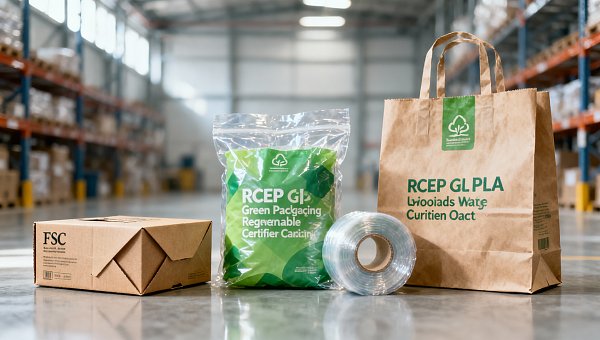
 RCEP Green Packaging Mutual Recognition Takes EffectRCEP Green Packaging Mutual Recognition takes effect Apr 22, 2026—streamline exports to AU, NZ, JP, KR with GB/T 37629–2019 certified molded fiber & PLA packaging.
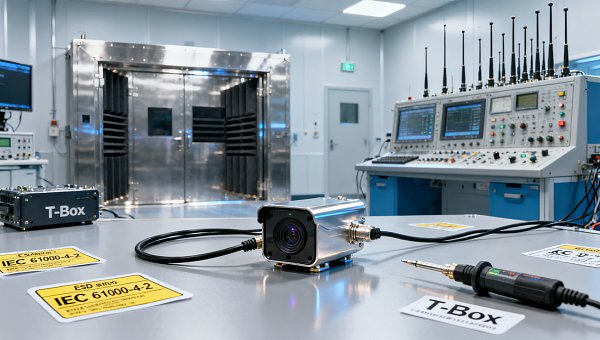
 Mexico NOM-019-SCFI-2026 Effective: EMC Certification Required for Auto Electronics ExportsEMC certification is now mandatory for auto electronics exports to Mexico under NOM-019-SCFI-2026. Ensure compliance for rearview mirrors, radar sensors & T-Box units—avoid shipment delays and order cancellations.
") TÜV Rheinland Updates CE Requirements for Servo Drives (PLd + EMC Joint Validation)TÜV Rheinland now mandates joint PLd + EMC validation for servo drives under CE marking—learn how this impacts certification timelines, lab selection, and EU market access.
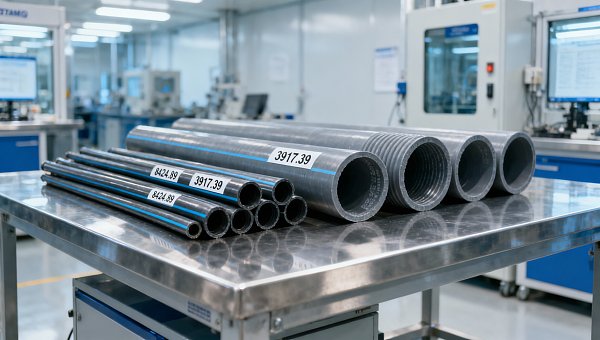
TÜV Rheinland Updates CE Requirements for Servo Drives (PLd + EMC Joint Validation)TÜV Rheinland now mandates joint PLd + EMC validation for servo drives under CE marking—learn how this impacts certification timelines, lab selection, and EU market access. Vietnam Suspends SASO Mutual Recognition for Chinese Irrigation EquipmentVietnam suspends SASO mutual recognition for Chinese irrigation equipment—urgent compliance updates for drip tapes & PE pipes (HS 8424.89/3917.39). Act now to avoid delays.
 FDA Finalizes AI Diagnostic Device Rules for ImportersFDA finalizes AI diagnostic device rules for importers: New bias assessment mandate impacts ultrasound, glucose analyzers & dermatoscopes. Act now to ensure U.S. market access.
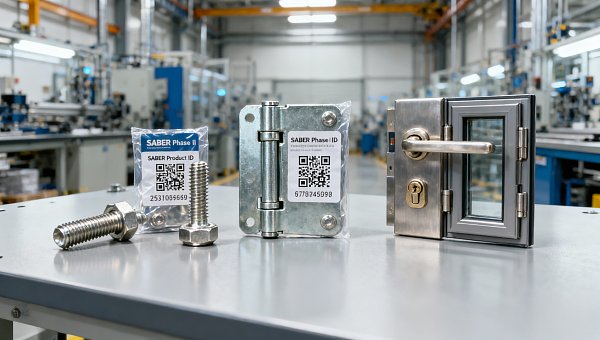
 SABER Phase II Live: Saudi Building Hardware Requires Digital Type Test Reports & PIDSABER Phase II is live: Building hardware exports to Saudi Arabia now require digital type test reports & a mandatory, immutable Product ID (PID). Act now to avoid customs delays!
 IMDG Code 41-24 Enforced: UN3480 Lithium Battery Labeling Mandatory from Apr 2026IMDG Code 41-24 enforcement starts Apr 2026: UN3480 lithium battery labeling & ISO 17363 docs are now mandatory—avoid port rejections!
 CBAM Carbon Tax Launch: Low CBAM Reporting Rate Among Chinese ExportersCBAM Carbon Tax is live—only 36.8% of Chinese exporters reported. Discover why, which industries are at risk, and how to secure EU market access now.
 China’s 10 Agencies Issue AI Export Ethics Review RulesChina’s 10 agencies launch AI export ethics rules—mandating bias reviews for visual inspection, warehouse AI & defect detection systems. Stay compliant & competitive.
 RCEP Green Packaging Mutual Recognition Takes EffectRCEP Green Packaging Mutual Recognition is now in effect—unlock faster customs clearance in Australia, NZ, Japan & Korea for GB/T 37659–2019-certified eco-packaging.
 Mexico NOM-019-SCFI-2026 Effective Apr 10, 2026: EMC Certification Required for Automotive ElectronicsNOM-019-SCFI-2026 EMC certification is now mandatory for automotive electronics entering Mexico — act before the July 1, 2026 customs ban.
 Red Sea Rerouting Normalized, EBA at $1,850/TEURed Sea rerouting normalized with EBA fixed at $1,850/TEU—learn how this structural shift impacts Asia-Europe freight costs, lead times & supply chain strategy.
 FDA AI Diagnostic Device Draft Rules: Bias Assessment for ImportsFDA AI diagnostic device draft rules require bias assessment for imports—learn how portable ultrasound, glucose, and dermatoscopic AI devices are affected & what to do next.
") TÜV Rheinland Updates CE Requirements for Servo Drives (PLd + EMC)TÜV Rheinland updates CE requirements for servo drives: PLd (ISO 13849-1) + EMC immunity (IEC 61000-6-2 Ed.4) now mandatory together — act now to avoid EU market delays!
TÜV Rheinland Updates CE Requirements for Servo Drives (PLd + EMC)TÜV Rheinland updates CE requirements for servo drives: PLd (ISO 13849-1) + EMC immunity (IEC 61000-6-2 Ed.4) now mandatory together — act now to avoid EU market delays! SABER Phase II Launch: Building Hardware Must Submit Digital Type Test Reports & Unique Product IDSABER Phase II now mandates digital type test reports & unique product IDs for building hardware—fasteners, scaffolding, door/window components. Ensure compliance to avoid customs rejection & SCOC delays.
 Vietnam Suspends SASO Mutual Recognition for Chinese Irrigation EquipmentVietnam suspends SASO mutual recognition for Chinese irrigation equipment—TCVN testing now mandatory. Act now to avoid 8–12 week delays and customs holdups.
 IMDG Code 41-24 Enforced: UN3480 Lithium Battery Labeling UpdateIMDG Code 41-24 enforcement starts April 2026: UN3480 lithium battery labeling updates are mandatory for global maritime shipments — avoid port delays, detention & penalties.
 EU CBAM Enters Full Enforcement on Jan 1, 2026EU CBAM full enforcement starts Jan 1, 2026 — mandatory quarterly reporting & certificate purchases for batteries, steel, cement, aluminum, fertilizers & chemicals. Act now to ensure EU market access.
 EU CBAM Carbon Tariff Starts Oct 2026 for Chinese Battery, Cement, Chemical ExportsEU CBAM carbon tariff hits Chinese battery, cement & chemical exports from Oct 2026 — mandatory emissions reporting starts now. Avoid €98/t default fees.

















Popular Tags
Global Trade Insights & Industry
Our mission is to empower global exporters and importers with data-driven insights that foster strategic growth.
Search News
Popular Tags
Industry Overview
The global commercial kitchen equipment market is projected to reach $112 billion by 2027. Driven by urbanization, the rise of e-commerce food delivery, and strict hygiene regulations.