

What Affects Radiators Price Most When Sourcing in Bulk?
When sourcing in bulk, radiator price is rarely determined by the quoted unit cost alone. In most real procurement scenarios, the biggest pricing drivers are material type, manufacturing process, technical specifications, order volume, quality consistency, and total landed cost. For importers, distributors, and sourcing teams, the most important question is not simply “Which supplier offers the lowest price?” but “Which offer delivers the best cost-to-performance ratio with the lowest supply risk?” That distinction matters because a cheaper radiator can quickly become more expensive once freight, defect rates, warranty exposure, and inconsistent thermal performance are factored in.
For buyers comparing bulk offers, the most useful approach is to break pricing into a few practical layers: what the radiator is made of, how it is produced, what performance standard it must meet, how many units are being ordered, and how reliable the supplier is over repeated shipments. Understanding these factors makes it easier to compare quotations accurately, negotiate better terms, and avoid hidden costs that undermine margins later.
What usually affects radiators price the most in bulk sourcing?
In wholesale procurement, the strongest price drivers are typically raw materials and product specifications. Aluminum radiators, copper-brass radiators, and steel variants have very different cost structures. Aluminum is often preferred for its light weight, corrosion resistance, and manufacturing scalability, while copper-brass units may cost more because of higher material value and certain performance advantages in specific applications. Steel can be competitive in some categories, but its suitability depends on the end-use environment.
Beyond the base metal, the radiator’s size, tube density, fin design, welding quality, coating treatment, and pressure tolerance all influence cost. A radiator built for demanding automotive, industrial, generator, or HVAC applications will generally cost more than a standard unit because it requires tighter tolerances, stronger assemblies, and more reliable heat dissipation performance.
For bulk buyers, this means the largest price differences usually come from specification complexity rather than from supplier markup alone. Two products that look similar in a quote sheet may differ significantly in lifespan, cooling efficiency, and return risk.
How do materials change radiator pricing?
Material selection is one of the clearest factors behind radiator price. When sourcing in bulk, even a modest change in metal cost has a major impact across large order volumes. Aluminum radiators are widely used because they balance performance, weight, and manufacturability. Their pricing is often more sensitive to global aluminum market fluctuations, alloy grade, and extrusion or brazing requirements.
Copper-brass radiators usually come at a premium due to higher raw material costs and more traditional assembly methods in some segments. However, buyers in heavy-duty or repair-oriented markets may still favor them for serviceability and application-specific durability. If corrosion resistance, conductivity, or maintenance patterns matter in the destination market, the higher upfront price may still support better long-term value.
Material thickness also matters. Lower-cost offers may use thinner cores, lighter tanks, or less durable components, which can reduce thermal efficiency and service life. That is why procurement teams should not compare only by material name, but by exact grade, thickness, and test standard.
Why does manufacturing method have such a big impact on cost?
The production method influences both direct cost and long-term product consistency. In the radiator market, processes such as brazing, welding, stamping, tube expansion, leak testing, and surface finishing all affect price. Automated production lines can improve consistency and reduce labor dependence, but factories with better equipment may not always offer the lowest initial quotation.
For example, radiators produced with stronger process control and tighter inspection standards tend to have lower defect rates. That can justify a higher purchase price, especially for distributors and importers who cannot afford warranty claims, shipment disputes, or end-customer complaints. A low-cost supplier with unstable welding quality or inconsistent core assembly may create much higher after-sales costs later.
Tooling and customization also affect bulk pricing. If a buyer needs private labeling, custom dimensions, modified fittings, branded packaging, or market-specific certification, the supplier may charge mold fees, setup costs, or lower first-order efficiency costs. These are often spread across larger orders, which is why pricing usually improves as production stabilizes over repeat purchases.
How much do order quantity and MOQ influence the final deal?
Order volume is a major pricing lever in radiator sourcing, but buyers should be realistic about how discounts actually work. Suppliers often reduce unit prices at higher quantities because fixed costs such as setup, packaging design, quality planning, and export handling can be distributed across more units. Raw material purchasing may also become more efficient for the manufacturer at scale.
However, the cheapest volume tier is not always the smartest choice. If buyers over-order to secure a lower unit price, they may increase inventory pressure, warehousing costs, and exposure to specification changes or slower sales turnover. This is especially important for distributors managing multiple SKUs.
Minimum order quantity also varies by product type. Standard radiator models usually have more flexible MOQ terms, while customized items often require larger commitments. In negotiations, buyers should ask not only for price breaks at different quantities, but also for mixed-model loading options, trial-order terms, and reorder stability. These details often matter more than an aggressive first quote.
What hidden costs make a low radiator price misleading?
One of the biggest sourcing mistakes is focusing only on EXW or FOB price while ignoring total landed cost. Freight, duties, packaging strength, port handling, insurance, inspection expenses, and customs delays can significantly alter the real procurement cost. Because radiators can be bulky relative to value, shipping efficiency is especially important.
Poor packaging can lead to fin damage, leaks, and rejected goods during transit. That means a supplier with a slightly higher product price but stronger export packaging may actually deliver better economics. Likewise, inconsistent documentation or weak export experience can result in customs problems that delay inventory and raise operational costs.
Quality-related hidden costs are even more important. A lower-priced batch with a higher failure rate can erode distributor credibility and create replacement expenses. For procurement professionals, the real benchmark should be cost per usable, saleable unit—not just cost per shipped unit.
How do quality standards and certifications affect bulk pricing?
Quality assurance directly influences radiator price because testing, compliance, and traceability all require cost. Products that meet stricter standards for leak resistance, pressure performance, corrosion protection, dimensional precision, or thermal output typically involve more process control and inspection time.
Depending on the target market, buyers may need specific certifications, factory audits, material reports, or performance test records. These requirements increase supplier workload but reduce buyer risk. In B2B procurement, this trade-off is often worthwhile, especially for importers supplying regulated or quality-sensitive channels.
It is also important to check whether a supplier’s certification applies to the actual factory and product category being quoted. Some low-price offers appear competitive because they omit testing scope, downgrade materials, or simplify inspection steps. Buyers should request documentation that matches the exact radiator model and intended export market.
Does supplier reputation affect price, and should buyers pay more for it?
Yes. Supplier reliability often carries a price premium, but in many cases it is justified. Established manufacturers with stronger process control, export experience, and stable communication may quote higher prices than smaller or less mature suppliers. That premium often reflects lower risk of delays, quality inconsistency, and post-shipment disputes.
For procurement teams, supplier evaluation should include more than price lists. Production capacity, lead-time stability, responsiveness, historical export markets, defect handling procedures, and willingness to support after-sales claims all matter. In bulk sourcing, reliability is a commercial asset. A missed shipment or a defective container can cost far more than a modest difference in unit price.
This is particularly important for distributors and agents whose margins depend on stock availability and customer trust. Paying slightly more to a dependable supplier can improve forecast accuracy, reduce emergency purchasing, and strengthen long-term profitability.
How should buyers compare radiator quotations more accurately?
The best way to compare radiator prices is to standardize the quotation framework. Buyers should request the same technical details from every supplier: material grade, core size, fin density, tank specification, pressure rating, coating, packaging method, test process, MOQ, lead time, trade term, and warranty policy. Without this level of detail, price comparison is often misleading.
It is also useful to build a simple cost matrix that includes unit price, tooling fees, sample charges, shipping estimate, expected defect rate, payment terms, and certification cost. This allows sourcing teams to identify the true total cost of ownership rather than choosing the lowest visible number.
Where possible, buyers should validate a shortlisted supplier through samples, factory audits, or third-party inspection. Even a small pilot order can reveal a great deal about consistency, communication speed, packaging quality, and documentation accuracy. In bulk purchasing, data from a trial batch is often more valuable than an aggressive sales promise.
Which factors matter most for different buyer types?
Not every buyer evaluates radiators price in the same way. Market researchers and sourcing analysts usually focus on cost trends, supply-side competitiveness, and material-linked price volatility. Procurement officers care more about quotation transparency, consistency, MOQ flexibility, and landed cost. Distributors and resellers tend to prioritize durability, warranty exposure, packaging, and repeat-order stability because those factors directly affect resale margins.
Business evaluators and strategic decision-makers often look at a broader picture: whether a supplier can support long-term category expansion, customized product lines, regional compliance needs, and stable partnership economics. For them, price matters, but price stability and risk control matter just as much.
That is why the “most important” factor behind radiator price depends partly on the buyer’s business model. A trader seeking fast-turn standard products may optimize differently from a distributor building a long-term brand position in a local market.
Practical takeaway: what should bulk buyers focus on first?
If the goal is to secure the best bulk radiator deal, start with specifications and total landed cost before negotiating final unit price. Confirm the material grade, structural design, production quality, and compliance requirements first. Then compare shipping, packaging, defect risk, and supplier consistency. Only after those elements are aligned does price comparison become meaningful.
In many cases, the factors that affect radiators price most are not the ones that appear most obvious at first glance. Raw material and manufacturing method shape the baseline, but logistics, quality reliability, and supplier capability often determine whether the deal remains profitable after delivery.
For serious B2B buyers, the smartest sourcing decision is usually not the cheapest quotation. It is the offer that combines acceptable pricing, verified performance, manageable risk, and dependable long-term supply.
In summary, radiators price in bulk sourcing is influenced most by material composition, manufacturing complexity, technical requirements, order scale, quality control, logistics, and supplier reliability. Buyers who evaluate these factors together can negotiate with greater confidence, avoid false savings, and make sourcing decisions that support both margin protection and supply chain stability.
Recommended News
 China’s 10-Dept AI Export Ethics Review Rule Takes EffectChina’s new 10-dept AI export ethics rule mandates algorithmic bias review for AI hardware bound for the EU, US, Canada, Japan & SK—key for smart cameras, voice assistants & industrial vision exporters.
 Red Sea Detour Now Standard: $1,850 TEU Premium on Asia-Europe RoutesRed Sea detour premium now standard: $1,850/TEU surcharge embedded in Asia-Europe freight rates — vital intel for exporters, importers & logistics teams.
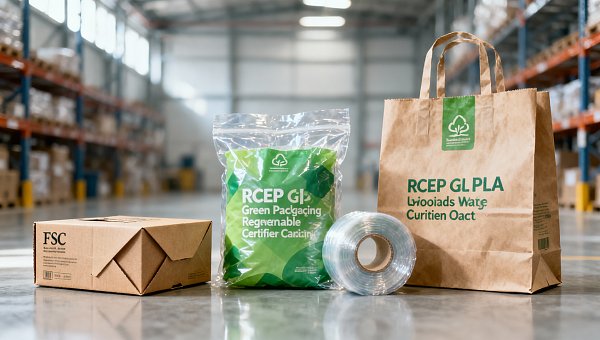
 RCEP Green Packaging Mutual Recognition Takes EffectRCEP Green Packaging Mutual Recognition takes effect Apr 22, 2026—streamline exports to AU, NZ, JP, KR with GB/T 37629–2019 certified molded fiber & PLA packaging.
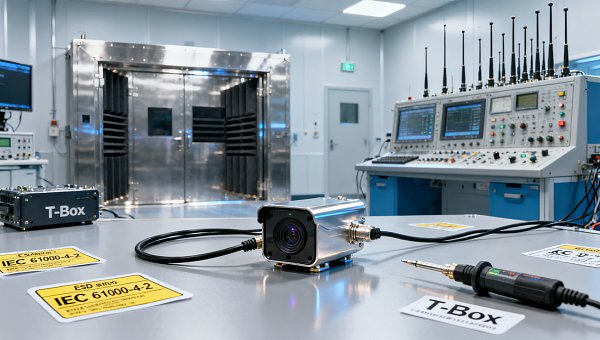
 Mexico NOM-019-SCFI-2026 Effective: EMC Certification Required for Auto Electronics ExportsEMC certification is now mandatory for auto electronics exports to Mexico under NOM-019-SCFI-2026. Ensure compliance for rearview mirrors, radar sensors & T-Box units—avoid shipment delays and order cancellations.
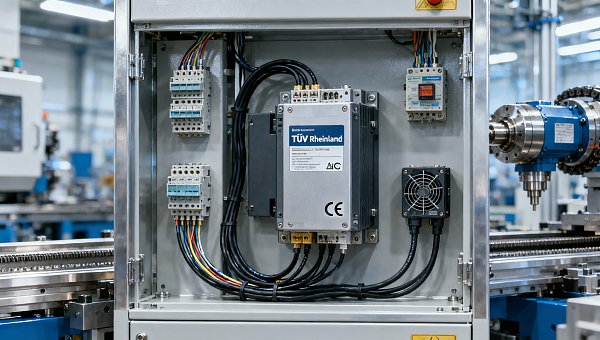
") TÜV Rheinland Updates CE Requirements for Servo Drives (PLd + EMC Joint Validation)TÜV Rheinland now mandates joint PLd + EMC validation for servo drives under CE marking—learn how this impacts certification timelines, lab selection, and EU market access.
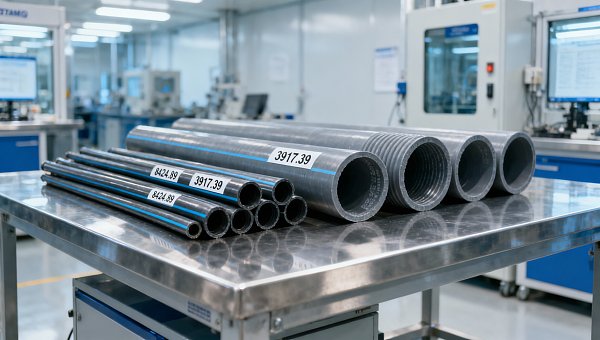
TÜV Rheinland Updates CE Requirements for Servo Drives (PLd + EMC Joint Validation)TÜV Rheinland now mandates joint PLd + EMC validation for servo drives under CE marking—learn how this impacts certification timelines, lab selection, and EU market access. Vietnam Suspends SASO Mutual Recognition for Chinese Irrigation EquipmentVietnam suspends SASO mutual recognition for Chinese irrigation equipment—urgent compliance updates for drip tapes & PE pipes (HS 8424.89/3917.39). Act now to avoid delays.
 FDA Finalizes AI Diagnostic Device Rules for ImportersFDA finalizes AI diagnostic device rules for importers: New bias assessment mandate impacts ultrasound, glucose analyzers & dermatoscopes. Act now to ensure U.S. market access.
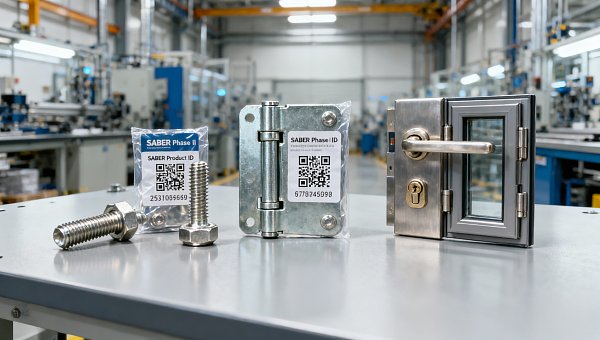
 SABER Phase II Live: Saudi Building Hardware Requires Digital Type Test Reports & PIDSABER Phase II is live: Building hardware exports to Saudi Arabia now require digital type test reports & a mandatory, immutable Product ID (PID). Act now to avoid customs delays!
 IMDG Code 41-24 Enforced: UN3480 Lithium Battery Labeling Mandatory from Apr 2026IMDG Code 41-24 enforcement starts Apr 2026: UN3480 lithium battery labeling & ISO 17363 docs are now mandatory—avoid port rejections!
 CBAM Carbon Tax Launch: Low CBAM Reporting Rate Among Chinese ExportersCBAM Carbon Tax is live—only 36.8% of Chinese exporters reported. Discover why, which industries are at risk, and how to secure EU market access now.
 China’s 10 Agencies Issue AI Export Ethics Review RulesChina’s 10 agencies launch AI export ethics rules—mandating bias reviews for visual inspection, warehouse AI & defect detection systems. Stay compliant & competitive.
 RCEP Green Packaging Mutual Recognition Takes EffectRCEP Green Packaging Mutual Recognition is now in effect—unlock faster customs clearance in Australia, NZ, Japan & Korea for GB/T 37659–2019-certified eco-packaging.
 Mexico NOM-019-SCFI-2026 Effective Apr 10, 2026: EMC Certification Required for Automotive ElectronicsNOM-019-SCFI-2026 EMC certification is now mandatory for automotive electronics entering Mexico — act before the July 1, 2026 customs ban.
 Red Sea Rerouting Normalized, EBA at $1,850/TEURed Sea rerouting normalized with EBA fixed at $1,850/TEU—learn how this structural shift impacts Asia-Europe freight costs, lead times & supply chain strategy.
 FDA AI Diagnostic Device Draft Rules: Bias Assessment for ImportsFDA AI diagnostic device draft rules require bias assessment for imports—learn how portable ultrasound, glucose, and dermatoscopic AI devices are affected & what to do next.
") TÜV Rheinland Updates CE Requirements for Servo Drives (PLd + EMC)TÜV Rheinland updates CE requirements for servo drives: PLd (ISO 13849-1) + EMC immunity (IEC 61000-6-2 Ed.4) now mandatory together — act now to avoid EU market delays!
TÜV Rheinland Updates CE Requirements for Servo Drives (PLd + EMC)TÜV Rheinland updates CE requirements for servo drives: PLd (ISO 13849-1) + EMC immunity (IEC 61000-6-2 Ed.4) now mandatory together — act now to avoid EU market delays! SABER Phase II Launch: Building Hardware Must Submit Digital Type Test Reports & Unique Product IDSABER Phase II now mandates digital type test reports & unique product IDs for building hardware—fasteners, scaffolding, door/window components. Ensure compliance to avoid customs rejection & SCOC delays.
 Vietnam Suspends SASO Mutual Recognition for Chinese Irrigation EquipmentVietnam suspends SASO mutual recognition for Chinese irrigation equipment—TCVN testing now mandatory. Act now to avoid 8–12 week delays and customs holdups.
 IMDG Code 41-24 Enforced: UN3480 Lithium Battery Labeling UpdateIMDG Code 41-24 enforcement starts April 2026: UN3480 lithium battery labeling updates are mandatory for global maritime shipments — avoid port delays, detention & penalties.
 EU CBAM Enters Full Enforcement on Jan 1, 2026EU CBAM full enforcement starts Jan 1, 2026 — mandatory quarterly reporting & certificate purchases for batteries, steel, cement, aluminum, fertilizers & chemicals. Act now to ensure EU market access.
 EU CBAM Carbon Tariff Starts Oct 2026 for Chinese Battery, Cement, Chemical ExportsEU CBAM carbon tariff hits Chinese battery, cement & chemical exports from Oct 2026 — mandatory emissions reporting starts now. Avoid €98/t default fees.
















Popular Tags
Global Trade Insights & Industry
Our mission is to empower global exporters and importers with data-driven insights that foster strategic growth.
Search News
Popular Tags
Industry Overview
The global commercial kitchen equipment market is projected to reach $112 billion by 2027. Driven by urbanization, the rise of e-commerce food delivery, and strict hygiene regulations.