

Mexico NOM-019-SCFI-2026 Enforced: Auto EMC Rules Impact Chinese Rearview & Radar Exports
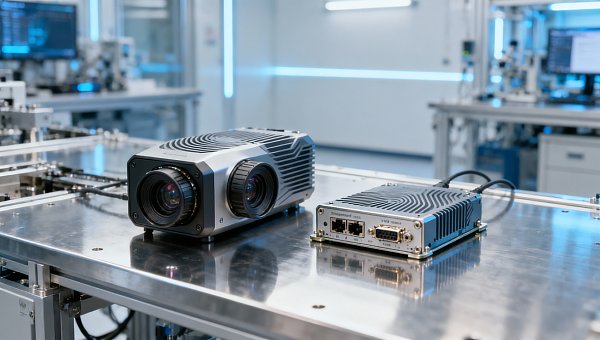
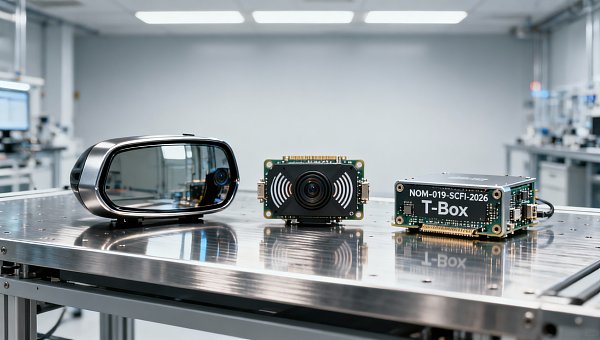
Mexico’s NOM-019-SCFI-2026 — a mandatory electromagnetic compatibility (EMC) standard for automotive electronics — entered into force on April 24, 2026. The regulation directly affects exporters of rearview cameras, blind-spot radar modules, and ADAS control units from China, triggering supply chain delays and order cancellations due to limited certified testing capacity.
Event Overview
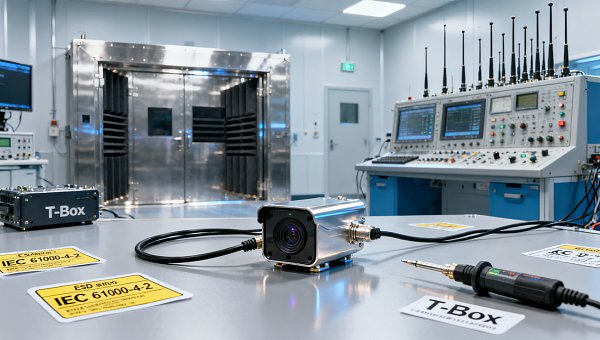
On April 24, 2026, Mexico’s Secretariat of Economy (SE) published the enforcement of NOM-019-SCFI-2026, titled ‘Electromagnetic Compatibility Requirements for Automotive Electronic Components’. The standard applies to car electronics including backup camera systems, blind-spot detection radar modules, and ADAS electronic control units. It mandates compliance with IEC 61000-4-3 radiation immunity test limits. As of the effective date, only three laboratories in China have been officially recognized by Mexican authorities to conduct the required testing.
Industries Affected
Direct Exporters of Automotive Electronics
Chinese manufacturers exporting rearview cameras, radar sensors, or ADAS control modules to Mexico must now obtain NOM-019 certification before customs clearance. Because only three labs in China are approved, testing backlogs exceeding eight weeks have led to shipment delays and customer order cancellations.
Contract Manufacturers & Tier-2 Suppliers
Firms supplying sub-assemblies (e.g., PCBs with integrated RF components or camera image processors) to OEMs or Tier-1 integrators may face downstream certification requirements. If their modules are embedded in end products falling under NOM-019’s scope, they become indirectly liable for compliance verification — even if not named as the certificate holder.
Logistics & Customs Compliance Service Providers
Freight forwarders and customs brokers handling automotive electronics shipments to Mexico report increased documentation scrutiny. Non-certified consignments are being held at ports pending proof of NOM-019 conformity — affecting transit time, storage fees, and delivery reliability.
What Enterprises Should Monitor and Do Now
Track official updates from Mexico’s SE and SCFI
The current list of accredited labs is subject to revision. Enterprises should monitor announcements via Mexico’s Official Journal of the Federation (DOF) and the National Accreditation Entity (EMA) for additions or clarifications — especially regarding transitional provisions or lab accreditation expansions.
Prioritize high-risk product categories for immediate testing
Given the bottleneck, exporters should identify which SKUs fall unambiguously within NOM-019’s defined scope (e.g., active radar-based blind-spot monitors vs. passive optical sensors) and allocate testing slots accordingly — avoiding assumptions based on functional similarity alone.
Distinguish between regulatory signal and operational readiness
The standard is in force, but enforcement granularity (e.g., sampling frequency at border, penalties for noncompliance) remains evolving. Companies should treat initial port holds as indicative — not conclusive — of full-scale inspection rollout, and maintain records of all test applications and lab confirmations.
Prepare contingency plans for testing lead time and documentation
With current wait times exceeding two months, exporters should adjust production scheduling, extend order-to-shipment timelines, and pre-submit technical files to accredited labs. Where feasible, coordinate with Mexican importers to align NOM-019 documentation with existing NOM-037 (for lighting) or NOM-151 (for tires) submission workflows.
Editorial Observation / Industry Perspective
From an industry perspective, NOM-019-SCFI-2026 is better understood as an enforcement milestone rather than a sudden policy shift — its technical basis aligns closely with international EMC frameworks already referenced in earlier Mexican auto standards. Analysis来看, the bottleneck stems less from novelty of requirements and more from infrastructure lag: recognition of testing labs has not kept pace with export volume growth. Observation来看, this reflects a broader trend in Latin American markets where harmonization with IEC/ISO norms is accelerating, but local conformity assessment capacity remains concentrated and slow to scale. Current更值得关注的是 whether Mexico will accept test reports from ILAC-MRA signatory labs outside China — a potential near-term mitigation path still unconfirmed by official sources.
This development signals growing regulatory complexity for automotive electronics exporters targeting Mexico — not just as a compliance checkpoint, but as a structural constraint on time-to-market. It does not yet indicate a broad restriction on market access, but it does elevate the operational cost and planning horizon for entry. For now, it is more accurately interpreted as a capacity-constrained implementation phase — one requiring proactive coordination across manufacturing, testing, and logistics functions.
Information Sources: Official Gazette of the Federation (DOF), Mexico Secretariat of Economy (SE), Standardization Directorate of the Ministry of Economy (SCFI). Note: Lab accreditation status and enforcement practices remain subject to ongoing observation beyond April 2026.
Recommended News
 China’s 10-Dept AI Export Ethics Review Rule Takes EffectChina’s new 10-dept AI export ethics rule mandates algorithmic bias review for AI hardware bound for the EU, US, Canada, Japan & SK—key for smart cameras, voice assistants & industrial vision exporters.
 Red Sea Detour Now Standard: $1,850 TEU Premium on Asia-Europe RoutesRed Sea detour premium now standard: $1,850/TEU surcharge embedded in Asia-Europe freight rates — vital intel for exporters, importers & logistics teams.
 RCEP Green Packaging Mutual Recognition Takes EffectRCEP Green Packaging Mutual Recognition takes effect Apr 22, 2026—streamline exports to AU, NZ, JP, KR with GB/T 37629–2019 certified molded fiber & PLA packaging.
 Mexico NOM-019-SCFI-2026 Effective: EMC Certification Required for Auto Electronics ExportsEMC certification is now mandatory for auto electronics exports to Mexico under NOM-019-SCFI-2026. Ensure compliance for rearview mirrors, radar sensors & T-Box units—avoid shipment delays and order cancellations.
") TÜV Rheinland Updates CE Requirements for Servo Drives (PLd + EMC Joint Validation)TÜV Rheinland now mandates joint PLd + EMC validation for servo drives under CE marking—learn how this impacts certification timelines, lab selection, and EU market access.
TÜV Rheinland Updates CE Requirements for Servo Drives (PLd + EMC Joint Validation)TÜV Rheinland now mandates joint PLd + EMC validation for servo drives under CE marking—learn how this impacts certification timelines, lab selection, and EU market access. Vietnam Suspends SASO Mutual Recognition for Chinese Irrigation EquipmentVietnam suspends SASO mutual recognition for Chinese irrigation equipment—urgent compliance updates for drip tapes & PE pipes (HS 8424.89/3917.39). Act now to avoid delays.
 FDA Finalizes AI Diagnostic Device Rules for ImportersFDA finalizes AI diagnostic device rules for importers: New bias assessment mandate impacts ultrasound, glucose analyzers & dermatoscopes. Act now to ensure U.S. market access.
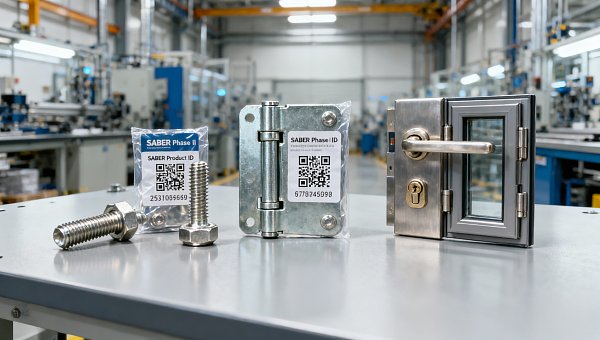
 SABER Phase II Live: Saudi Building Hardware Requires Digital Type Test Reports & PIDSABER Phase II is live: Building hardware exports to Saudi Arabia now require digital type test reports & a mandatory, immutable Product ID (PID). Act now to avoid customs delays!
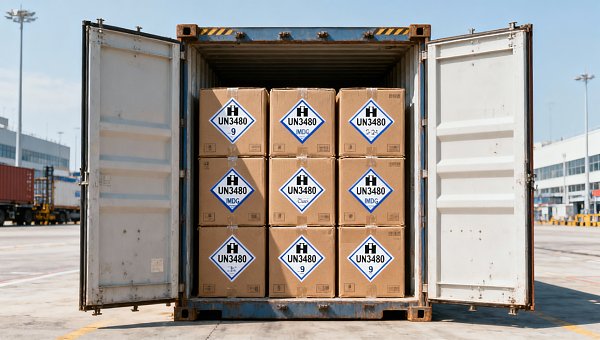
 IMDG Code 41-24 Enforced: UN3480 Lithium Battery Labeling Mandatory from Apr 2026IMDG Code 41-24 enforcement starts Apr 2026: UN3480 lithium battery labeling & ISO 17363 docs are now mandatory—avoid port rejections!
 CBAM Carbon Tax Launch: Low CBAM Reporting Rate Among Chinese ExportersCBAM Carbon Tax is live—only 36.8% of Chinese exporters reported. Discover why, which industries are at risk, and how to secure EU market access now.
 China’s 10 Agencies Issue AI Export Ethics Review RulesChina’s 10 agencies launch AI export ethics rules—mandating bias reviews for visual inspection, warehouse AI & defect detection systems. Stay compliant & competitive.
 RCEP Green Packaging Mutual Recognition Takes EffectRCEP Green Packaging Mutual Recognition is now in effect—unlock faster customs clearance in Australia, NZ, Japan & Korea for GB/T 37659–2019-certified eco-packaging.
 Mexico NOM-019-SCFI-2026 Effective Apr 10, 2026: EMC Certification Required for Automotive ElectronicsNOM-019-SCFI-2026 EMC certification is now mandatory for automotive electronics entering Mexico — act before the July 1, 2026 customs ban.
 Red Sea Rerouting Normalized, EBA at $1,850/TEURed Sea rerouting normalized with EBA fixed at $1,850/TEU—learn how this structural shift impacts Asia-Europe freight costs, lead times & supply chain strategy.
 FDA AI Diagnostic Device Draft Rules: Bias Assessment for ImportsFDA AI diagnostic device draft rules require bias assessment for imports—learn how portable ultrasound, glucose, and dermatoscopic AI devices are affected & what to do next.
") TÜV Rheinland Updates CE Requirements for Servo Drives (PLd + EMC)TÜV Rheinland updates CE requirements for servo drives: PLd (ISO 13849-1) + EMC immunity (IEC 61000-6-2 Ed.4) now mandatory together — act now to avoid EU market delays!
TÜV Rheinland Updates CE Requirements for Servo Drives (PLd + EMC)TÜV Rheinland updates CE requirements for servo drives: PLd (ISO 13849-1) + EMC immunity (IEC 61000-6-2 Ed.4) now mandatory together — act now to avoid EU market delays! SABER Phase II Launch: Building Hardware Must Submit Digital Type Test Reports & Unique Product IDSABER Phase II now mandates digital type test reports & unique product IDs for building hardware—fasteners, scaffolding, door/window components. Ensure compliance to avoid customs rejection & SCOC delays.
 Vietnam Suspends SASO Mutual Recognition for Chinese Irrigation EquipmentVietnam suspends SASO mutual recognition for Chinese irrigation equipment—TCVN testing now mandatory. Act now to avoid 8–12 week delays and customs holdups.
 IMDG Code 41-24 Enforced: UN3480 Lithium Battery Labeling UpdateIMDG Code 41-24 enforcement starts April 2026: UN3480 lithium battery labeling updates are mandatory for global maritime shipments — avoid port delays, detention & penalties.
 EU CBAM Enters Full Enforcement on Jan 1, 2026EU CBAM full enforcement starts Jan 1, 2026 — mandatory quarterly reporting & certificate purchases for batteries, steel, cement, aluminum, fertilizers & chemicals. Act now to ensure EU market access.
 EU CBAM Carbon Tariff Starts Oct 2026 for Chinese Battery, Cement, Chemical ExportsEU CBAM carbon tariff hits Chinese battery, cement & chemical exports from Oct 2026 — mandatory emissions reporting starts now. Avoid €98/t default fees.














Popular Tags
Global Trade Insights & Industry
Our mission is to empower global exporters and importers with data-driven insights that foster strategic growth.
Search News
Popular Tags
Industry Overview
The global commercial kitchen equipment market is projected to reach $112 billion by 2027. Driven by urbanization, the rise of e-commerce food delivery, and strict hygiene regulations.