

3D Printing Price: What You Pay for Prototyping vs Production
Understanding 3D printing price starts with one practical answer: prototyping is usually priced for speed, flexibility, and low setup cost, while production is priced for repeatability, throughput, and unit economics. For buyers, that means a single prototype may be affordable compared with machining or tooling, but the same process can become expensive at scale if material use, post-processing, and machine time are high. On the other hand, for low-volume custom parts, additive manufacturing can still outperform traditional methods even in production.
For procurement teams, distributors, and business evaluators, the real question is not simply “How much does 3D printing cost?” but “When does 3D printing make financial sense compared with other manufacturing options?” The answer depends on part geometry, quantity, material requirements, tolerance expectations, finishing needs, lead time pressure, and supplier capability. On a global sourcing platform, these decisions often sit alongside comparisons involving sheet metal fabrication, home improvement tools, and even MRI scanners price benchmarks—because professional buyers assess cost in the broader context of total value, risk, and supply chain fit.
This guide explains what drives 3D printing price in prototyping versus production, where hidden costs often appear, and how to evaluate supplier quotes with a more commercial, market-aligned lens.
What Buyers Really Need to Know About 3D Printing Price
The core search intent behind this topic is commercial and evaluative. Most readers are not looking for a generic definition of additive manufacturing. They want to know:
- Why prototype pricing and production pricing can be very different
- What cost factors matter most in supplier quotations
- At what volume 3D printing stops being cost-effective
- How to compare 3D printing with machining, molding, or fabrication alternatives
- How to avoid paying more because of design, material, or finishing choices
For sourcing professionals, the highest-value content is practical: cost structure, break-even logic, quoting variables, and supplier assessment criteria. Broad technical history or overly theoretical process descriptions add little value unless they help explain pricing decisions. That is why the discussion below focuses on decision-making, not just definitions.
Why Prototyping and Production Have Different Cost Logic
In prototyping, 3D printing is often chosen because it avoids tooling, reduces development cycles, and supports rapid design changes. A buyer may pay a relatively high price per part, but still save money overall because there is no mold investment, no long setup phase, and fewer delays during product validation.
In production, the math changes. Unit cost becomes more important than development speed. Buyers start asking whether the process can deliver stable output, acceptable consistency, and enough throughput at the required quantity. A process that is ideal for one to twenty prototype units may become inefficient at hundreds or thousands of parts.
In simple terms:
- Prototyping cost focus: speed, iteration, low upfront cost, design freedom
- Production cost focus: repeatability, cost per unit, labor efficiency, scalability
This is why a prototype quote can seem reasonable while a production quote for the same part looks unexpectedly high. The machine time, post-processing effort, and material consumption may scale in ways that traditional methods eventually handle more efficiently.
What Drives 3D Printing Price the Most
When reviewing quotations, buyers should focus on the main pricing drivers instead of only comparing the final number. In most cases, 3D printing price is shaped by the following factors:
1. Material type
Engineering plastics, resins, nylon powders, metal powders, and specialty composites vary significantly in cost. Certified, heat-resistant, biocompatible, or flame-retardant materials are usually more expensive than standard grades. Metal additive manufacturing is typically far more costly than polymer printing because of powder price, machine investment, energy demand, and post-processing complexity.
2. Part size and material volume
Larger parts generally cost more, but the real issue is not only dimensions. Solid geometry, high infill, and unnecessary wall thickness can drive up material use and machine time. A lightweight but large hollow part may cost less than a smaller dense part.
3. Printing technology
Different processes produce very different economics:
- FDM/FFF: often cost-effective for basic prototypes and functional concept parts
- SLA/DLP: suitable for finer detail and smoother surfaces, but resin and finishing costs can rise
- SLS/MJF: often stronger candidates for low-volume production in polymers
- DMLS/SLM metal printing: high capability, high cost, usually justified for complex or high-value parts
4. Surface finish and post-processing
Many buyers underestimate this area. Support removal, sanding, polishing, dyeing, coating, heat treatment, machining, inspection, and packaging can represent a major share of total cost. In commercial projects, the printed part is rarely the final cost by itself.
5. Tolerances and quality requirements
Tighter tolerances usually mean more inspection, more calibration, and often secondary machining. If the part must meet end-use or regulated application standards, documentation and quality control can materially increase the price.
6. Order quantity
3D printing usually performs best for one-off parts, customization, bridge manufacturing, spare parts, and low-volume production. As volume rises, processes such as injection molding, CNC machining, die casting, or sheet metal fabrication may offer lower unit cost depending on design and material.
7. Lead time urgency
Fast-turn requests often command premium pricing. Expedited scheduling, overtime labor, and priority post-processing can all affect the quote.
Prototype Pricing: Where 3D Printing Often Delivers the Best Value
For prototyping, 3D printing often wins not because it is always the cheapest manufacturing method in absolute terms, but because it reduces total development cost. That value comes from shorter iteration loops, fewer tooling commitments, and earlier design validation.
Typical situations where prototype pricing is attractive include:
- Testing multiple design concepts quickly
- Creating display models or proof-of-concept parts
- Validating assembly fit before committing to production tooling
- Producing custom fixtures, jigs, or one-off internal tools
- Launching pilot products with uncertain demand
For these use cases, the buyer should evaluate more than the piece price. A prototype that costs more per unit may still be the better decision if it cuts weeks from development or prevents expensive tooling mistakes later.
This is especially relevant for international buyers working across multiple suppliers and regions. Time saved in development can reduce coordination risk, speed customer approval, and improve launch timing in competitive markets.
Production Pricing: When 3D Printing Is Competitive and When It Is Not
In production, 3D printing can be highly competitive in the right volume range and application profile, but it is not automatically the best option. Buyers should be realistic about where additive manufacturing fits.
3D printing is often competitive for production when:
- Volumes are low to medium
- Parts need customization or frequent design variation
- Geometry is too complex for easy machining or molding
- Inventory can be replaced by on-demand manufacturing
- Tooling cost would be too high for expected demand
- Lightweighting or part consolidation creates downstream savings
3D printing is often less competitive when:
- Volumes are high and design is stable
- Unit cost is the main priority
- The part geometry is simple and easy to machine or mold
- Surface finish requirements are strict and labor-intensive to achieve
- Cycle time and output rate are more important than customization
For example, a low-volume custom housing may suit additive manufacturing well, while a high-volume standardized enclosure may be more economical with injection molding or sheet metal fabrication once the tooling and setup are justified.
Hidden Costs Buyers Often Miss in 3D Printing Quotes
One of the most common procurement mistakes is evaluating only the quoted print price. In practice, the commercial cost of 3D printed parts can expand through several hidden or underexplained items.
- Design optimization work: file repair, printability review, orientation adjustment
- Support structures and waste: extra material and labor, especially in some resin and metal processes
- Post-processing: support removal, polishing, coating, machining, coloring
- Inspection and certification: dimensional reports, material traceability, compliance documents
- Yield loss: failed prints, warping, distortion, or inconsistent batches
- Shipping and packaging: especially relevant for fragile parts or cross-border delivery
- Supplier communication cost: revisions, approval cycles, and engineering clarification
For global sourcing teams, these hidden costs matter because they affect total landed cost, not just ex-works price. A lower quote from one supplier may become less attractive if failure rates, communication delays, or quality inconsistencies create rework and schedule risk.
How to Compare 3D Printing With Other Manufacturing Options
Professional buyers rarely evaluate 3D printing in isolation. They compare it against alternatives based on quantity, complexity, lead time, and lifecycle cost.
Here is a practical comparison framework:
3D Printing vs CNC Machining
- Choose 3D printing for complex geometry, internal channels, rapid iteration, and low-volume customization
- Choose CNC machining for tighter tolerances, strong material properties, smoother predictable finishes, and often better economics for simple parts
3D Printing vs Injection Molding
- Choose 3D printing for prototypes, bridge production, low-volume runs, and variable designs
- Choose injection molding for high-volume plastic parts with stable demand and strong unit-cost requirements
3D Printing vs Sheet Metal Fabrication
- Choose 3D printing for organic shapes, consolidated components, and lightweight specialized structures
- Choose sheet metal fabrication for enclosures, brackets, panels, and structural forms where fabrication is mature, scalable, and cost-efficient
This is the same evaluation mindset buyers use across categories. Just as one would compare MRI scanners price not only by equipment cost but also service, lifecycle, and application fit, 3D printing should be assessed through total business value rather than headline quote alone.
Questions Procurement Teams Should Ask Before Accepting a Quote
To make smarter sourcing decisions, buyers should request clarity on the commercial and technical assumptions behind the quotation. Useful questions include:
- Which printing technology and material are being quoted?
- Is the part quoted as prototype quality or production quality?
- What tolerances are realistically achievable without secondary machining?
- What post-processing steps are included in the price?
- Does the quote include inspection reports or certification?
- What is the expected lead time for repeat orders?
- How does unit cost change at different quantities?
- What design changes could reduce cost without affecting function?
- What are the likely failure risks or process limitations?
- Can the supplier support scale-up if demand increases?
These questions help procurement teams move from passive price comparison to active cost engineering. That shift often produces better supplier selection and stronger negotiation outcomes.
How Suppliers and Buyers Can Reduce 3D Printing Price
There are several practical ways to reduce cost without sacrificing functional value:
- Optimize geometry to reduce support requirements
- Use hollow sections or lower-density internal structures where appropriate
- Select the least expensive material that still meets performance needs
- Match the process to the use case instead of over-specifying precision
- Combine parts only when it creates real assembly or inventory savings
- Standardize finishes and avoid cosmetic steps that add little business value
- Order in quantity tiers that improve machine utilization
- Clarify end-use requirements early to prevent costly redesigns
For distributors and commercial evaluators, it is also important to assess the supplier’s process stability. A supplier with better engineering support may quote higher initially but save money by reducing failed builds, delays, and non-conforming parts.
Bottom Line: How to Judge Whether the Price Is Worth It
The best way to judge 3D printing price is to separate prototype economics from production economics. For prototyping, the value often lies in speed, flexibility, and avoided tooling cost. For production, the decision depends on quantity, repeatability, design complexity, and total unit economics.
If your application involves low-volume manufacturing, custom parts, rapid design changes, or complex geometry, 3D printing may offer strong commercial value even if the unit price looks higher at first glance. If your demand is stable, volumes are high, and geometry is simple, traditional methods may deliver a better cost structure.
For buyers on global trade platforms, the smartest approach is to compare not just print price, but total landed value: material fit, post-processing burden, lead time, quality consistency, scale potential, and supply chain risk. That is the standard required for sound procurement decisions—and the clearest way to determine whether a 3D printing quote is truly competitive.
Recommended News
 China’s 10-Dept AI Export Ethics Review Rule Takes EffectChina’s new 10-dept AI export ethics rule mandates algorithmic bias review for AI hardware bound for the EU, US, Canada, Japan & SK—key for smart cameras, voice assistants & industrial vision exporters.
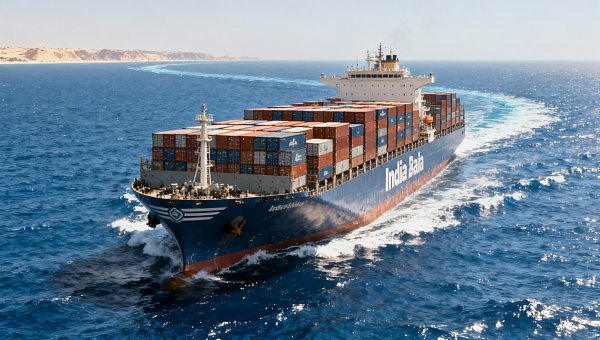
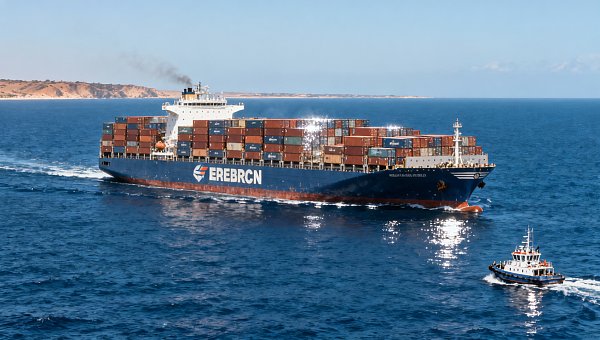
 Red Sea Detour Now Standard: $1,850 TEU Premium on Asia-Europe RoutesRed Sea detour premium now standard: $1,850/TEU surcharge embedded in Asia-Europe freight rates — vital intel for exporters, importers & logistics teams.
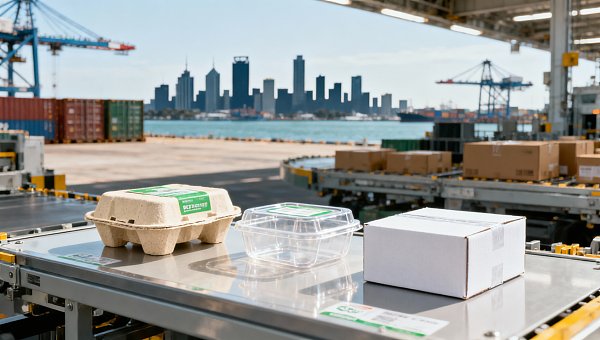
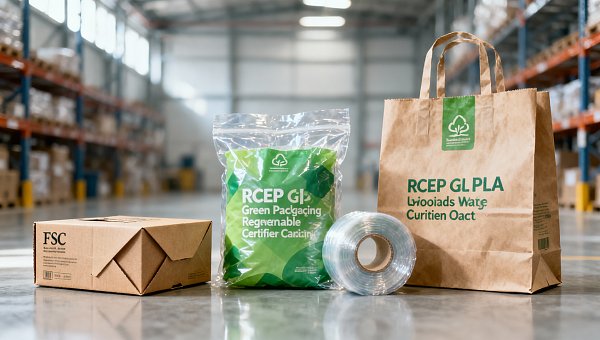
 RCEP Green Packaging Mutual Recognition Takes EffectRCEP Green Packaging Mutual Recognition takes effect Apr 22, 2026—streamline exports to AU, NZ, JP, KR with GB/T 37629–2019 certified molded fiber & PLA packaging.
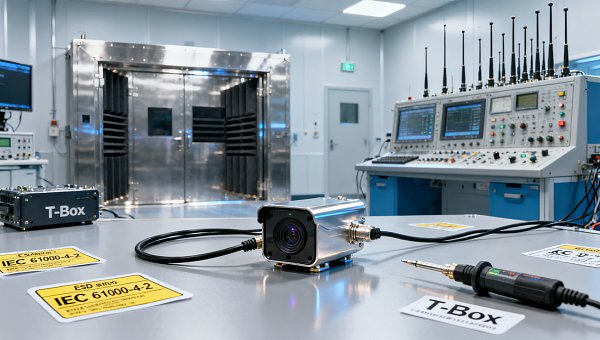
 Mexico NOM-019-SCFI-2026 Effective: EMC Certification Required for Auto Electronics ExportsEMC certification is now mandatory for auto electronics exports to Mexico under NOM-019-SCFI-2026. Ensure compliance for rearview mirrors, radar sensors & T-Box units—avoid shipment delays and order cancellations.
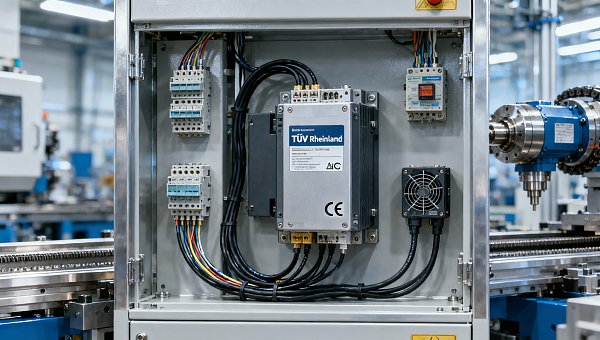
") TÜV Rheinland Updates CE Requirements for Servo Drives (PLd + EMC Joint Validation)TÜV Rheinland now mandates joint PLd + EMC validation for servo drives under CE marking—learn how this impacts certification timelines, lab selection, and EU market access.
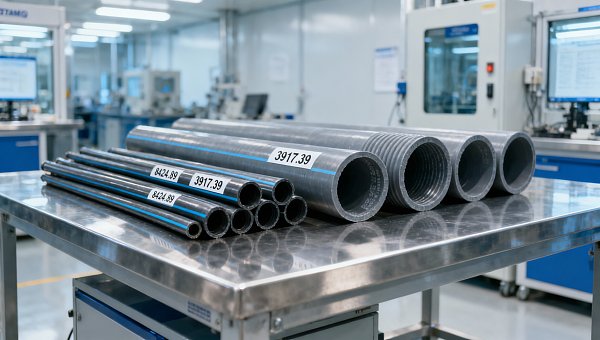
TÜV Rheinland Updates CE Requirements for Servo Drives (PLd + EMC Joint Validation)TÜV Rheinland now mandates joint PLd + EMC validation for servo drives under CE marking—learn how this impacts certification timelines, lab selection, and EU market access. Vietnam Suspends SASO Mutual Recognition for Chinese Irrigation EquipmentVietnam suspends SASO mutual recognition for Chinese irrigation equipment—urgent compliance updates for drip tapes & PE pipes (HS 8424.89/3917.39). Act now to avoid delays.
 FDA Finalizes AI Diagnostic Device Rules for ImportersFDA finalizes AI diagnostic device rules for importers: New bias assessment mandate impacts ultrasound, glucose analyzers & dermatoscopes. Act now to ensure U.S. market access.
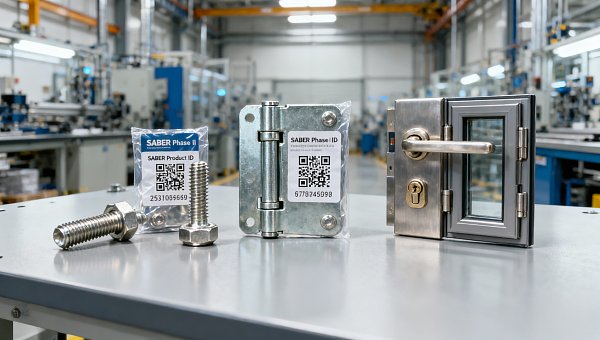
 SABER Phase II Live: Saudi Building Hardware Requires Digital Type Test Reports & PIDSABER Phase II is live: Building hardware exports to Saudi Arabia now require digital type test reports & a mandatory, immutable Product ID (PID). Act now to avoid customs delays!
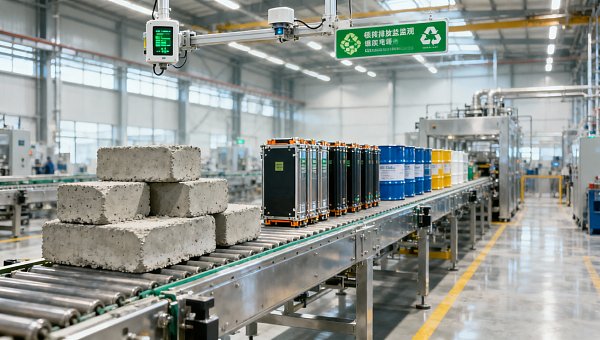
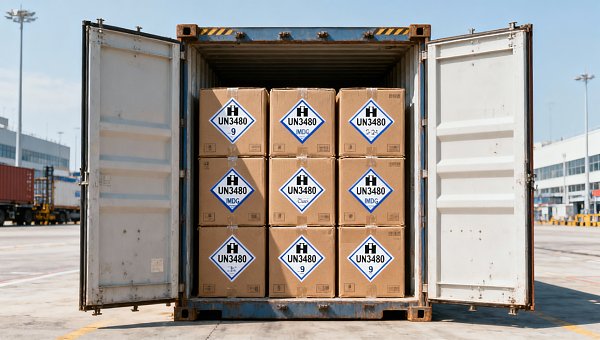
 IMDG Code 41-24 Enforced: UN3480 Lithium Battery Labeling Mandatory from Apr 2026IMDG Code 41-24 enforcement starts Apr 2026: UN3480 lithium battery labeling & ISO 17363 docs are now mandatory—avoid port rejections!
 CBAM Carbon Tax Launch: Low CBAM Reporting Rate Among Chinese ExportersCBAM Carbon Tax is live—only 36.8% of Chinese exporters reported. Discover why, which industries are at risk, and how to secure EU market access now.
 China’s 10 Agencies Issue AI Export Ethics Review RulesChina’s 10 agencies launch AI export ethics rules—mandating bias reviews for visual inspection, warehouse AI & defect detection systems. Stay compliant & competitive.
 RCEP Green Packaging Mutual Recognition Takes EffectRCEP Green Packaging Mutual Recognition is now in effect—unlock faster customs clearance in Australia, NZ, Japan & Korea for GB/T 37659–2019-certified eco-packaging.
 Mexico NOM-019-SCFI-2026 Effective Apr 10, 2026: EMC Certification Required for Automotive ElectronicsNOM-019-SCFI-2026 EMC certification is now mandatory for automotive electronics entering Mexico — act before the July 1, 2026 customs ban.
 Red Sea Rerouting Normalized, EBA at $1,850/TEURed Sea rerouting normalized with EBA fixed at $1,850/TEU—learn how this structural shift impacts Asia-Europe freight costs, lead times & supply chain strategy.
 FDA AI Diagnostic Device Draft Rules: Bias Assessment for ImportsFDA AI diagnostic device draft rules require bias assessment for imports—learn how portable ultrasound, glucose, and dermatoscopic AI devices are affected & what to do next.
") TÜV Rheinland Updates CE Requirements for Servo Drives (PLd + EMC)TÜV Rheinland updates CE requirements for servo drives: PLd (ISO 13849-1) + EMC immunity (IEC 61000-6-2 Ed.4) now mandatory together — act now to avoid EU market delays!
TÜV Rheinland Updates CE Requirements for Servo Drives (PLd + EMC)TÜV Rheinland updates CE requirements for servo drives: PLd (ISO 13849-1) + EMC immunity (IEC 61000-6-2 Ed.4) now mandatory together — act now to avoid EU market delays! SABER Phase II Launch: Building Hardware Must Submit Digital Type Test Reports & Unique Product IDSABER Phase II now mandates digital type test reports & unique product IDs for building hardware—fasteners, scaffolding, door/window components. Ensure compliance to avoid customs rejection & SCOC delays.
 Vietnam Suspends SASO Mutual Recognition for Chinese Irrigation EquipmentVietnam suspends SASO mutual recognition for Chinese irrigation equipment—TCVN testing now mandatory. Act now to avoid 8–12 week delays and customs holdups.
 IMDG Code 41-24 Enforced: UN3480 Lithium Battery Labeling UpdateIMDG Code 41-24 enforcement starts April 2026: UN3480 lithium battery labeling updates are mandatory for global maritime shipments — avoid port delays, detention & penalties.
 EU CBAM Enters Full Enforcement on Jan 1, 2026EU CBAM full enforcement starts Jan 1, 2026 — mandatory quarterly reporting & certificate purchases for batteries, steel, cement, aluminum, fertilizers & chemicals. Act now to ensure EU market access.
 EU CBAM Carbon Tariff Starts Oct 2026 for Chinese Battery, Cement, Chemical ExportsEU CBAM carbon tariff hits Chinese battery, cement & chemical exports from Oct 2026 — mandatory emissions reporting starts now. Avoid €98/t default fees.











Popular Tags
Global Trade Insights & Industry
Our mission is to empower global exporters and importers with data-driven insights that foster strategic growth.
Search News
Popular Tags
Industry Overview
The global commercial kitchen equipment market is projected to reach $112 billion by 2027. Driven by urbanization, the rise of e-commerce food delivery, and strict hygiene regulations.