

What Really Changes 3D Printing Price From One Project to Another
Why does 3D printing price vary so much from one project to another? For buyers, distributors, and sourcing teams on an online trade platform, the answer goes far beyond material alone. From design complexity and production volume to finishing standards and delivery speed, each factor shapes the final quote. This article breaks down the real cost drivers behind 3D printing price and helps decision-makers compare options more confidently in global procurement.
In B2B sourcing, a price gap of 20% to 300% between two seemingly similar 3D printed parts is not unusual. One supplier may quote based on raw print time only, while another includes engineering review, support removal, surface finishing, inspection, and export-safe packaging. For importers, procurement teams, and channel partners, understanding these variables is essential to avoid misleading comparisons.
Unlike standard mass production, additive manufacturing prices are shaped by project-specific inputs. A prototype run of 5 units is priced differently from a repeat batch of 500 units. A cosmetic display component has different requirements from a functional bracket exposed to heat, load, or chemicals. The more accurately buyers define specifications at the start, the more reliable the quotation becomes.
Core Cost Drivers Behind 3D Printing Price
The first major factor in 3D printing price is geometry. Parts with thin walls, hollow sections, internal channels, undercuts, or dense support structures often require more machine time and more post-processing labor. A simple enclosure may print in 3 to 5 hours, while a complex industrial component of similar size may take 12 to 18 hours because of orientation changes and support density.
Material choice is the second key variable. Entry-level polymers are generally lower cost than engineering-grade materials, but price differences also come from print behavior. Some materials print faster and more reliably, while others need tighter temperature control, drying, or slower build speeds. In practical sourcing, the same part printed in a standard resin and an engineering nylon can produce a quote difference of 30% to 120%.
Machine type and process selection also matter. FDM, SLA, SLS, MJF, DMLS, and binder-based processes all use different equipment, throughput, and quality controls. A buyer focused only on unit price may overlook the fact that process choice directly affects tolerance, strength, finish quality, and secondary operations. In many industrial procurement decisions, the wrong process appears cheaper at first but creates higher rework costs later.
Labor is another hidden component. Many quotations include file preparation, build setup, support removal, cleaning, curing, sanding, dyeing, coating, inspection, and packaging. For highly cosmetic or assembly-critical parts, labor may account for 25% to 50% of the total quote. This is why identical CAD dimensions do not always produce identical pricing across suppliers.
How suppliers usually break down a quote
Although quoting formats vary, most 3D printing suppliers evaluate a project through a similar structure. Buyers who request detail at this stage can compare offers more accurately and reduce negotiation friction.
- Material consumption, including waste factor, support material, or powder refresh ratio.
- Machine occupancy, often measured by print time, build volume usage, or batch nesting efficiency.
- Engineering preparation, such as file repair, orientation analysis, and process planning.
- Post-processing work, including support removal, curing, sanding, painting, machining, or assembly.
- Quality assurance and packaging, especially when export labeling, dimensional reports, or protective trays are required.
The table below shows how common cost elements influence 3D printing price in typical B2B projects.
The main takeaway is that 3D printing price is a packaged cost, not just a material rate. For sourcing teams, asking suppliers to separate printing, finishing, and logistics can reveal where the true differences lie and where negotiations are possible without compromising performance.
Volume, Batch Strategy, and the Real Effect of Unit Economics
One of the biggest misconceptions in procurement is assuming that 3D printing price always falls sharply with volume. In reality, additive manufacturing does not follow the same cost curve as injection molding or die casting. Tooling-free production reduces upfront investment, but machine capacity and finishing labor still create a floor under unit cost. This makes 3D printing highly competitive at low to medium volumes, but not always at 10,000-plus units.
For example, a batch of 10 custom enclosures may show little tooling cost and a fast launch advantage, while a batch of 1,000 may benefit from nesting efficiencies and setup absorption. However, if each part still requires hand finishing for 6 to 8 minutes, labor remains significant. Buyers should evaluate total landed cost over the expected order pattern, not just on one RFQ snapshot.
Batch strategy also affects pricing. If suppliers can stack multiple parts in one build or combine jobs from several customers, machine utilization improves. A part that uses only 15% of a build chamber may be relatively expensive as a standalone order, but more economical when nested with companion parts. This is why quote timing and batch windows can influence 3D printing price by a meaningful margin.
Repeat orders often bring savings even when geometry stays the same. Once the file is validated, orientation is fixed, and post-processing steps are standardized, engineering time drops. Buyers placing rolling monthly orders of 50 to 200 units may negotiate lower rates than one-off purchasers because the supplier sees a more predictable production workflow.
When 3D printing is cost-effective by volume
The right answer depends on part function, tolerances, and market timing. The list below gives a practical way for business evaluators to think about volume economics.
- For 1 to 20 units, 3D printing is often strongest for prototypes, validation parts, jigs, fixtures, and urgent replacement components.
- For 20 to 500 units, it can remain competitive for customized products, multi-variant SKUs, bridge production, and low-volume aftermarket demand.
- For 500 to 2,000 units, competitiveness depends on process type, labor intensity, and whether finishing can be standardized.
- Above 2,000 units, conventional manufacturing may become more attractive if the design is stable and tooling can be amortized.
The following comparison helps procurement teams align batch size with sourcing logic.
For distributors and channel partners, the lesson is clear: do not judge 3D printing price without matching it to demand volatility, SKU diversity, and reorder frequency. In fragmented global markets, lower inventory risk can sometimes outweigh a higher per-piece manufacturing cost.
Design Specifications That Increase or Reduce Quotation Risk
Many sourcing disputes start with incomplete specifications. A buyer sends a CAD file and asks for the best 3D printing price, but does not define the use environment, load condition, cosmetic standard, or dimensional criticality. Suppliers then make different assumptions. One quotes a basic utility-grade output, while another includes enhanced finishing and inspection. The resulting price spread reflects different scopes rather than supplier inconsistency.
Tolerance is a major cost lever. A general fit tolerance may be acceptable at ±0.3 mm to ±0.5 mm for many plastic parts, but mating components or assembly interfaces may need tighter control. Achieving closer tolerances can require orientation changes, additional calibration, or secondary machining. Buyers should identify only the critical dimensions rather than demanding tight tolerances across the entire model.
Surface requirements also drive price. A non-visible internal fixture may need no cosmetic treatment, while a retail-facing product mockup may require sanding, painting, vapor smoothing, or coating. Each added finish step increases touch time. Even a seemingly simple color requirement can change lead time by 1 to 3 days if dyeing, curing, or coating schedules are involved.
Packaging and documentation are often overlooked. Export projects may require barcoding, poly-bag segregation, foam inserts, drop-test-friendly cartons, or dimensional inspection reports. For procurement teams managing international distribution, these “last-mile” items can materially affect total 3D printing price, especially on small batches where overhead is spread over fewer units.
Specification checklist before requesting a quote
Providing complete information can shorten the quotation cycle from several back-and-forth emails to 24 to 48 hours in many cases. It also helps avoid costly revisions after production begins.
- State application type: prototype, test fit, functional use, end-use part, or display model.
- Define critical dimensions and acceptable tolerance ranges rather than applying one strict standard everywhere.
- Clarify environmental exposure such as heat, UV, moisture, chemicals, or repetitive load.
- Specify finish level: raw, support-removed, sanded, painted, dyed, sealed, or assembly-ready.
- Add order frequency, target batch size, and desired delivery window, such as 3 days, 7 days, or 2 weeks.
Common quoting mistakes from buyers
Three mistakes are especially common. First, buyers compare quotations without checking whether all suppliers are offering the same process and finish level. Second, they ask for the lowest 3D printing price before confirming whether the part must withstand real operating stress. Third, they ignore orientation-sensitive dimensions, which can affect strength and accuracy in additive manufacturing.
A better approach is to request two or three quote scenarios. For instance, ask for a prototype-grade option, a functional-grade option, and a cosmetic-grade option. This lets commercial teams compare not only price, but also the business value of each specification level.
Lead Time, Finishing, and International Delivery Considerations
Lead time is one of the fastest ways to change 3D printing price. Standard production slots are usually more economical because suppliers can batch work efficiently. Rush orders disrupt scheduling, create overtime pressure, and reduce nesting efficiency. In practical terms, a 7 to 10 day delivery plan may cost notably less than an expedited 48 to 72 hour turnaround for the same part.
Post-processing is equally important. Raw printed parts often need support removal, bead blasting, UV curing, thermal treatment, infiltration, sanding, painting, or machining. Some of these steps are essential for function, while others are purely aesthetic. Buyers should separate “must-have” finishing from “nice-to-have” finishing when reviewing a quotation. This distinction can lower unnecessary spend without compromising end use.
International buyers also need to account for logistics. Air shipment is faster but raises landed cost, especially for bulky but lightweight polymer parts. Sea freight lowers freight cost but extends the project timeline by 2 to 5 weeks depending on lane and customs handling. For replacement parts or urgent product validation, the manufacturing quote is only one part of the total procurement equation.
Documentation requirements can further affect lead time. Some buyers need dimensional inspection reports, material declarations, lot traceability, or individual labeling for distribution networks. While these are reasonable requirements, they should be defined before quotation approval. Adding them after production can cause delays and rework charges.
Typical delivery scenarios in cross-border sourcing
The table below outlines how scheduling and finishing choices influence project planning.
For procurement professionals, the most effective cost control method is to align urgency with commercial value. If a product launch, customer approval, or equipment downtime justifies the premium, faster delivery makes sense. If not, standard queue production usually provides better overall value.
How Buyers, Distributors, and Evaluators Should Compare Supplier Quotes
The best way to compare 3D printing price is to standardize the RFQ package. Send the same CAD file, quantity, material target, tolerance notes, finish expectation, inspection need, and Incoterm request to each supplier. Without that consistency, a low quote may simply reflect a lower scope. In global trade, price transparency starts with specification discipline.
Commercial teams should also evaluate non-price criteria. A supplier with slightly higher pricing may offer more stable lead time, stronger communication, better export packaging, or faster engineering feedback. For a distributor managing repeated overseas orders, these factors often reduce total operational risk even if the piece price is not the lowest in the shortlist.
A practical sourcing review should include at least 4 dimensions: technical fit, commercial competitiveness, delivery reliability, and documentation quality. If one supplier scores well in only one area, the apparent saving may disappear later through delays, rejects, or customer complaints. Decision-makers should assess the total procurement outcome rather than treating 3D printing price as an isolated number.
It is also useful to request sample photos, process suggestions, and a short manufacturability review. In many cases, a supplier can recommend wall thickness changes, part splitting, orientation adjustments, or support reduction strategies that lower cost by 10% to 25% without affecting function. That type of feedback is commercially valuable in B2B sourcing.
A simple quote evaluation framework
The list below can help research teams and purchasing departments evaluate offers with more confidence.
- Check whether the quoted process matches the intended application, not just the target budget.
- Confirm what finishing steps are included and whether inspection reports are standard or optional.
- Review lead time in calendar days, not only production days, especially for export projects.
- Ask if the supplier can support repeat orders, design revisions, and mixed-batch fulfillment.
- Compare logistics terms and packaging scope to avoid hidden downstream costs.
FAQ: common sourcing questions
How much can design optimization reduce 3D printing price? In many projects, modest design changes such as thicker weak sections, reduced support zones, or split assemblies can lower cost by around 10% to 25%. The actual effect depends on process type and finishing requirements.
Is the cheapest quote usually the best option? Not always. A lower quote may exclude finishing, inspection, or export packaging. Buyers should compare scope line by line, especially on orders below 100 units where overhead allocation can vary greatly.
What delivery time is realistic for international procurement? For many standard polymer jobs, 3 to 10 production days is common, with extra transit time depending on air or sea shipment. Cosmetic finishing or documentation-heavy orders may extend production to 10 to 15 days.
When should a buyer shift from 3D printing to conventional manufacturing? Usually when annual volume stabilizes, the design is frozen, and tooling amortization becomes favorable. For some products, that review starts around 1,000 to 2,000 units, but the threshold varies by geometry and quality requirements.
3D printing price changes from project to project because additive manufacturing is deeply tied to design, material, volume, finishing, quality control, and delivery priorities. For buyers, distributors, and business evaluators, the smartest comparison is never based on unit price alone. It should reflect application fit, process suitability, batch strategy, and total procurement risk.
If your team is assessing suppliers, validating costs across regions, or comparing production options for global trade, a structured RFQ and a data-based review process will lead to better decisions. To explore tailored sourcing insights, supplier comparison methods, and broader industrial intelligence for international procurement, contact us today to discuss your project requirements and get a more informed path to the right solution.
Recommended News
 China’s 10-Dept AI Export Ethics Review Rule Takes EffectChina’s new 10-dept AI export ethics rule mandates algorithmic bias review for AI hardware bound for the EU, US, Canada, Japan & SK—key for smart cameras, voice assistants & industrial vision exporters.
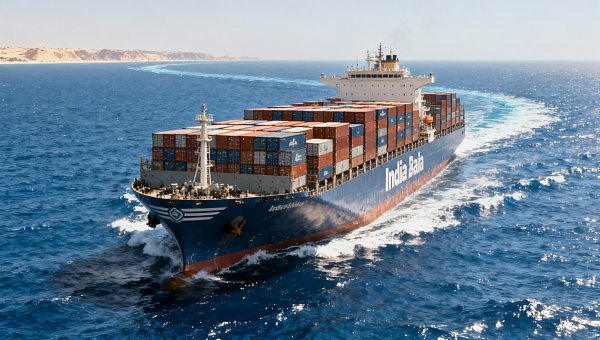
 Red Sea Detour Now Standard: $1,850 TEU Premium on Asia-Europe RoutesRed Sea detour premium now standard: $1,850/TEU surcharge embedded in Asia-Europe freight rates — vital intel for exporters, importers & logistics teams.
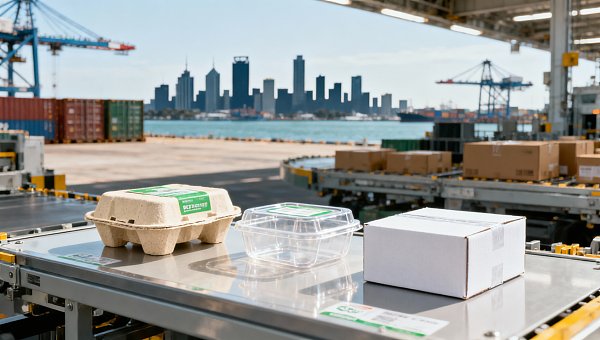
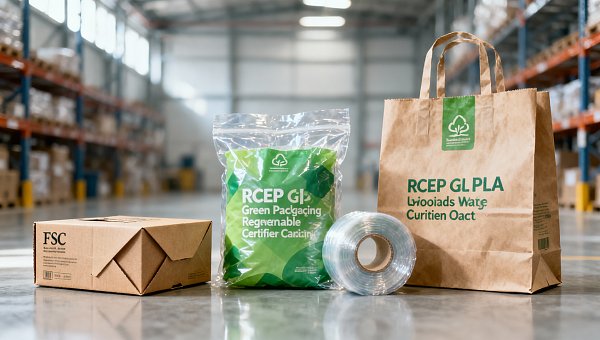
 RCEP Green Packaging Mutual Recognition Takes EffectRCEP Green Packaging Mutual Recognition takes effect Apr 22, 2026—streamline exports to AU, NZ, JP, KR with GB/T 37629–2019 certified molded fiber & PLA packaging.
 Mexico NOM-019-SCFI-2026 Effective: EMC Certification Required for Auto Electronics ExportsEMC certification is now mandatory for auto electronics exports to Mexico under NOM-019-SCFI-2026. Ensure compliance for rearview mirrors, radar sensors & T-Box units—avoid shipment delays and order cancellations.
") TÜV Rheinland Updates CE Requirements for Servo Drives (PLd + EMC Joint Validation)TÜV Rheinland now mandates joint PLd + EMC validation for servo drives under CE marking—learn how this impacts certification timelines, lab selection, and EU market access.
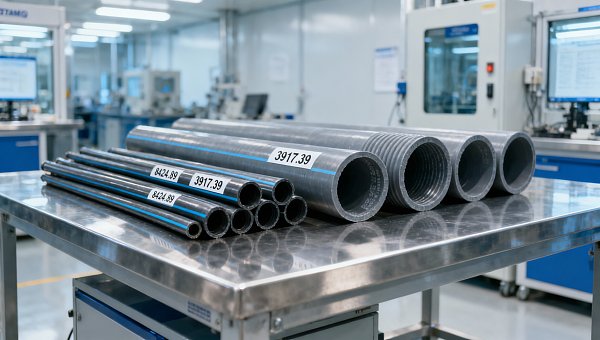
TÜV Rheinland Updates CE Requirements for Servo Drives (PLd + EMC Joint Validation)TÜV Rheinland now mandates joint PLd + EMC validation for servo drives under CE marking—learn how this impacts certification timelines, lab selection, and EU market access. Vietnam Suspends SASO Mutual Recognition for Chinese Irrigation EquipmentVietnam suspends SASO mutual recognition for Chinese irrigation equipment—urgent compliance updates for drip tapes & PE pipes (HS 8424.89/3917.39). Act now to avoid delays.
 FDA Finalizes AI Diagnostic Device Rules for ImportersFDA finalizes AI diagnostic device rules for importers: New bias assessment mandate impacts ultrasound, glucose analyzers & dermatoscopes. Act now to ensure U.S. market access.
 SABER Phase II Live: Saudi Building Hardware Requires Digital Type Test Reports & PIDSABER Phase II is live: Building hardware exports to Saudi Arabia now require digital type test reports & a mandatory, immutable Product ID (PID). Act now to avoid customs delays!
 IMDG Code 41-24 Enforced: UN3480 Lithium Battery Labeling Mandatory from Apr 2026IMDG Code 41-24 enforcement starts Apr 2026: UN3480 lithium battery labeling & ISO 17363 docs are now mandatory—avoid port rejections!
 CBAM Carbon Tax Launch: Low CBAM Reporting Rate Among Chinese ExportersCBAM Carbon Tax is live—only 36.8% of Chinese exporters reported. Discover why, which industries are at risk, and how to secure EU market access now.
 China’s 10 Agencies Issue AI Export Ethics Review RulesChina’s 10 agencies launch AI export ethics rules—mandating bias reviews for visual inspection, warehouse AI & defect detection systems. Stay compliant & competitive.
 RCEP Green Packaging Mutual Recognition Takes EffectRCEP Green Packaging Mutual Recognition is now in effect—unlock faster customs clearance in Australia, NZ, Japan & Korea for GB/T 37659–2019-certified eco-packaging.
 Mexico NOM-019-SCFI-2026 Effective Apr 10, 2026: EMC Certification Required for Automotive ElectronicsNOM-019-SCFI-2026 EMC certification is now mandatory for automotive electronics entering Mexico — act before the July 1, 2026 customs ban.
 Red Sea Rerouting Normalized, EBA at $1,850/TEURed Sea rerouting normalized with EBA fixed at $1,850/TEU—learn how this structural shift impacts Asia-Europe freight costs, lead times & supply chain strategy.
 FDA AI Diagnostic Device Draft Rules: Bias Assessment for ImportsFDA AI diagnostic device draft rules require bias assessment for imports—learn how portable ultrasound, glucose, and dermatoscopic AI devices are affected & what to do next.
") TÜV Rheinland Updates CE Requirements for Servo Drives (PLd + EMC)TÜV Rheinland updates CE requirements for servo drives: PLd (ISO 13849-1) + EMC immunity (IEC 61000-6-2 Ed.4) now mandatory together — act now to avoid EU market delays!
TÜV Rheinland Updates CE Requirements for Servo Drives (PLd + EMC)TÜV Rheinland updates CE requirements for servo drives: PLd (ISO 13849-1) + EMC immunity (IEC 61000-6-2 Ed.4) now mandatory together — act now to avoid EU market delays! SABER Phase II Launch: Building Hardware Must Submit Digital Type Test Reports & Unique Product IDSABER Phase II now mandates digital type test reports & unique product IDs for building hardware—fasteners, scaffolding, door/window components. Ensure compliance to avoid customs rejection & SCOC delays.
 Vietnam Suspends SASO Mutual Recognition for Chinese Irrigation EquipmentVietnam suspends SASO mutual recognition for Chinese irrigation equipment—TCVN testing now mandatory. Act now to avoid 8–12 week delays and customs holdups.
 IMDG Code 41-24 Enforced: UN3480 Lithium Battery Labeling UpdateIMDG Code 41-24 enforcement starts April 2026: UN3480 lithium battery labeling updates are mandatory for global maritime shipments — avoid port delays, detention & penalties.
 EU CBAM Enters Full Enforcement on Jan 1, 2026EU CBAM full enforcement starts Jan 1, 2026 — mandatory quarterly reporting & certificate purchases for batteries, steel, cement, aluminum, fertilizers & chemicals. Act now to ensure EU market access.
 EU CBAM Carbon Tariff Starts Oct 2026 for Chinese Battery, Cement, Chemical ExportsEU CBAM carbon tariff hits Chinese battery, cement & chemical exports from Oct 2026 — mandatory emissions reporting starts now. Avoid €98/t default fees.















Popular Tags
Global Trade Insights & Industry
Our mission is to empower global exporters and importers with data-driven insights that foster strategic growth.
Search News
Popular Tags
Industry Overview
The global commercial kitchen equipment market is projected to reach $112 billion by 2027. Driven by urbanization, the rise of e-commerce food delivery, and strict hygiene regulations.