

Wearable Technology Is Smarter Now, but Is It More Reliable?
Wearable technology has evolved fast, offering smarter health tracking, seamless connectivity, and more personalized experiences than ever before. But as these devices become more advanced, many consumers are asking an important question: can they also be trusted to perform consistently in daily life? This article explores whether innovation in wearable technology is truly matched by reliability, accuracy, and long-term value.
For consumers, that question is no longer theoretical. A smartwatch that misses heart-rate spikes, a fitness band that loses sync after 2 days, or wireless earbuds that degrade after 12 months can quickly turn a premium purchase into frustration. In a market where product cycles often run 6–18 months and new features arrive every season, reliability has become just as important as design, battery life, and app integration.
From a broader market perspective, wearable technology also reflects how global supply chains, component sourcing, software maintenance, and after-sales support shape the consumer experience. For readers tracking market trends through industry intelligence platforms such as GTIIN and TradeVantage, reliability is not just a device issue; it is a signal of manufacturing quality, product maturity, and long-term brand credibility.
How Wearable Technology Became Smarter
Over the last 5–7 years, wearable technology has moved far beyond step counting. Today’s devices can monitor heart rate in near real time, estimate blood oxygen levels, detect sleep stages across 3–4 categories, and support voice assistants, contactless payment, and multi-device pairing. In practical terms, consumers now expect one device to handle wellness tracking, communication alerts, music control, and navigation prompts without noticeable lag.
What “Smarter” Usually Means in Current Devices
Smarter wearable technology generally combines 4 layers: sensors, software, connectivity, and personalization. Sensors capture movement, temperature, heart rhythm, or oxygen data. Software turns raw signals into readable insights. Connectivity links the device to phones, cloud accounts, or smart-home ecosystems. Personalization adapts goals, alerts, and recommendations based on behavior over 7, 30, or 90 days.
- Health metrics with minute-by-minute monitoring
- AI-assisted coaching for exercise, sleep, and recovery
- Bluetooth, Wi-Fi, LTE, or NFC integration
- Companion apps with trend dashboards and habit scoring
Why consumers like the added intelligence
The appeal is obvious: convenience and feedback. Instead of opening 3 separate apps or carrying multiple devices, users can see daily activity, notification flow, and workout performance on a single screen. In many cases, the best wearable technology reduces friction by automating reminders, recording workouts within 1 tap, and surfacing patterns that are difficult to notice manually.
The table below outlines the main categories of wearable technology features and where smart functions add the most visible value for end users.
The key takeaway is that smart features improve usefulness only when they remain stable over time. If a wearable technology product offers 20 functions but 5 of them work inconsistently, consumers will usually judge the entire device by the weakest experience, not the most impressive specification.
Where Reliability Still Falls Short
Reliability in wearable technology can be measured across several dimensions: sensor accuracy, battery consistency, connectivity stability, build durability, and software support. A product does not need clinical-grade precision for every use case, but it does need predictable performance under ordinary conditions such as commuting, sleeping, sweating, charging, and receiving updates over 12–24 months.
Accuracy is often context-dependent
Heart-rate readings may be reasonably accurate during steady walking but less dependable during high-intensity interval training, cold weather, or loose wrist placement. Sleep tracking can provide useful trend direction across several weeks, yet exact stage breakdowns may vary from one night to the next. In other words, wearable technology is often reliable enough for lifestyle guidance, but not always precise enough for medical decisions.
Battery claims do not always reflect daily use
A device advertised for 7 days may deliver only 2–4 days when GPS, always-on display, notifications, and sleep tracking are all active. For wireless wearables, battery aging is another problem. After 300–500 charge cycles, noticeable decline can affect day-long performance, especially in compact devices with limited cell capacity.
Software updates can improve or weaken performance
Many brands release firmware updates every few months. These updates can fix sync bugs, improve algorithm accuracy, or add features. However, they can also introduce app instability, pairing issues, or battery drain. Consumers often discover that the long-term reliability of wearable technology depends as much on post-purchase software maintenance as on the hardware itself.
Most common reliability complaints
- Inconsistent biometric readings during intense motion
- Battery life dropping below 50% of original expectation within 12–18 months
- Bluetooth pairing failures after operating system updates
- Touchscreen or button wear from sweat, dust, or repeated charging
- Water resistance confusion between splash protection and swim-ready use
The following table compares the most frequent reliability concerns consumers should evaluate before buying wearable technology.
This comparison shows that reliability is not one single specification. It is the combined result of hardware engineering, software optimization, quality control, and long-term support. For consumers, the best wearable technology is rarely the one with the longest feature list alone; it is the one that performs predictably across months of real use.
How to Judge Long-Term Value Before You Buy
A practical buying decision should balance 5 factors: intended use, reliability, ecosystem compatibility, service support, and replacement cycle. For example, someone focused on sleep and wellness may prioritize sensor stability and comfort over LTE calling. A runner may care more about GPS lock speed, sweat resistance, and 8–20 hours of active tracking endurance. The right wearable technology depends on daily habits, not just headline features.
Start with your primary use case
Consumers often overspend on advanced tools they use only once or twice a month. A better approach is to define 1 primary function and 2 secondary needs. For instance, primary: fitness tracking. Secondary: message alerts and sleep data. This method helps filter out devices that look impressive on paper but offer little day-to-day value.
Check the support window and accessory ecosystem
A wearable that works well for the first 90 days but receives limited updates afterward may become poor value quickly. Buyers should look for visible evidence of firmware maintenance, app compatibility with recent phone operating systems, and easy access to chargers, straps, or ear tips. Even low-cost accessories can extend usable life by 6–12 months.
A 6-point pre-purchase checklist
- Confirm your main use case: health, fitness, communication, or audio.
- Compare real battery life, not advertised standby time.
- Review water and dust protection in clear terms.
- Check whether the mobile app has stable ratings over recent updates.
- Look for replaceable accessories and available customer support channels.
- Consider the total cost over 18–24 months, including accessories or subscriptions.
The market often rewards visible innovation, but lasting satisfaction comes from fewer surprises after purchase. In that sense, wearable technology should be evaluated like any other connected product: by its ownership experience, not only by launch-day specifications.
What Reliability Means in a Global Consumer Market
Reliability also has an industry-side meaning. The wearable technology market depends on semiconductors, battery cells, sensors, contract manufacturing, logistics, and software teams spread across multiple regions. A delay in one component category can affect not only delivery schedules but also quality consistency, repair speed, and product revision timing. Consumers may not see these supply-chain layers directly, but they experience the outcome in stock availability, warranty response, and product stability.
Why supply-chain visibility matters to buyers
When brands have stronger sourcing discipline and clearer product support planning, consumers benefit from more reliable launches, fewer silent hardware revisions, and better post-sale communication. This is where market intelligence platforms add value. By tracking industrial shifts across 50+ sectors, GTIIN and TradeVantage help readers understand the broader signals behind product quality, manufacturing trends, and global demand changes that can affect wearable technology availability and confidence.
Signals of a more dependable product category
Consumers looking at the market in 2024 and beyond should pay attention to several patterns. First, mature product lines usually offer more stable firmware than first-generation devices. Second, brands with cross-region distribution often maintain better accessory supply and service continuity. Third, devices built around proven features tend to age better than products overloaded with experimental functions added too quickly.
- Generation 2 or 3 products are often safer bets than brand-new categories
- Longer software support improves value retention over 12–24 months
- Clear warranty terms are a stronger trust signal than aggressive launch marketing
- Consistent app performance is often more important than one extra sensor
Wearable technology is undeniably smarter now. The category has made real progress in sensor design, software interpretation, and connected convenience. Yet smarter does not automatically mean more reliable. The best products are those that balance innovation with tested performance, realistic battery endurance, steady software support, and practical ownership costs over time.
For end consumers, the smartest buying strategy is to focus on daily relevance, not just novelty. For businesses and market watchers, reliability remains one of the clearest indicators of product maturity and brand trust. If you want deeper insight into wearable technology trends, sourcing signals, and global industry developments, connect with GTIIN and TradeVantage to explore more intelligence-driven solutions, consult product details, and discover market updates that support better decisions.
Recommended News
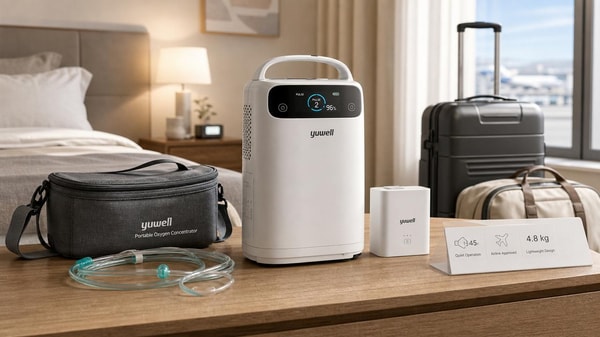
 Portable oxygen concentrators are quieter now, but not always lighterPortable oxygen concentrators are getting quieter, but not always lighter. Explore the trade-offs in weight, battery life, comfort, and daily usability before you compare today’s top options.
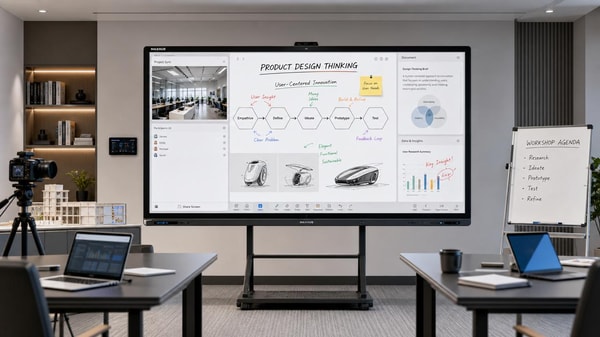
 Interactive whiteboards are improving, but software still decides valueInteractive whiteboards deliver real value when software matches the scenario. Explore how usability, integration, security, and updates shape smarter buying decisions.
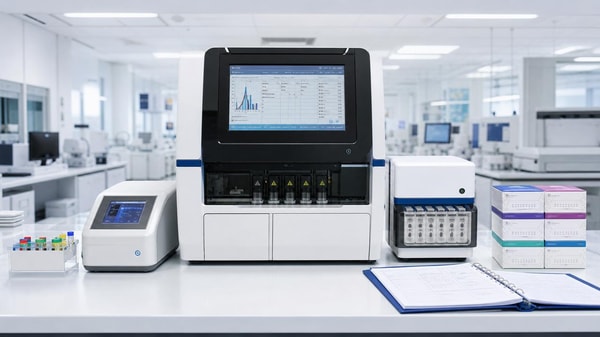
 Medical diagnostic equipment downtime often starts with calibration neglectMedical diagnostic equipment downtime often starts with missed calibration. Learn the warning signs, checklist priorities, and practical steps to prevent failures and keep healthcare operations reliable.
 Eco-friendly building materials are easier to specify than to sourceEco-friendly building materials are easier to specify than source. Learn how procurement teams can verify claims, reduce risk, and find reliable suppliers faster.
 Ergonomic workspace design can fail if chair fit comes lastErgonomic workspace design starts with chair fit. Learn how the right seat improves posture, comfort, and focus—and why fixing it first can transform your workspace.
 Outdoor garden supplies demand shifts faster than many expectOutdoor garden supplies demand is shifting faster than expected. Discover key B2B trends, smarter sourcing insights, and practical strategies to stay competitive and capture growth.
 Sustainable home decor sells better when materials are clearly disclosedSustainable home decor sells better when brands clearly disclose materials, finishes, and sourcing. Discover why transparency builds trust, justifies price, and drives more confident buying.
 Modern office furniture trends now favor modular over fixed layoutsModern office furniture is shifting to modular layouts for flexibility, lower lifecycle costs, and better hybrid work performance. See why enterprises are moving away from fixed office design.
 Smart street lighting projects stall when controls are overcomplicatedSmart street lighting projects often stall when controls become too complex. Learn how to simplify deployment, reduce risk, and scale citywide with practical, maintainable systems.
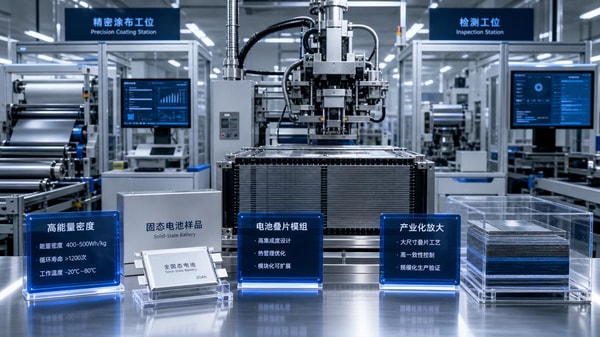
 Solid-state battery breakthroughs look promising, but scale is harderSolid-state battery breakthroughs promise safer, higher-density energy storage, but scaling remains the real challenge. Explore what this means for supply chains, investment, and market advantage.
 Commercial LED lighting upgrades often save less than expectedCommercial LED lighting upgrades can underdeliver when baseline data, controls, and installation costs are misjudged. Learn how to assess real savings, reduce ROI risk, and make smarter investment decisions.
 Lithium battery storage payback can change with one policy updateLithium battery storage payback can shift fast after one policy update. See how tariffs, tax credits, grid pricing, and incentives change ROI—and how finance teams can approve smarter.
 Photovoltaic solar panels now compete on output in low lightPhotovoltaic solar panels now compete on low-light output. Discover how buyers can compare yield, risk, and supplier value to source smarter and boost project returns.
 Plant-based protein processing changes texture more than many expectPlant-based protein processing reshapes texture, stability, and safety more than expected. Explore key risks, QC checkpoints, and smarter sourcing insights for consistent results.
 Foldable screen technology is improving, but crease concerns remainFoldable screen technology is evolving fast with slimmer designs and stronger hinges, but crease concerns still shape buying decisions. Explore where it matters most.
 Next-gen wireless charging still faces a heat management problemNext-gen wireless charging promises faster, more flexible power delivery, but heat remains the key barrier. Discover how thermal limits impact safety, efficiency, and market readiness.
 Wearable technology adoption drops when comfort gets overlookedWearable technology adoption falls fast when comfort is ignored. Discover how fit, materials, weight, and battery life shape long-term use and smarter buying decisions.
 Smart home devices wholesale is no longer just about low pricingSmart home devices wholesale now goes beyond low pricing. Discover how reliability, compatibility, and supply chain confidence help distributors choose profitable, trusted partners.
 Agri-PV systems make sense only when land use is planned wellAgri-PV systems deliver real value only when land use is planned well. Discover how smart site, crop, grid, and compliance decisions turn dual-use solar into a bankable, sustainable project.
 Organic fertilizers may improve soil slower, but results last longerOrganic fertilizers improve soil slowly but deliver longer-lasting results. Learn how they boost soil health, support safer growing, and help you choose the right option for sustainable planting success.
 Smart classroom solutions fail when teachers need too many appsSmart classroom solutions fail when teachers juggle too many apps. Discover why integrated, easy-to-use platforms drive adoption, ROI, and scalable learning success.












Popular Tags
Global Trade Insights & Industry
Our mission is to empower global exporters and importers with data-driven insights that foster strategic growth.
Search News
Popular Tags
Industry Overview
The global commercial kitchen equipment market is projected to reach $112 billion by 2027. Driven by urbanization, the rise of e-commerce food delivery, and strict hygiene regulations.