

IMDG Code 41-24 Enforces UN3480 Class 9 Labeling for Lithium Battery Sea Freight
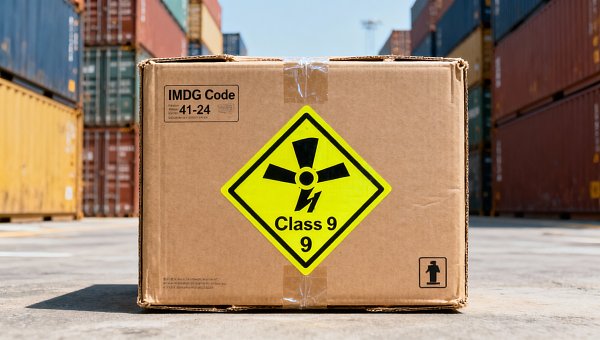
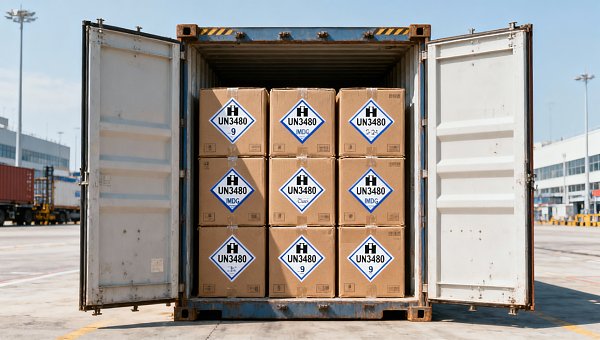
As of April 1, 2026, the International Maritime Organization (IMO)’s updated International Maritime Dangerous Goods Code (IMDG Code 41-24) has entered mandatory force — requiring all lithium-ion battery shipments classified under UN3480 to display the Class 9 hazard diamond label and include full transport-specific nomenclature, UN number, and packaging group in shipping documentation. This change directly impacts lithium battery manufacturers and exporters in China serving markets including North America, Europe, Southeast Asia, and Latin America.
Event Overview
The IMDG Code 41-24 revision became legally enforceable on April 1, 2026. It explicitly mandates that all sea freight consignments containing lithium-ion batteries (UN3480) must bear the standardized Class 9 hazardous materials diamond label. In parallel, freight forwarders including DHL Global Forwarding and Kuehne+Nagel have implemented active rejection policies for shipments lacking compliant labeling and documentation.
Which Subsectors Are Affected
Direct Exporters & Trading Enterprises
These entities are responsible for end-to-end shipment compliance. Without correct labeling and documentation, their cargo will be refused at origin ports or during carrier handover — leading to delays, rework costs, and potential contractual penalties with overseas buyers.
Lithium Battery Manufacturing Firms
Manufacturers must now integrate Class 9 label application into final packaging workflows. Any deviation — such as omission, misplacement, or use of non-standard label dimensions or text — may result in downstream rejection, even if batteries themselves meet technical specifications.
Supply Chain & Logistics Service Providers
Cargo consolidators, warehousing operators, and customs brokers involved in pre-carriage handling must verify label presence and accuracy before releasing shipments to carriers. Their operational checklists and staff training protocols now require explicit Class 9 verification steps.
Importers & Distributors Receiving Consignments
While not directly responsible for labeling, importers face increased risk of delayed clearance or port detention if upstream partners fail to comply. They may also need to adjust receiving protocols to screen for label compliance upon arrival — especially where local authorities conduct spot checks.
What Relevant Enterprises or Practitioners Should Focus On — And How to Respond
Verify label specifications against IMDG Code 41-24 Annex 5 requirements
Class 9 labels must conform to exact size, color contrast, symbol placement, and font height standards defined in the Code’s latest annexes. Current practice shows many pre-2026 templates no longer qualify — so enterprises should audit existing label designs and update printing assets accordingly.
Confirm documentation alignment across all touchpoints
The transport name “Lithium ion batteries” (not “Li-ion cells” or “rechargeable batteries”), UN3480, and correct packaging group (II or III, depending on configuration) must appear identically on the dangerous goods declaration, bill of lading, packing list, and container placards. Discrepancies — even minor ones — trigger automatic rejection by major forwarders.
Engage forwarders early to confirm internal SOP updates
Since enforcement is carrier-driven, enterprises should request written confirmation from their primary forwarders on how they define compliance — including acceptable label suppliers, digital verification methods, and grace period policies (if any). Relying solely on historical practice is no longer sufficient.
Review contract terms with overseas buyers regarding compliance liability
Where delivery timelines or Incoterms (e.g., FCA, CIF) assign labeling responsibility to the seller, failure to meet IMDG 41-24 may constitute a breach. Enterprises should assess whether existing commercial agreements address regulatory updates of this nature — and consider addenda where needed.
Editorial Perspective / Industry Observation
From industry perspective, this is not merely an administrative update but a hardening of enforcement discipline across global maritime logistics channels. Analysis来看, the coordinated rejection stance taken by tier-one forwarders signals that compliance is now treated as binary — either fully met or fully non-compliant — with little room for interpretation or remediation mid-transit. Observation来看, it reflects growing alignment between IMO standards and private-sector risk management frameworks, particularly around lithium battery safety perception. Current more appropriate understanding is that IMDG Code 41-24 enforcement marks the transition from guidance-based to operationally binding regulation — one that prioritizes uniformity over flexibility.
It is therefore less a signal of future intent and more an already operational reality: effective April 1, 2026, UN3480 sea shipments without Class 9 labeling are functionally undeliverable via mainstream ocean carriers and forwarders.
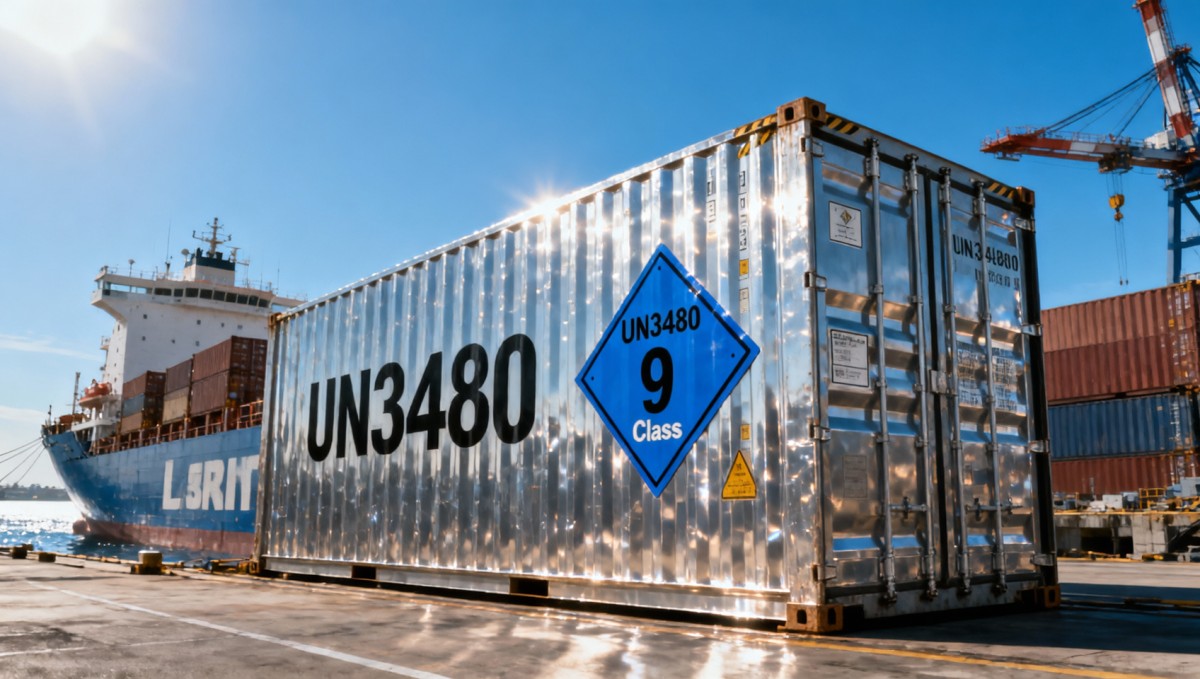
Concluding, this regulatory shift underscores how technical compliance — once managed at the periphery of export operations — has become central to supply chain continuity for lithium battery stakeholders. The practical implication is clear: labeling is no longer a paperwork footnote but a prerequisite gate for market access. A neutral reading suggests this is not a temporary adjustment but the baseline standard for foreseeable trade cycles — making proactive alignment essential rather than optional.
Source Information:
• International Maritime Organization (IMO), IMDG Code 41-24, effective April 1, 2026
• Public announcements from DHL Global Forwarding and Kuehne+Nagel on UN3480 shipment acceptance criteria (Q1 2026)
Note: Ongoing monitoring is recommended for national maritime authority implementation notices — e.g., U.S. Coast Guard, UK MCA, or China MSA — which may issue supplementary guidance post-April 2026.
Recommended News
 China’s 10-Dept AI Export Ethics Review Rule Takes EffectChina’s new 10-dept AI export ethics rule mandates algorithmic bias review for AI hardware bound for the EU, US, Canada, Japan & SK—key for smart cameras, voice assistants & industrial vision exporters.
 Red Sea Detour Now Standard: $1,850 TEU Premium on Asia-Europe RoutesRed Sea detour premium now standard: $1,850/TEU surcharge embedded in Asia-Europe freight rates — vital intel for exporters, importers & logistics teams.
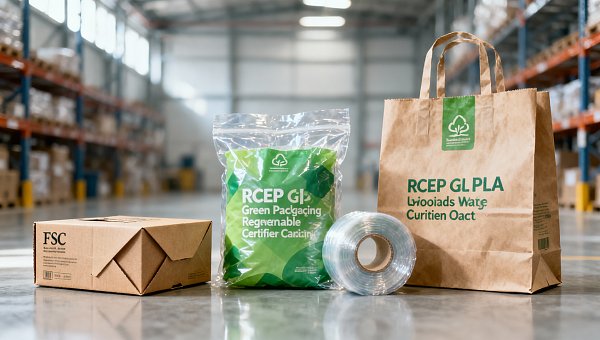
 RCEP Green Packaging Mutual Recognition Takes EffectRCEP Green Packaging Mutual Recognition takes effect Apr 22, 2026—streamline exports to AU, NZ, JP, KR with GB/T 37629–2019 certified molded fiber & PLA packaging.
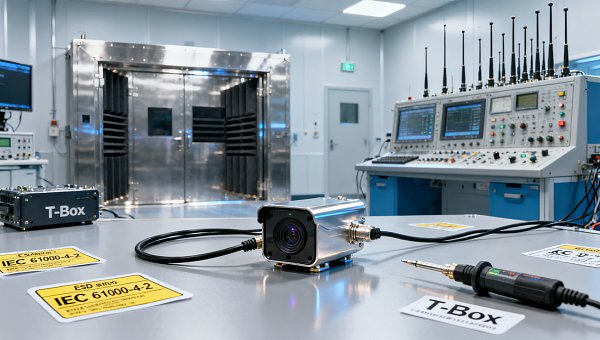
 Mexico NOM-019-SCFI-2026 Effective: EMC Certification Required for Auto Electronics ExportsEMC certification is now mandatory for auto electronics exports to Mexico under NOM-019-SCFI-2026. Ensure compliance for rearview mirrors, radar sensors & T-Box units—avoid shipment delays and order cancellations.
") TÜV Rheinland Updates CE Requirements for Servo Drives (PLd + EMC Joint Validation)TÜV Rheinland now mandates joint PLd + EMC validation for servo drives under CE marking—learn how this impacts certification timelines, lab selection, and EU market access.
TÜV Rheinland Updates CE Requirements for Servo Drives (PLd + EMC Joint Validation)TÜV Rheinland now mandates joint PLd + EMC validation for servo drives under CE marking—learn how this impacts certification timelines, lab selection, and EU market access. Vietnam Suspends SASO Mutual Recognition for Chinese Irrigation EquipmentVietnam suspends SASO mutual recognition for Chinese irrigation equipment—urgent compliance updates for drip tapes & PE pipes (HS 8424.89/3917.39). Act now to avoid delays.
 FDA Finalizes AI Diagnostic Device Rules for ImportersFDA finalizes AI diagnostic device rules for importers: New bias assessment mandate impacts ultrasound, glucose analyzers & dermatoscopes. Act now to ensure U.S. market access.
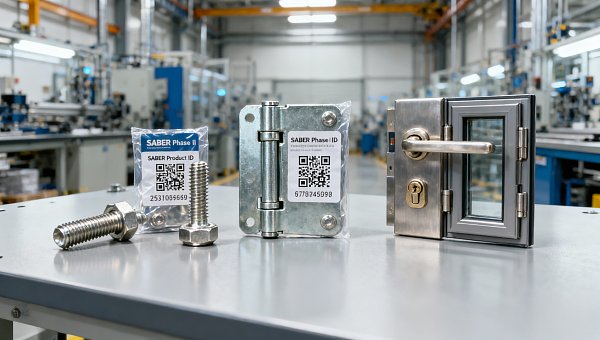
 SABER Phase II Live: Saudi Building Hardware Requires Digital Type Test Reports & PIDSABER Phase II is live: Building hardware exports to Saudi Arabia now require digital type test reports & a mandatory, immutable Product ID (PID). Act now to avoid customs delays!
 IMDG Code 41-24 Enforced: UN3480 Lithium Battery Labeling Mandatory from Apr 2026IMDG Code 41-24 enforcement starts Apr 2026: UN3480 lithium battery labeling & ISO 17363 docs are now mandatory—avoid port rejections!
 CBAM Carbon Tax Launch: Low CBAM Reporting Rate Among Chinese ExportersCBAM Carbon Tax is live—only 36.8% of Chinese exporters reported. Discover why, which industries are at risk, and how to secure EU market access now.
 China’s 10 Agencies Issue AI Export Ethics Review RulesChina’s 10 agencies launch AI export ethics rules—mandating bias reviews for visual inspection, warehouse AI & defect detection systems. Stay compliant & competitive.
 RCEP Green Packaging Mutual Recognition Takes EffectRCEP Green Packaging Mutual Recognition is now in effect—unlock faster customs clearance in Australia, NZ, Japan & Korea for GB/T 37659–2019-certified eco-packaging.
 Mexico NOM-019-SCFI-2026 Effective Apr 10, 2026: EMC Certification Required for Automotive ElectronicsNOM-019-SCFI-2026 EMC certification is now mandatory for automotive electronics entering Mexico — act before the July 1, 2026 customs ban.
 Red Sea Rerouting Normalized, EBA at $1,850/TEURed Sea rerouting normalized with EBA fixed at $1,850/TEU—learn how this structural shift impacts Asia-Europe freight costs, lead times & supply chain strategy.
 FDA AI Diagnostic Device Draft Rules: Bias Assessment for ImportsFDA AI diagnostic device draft rules require bias assessment for imports—learn how portable ultrasound, glucose, and dermatoscopic AI devices are affected & what to do next.
") TÜV Rheinland Updates CE Requirements for Servo Drives (PLd + EMC)TÜV Rheinland updates CE requirements for servo drives: PLd (ISO 13849-1) + EMC immunity (IEC 61000-6-2 Ed.4) now mandatory together — act now to avoid EU market delays!
TÜV Rheinland Updates CE Requirements for Servo Drives (PLd + EMC)TÜV Rheinland updates CE requirements for servo drives: PLd (ISO 13849-1) + EMC immunity (IEC 61000-6-2 Ed.4) now mandatory together — act now to avoid EU market delays! SABER Phase II Launch: Building Hardware Must Submit Digital Type Test Reports & Unique Product IDSABER Phase II now mandates digital type test reports & unique product IDs for building hardware—fasteners, scaffolding, door/window components. Ensure compliance to avoid customs rejection & SCOC delays.
 Vietnam Suspends SASO Mutual Recognition for Chinese Irrigation EquipmentVietnam suspends SASO mutual recognition for Chinese irrigation equipment—TCVN testing now mandatory. Act now to avoid 8–12 week delays and customs holdups.
 IMDG Code 41-24 Enforced: UN3480 Lithium Battery Labeling UpdateIMDG Code 41-24 enforcement starts April 2026: UN3480 lithium battery labeling updates are mandatory for global maritime shipments — avoid port delays, detention & penalties.
 EU CBAM Enters Full Enforcement on Jan 1, 2026EU CBAM full enforcement starts Jan 1, 2026 — mandatory quarterly reporting & certificate purchases for batteries, steel, cement, aluminum, fertilizers & chemicals. Act now to ensure EU market access.
 EU CBAM Carbon Tariff Starts Oct 2026 for Chinese Battery, Cement, Chemical ExportsEU CBAM carbon tariff hits Chinese battery, cement & chemical exports from Oct 2026 — mandatory emissions reporting starts now. Avoid €98/t default fees.














Popular Tags
Global Trade Insights & Industry
Our mission is to empower global exporters and importers with data-driven insights that foster strategic growth.
Search News
Popular Tags
Industry Overview
The global commercial kitchen equipment market is projected to reach $112 billion by 2027. Driven by urbanization, the rise of e-commerce food delivery, and strict hygiene regulations.