

Smart Street Lighting Looks Efficient, but Maintenance Tells the Full Story
Smart street lighting may promise energy savings and smarter urban control, but for after-sales maintenance teams, real performance is measured in uptime, fault response, and lifecycle cost. Behind every connected lighting network lies a complex maintenance reality involving sensors, controllers, software updates, and field repairs. Understanding this full picture is essential for improving service efficiency, reducing downtime, and delivering long-term value.
Why Maintenance Priorities Change from One Deployment Scenario to Another
For after-sales teams, Smart street lighting is never just a collection of LED poles with a remote control dashboard. It is a field infrastructure system shaped by geography, traffic patterns, public safety demands, network design, and customer service expectations. A downtown district, an industrial park, a highway corridor, and a residential neighborhood may all use similar hardware, yet their maintenance logic is completely different.
This difference matters because service success is not defined by installation completion. It is defined by whether faults can be detected early, whether replacement parts are standardized, whether technicians can reach the site safely, and whether software issues can be separated from electrical failures without wasting time. In practice, the same Smart street lighting platform may be highly efficient in one scenario and operationally costly in another.
For maintenance personnel, the key question is not only “Does the system work?” but “Is this specific deployment maintainable under real service conditions?” That is why scenario-based evaluation is more useful than generic claims about automation or energy savings.
Typical Smart Street Lighting Scenarios and What Maintenance Teams Face
Different operating environments create different failure patterns, spare part needs, and service response standards. The table below helps after-sales teams compare where Smart street lighting becomes easy to support and where hidden complexity often grows.
Scenario 1: Urban Arterial Roads Need Speed More Than Feature Richness
On major city roads, Smart street lighting supports public safety, traffic visibility, and municipal image. Here, maintenance teams are judged on how quickly they restore failed nodes and whether they can prevent a small controller issue from becoming a dark zone affecting many poles. A system with advanced analytics is useful, but not if the platform produces unclear alarms or forces technicians to inspect too many devices manually.
In this scenario, the best-maintained systems usually have three traits: stable communication architecture, clear asset mapping, and replacement parts that technicians can swap quickly at pole side. Fault codes must distinguish between power supply failure, driver failure, controller failure, and network disconnection. If the platform reports all of these simply as “offline,” service teams lose precious time.
For Smart street lighting used on dense urban routes, maintenance leaders should favor standardization over excessive customization. A simpler, more uniform node architecture often lowers total service cost more than a highly customized control strategy.
Scenario 2: Residential Areas Depend on Perceived Quality and Complaint Patterns
In residential neighborhoods, after-sales work is shaped less by traffic engineering and more by resident perception. Even when energy use is low and the network is technically online, people will report problems if brightness is uneven, dimming changes feel abrupt, or motion-triggered lighting reacts too late. Maintenance teams therefore need more than repair skills; they need pattern recognition across repeated complaints.
Smart street lighting in these settings often includes occupancy sensors, adaptive dimming schedules, and grouped control logic. This creates a different kind of maintenance burden: not only hardware failures, but parameter errors. A lamp may be physically healthy while still causing service dissatisfaction due to poor threshold settings, delayed wake-up timing, or overaggressive dimming policies.
A strong support process for residential deployments should include remote tuning capability, version tracking for control logic, and a complaint-to-cause workflow. If maintenance teams can connect customer feedback with sensor calibration records and dimming schedules, they reduce unnecessary site visits and improve long-term service stability.
Scenario 3: Industrial Parks Require Rugged Service Planning
Industrial parks present a very different maintenance picture for Smart street lighting. The environment may include dust, vibration, truck movement, heavy equipment, irregular electrical loads, and strict safety rules for access. In these locations, the main risk is not only light failure, but the effect of that failure on operations, logistics, and worker safety during night shifts.
Maintenance personnel should pay close attention to surge protection, sealing performance, connector reliability, and cabinet ventilation. These practical details often matter more than app features. A controller that works perfectly in a clean urban boulevard may degrade faster in an industrial environment if enclosures, cable glands, or protective devices are underspecified.
For this scenario, Smart street lighting should be evaluated as part of site infrastructure, not just lighting equipment. Service teams benefit from maintenance schedules aligned with factory downtime, site access permits, and electrical inspection cycles. Where operations are continuous, preventive replacement of high-risk components can be more cost-effective than waiting for fault alarms.
Scenario 4: Highways Favor Remote Diagnostics and Predictable Field Work
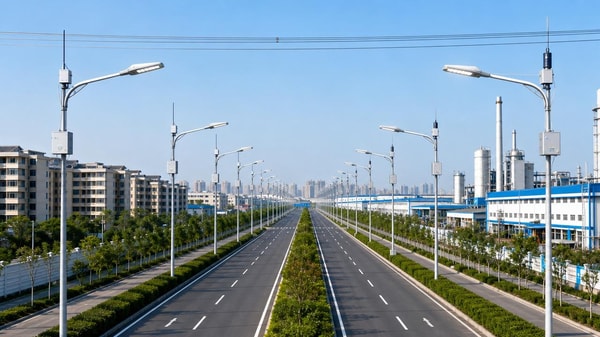
Highway and ring-road deployments expose one of the clearest truths about Smart street lighting: distance multiplies every maintenance mistake. A wrong diagnosis means wasted travel, delayed restoration, and greater exposure for field crews working near traffic. For these projects, remote diagnosis quality is one of the strongest indicators of whether the system is truly supportable.
Maintenance teams need segmented alarm logic, health trend analysis, and reliable communication status histories. They also need to know whether a fault is isolated to a luminaire, a cabinet, a feeder, or a network gateway before dispatching a crew. The more precise the system is, the more efficient route planning becomes.
In long corridor deployments, Smart street lighting should also be assessed for spare inventory strategy. If every section uses a different controller revision or firmware branch, after-sales service becomes fragile. Highway projects are best served by low-variation hardware, strict firmware governance, and maintenance windows that match traffic management constraints.
Scenario 5: Public Spaces Add Mixed Devices and Unpredictable Use Patterns
Parks, plazas, campuses, and waterfronts often combine Smart street lighting with cameras, environmental sensors, Wi-Fi modules, public address systems, or emergency call functions. This creates service value, but it also increases after-sales complexity. A maintenance event may involve power distribution, communications, application software, and physical pole damage at the same time.
These locations also face variable foot traffic, seasonal use, vandalism risk, and landscaping constraints. For maintenance teams, component accessibility matters greatly. If a smart pole includes multiple devices but requires lengthy disassembly for simple replacement, service labor costs rise quickly. Similarly, systems that generate frequent false alarms can overwhelm support teams in environments where usage patterns naturally fluctuate.
In such scenarios, Smart street lighting works best when devices are modular, service documentation is clear, and local staff can handle first-level triage before specialists arrive. Otherwise, the “smart” layer may create more operational friction than value.
How Maintenance Needs Differ by Customer Type and Project Scale
Not all buyers expect the same support model. Municipal clients may focus on public accountability and service-level reporting. Industrial users may care more about operational continuity. Property operators may prioritize low complaint volume and predictable monthly service cost. The maintenance design for Smart street lighting should reflect these business realities from the start.
Common Misjudgments That Make Smart Street Lighting Harder to Maintain
One frequent mistake is assuming that energy savings automatically justify complexity. In reality, Smart street lighting may reduce electricity consumption while increasing maintenance burden if there are too many device variants, unclear firmware control paths, or poor interoperability between subsystems.
Another common error is treating software updates as risk-free. For after-sales teams, each update can affect dimming behavior, communication stability, or sensor logic. Without rollback procedures and version records, a software change can create widespread service confusion that looks like field hardware failure.
A third misjudgment is underestimating physical access. A technically advanced Smart street lighting system is still serviced by real people using vehicles, tools, permits, and time. If access windows are narrow or sites are scattered, every diagnostic inaccuracy becomes expensive.
Practical Fit Criteria Before Supporting a New Deployment
Before accepting or scaling support responsibility for Smart street lighting, after-sales teams should verify several conditions. First, confirm whether the alarm system is meaningful enough to support triage. Second, check whether parts and firmware are standardized. Third, review whether service documentation reflects the actual installed configuration rather than a generic project plan.
It is also important to evaluate communication resilience, local environmental stress, and who owns platform administration rights. Many maintenance delays come not from technical complexity alone, but from unclear responsibilities between installer, platform provider, electrical contractor, and service operator.
When these conditions are clear, Smart street lighting becomes far more manageable. When they are not, even small faults can trigger repeated dispatches, customer dissatisfaction, and avoidable cost escalation over the system lifecycle.
FAQ for After-Sales Teams Working with Smart Street Lighting
Which scenario usually creates the highest maintenance pressure?
Highways and mixed-function public spaces often create the highest pressure because access is difficult, fault isolation must be precise, and multiple subsystems may be involved.
Is Smart street lighting always easier to manage remotely?
No. Remote visibility helps only when alarms are accurate, data is complete, and field assets are clearly mapped. Poor data can increase dispatch confusion rather than reduce it.
What should maintenance teams request before handover?
They should request updated as-built documentation, firmware versions, device lists, spare part specifications, network topology, escalation contacts, and access to historical fault logs.
From Smart Design to Maintainable Operation
The value of Smart street lighting is not proven by sensors, dashboards, or energy reports alone. For after-sales maintenance personnel, the true test is whether the system matches the service reality of its deployment scenario. Urban corridors demand speed, residential zones demand tuning accuracy, industrial parks demand ruggedness, highways demand remote precision, and public spaces demand flexible multi-device support.
If you are evaluating or supporting Smart street lighting, start with your actual field conditions: access difficulty, customer expectations, alarm quality, spare standardization, and lifecycle service cost. That scenario-first approach leads to better maintenance planning, better uptime, and better long-term outcomes than any one-size-fits-all promise. For organizations building stronger trade visibility and industry trust, well-structured insights into maintainability are also what turn technical content into practical decision value.
Recommended News
 Portable oxygen concentrators are quieter now, but not always lighterPortable oxygen concentrators are getting quieter, but not always lighter. Explore the trade-offs in weight, battery life, comfort, and daily usability before you compare today’s top options.
 Interactive whiteboards are improving, but software still decides valueInteractive whiteboards deliver real value when software matches the scenario. Explore how usability, integration, security, and updates shape smarter buying decisions.
 Medical diagnostic equipment downtime often starts with calibration neglectMedical diagnostic equipment downtime often starts with missed calibration. Learn the warning signs, checklist priorities, and practical steps to prevent failures and keep healthcare operations reliable.
 Eco-friendly building materials are easier to specify than to sourceEco-friendly building materials are easier to specify than source. Learn how procurement teams can verify claims, reduce risk, and find reliable suppliers faster.
 Ergonomic workspace design can fail if chair fit comes lastErgonomic workspace design starts with chair fit. Learn how the right seat improves posture, comfort, and focus—and why fixing it first can transform your workspace.
 Outdoor garden supplies demand shifts faster than many expectOutdoor garden supplies demand is shifting faster than expected. Discover key B2B trends, smarter sourcing insights, and practical strategies to stay competitive and capture growth.
 Sustainable home decor sells better when materials are clearly disclosedSustainable home decor sells better when brands clearly disclose materials, finishes, and sourcing. Discover why transparency builds trust, justifies price, and drives more confident buying.
 Modern office furniture trends now favor modular over fixed layoutsModern office furniture is shifting to modular layouts for flexibility, lower lifecycle costs, and better hybrid work performance. See why enterprises are moving away from fixed office design.
 Smart street lighting projects stall when controls are overcomplicatedSmart street lighting projects often stall when controls become too complex. Learn how to simplify deployment, reduce risk, and scale citywide with practical, maintainable systems.
 Solid-state battery breakthroughs look promising, but scale is harderSolid-state battery breakthroughs promise safer, higher-density energy storage, but scaling remains the real challenge. Explore what this means for supply chains, investment, and market advantage.
 Commercial LED lighting upgrades often save less than expectedCommercial LED lighting upgrades can underdeliver when baseline data, controls, and installation costs are misjudged. Learn how to assess real savings, reduce ROI risk, and make smarter investment decisions.
 Lithium battery storage payback can change with one policy updateLithium battery storage payback can shift fast after one policy update. See how tariffs, tax credits, grid pricing, and incentives change ROI—and how finance teams can approve smarter.
 Photovoltaic solar panels now compete on output in low lightPhotovoltaic solar panels now compete on low-light output. Discover how buyers can compare yield, risk, and supplier value to source smarter and boost project returns.
 Plant-based protein processing changes texture more than many expectPlant-based protein processing reshapes texture, stability, and safety more than expected. Explore key risks, QC checkpoints, and smarter sourcing insights for consistent results.
 Foldable screen technology is improving, but crease concerns remainFoldable screen technology is evolving fast with slimmer designs and stronger hinges, but crease concerns still shape buying decisions. Explore where it matters most.
 Next-gen wireless charging still faces a heat management problemNext-gen wireless charging promises faster, more flexible power delivery, but heat remains the key barrier. Discover how thermal limits impact safety, efficiency, and market readiness.
 Wearable technology adoption drops when comfort gets overlookedWearable technology adoption falls fast when comfort is ignored. Discover how fit, materials, weight, and battery life shape long-term use and smarter buying decisions.
 Smart home devices wholesale is no longer just about low pricingSmart home devices wholesale now goes beyond low pricing. Discover how reliability, compatibility, and supply chain confidence help distributors choose profitable, trusted partners.
 Agri-PV systems make sense only when land use is planned wellAgri-PV systems deliver real value only when land use is planned well. Discover how smart site, crop, grid, and compliance decisions turn dual-use solar into a bankable, sustainable project.
 Organic fertilizers may improve soil slower, but results last longerOrganic fertilizers improve soil slowly but deliver longer-lasting results. Learn how they boost soil health, support safer growing, and help you choose the right option for sustainable planting success.
 Smart classroom solutions fail when teachers need too many appsSmart classroom solutions fail when teachers juggle too many apps. Discover why integrated, easy-to-use platforms drive adoption, ROI, and scalable learning success.
















Popular Tags
Global Trade Insights & Industry
Our mission is to empower global exporters and importers with data-driven insights that foster strategic growth.
Search News
Popular Tags
Industry Overview
The global commercial kitchen equipment market is projected to reach $112 billion by 2027. Driven by urbanization, the rise of e-commerce food delivery, and strict hygiene regulations.