

Agri-PV Systems Promise Dual Income, but What Affects Returns Most?
Agri-PV systems are increasingly promoted as a dual-income model, combining crop production with solar power generation. Yet for business evaluators, projected returns depend far less on headline revenue claims than on land productivity, system design, policy incentives, grid access, and long-term operating costs. Understanding which variables drive profitability most is essential for making sound investment comparisons and avoiding overly optimistic assumptions.
For commercial reviewers, lenders, import-export strategists, and project screening teams, the key question is not whether Agri-PV systems can work, but under which conditions they create bankable returns over 10, 15, or 25 years. In cross-border markets, the answer often varies by crop type, module elevation, local electricity pricing, land tenure rules, and the practical cost of operating a dual-use site.
This makes Agri-PV systems a business evaluation exercise rather than a simple technology purchase. A project that looks attractive on a headline IRR basis may underperform once curtailment risk, irrigation conflicts, seasonal labor access, or inverter replacement cycles are included. For B2B decision-makers, disciplined comparison criteria matter more than promotional assumptions.
Why Return Profiles in Agri-PV Systems Vary So Widely
Agri-PV systems combine two productive uses on one site, but the financial balance between them is rarely stable across locations. A 5 MW layout above shade-tolerant vegetables may perform very differently from a 20 MW installation over orchards or grazing land. Even within the same region, a difference of 15% to 25% in solar yield, crop output, or interconnection cost can materially change payback periods.
Business evaluators should begin with one core principle: dual income does not always mean doubled value. In some cases, power revenue becomes the dominant cash source, while agricultural activity mainly preserves land-use eligibility or community acceptance. In other cases, the agricultural component remains central, and the PV design must accept lower energy density to protect crop quality and long-term soil productivity.
The 5 variables that usually shape returns first
- Land productivity before installation and after shading adjustment
- Solar generation per kW under the chosen row spacing and tilt configuration
- Grid access terms, including interconnection lead time of 6 to 24 months
- Policy support such as feed-in tariffs, tax credits, grants, or land-use exemptions
- Operating cost profile over 15 to 25 years, including cleaning, vegetation control, and component replacement
Why headline revenue claims often mislead
Many early-stage proposals focus on top-line income from electricity sales and crop output without clarifying which assumptions are fixed and which are conditional. For example, a model may use a high merchant power price for Year 1 while ignoring price compression after Year 5. It may also assume only a 5% crop penalty under partial shading, even though some field conditions can produce a 10% to 30% variation depending on crop species, irrigation design, and local climate.
This is why Agri-PV systems should be reviewed with sensitivity analysis rather than a single forecast. At minimum, commercial screening should include base, downside, and stressed cases across 3 dimensions: energy price, agricultural yield, and O&M cost escalation.
A practical screening logic for commercial teams
In the first screening round, teams should reject projects that rely on more than 2 aggressive assumptions at the same time. Typical red flags include premium electricity pricing without a long-term contract, crop yield preservation above 95% without local trial evidence, and interconnection timelines below 9 months in congested networks.
Land Productivity and Crop Compatibility Usually Matter More Than Expected
The agricultural side of Agri-PV systems is often underestimated in financial models. Yet if land output falls too sharply, the dual-use premise weakens, and site economics may depend almost entirely on power sales. For business evaluators, the central question is not simply whether crops can survive under PV structures, but whether commercial-grade production can remain reliable across at least 3 to 5 growing cycles.
Crop compatibility depends on shade tolerance, machinery access, row spacing, drainage behavior, and harvest logistics. Leafy greens, forage crops, and certain berries may tolerate modified light conditions better than broad-acre mechanized crops. In contrast, high-clearance machinery, pollination needs, and sensitivity to humidity can create operational friction that is not captured in simplified business plans.
How evaluators should compare agricultural performance
A useful comparison framework is to measure post-installation agricultural performance against the site’s own historical baseline, not against idealized regional averages. If a site delivered stable commercial yield for 4 consecutive years before conversion, that data should be the benchmark. A 12% reduction in crop output may be acceptable if electricity income compensates for it, but a 25% reduction could undermine the dual-income case unless power pricing is unusually strong.
The table below shows a practical way to classify crop and land-use fit when reviewing Agri-PV systems at pre-feasibility stage.
The main takeaway is that agricultural resilience should be treated as a primary return driver, not a secondary benefit. If the farming model becomes impractical after installation, the project may still function as a solar asset, but it no longer justifies the same land-use narrative or policy treatment.
Key due diligence questions on the farming side
- Has the crop or grazing model been tested for at least 2 seasonal cycles under similar shading conditions?
- Can irrigation lines, drainage channels, and maintenance roads operate without major redesign?
- Will labor time per hectare increase by more than 10% to 15% after PV installation?
- Are there crop quality risks such as higher moisture retention, delayed ripening, or disease pressure?
System Design Choices Often Determine Whether the Dual-Income Model Holds
In Agri-PV systems, structural design is not just an engineering question. It directly influences shade distribution, maintenance access, machinery movement, and long-term O&M cost. The difference between a low-clearance dense array and a higher, more open configuration can change both agricultural viability and capital efficiency.
Commercial teams should pay close attention to at least 4 design factors: panel height, row spacing, mounting orientation, and tracking versus fixed-tilt choice. Higher clearance often improves field usability but raises steel, foundation, and installation cost. Wider row spacing protects crops and access lanes, but it reduces installed capacity per hectare. The right balance is rarely the maximum solar density.
Core design trade-offs that affect return
A fixed-tilt layout may be cheaper upfront and easier to maintain, especially where labor costs are moderate and soiling risk is manageable. A tracker system can increase generation by roughly 8% to 20% depending on latitude and weather patterns, but it also adds actuator, control, and maintenance complexity. If crop access is sensitive, the additional moving parts may reduce the overall operational fit.
Likewise, structure height matters beyond crop clearance alone. Raising modules from 2.5 meters to 4.0 meters may preserve machinery access and improve airflow, but it typically increases balance-of-system cost and wind-loading requirements. That means business evaluators should compare value per hectare and value per usable farming hour, not only cost per installed watt.
The comparison below can help procurement and finance teams review common design choices in Agri-PV systems.
The commercial conclusion is clear: design should be judged by system-wide efficiency, not by maximizing one metric. A layout that sacrifices 7% of energy output but preserves 90% to 95% of agricultural usability may outperform a denser design over the full asset life.
A useful threshold for pre-investment review
If a proposed design materially compromises routine field access for more than 20% of the farming calendar, it deserves deeper revision before approval. In many projects, recurring operational friction becomes a larger financial issue than initial CAPEX variance.
Policy Incentives, Grid Access, and Revenue Certainty Can Make or Break the Case
Even well-designed Agri-PV systems may disappoint if policy treatment is uncertain or the grid connection is weak. For commercial evaluators, these external variables often have more influence on return than marginal differences in module efficiency. A project with strong land productivity and solid engineering can still underperform if interconnection delays add 12 to 18 months of idle capital exposure.
Revenue certainty matters as much as revenue size. Long-term contracted pricing, predictable tariff structures, and clearly documented land-use permissions reduce risk and improve financing terms. By contrast, projects that rely heavily on short-term merchant prices or ambiguous agricultural eligibility may look attractive in a presentation but prove difficult in credit review.
External factors to stress-test before approval
- Grid queue timing: estimate realistic lead times in 2 scenarios, not one
- Curtailment exposure: test revenue impact if export is reduced 5%, 10%, and 15%
- Incentive durability: identify whether support applies for 5, 10, or 20 years
- Land-use compliance: confirm whether agricultural activity must meet minimum intensity thresholds
- Power offtake quality: compare merchant sales, corporate PPA, and utility contract stability
Why international business teams should care
For exporters, importers, component suppliers, and cross-border project advisors, Agri-PV systems create opportunity only when local rules align with technical reality. Some markets reward dual-use land with faster permitting or agricultural preservation benefits. Others apply the same grid and zoning constraints as conventional ground-mounted solar. That difference directly affects procurement timing, financing appetite, and the viability of long-lead imports such as structures, inverters, and monitoring equipment.
Commercial warning signs
If a project forecast assumes premium policy treatment without written confirmation, or if interconnection studies are still preliminary while CAPEX ordering is already planned, the return case should be discounted. In practical reviews, uncertainty should be priced in early rather than explained away later.
Long-Term Operating Costs Are Usually Underestimated in Agri-PV Systems
The dual-use nature of Agri-PV systems can increase maintenance complexity compared with standard utility-scale solar. Cleaning schedules must account for dust, crop residue, and irrigation spray. Vegetation management may require a mixed approach involving livestock, mowing, or manual work. Inverter replacement, cable inspection, drainage repairs, and access-route upkeep can all become more expensive when the site must remain compatible with agricultural activity.
Many business cases underestimate O&M by treating the site like a conventional solar plant. In reality, dual-use sites may require 2 operating calendars: one for energy equipment and one for farming activity. If these calendars conflict during planting, harvest, or peak irrigation periods, labor costs and downtime risk can rise.
A 6-point O&M review checklist
- Define cleaning frequency by season, not annual average only
- Model inverter service and replacement around Year 10 to Year 15 where relevant
- Estimate access road and drainage maintenance after heavy rain events
- Include additional labor time caused by structure clearance or restricted equipment movement
- Separate routine vegetation control from emergency corrective maintenance
- Review insurance implications for combined agricultural and power operations
How to improve reliability of return forecasts
Commercial reviewers should request at least a 15-year operating model with transparent replacement assumptions and annual escalation logic. It is also good practice to compare O&M under 3 operating modes: solar-led, balanced dual-use, and agriculture-led. This reveals whether the project remains profitable if either side of the business becomes less favorable than expected.
A disciplined model should also include downtime allowances, spare parts strategy, and response times for key failures. If critical maintenance can only be done during narrow agricultural windows, the site may need higher contingency reserves than a standard PV plant.
How Business Evaluators Should Compare Agri-PV Systems Across Suppliers and Markets
When comparing suppliers, EPC concepts, or regional opportunities, the strongest approach is to use a weighted framework rather than a single return estimate. Agri-PV systems should be evaluated across at least 4 dimensions: agricultural retention, energy performance, regulatory certainty, and lifecycle cost control. This prevents procurement teams from favoring the lowest CAPEX option when long-term operational fit is weak.
A practical screening model may assign 30% weight to land and crop compatibility, 30% to power revenue and grid certainty, 20% to structural and O&M robustness, and 20% to policy and legal clarity. The exact weighting will differ by market, but the principle is stable: project quality is multidimensional.
Questions to ask before supplier shortlisting
- Can the supplier show how structure geometry supports actual agricultural operations, not just theoretical shading maps?
- Are replacement cycles, spare parts, and maintenance access assumptions documented over 10 to 25 years?
- Has the power export route been verified against realistic queue and curtailment conditions?
- Does the business case include downside scenarios for both crop and electricity performance?
- Are local permitting and land-use conditions reflected in the design from the start?
Common evaluation mistakes
Three mistakes appear frequently. First, teams compare Agri-PV systems only on energy yield and ignore the operational cost of preserving farming activity. Second, they assume all agricultural output retained under partial shade is economically equivalent, even when crop quality, timing, or labor intensity changes. Third, they overlook the effect of grid timing and policy documentation on financing confidence.
For global B2B stakeholders using market intelligence platforms and trade analysis tools, these mistakes are avoidable. Better upstream evaluation improves supplier conversations, aligns capital allocation with real project risk, and supports more credible cross-border business development.
Agri-PV systems can deliver meaningful dual income, but returns are driven most by fundamentals: usable land productivity, crop compatibility, design logic, grid certainty, policy treatment, and long-term operating discipline. Projects that balance these factors well are more likely to produce durable cash flow than those built on optimistic top-line assumptions alone.
For business evaluators, the best next step is a structured, scenario-based review that tests both agricultural and energy performance across realistic time horizons. If you are assessing suppliers, entering a new market, or comparing dual-use solar opportunities across regions, now is the time to obtain a tailored evaluation framework, review project assumptions, and identify the return drivers that matter most. Contact us to explore more solutions, request customized insight, or discuss your Agri-PV systems assessment in greater detail.
Recommended News
 Portable oxygen concentrators are quieter now, but not always lighterPortable oxygen concentrators are getting quieter, but not always lighter. Explore the trade-offs in weight, battery life, comfort, and daily usability before you compare today’s top options.
 Interactive whiteboards are improving, but software still decides valueInteractive whiteboards deliver real value when software matches the scenario. Explore how usability, integration, security, and updates shape smarter buying decisions.
 Medical diagnostic equipment downtime often starts with calibration neglectMedical diagnostic equipment downtime often starts with missed calibration. Learn the warning signs, checklist priorities, and practical steps to prevent failures and keep healthcare operations reliable.
 Eco-friendly building materials are easier to specify than to sourceEco-friendly building materials are easier to specify than source. Learn how procurement teams can verify claims, reduce risk, and find reliable suppliers faster.
 Ergonomic workspace design can fail if chair fit comes lastErgonomic workspace design starts with chair fit. Learn how the right seat improves posture, comfort, and focus—and why fixing it first can transform your workspace.
 Outdoor garden supplies demand shifts faster than many expectOutdoor garden supplies demand is shifting faster than expected. Discover key B2B trends, smarter sourcing insights, and practical strategies to stay competitive and capture growth.
 Sustainable home decor sells better when materials are clearly disclosedSustainable home decor sells better when brands clearly disclose materials, finishes, and sourcing. Discover why transparency builds trust, justifies price, and drives more confident buying.
 Modern office furniture trends now favor modular over fixed layoutsModern office furniture is shifting to modular layouts for flexibility, lower lifecycle costs, and better hybrid work performance. See why enterprises are moving away from fixed office design.
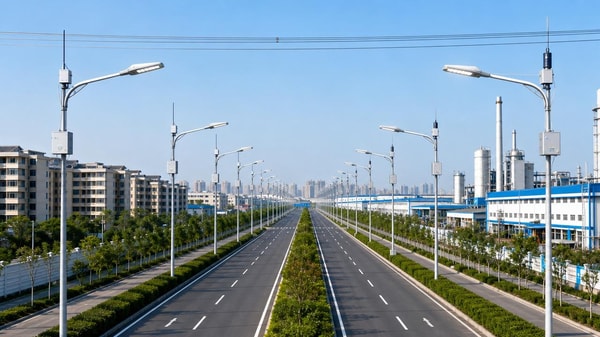
 Smart street lighting projects stall when controls are overcomplicatedSmart street lighting projects often stall when controls become too complex. Learn how to simplify deployment, reduce risk, and scale citywide with practical, maintainable systems.
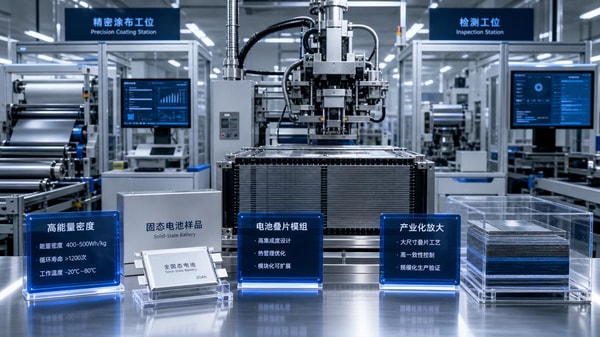
 Solid-state battery breakthroughs look promising, but scale is harderSolid-state battery breakthroughs promise safer, higher-density energy storage, but scaling remains the real challenge. Explore what this means for supply chains, investment, and market advantage.
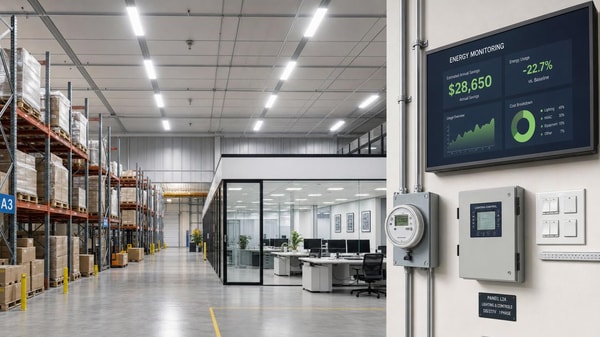
 Commercial LED lighting upgrades often save less than expectedCommercial LED lighting upgrades can underdeliver when baseline data, controls, and installation costs are misjudged. Learn how to assess real savings, reduce ROI risk, and make smarter investment decisions.
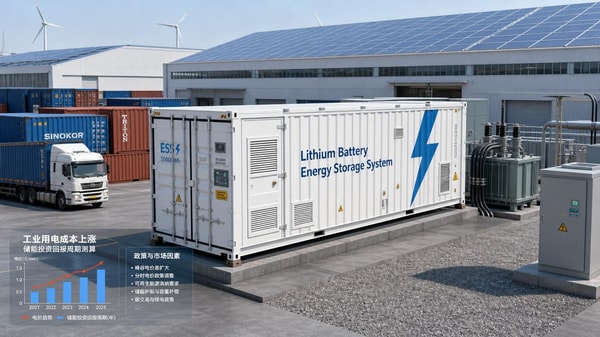
 Lithium battery storage payback can change with one policy updateLithium battery storage payback can shift fast after one policy update. See how tariffs, tax credits, grid pricing, and incentives change ROI—and how finance teams can approve smarter.
 Photovoltaic solar panels now compete on output in low lightPhotovoltaic solar panels now compete on low-light output. Discover how buyers can compare yield, risk, and supplier value to source smarter and boost project returns.
 Plant-based protein processing changes texture more than many expectPlant-based protein processing reshapes texture, stability, and safety more than expected. Explore key risks, QC checkpoints, and smarter sourcing insights for consistent results.
 Foldable screen technology is improving, but crease concerns remainFoldable screen technology is evolving fast with slimmer designs and stronger hinges, but crease concerns still shape buying decisions. Explore where it matters most.
 Next-gen wireless charging still faces a heat management problemNext-gen wireless charging promises faster, more flexible power delivery, but heat remains the key barrier. Discover how thermal limits impact safety, efficiency, and market readiness.
 Wearable technology adoption drops when comfort gets overlookedWearable technology adoption falls fast when comfort is ignored. Discover how fit, materials, weight, and battery life shape long-term use and smarter buying decisions.
 Smart home devices wholesale is no longer just about low pricingSmart home devices wholesale now goes beyond low pricing. Discover how reliability, compatibility, and supply chain confidence help distributors choose profitable, trusted partners.
 Agri-PV systems make sense only when land use is planned wellAgri-PV systems deliver real value only when land use is planned well. Discover how smart site, crop, grid, and compliance decisions turn dual-use solar into a bankable, sustainable project.
 Organic fertilizers may improve soil slower, but results last longerOrganic fertilizers improve soil slowly but deliver longer-lasting results. Learn how they boost soil health, support safer growing, and help you choose the right option for sustainable planting success.
 Smart classroom solutions fail when teachers need too many appsSmart classroom solutions fail when teachers juggle too many apps. Discover why integrated, easy-to-use platforms drive adoption, ROI, and scalable learning success.








Popular Tags
Global Trade Insights & Industry
Our mission is to empower global exporters and importers with data-driven insights that foster strategic growth.
Search News
Popular Tags
Industry Overview
The global commercial kitchen equipment market is projected to reach $112 billion by 2027. Driven by urbanization, the rise of e-commerce food delivery, and strict hygiene regulations.