

Photovoltaic Solar Panels: When Efficiency Claims Need a Closer Look
Photovoltaic solar panels are often marketed with impressive efficiency figures, but procurement teams know that headline claims do not always reflect real-world performance, lifecycle cost, or supply chain reliability. This article takes a closer look at how buyers can assess efficiency data critically, compare suppliers more effectively, and make informed sourcing decisions that balance technical value with long-term commercial returns.
Why a checklist approach matters before comparing Photovoltaic solar panels
For procurement professionals, buying Photovoltaic solar panels is rarely a simple exercise in selecting the highest published efficiency. In practice, the decision affects capital expenditure, installation design, energy yield, warranty exposure, logistics planning, and supplier risk. A checklist-based review helps teams avoid being distracted by a single number and instead evaluate what actually supports commercial performance over the full operating life of the project.
This is especially important in cross-border sourcing, where sales sheets can look similar while underlying manufacturing quality, certification discipline, and after-sales support differ sharply. Procurement teams that apply a structured evaluation method are better positioned to compare bids fairly, identify hidden cost drivers, and negotiate from evidence rather than marketing language.
First checks: what buyers should confirm before trusting efficiency claims
Before comparing suppliers, start with a short list of core verification points. These checks create a baseline and help screen out quotations that look attractive at first glance but do not hold up under technical or commercial review.
- Confirm whether the quoted efficiency refers to module efficiency under Standard Test Conditions (STC), cell efficiency, or a marketing estimate. These are not interchangeable.
- Check the exact wattage, dimensions, and power density. A panel with slightly lower efficiency may still fit the site better depending on layout and balance-of-system constraints.
- Request the full datasheet and independent test references, not just a brochure summary. Key values such as temperature coefficient, bifacial gain assumptions, and mechanical load ratings should be clearly stated.
- Verify certifications and factory audit records. A strong efficiency claim has more value when supported by reliable manufacturing control and recognized compliance standards.
- Review degradation guarantees alongside product warranty terms. High initial efficiency can lose practical value if long-term performance retention is weak.
- Ask how the supplier defines tolerance, sorting, and flash test methodology. Small wording differences can materially change real delivered output.
Core evaluation checklist for Photovoltaic solar panels sourcing
1. Efficiency in context, not in isolation
The first procurement mistake is treating efficiency as the main decision driver in every scenario. For rooftop projects with tight space, higher-efficiency Photovoltaic solar panels may justify a premium because each square meter matters. For ground-mounted projects with more available land, system economics may favor slightly lower-efficiency modules with lower cost per watt. Buyers should therefore evaluate efficiency against project constraints, installation geometry, labor intensity, and expected energy output.
2. Test conditions and real-world yield
Published efficiency typically reflects laboratory conditions. Procurement teams should ask how the module performs under high temperature, low irradiance, dust exposure, humidity, and seasonal variation. A realistic review should include temperature coefficient of power, local climate matching, and any available field-performance references. In many sourcing decisions, actual energy yield over time is more valuable than a narrow advantage in STC efficiency.
3. Bill of materials consistency
Two suppliers may offer Photovoltaic solar panels with similar nameplate ratings but use different glass, encapsulant, backsheets, junction boxes, or frame designs. Procurement should check whether the bill of materials is fixed, whether substitutions are allowed, and how such changes are communicated. Component inconsistency can affect durability, defect rates, and warranty claims.
4. Manufacturing maturity and capacity reliability
Efficiency claims are easier to publish than to reproduce at scale. Buyers should review factory production capacity, line automation level, yield rates, quality-control procedures, and historical shipment consistency. A supplier that can deliver stable output quality over multiple batches often creates more value than one advertising top-tier specifications without dependable execution.
5. Warranty strength and claim practicality
The procurement question is not only what warranty is written, but whether it can be enforced. Review product warranty length, linear power warranty, exclusions, response procedures, local service capability, and financial stability of the issuer. For international projects, practical claim handling is a major part of risk assessment when sourcing Photovoltaic solar panels.
A practical comparison table for procurement teams
Use the following criteria when comparing quotations for Photovoltaic solar panels. This approach keeps discussions focused on decision quality rather than headline marketing.
Scenario-based checks: different projects need different priorities
For rooftop procurement
When roof space is constrained, procurement should prioritize high power density, manageable module weight, reliable fire compliance, and compatibility with racking and inverter design. In this scenario, premium Photovoltaic solar panels can be justified if they reduce the number of modules required, lower installation complexity, or improve energy density per square meter.
For utility-scale or ground-mounted projects
For larger projects, cost per watt, delivery consistency, and bankability often carry more weight than absolute peak efficiency. Buyers should analyze logistics efficiency, container loading ratios, spare module strategy, and long-term performance guarantees. Here, the best Photovoltaic solar panels are not always the ones with the highest quoted efficiency, but those with the strongest total project economics.
For harsh climates or special industrial applications
Sites exposed to salt mist, sand, snow, ammonia, or extreme heat require extra scrutiny. Buyers should request environment-specific test data, frame and glass durability information, and references from similar conditions. A module that performs well in one climate may not maintain value in another, even if its efficiency claim is strong.
Commonly overlooked risks when sourcing Photovoltaic solar panels
- Confusing cell technology branding with measurable project benefit. Terms such as TOPCon, HJT, or bifacial should be reviewed through project-specific yield and cost data.
- Ignoring mismatch between datasheet assumptions and site conditions. This is common when energy models use generic values instead of supplier-specific performance data.
- Underestimating packaging and transport damage risk. Module breakage, microcracks, or poor palletization can erase any efficiency advantage.
- Failing to verify production batch consistency. Pilot samples may not fully represent bulk shipment quality.
- Overlooking document quality. Incomplete traceability, vague warranty language, or inconsistent serial numbering can create downstream disputes.
Execution advice: how to compare suppliers more effectively
A stronger procurement process usually combines technical review, commercial normalization, and supplier due diligence. Start by building a comparison sheet that standardizes all supplier inputs, including module type, wattage, efficiency, warranty structure, certifications, delivery schedule, and payment terms. Then request clarifications where numbers are not directly comparable.
Next, involve engineering or project teams early. Procurement decisions for Photovoltaic solar panels should not be made on price and brochure data alone. Installation layout, inverter matching, expected clipping, and operating environment can materially change the preferred supplier. The more cross-functional the review, the lower the risk of selecting a technically acceptable but commercially suboptimal option.
Finally, treat supplier communication quality as a data point. Fast, precise answers to technical questions often indicate stronger internal control. If a seller cannot explain test conditions, degradation assumptions, or manufacturing change-control procedures clearly, buyers should consider that a warning sign.
What information buyers should prepare before moving forward
To make sourcing more efficient, procurement teams should prepare a clear project brief before requesting final quotes for Photovoltaic solar panels. This brief should include installation type, available area, target capacity, local climate, certification requirements, logistics destination, expected commissioning schedule, and budget framework. With better input data, suppliers can provide more relevant offers and buyers can compare proposals on equal terms.
It is also useful to define acceptable trade-offs in advance. For example, determine whether the project prioritizes lower upfront cost, higher energy density, lower degradation risk, shorter lead time, or easier warranty administration. These priorities help prevent delayed decisions and reduce the chance of choosing a module that looks efficient on paper but does not fit the project’s operational goals.
Final procurement takeaway
The smartest way to evaluate Photovoltaic solar panels is to treat efficiency claims as one input among many, not as a stand-alone purchasing answer. Procurement teams should prioritize verified test conditions, real-world yield expectations, manufacturing consistency, warranty enforceability, and total delivered value. A disciplined checklist approach makes supplier comparison more transparent and supports better long-term returns.
If your business is moving toward supplier selection, technical validation, or cross-border sourcing, the next step is to confirm the parameters that matter most: site constraints, target performance, certification needs, lead time, shipment terms, warranty process, and budget limits. With those questions defined early, buyers can assess Photovoltaic solar panels more confidently and build a sourcing strategy that supports both project performance and commercial resilience.
Recommended News
 Portable oxygen concentrators are quieter now, but not always lighterPortable oxygen concentrators are getting quieter, but not always lighter. Explore the trade-offs in weight, battery life, comfort, and daily usability before you compare today’s top options.
 Interactive whiteboards are improving, but software still decides valueInteractive whiteboards deliver real value when software matches the scenario. Explore how usability, integration, security, and updates shape smarter buying decisions.
 Medical diagnostic equipment downtime often starts with calibration neglectMedical diagnostic equipment downtime often starts with missed calibration. Learn the warning signs, checklist priorities, and practical steps to prevent failures and keep healthcare operations reliable.
 Eco-friendly building materials are easier to specify than to sourceEco-friendly building materials are easier to specify than source. Learn how procurement teams can verify claims, reduce risk, and find reliable suppliers faster.
 Ergonomic workspace design can fail if chair fit comes lastErgonomic workspace design starts with chair fit. Learn how the right seat improves posture, comfort, and focus—and why fixing it first can transform your workspace.
 Outdoor garden supplies demand shifts faster than many expectOutdoor garden supplies demand is shifting faster than expected. Discover key B2B trends, smarter sourcing insights, and practical strategies to stay competitive and capture growth.
 Sustainable home decor sells better when materials are clearly disclosedSustainable home decor sells better when brands clearly disclose materials, finishes, and sourcing. Discover why transparency builds trust, justifies price, and drives more confident buying.
 Modern office furniture trends now favor modular over fixed layoutsModern office furniture is shifting to modular layouts for flexibility, lower lifecycle costs, and better hybrid work performance. See why enterprises are moving away from fixed office design.
 Smart street lighting projects stall when controls are overcomplicatedSmart street lighting projects often stall when controls become too complex. Learn how to simplify deployment, reduce risk, and scale citywide with practical, maintainable systems.
 Solid-state battery breakthroughs look promising, but scale is harderSolid-state battery breakthroughs promise safer, higher-density energy storage, but scaling remains the real challenge. Explore what this means for supply chains, investment, and market advantage.
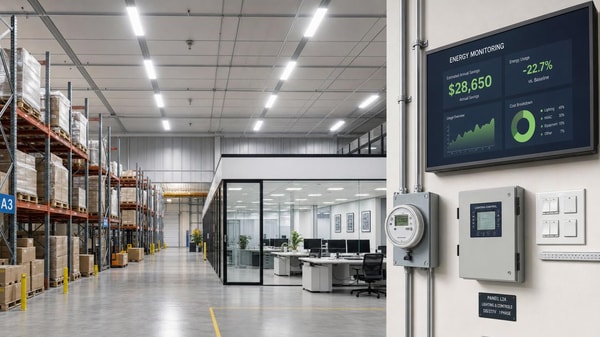
 Commercial LED lighting upgrades often save less than expectedCommercial LED lighting upgrades can underdeliver when baseline data, controls, and installation costs are misjudged. Learn how to assess real savings, reduce ROI risk, and make smarter investment decisions.
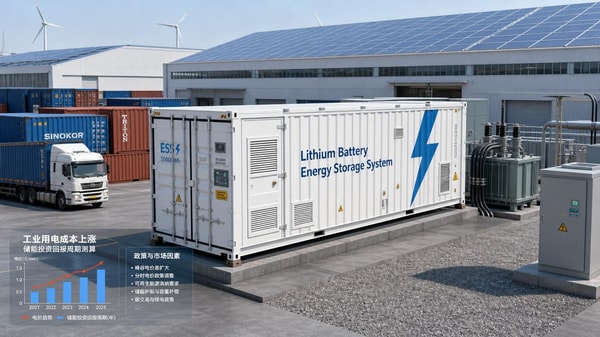
 Lithium battery storage payback can change with one policy updateLithium battery storage payback can shift fast after one policy update. See how tariffs, tax credits, grid pricing, and incentives change ROI—and how finance teams can approve smarter.
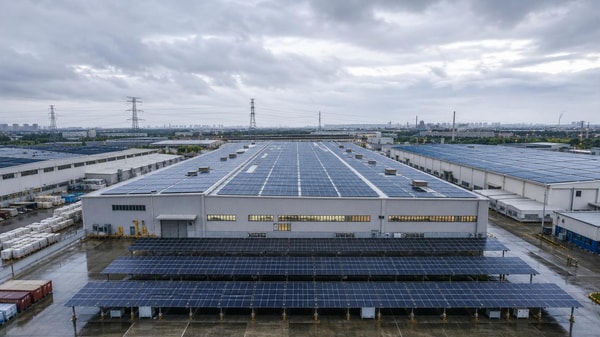
 Photovoltaic solar panels now compete on output in low lightPhotovoltaic solar panels now compete on low-light output. Discover how buyers can compare yield, risk, and supplier value to source smarter and boost project returns.
 Plant-based protein processing changes texture more than many expectPlant-based protein processing reshapes texture, stability, and safety more than expected. Explore key risks, QC checkpoints, and smarter sourcing insights for consistent results.
 Foldable screen technology is improving, but crease concerns remainFoldable screen technology is evolving fast with slimmer designs and stronger hinges, but crease concerns still shape buying decisions. Explore where it matters most.
 Next-gen wireless charging still faces a heat management problemNext-gen wireless charging promises faster, more flexible power delivery, but heat remains the key barrier. Discover how thermal limits impact safety, efficiency, and market readiness.
 Wearable technology adoption drops when comfort gets overlookedWearable technology adoption falls fast when comfort is ignored. Discover how fit, materials, weight, and battery life shape long-term use and smarter buying decisions.
 Smart home devices wholesale is no longer just about low pricingSmart home devices wholesale now goes beyond low pricing. Discover how reliability, compatibility, and supply chain confidence help distributors choose profitable, trusted partners.
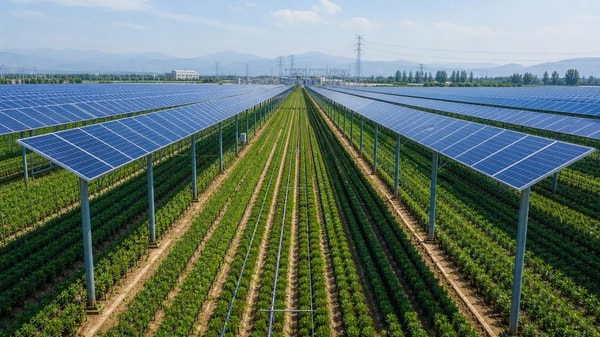
 Agri-PV systems make sense only when land use is planned wellAgri-PV systems deliver real value only when land use is planned well. Discover how smart site, crop, grid, and compliance decisions turn dual-use solar into a bankable, sustainable project.
 Organic fertilizers may improve soil slower, but results last longerOrganic fertilizers improve soil slowly but deliver longer-lasting results. Learn how they boost soil health, support safer growing, and help you choose the right option for sustainable planting success.
 Smart classroom solutions fail when teachers need too many appsSmart classroom solutions fail when teachers juggle too many apps. Discover why integrated, easy-to-use platforms drive adoption, ROI, and scalable learning success.

















Popular Tags
Global Trade Insights & Industry
Our mission is to empower global exporters and importers with data-driven insights that foster strategic growth.
Search News
Popular Tags
Industry Overview
The global commercial kitchen equipment market is projected to reach $112 billion by 2027. Driven by urbanization, the rise of e-commerce food delivery, and strict hygiene regulations.