

How to Spot Greenwashing in Sustainable Fashion Brands?
As demand for sustainable fashion brands grows, so does the risk of greenwashing. For buyers, analysts, and decision-makers using a business intelligence platform or online trade platform, knowing how to verify ethical claims is essential. This guide helps you identify misleading sustainability messaging, assess supplier credibility, and make smarter sourcing and partnership decisions in a fast-changing global market.
Greenwashing in fashion is usually not hard to detect once you know what to check. The biggest warning signs are vague sustainability claims, missing third-party verification, selective disclosure, and marketing that sounds stronger than the actual operational evidence. For procurement teams, distributors, quality managers, and business evaluators, the key is not whether a brand says it is sustainable, but whether it can prove traceability, material integrity, labor compliance, and measurable environmental performance.
What buyers and decision-makers should check first
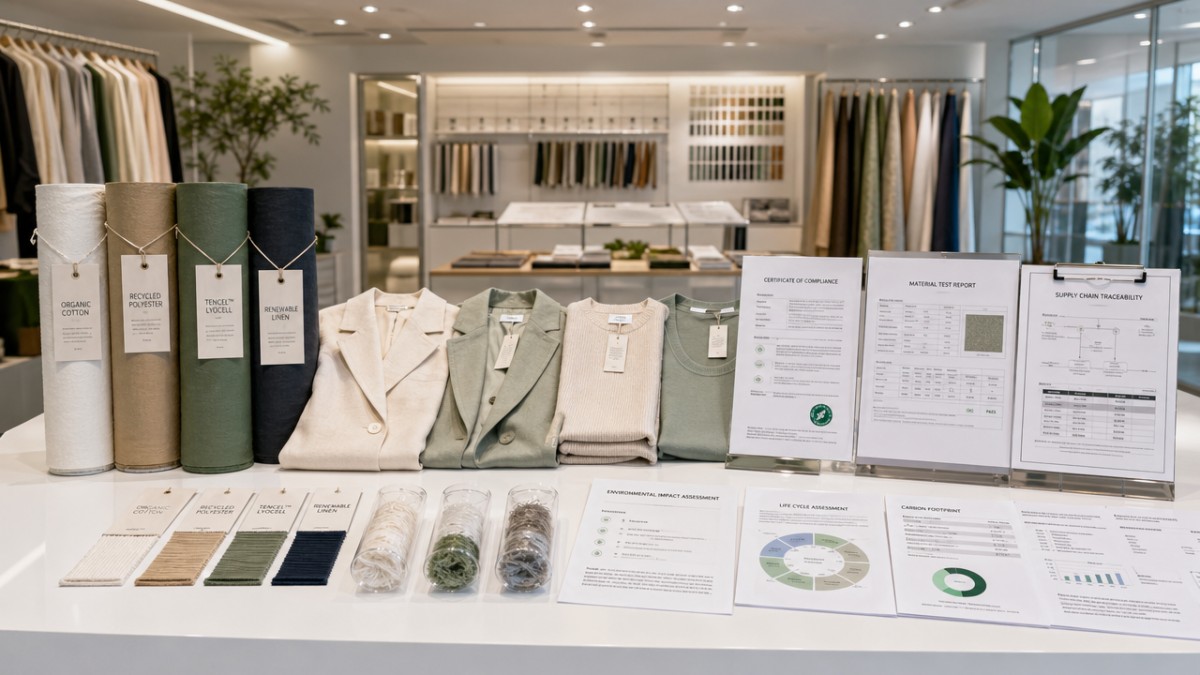
If you need a fast way to evaluate sustainable fashion brands, start with this question: Can the company support its claims with verifiable, current, and supply-chain-level evidence? If the answer is unclear, the risk of greenwashing is high.
For B2B readers, especially sourcing teams and commercial evaluators, the first review should focus on five practical checks:
- Claim clarity: Does the brand define what “sustainable,” “ethical,” “eco-friendly,” or “responsible” actually means?
- Certification scope: Are certifications valid, relevant, and linked to the exact product or facility being promoted?
- Traceability depth: Can the company identify where fibers, fabrics, trims, and finished goods come from?
- Data transparency: Does it publish measurable KPIs such as emissions, water use, waste, or recycled content?
- Supply chain accountability: Does it disclose factories, audit standards, remediation actions, and labor practices?
If a brand invests heavily in storytelling but offers weak documentation, that imbalance is often the first sign of misleading sustainability messaging.
Common greenwashing tactics used by sustainable fashion brands
Many brands do not make completely false claims. Instead, they present partial truths in a way that creates a stronger sustainability impression than the facts justify. That is what makes greenwashing difficult and commercially risky.
Here are the most common tactics:
1. Vague language with no measurable meaning
Terms like “conscious collection,” “planet-friendly,” “green materials,” or “more sustainable” may sound positive, but they are not proof. Without defined criteria, these phrases are marketing tools, not decision-grade information.
2. Highlighting one good feature while hiding the bigger impact
A brand may promote organic cotton in one product line while remaining silent on synthetic blends, overproduction, coal-powered manufacturing, poor dyeing practices, or weak labor oversight. This is selective disclosure.
3. Using irrelevant or weak certifications
Some labels only cover a small part of the product lifecycle. Others verify a material input but not labor conditions, chemical safety, or overall environmental impact. Buyers should never assume one logo validates the entire product.
4. “Recycled” claims without context
Recycled polyester, for example, may reduce virgin input, but it does not automatically make a garment low-impact. Questions remain around microfiber shedding, recyclability at end of life, blend complexity, and the percentage of recycled content actually used.
5. Net-zero or carbon-neutral claims built on offsets alone
If a brand announces carbon neutrality but cannot show real emissions reduction across operations and suppliers, the claim may rely too heavily on offsets. Serious sustainability performance should show reduction before compensation.
6. Sustainability pages that avoid hard numbers
When a company talks at length about mission, values, and purpose but provides few audited metrics, readers should be cautious. Strong sustainability programs usually produce measurable results and regular reporting.
How to verify whether a fashion brand’s sustainability claims are credible
The most useful approach is to treat sustainability like supplier qualification. Do not rely on design, branding, or social media positioning. Verify claims through a structured review.
Check the exact product, not just the company narrative
A brand may have one responsible capsule collection while the majority of its products remain unchanged. Ask whether the claim applies to:
- One SKU
- A product category
- A seasonal campaign
- The entire business model
This distinction matters for sourcing, distribution, and partnership decisions.
Review third-party certifications carefully
Useful certifications can support due diligence, but only when correctly interpreted. Look at:
- Certificate issuer credibility
- Expiration date
- Facility or product scope
- Chain-of-custody coverage
- Whether the certificate applies to the exact supplier in question
A valid document should be traceable and current, not just displayed as a website badge.
Ask for supply chain mapping
Credible sustainable fashion brands should be able to explain who makes the garment and where key processes happen, including:
- Fiber origin
- Spinning and knitting/weaving
- Dyeing and finishing
- Cut-and-sew facility
- Packing and logistics
If the supplier says it is transparent but cannot identify Tier 2 or Tier 3 sources, the sustainability claim may be immature.
Compare claims against reporting quality
Trustworthy brands usually publish sustainability reports, impact updates, supplier codes, or ESG disclosures that include both achievements and unresolved issues. A one-sided narrative with no mention of challenges can signal reputation management rather than operational maturity.
Questions procurement teams should ask before approving a supplier or brand
For sourcing professionals and business evaluators, the best defense against greenwashing is a strong question set. These questions help move the conversation from branding to evidence:
- Which sustainability claims apply to this exact product line?
- What percentage of the collection meets your stated standard?
- Which third-party certifications cover this item and this factory?
- Can you provide chain-of-custody documents for key materials?
- How do you verify recycled, organic, or low-impact material content?
- Do you disclose manufacturing partners and audit frequency?
- What corrective actions have been taken after non-compliance findings?
- How do you measure emissions, water use, chemical controls, and waste reduction?
- Have your sustainability metrics been externally assured?
- What is your policy on overproduction, deadstock, returns, and unsold inventory?
These questions are especially important on any online trade platform where product discovery happens faster than full due diligence. A supplier that answers clearly and consistently is usually lower risk than one that responds with general brand language.
Red flags that matter most in B2B sourcing and distribution
For enterprise users, greenwashing is not only a reputational issue. It can affect compliance, customer trust, resale claims, and even contractual exposure. The following red flags deserve close attention:
- No evidence behind environmental claims
- Frequent use of undefined sustainability terms
- Inconsistent information across website, packaging, and sales documents
- Certificates that do not match product origin or manufacturing site
- Refusal to share supplier, audit, or traceability information
- Heavy focus on packaging improvements while ignoring production impact
- Claims built around a small “green” collection that distracts from a high-volume conventional model
For distributors and agents, these warning signs are especially relevant because downstream customers may rely on your representations. Selling products with weak sustainability substantiation can create brand damage across the channel.
How to distinguish real progress from perfect marketing
Not every imperfect brand is greenwashing. In reality, many companies are still transitioning and may have genuine sustainability efforts that are incomplete. The difference lies in how they communicate.
A credible brand usually does the following:
- Explains what it has improved and what still needs work
- Uses precise language instead of broad moral claims
- Provides year-by-year progress data
- Links goals to operational changes, not only campaigns
- Shows accountability for materials, labor, and environmental controls
By contrast, greenwashing often appears as certainty without evidence, ambition without baselines, and polished storytelling without traceable execution.
Why this matters for trade intelligence, supplier selection, and market positioning
In international trade, sustainability claims increasingly influence buyer shortlists, platform visibility, retail partnerships, and market access. But because sustainability has become a commercial advantage, it also attracts inflated messaging. That is why verification matters.
Using a business intelligence platform to compare supplier disclosures, certifications, production locations, and market behavior can reduce the risk of selecting a partner based on reputation alone. For importers, exporters, and strategic sourcing teams, this is now part of commercial due diligence, not just brand ethics.
Better verification also improves negotiation quality. When buyers understand the difference between meaningful sustainability investment and surface-level claims, they can assess premium pricing more accurately, define clearer contract requirements, and protect long-term supply chain credibility.
Conclusion
To spot greenwashing in sustainable fashion brands, focus on evidence, scope, and consistency. The strongest indicator is not how often a brand uses sustainability language, but whether it can back every major claim with product-level proof, supply-chain transparency, and measurable performance data.
For researchers, procurement teams, quality managers, and business decision-makers, the practical rule is simple: trust verifiable systems, not attractive narratives. In a crowded market, the brands worth working with are usually the ones that make their progress auditable, their limits visible, and their claims specific.
That approach leads to smarter sourcing, lower reputational risk, and more reliable partnerships across the global fashion supply chain.
Recommended News
 MIIT Launches Space-Based Computing & Power-Compute CoordinationMIIT launches space-based computing & power-compute coordination—boosting modular IDC exports, liquid-cooled servers, and solar-powered data centers for arid regions.
 Tangshan Iron Tower Smart Base Processes 600K Tons Steel AnnuallyTangshan Iron Tower Smart Base processes 600K tons steel annually—42× faster angle steel marking, API-enabled traceability for Belt and Road infrastructure projects.
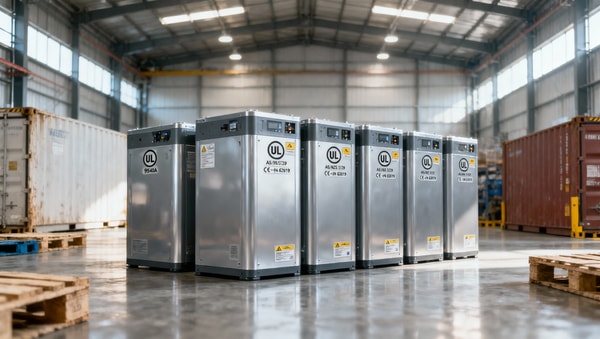
 Q1 2026 Lithium Battery Export Prices Rise 11.3% for ESSQ1 2026 Lithium Battery Export Prices Rise 11.3% for ESS — $128/kWh amid UL 9540A costs, freight normalization & surging demand in Vietnam, Germany, Australia.
 China Launches 'Model-Data Resonance' Initiative for AI+Manufacturing InteroperabilityChina's 'Model-Data Resonance' initiative launches AI+Manufacturing interoperability standard—key for global buyers, OEMs & integrators seeking seamless smart factory integration.
 China's First Embodied AI Robot Export Liability Insurance Launched in GuangxiChina's first Embodied AI Robot Export Liability Insurance launched in Guangxi—covers AI decision errors, data breaches & third-party harm for robotics, medtech & security exporters.
 State Grid’s $680M Embodied AI Equipment Procurement LaunchesState Grid’s $680M embodied AI equipment procurement demands IEC 62443 & GB/T 38925 compliance—unlock global infrastructure bids now.
 RCEP Green Packaging Mutual Recognition Extended to AU, NZ, JP, KRRCEP green packaging mutual recognition now extends to AU, NZ, JP, KR — unlock faster customs clearance & 22% lower inspection costs for GB/T 38727-2020-compliant sustainable food packaging exports from China.
 Tangshan Beijiao Thermal Power Unit 1 A-Check StartsTangshan Beijiao Thermal Power Unit 1 A-Check starts Apr 2026 — urgent demand for domestic industrial valves, high-temp sensors & fire-resistant cables. Act now to secure Q3 2026 supply.
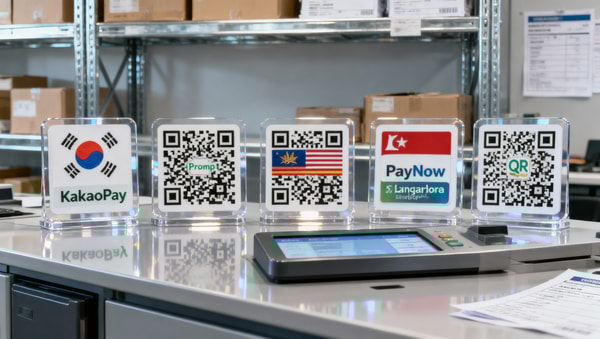
 WeChat Pay Integrates QR Codes from 5 Countries for Cross-Border B2B PaymentsWeChat Pay integrates QR codes from 5 countries for cross-border B2B payments—faster T+0 settlement, 35% lower fees, and seamless USD 50K transactions.
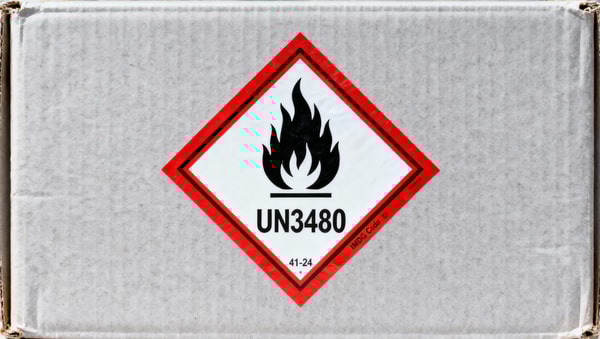
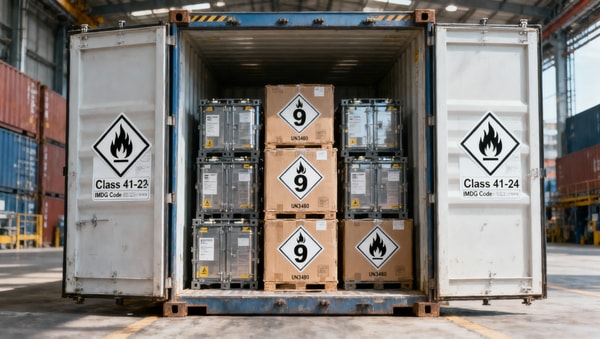
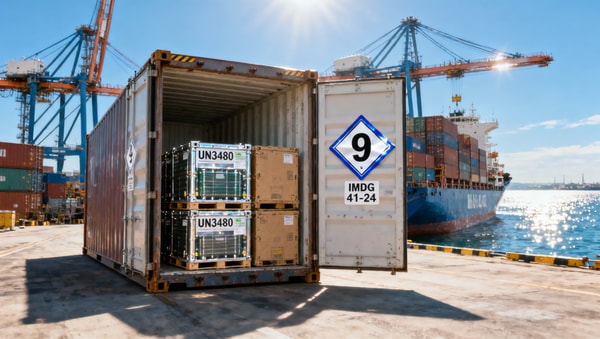
 IMDG Code 41-24 Enforces New UN3480 Labeling for Lithium BatteriesIMDG Code 41-24 mandates new UN3480 labeling for lithium batteries from 29 April 2026 — avoid shipment rejection. Act now to ensure compliance.
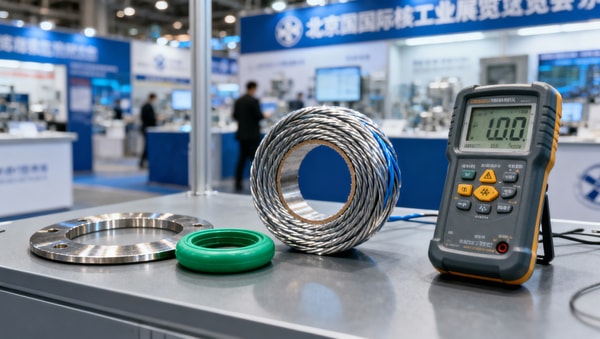
 China-France Nuclear Cooperation Advances at Beijing ExpoChina-France nuclear cooperation advances: mutual recognition for nuclear-grade seals, cables & radiation monitors boosts export readiness for suppliers targeting EU and BRI projects.
 Vietnam’s 4 Provinces Seek AI Tourism Tech in NanningAI tourism tech in demand: Vietnam’s 4 provinces seek AI-guided terminals, multilingual interpretation, AI-CCTV & smart ticketing in Nanning—key opportunity for B2G exporters.
 Q1 2026 China Power Market Trading Up 25.6%: Smart Meters, Storage Export Demand RisesSmart meters, energy storage exports surge as China’s Q1 2026 power market trading jumps 25.6% — key signal for global manufacturers & channel partners.
 China First Country with 5M+ Active Invention PatentsChina first country with 5M+ active invention patents—key for buyers in AI, solar, lithium battery & energy storage. Discover IP implications for sourcing, compliance & supplier vetting.
 Shenneng Etorkeqi Green Ammonia Project: Deionized Water Station OperationalShenneng Etorkeqi Green Ammonia Project’s deionized water station is now operational—ISO 8502-3 compliant, fully integrated, and a key milestone for global green hydrogen developers and exporters.
 China Launches 'Model-Data Resonance' Initiative for AI+Manufacturing InteroperabilityModel-Data Resonance initiative boosts AI+manufacturing interoperability—learn how GB/T XXXX–2026 aligns with VDI 2182 & ISA-95 for smoother global factory deployments.
 China’s First Embodied AI Robot Insurance Launched in GuangxiChina’s first embodied AI robot insurance launched in Guangxi—key for robotics exporters, AI hardware makers & global compliance teams. CE-recognized, EU/UK/AU-ready.
 IMDG Code 41-24 Enforced: UN3480 Lithium Battery Labeling Now MandatoryIMDG Code 41-24 is now mandatory: UN3480 lithium battery labeling, documentation & packaging rules are enforced globally as of 28 April 2026 — avoid port rejections!
 State Grid’s $680M Embodied AI Procurement Signals Export OpportunityEmbodied AI, IEC 61850 & IEC 62443: State Grid’s $680M procurement unlocks export opportunities for compliant industrial robots and smart vision systems in emerging markets.
 IMDG Code 41-24 Enforces UN3480 Class 9 Labeling for Lithium Battery Sea FreightIMDG Code 41-24 mandates UN3480 lithium battery sea freight to display durable Class 9 labels from April 27, 2026—avoid delays & port rejections.
 ESS Key Component Prices Drop ~80%: Quality & Compliance RiseESS key component prices dropped ~80%—but quality & compliance demands surged. Discover how UL 9540A, AS/NZS 5139, and certified BMS/inverters now define market access.















Popular Tags
Global Trade Insights & Industry
Our mission is to empower global exporters and importers with data-driven insights that foster strategic growth.
Search News
Popular Tags
Industry Overview
The global commercial kitchen equipment market is projected to reach $112 billion by 2027. Driven by urbanization, the rise of e-commerce food delivery, and strict hygiene regulations.