

Which car maintenance tools matter most for routine service?
Choosing the right car maintenance tools is essential for faster routine service, lower procurement cost, and better operational efficiency. For buyers, distributors, and market researchers comparing workshop essentials with related products like dash cams with night vision, breathable car seat covers, or even supply chain management solutions, understanding which tools deliver the most value helps support smarter sourcing decisions and long-term business planning.
In the automotive aftermarket, routine service tools are not just workshop accessories; they are productivity assets that influence service speed, technician safety, and customer retention. For B2B buyers, the challenge is rarely whether a tool is needed, but which categories deserve priority when budgets, lead times, and inventory capacity are limited.
This article examines the car maintenance tools that matter most for routine service, how to evaluate them for different business models, and what procurement teams should check before placing orders. The goal is practical decision support for importers, distributors, workshop operators, and commercial evaluators looking for reliable, scalable sourcing choices.
Core Tool Categories That Drive Routine Service Efficiency
Routine vehicle service usually follows a predictable set of tasks: lifting, inspection, fluid change, tire work, fastener removal, electrical checks, and torque-controlled reassembly. In most service bays, 6 core tool categories account for the majority of daily use. These categories should be prioritized before adding niche tools with lower turnover.
The highest-value car maintenance tools are typically floor jacks or lifts, jack stands, socket and wrench sets, torque wrenches, oil drain equipment, tire inflators or pressure gauges, and multimeters or battery testers. These tools support service intervals that recur every 5,000 to 15,000 km, depending on vehicle type, oil specification, and local operating conditions.
For workshops handling passenger cars, light commercial vehicles, and mixed fleets, tool versatility matters. A distributor may find that a 1/4-inch, 3/8-inch, and 1/2-inch socket system covers more than 80% of common fastener work. By contrast, oversized specialty tools may sit idle for weeks, reducing inventory efficiency and slowing return on procurement spend.
Safety also affects tool importance. A low-cost lifting setup that lacks stable load support can expose workshops to downtime and liability. In B2B sourcing, routine service tools should be measured not only by price per unit but by failure risk, service frequency, replacement cycle, and compatibility with common vehicle platforms.
High-priority tools for daily service bays
The table below outlines the tool groups that typically deliver the most immediate operational value in routine service environments.
A clear pattern emerges: the most important car maintenance tools are the ones used across multiple service jobs every day. For procurement teams, broad applicability often matters more than advanced features. A tool used 20 times per week usually delivers more value than a premium specialty tool used twice per month.
Priority checklist for first-round sourcing
- Confirm whether the tool supports passenger cars only or mixed vehicle classes up to 3.5 tons.
- Check replacement part availability, especially seals, heads, sockets, and calibration support.
- Review carton quantity, pallet efficiency, and MOQ to avoid overstocking slow-moving items.
- Match tool grade to usage intensity: light retail, daily workshop service, or fleet maintenance.
How Buyers Should Evaluate Specifications, Durability, and Service Life
Not all car maintenance tools with similar appearance deliver the same operating value. Two torque wrenches may look comparable, yet differ in calibration stability, ratchet mechanism quality, and usable torque range. For B2B buyers, technical screening should focus on service life, tolerance consistency, ergonomic design, and after-sales support rather than headline price alone.
A common mistake is buying by kit size without reviewing actual working specifications. For example, a 108-piece socket set may seem attractive, but if the included drive sizes, steel hardness, and anti-corrosion finish are inconsistent, workshops may still need supplemental purchases within 3 to 6 months. Lower acquisition cost can quickly be offset by breakage, technician frustration, and warranty claims.
For routine service, a practical specification approach is to assess 4 dimensions: load or torque capacity, material durability, measurement accuracy, and maintenance requirements. This method helps procurement teams compare across suppliers while reducing the risk of buying overspecified products that inflate inventory value without improving service output.
It is also useful to align product grade with operating rhythm. A workshop serving 8 to 15 vehicles per bay per day should not use the same procurement logic as a retail store that sells tools mainly for home users. Usage intensity changes the economics of durability, calibration intervals, and spare part stocking.
Specification factors that matter in routine service tools
The table below summarizes common evaluation points for frequently sourced workshop tools.
These ranges are not brand-specific rules, but they provide a realistic procurement baseline. Buyers who standardize around practical ranges can simplify training, reduce returns, and create more consistent replenishment cycles across multiple branches or distributor accounts.
Common durability warning signs
- Loose ratchet engagement or inconsistent click feel in torque tools after limited use.
- Surface corrosion appearing within 30 to 90 days in humid storage conditions.
- Seal leakage on hydraulic tools after low-cycle usage.
- Unreadable markings that slow technician work and increase operation errors.
For distributors and sourcing managers, durability should be judged over a realistic ownership cycle, often 12 to 24 months for high-use tools. This perspective is more useful than comparing ex-works price alone, especially when labor cost and service interruption are factored into total cost of ownership.
Matching Tool Selection to Workshop Type and Business Model
The most important car maintenance tools vary by operating model. A quick-lube center values speed, fluid management, and repeatable torque control. A tire retailer needs strong lifting support, impact-compatible accessories, and accurate inflation devices. A fleet service provider may prioritize ruggedness, multi-vehicle compatibility, and easy replacement logistics across different service locations.
This is why procurement teams should avoid one-size-fits-all tool bundles. Generic kits may look efficient on paper, but they often include low-rotation items while omitting the exact socket sizes, drain capacities, or hose lengths needed in day-to-day service. Tool selection should follow service mix, average vehicle throughput, and technician workflow, not just catalog availability.
In practical terms, workshops can be grouped into at least 3 broad sourcing profiles: general repair shops, fast-turn service outlets, and fleet maintenance operators. Each profile has a different tolerance for downtime, spare tool stock, and product standardization. Buyers that map these differences early usually make stronger purchase decisions and reduce unplanned reorders.
Distributors can also use this segmentation to build more targeted product packages. Instead of selling one universal assortment, they can develop 3 or 4 application-specific bundles with clearer value propositions, better inventory planning, and stronger repeat order potential.
Typical tool priorities by buyer scenario
The following comparison helps commercial teams align tool assortments with customer type and daily service demand.
The commercial takeaway is straightforward: the right mix depends on the service environment. Buyers who align tools to throughput and task frequency usually see better tool utilization, fewer emergency purchases, and more stable reorder patterns across 2 to 4 procurement cycles per year.
Questions procurement teams should ask before ordering
- How many vehicles will each bay service per day, and which jobs are repeated most often?
- Do technicians need one shared tool pool or duplicate tool sets for each workstation?
- Is the business selling to professional users, DIY users, or both?
- What percentage of SKUs should be fast-moving essentials versus specialized add-ons?
Procurement Risks, Cost Control, and Inventory Planning
For importers and commercial buyers, selecting car maintenance tools is only part of the job. The larger challenge is controlling procurement risk. Common issues include mixed quality within one shipment, unclear warranty handling, poor carton labeling, and overbuying slow-moving SKUs. Even a technically acceptable product can become a poor commercial decision if replenishment, claims management, or assortment planning is weak.
Cost control should be based on at least 5 elements: ex-works or landed price, expected tool life, defect exposure, replenishment lead time, and packaging efficiency. A tool that costs 8% more but reduces returns and replacement frequency may be the better choice, especially for distributors serving multiple downstream accounts in different markets.
Inventory planning is equally important. Routine service tools often have predictable demand, but the demand profile differs by region and sales channel. Tire pressure tools may move faster before seasonal travel periods, while oil service tools often follow workshop service campaigns. Procurement teams should use rolling demand windows of 60 to 90 days instead of relying only on annual estimates.
Another overlooked factor is packaging hierarchy. If a product has efficient inner boxes, carton counts, and pallet stacking, distributors can lower warehouse handling time and shipping waste. In B2B operations, packaging structure can influence fulfillment cost almost as much as product price for medium-volume shipments.
Key procurement control points
A disciplined buying process reduces margin erosion and improves supplier evaluation over time.
- Define the must-have tools that support at least 70% of recurring service tasks.
- Separate professional-use SKUs from entry-level SKUs to prevent channel mismatch.
- Request inspection criteria for finish quality, moving parts, load labels, and markings.
- Test sample units under repeated use before committing to large seasonal orders.
- Track return reasons over the first 2 replenishment cycles and refine the assortment.
Frequent sourcing mistakes to avoid
One common mistake is focusing on tool count instead of job coverage. A large set with weak core components can underperform a smaller set built around the 10 to 15 sizes and functions technicians actually use daily. Another error is failing to budget for calibration or accessory replacement, especially with torque tools and pneumatic attachments.
Buyers should also avoid mixing too many quality tiers in one offering unless the target channel is clearly segmented. When one catalog includes low-grade and professional-grade tools without distinction, sales teams face confusion, return rates rise, and brand positioning becomes harder to manage across regions.
Implementation, Maintenance, and Frequently Asked Buyer Questions
Once the right car maintenance tools are sourced, performance depends on implementation. Workshops that standardize storage, inspection, and replacement intervals usually get longer service life and better technician consistency. Even high-quality tools can wear prematurely if calibration schedules, cleaning routines, or load rules are ignored.
A practical rollout plan includes tool assignment, training, routine checks, and replacement thresholds. For example, torque tools may need periodic verification after heavy use, while hydraulic lifting tools should be checked for leakage, wheel condition, and saddle stability at regular intervals. These simple controls reduce service disruption and help buyers protect the value of their procurement spend over 12 months or longer.
For distributors, implementation also means creating better sales support. Product sheets should explain which workshop types each tool fits, what load or torque range is suitable, and when to position a standard model versus a heavy-duty version. Clear application guidance reduces returns and helps buyers make faster decisions.
Recommended maintenance practices for routine service tools
- Inspect high-use hand tools weekly for wear, head rounding, and loose mechanisms.
- Store torque wrenches at the lower end of their setting range after use to protect calibration stability.
- Check hydraulic tools every 30 days for oil leakage, abnormal lowering speed, and wheel damage.
- Replace damaged hoses, cracked grips, or unreadable markings before the next service cycle.
FAQ for buyers and evaluators
How many tool categories should a new workshop prioritize first?
A practical starting point is 5 to 7 categories: lifting equipment, hand tools, torque tools, fluid service tools, tire pressure tools, basic electrical test tools, and storage. This covers the majority of routine maintenance tasks without overinvesting in specialty equipment during the first procurement phase.
What matters more: lower price or longer tool life?
For professional service environments, longer tool life usually creates better value. If a tool sees daily use, even a 10% to 15% increase in purchase price can be justified by lower failure rates, less downtime, and fewer warranty cases. For low-frequency retail sales, however, entry-tier options may still be commercially valid.
Which tools are most often underestimated during sourcing?
Torque wrenches, battery testers, and fluid handling equipment are often underestimated because buyers focus heavily on visible hand tools. Yet these items directly affect rework risk, diagnostic accuracy, and service speed. In many workshops, they contribute disproportionately to service quality despite representing a smaller share of total SKU count.
How often should procurement teams review their tool assortment?
A quarterly review is a strong baseline for fast-moving B2B channels. Teams should compare sales turnover, returns, and customer feedback every 90 days, then adjust the assortment by usage pattern, seasonality, and vehicle mix. This process helps remove stagnant SKUs and strengthen stocking of proven essentials.
The car maintenance tools that matter most for routine service are the ones that combine high usage frequency, strong safety value, broad vehicle compatibility, and predictable replacement demand. For B2B buyers, the winning procurement strategy is not to buy the largest assortment, but to build a disciplined mix around lifting, fastening, torque control, fluid service, tire management, and electrical testing.
For information researchers, sourcing teams, distributors, and business evaluators, a structured view of tool performance supports better purchasing decisions and more resilient aftermarket planning. If you are comparing product categories, supplier opportunities, or market positioning within the automotive service ecosystem, GTIIN and TradeVantage can help you identify practical sourcing signals and broader industry direction. Contact us to explore tailored market insights, supplier exposure opportunities, and more B2B solutions for global trade growth.
Recommended News
 China’s 10-Dept AI Export Ethics Review Rule Takes EffectChina’s new 10-dept AI export ethics rule mandates algorithmic bias review for AI hardware bound for the EU, US, Canada, Japan & SK—key for smart cameras, voice assistants & industrial vision exporters.
 Red Sea Detour Now Standard: $1,850 TEU Premium on Asia-Europe RoutesRed Sea detour premium now standard: $1,850/TEU surcharge embedded in Asia-Europe freight rates — vital intel for exporters, importers & logistics teams.
 RCEP Green Packaging Mutual Recognition Takes EffectRCEP Green Packaging Mutual Recognition takes effect Apr 22, 2026—streamline exports to AU, NZ, JP, KR with GB/T 37629–2019 certified molded fiber & PLA packaging.
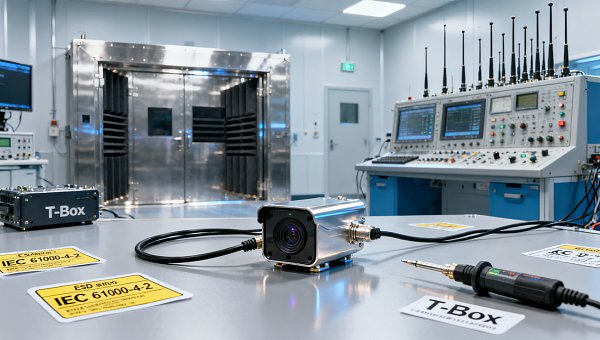
 Mexico NOM-019-SCFI-2026 Effective: EMC Certification Required for Auto Electronics ExportsEMC certification is now mandatory for auto electronics exports to Mexico under NOM-019-SCFI-2026. Ensure compliance for rearview mirrors, radar sensors & T-Box units—avoid shipment delays and order cancellations.
") TÜV Rheinland Updates CE Requirements for Servo Drives (PLd + EMC Joint Validation)TÜV Rheinland now mandates joint PLd + EMC validation for servo drives under CE marking—learn how this impacts certification timelines, lab selection, and EU market access.
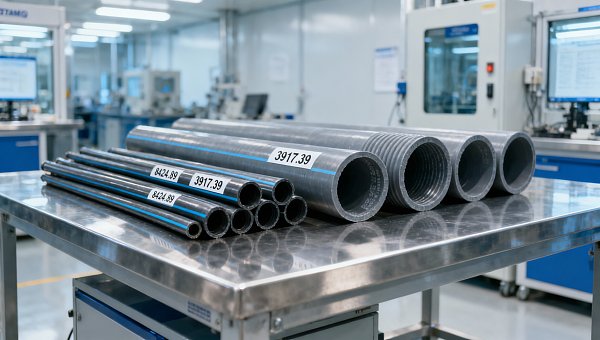
TÜV Rheinland Updates CE Requirements for Servo Drives (PLd + EMC Joint Validation)TÜV Rheinland now mandates joint PLd + EMC validation for servo drives under CE marking—learn how this impacts certification timelines, lab selection, and EU market access. Vietnam Suspends SASO Mutual Recognition for Chinese Irrigation EquipmentVietnam suspends SASO mutual recognition for Chinese irrigation equipment—urgent compliance updates for drip tapes & PE pipes (HS 8424.89/3917.39). Act now to avoid delays.
 FDA Finalizes AI Diagnostic Device Rules for ImportersFDA finalizes AI diagnostic device rules for importers: New bias assessment mandate impacts ultrasound, glucose analyzers & dermatoscopes. Act now to ensure U.S. market access.
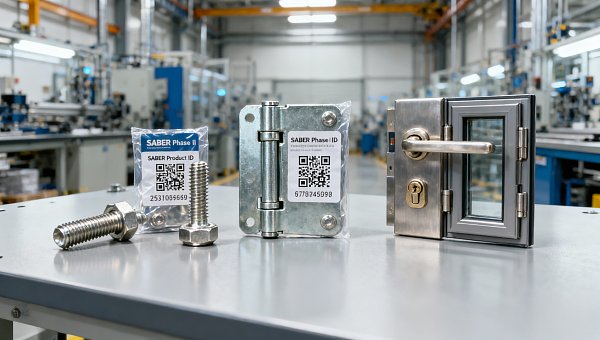
 SABER Phase II Live: Saudi Building Hardware Requires Digital Type Test Reports & PIDSABER Phase II is live: Building hardware exports to Saudi Arabia now require digital type test reports & a mandatory, immutable Product ID (PID). Act now to avoid customs delays!
 IMDG Code 41-24 Enforced: UN3480 Lithium Battery Labeling Mandatory from Apr 2026IMDG Code 41-24 enforcement starts Apr 2026: UN3480 lithium battery labeling & ISO 17363 docs are now mandatory—avoid port rejections!
 CBAM Carbon Tax Launch: Low CBAM Reporting Rate Among Chinese ExportersCBAM Carbon Tax is live—only 36.8% of Chinese exporters reported. Discover why, which industries are at risk, and how to secure EU market access now.
 China’s 10 Agencies Issue AI Export Ethics Review RulesChina’s 10 agencies launch AI export ethics rules—mandating bias reviews for visual inspection, warehouse AI & defect detection systems. Stay compliant & competitive.
 RCEP Green Packaging Mutual Recognition Takes EffectRCEP Green Packaging Mutual Recognition is now in effect—unlock faster customs clearance in Australia, NZ, Japan & Korea for GB/T 37659–2019-certified eco-packaging.
 Mexico NOM-019-SCFI-2026 Effective Apr 10, 2026: EMC Certification Required for Automotive ElectronicsNOM-019-SCFI-2026 EMC certification is now mandatory for automotive electronics entering Mexico — act before the July 1, 2026 customs ban.
 Red Sea Rerouting Normalized, EBA at $1,850/TEURed Sea rerouting normalized with EBA fixed at $1,850/TEU—learn how this structural shift impacts Asia-Europe freight costs, lead times & supply chain strategy.
 FDA AI Diagnostic Device Draft Rules: Bias Assessment for ImportsFDA AI diagnostic device draft rules require bias assessment for imports—learn how portable ultrasound, glucose, and dermatoscopic AI devices are affected & what to do next.
") TÜV Rheinland Updates CE Requirements for Servo Drives (PLd + EMC)TÜV Rheinland updates CE requirements for servo drives: PLd (ISO 13849-1) + EMC immunity (IEC 61000-6-2 Ed.4) now mandatory together — act now to avoid EU market delays!
TÜV Rheinland Updates CE Requirements for Servo Drives (PLd + EMC)TÜV Rheinland updates CE requirements for servo drives: PLd (ISO 13849-1) + EMC immunity (IEC 61000-6-2 Ed.4) now mandatory together — act now to avoid EU market delays! SABER Phase II Launch: Building Hardware Must Submit Digital Type Test Reports & Unique Product IDSABER Phase II now mandates digital type test reports & unique product IDs for building hardware—fasteners, scaffolding, door/window components. Ensure compliance to avoid customs rejection & SCOC delays.
 Vietnam Suspends SASO Mutual Recognition for Chinese Irrigation EquipmentVietnam suspends SASO mutual recognition for Chinese irrigation equipment—TCVN testing now mandatory. Act now to avoid 8–12 week delays and customs holdups.
 IMDG Code 41-24 Enforced: UN3480 Lithium Battery Labeling UpdateIMDG Code 41-24 enforcement starts April 2026: UN3480 lithium battery labeling updates are mandatory for global maritime shipments — avoid port delays, detention & penalties.
 EU CBAM Enters Full Enforcement on Jan 1, 2026EU CBAM full enforcement starts Jan 1, 2026 — mandatory quarterly reporting & certificate purchases for batteries, steel, cement, aluminum, fertilizers & chemicals. Act now to ensure EU market access.
 EU CBAM Carbon Tariff Starts Oct 2026 for Chinese Battery, Cement, Chemical ExportsEU CBAM carbon tariff hits Chinese battery, cement & chemical exports from Oct 2026 — mandatory emissions reporting starts now. Avoid €98/t default fees.


















Popular Tags
Global Trade Insights & Industry
Our mission is to empower global exporters and importers with data-driven insights that foster strategic growth.
Search News
Popular Tags
Industry Overview
The global commercial kitchen equipment market is projected to reach $112 billion by 2027. Driven by urbanization, the rise of e-commerce food delivery, and strict hygiene regulations.