

FDA Final AI Diagnostic Device Rule: Bias Assessment Required for US Imports
FDA has mandated algorithmic bias impact assessments for all AI/ML-based diagnostic medical devices entering the U.S. market, effective October 1, 2026. This rule directly affects manufacturers and exporters of AI-powered imaging, pathology, and remote monitoring equipment — particularly those engaged in 510(k) or De Novo submissions. Its implementation signals a structural shift in regulatory expectations for clinical AI validation and global market access.
Event Overview
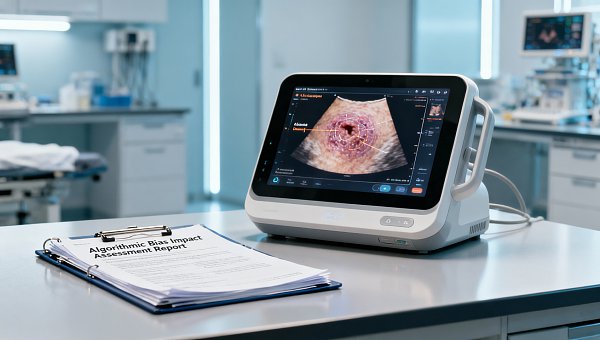
On April 24, 2026, the U.S. Food and Drug Administration (FDA) issued the final guidance titled Artificial Intelligence/Machine Learning-Based Software as a Medical Device (AI/ML SaMD) Final Guidance. The guidance requires that all AI/ML-based software as a medical device intended for diagnostic use — including applications in medical imaging analysis, digital pathology, and remote patient monitoring — must include, as part of its 510(k) or De Novo premarket submission, an Algorithmic Bias Impact Assessment Report. This report must be prepared by a third-party independent organization and must evaluate performance disparities across race, sex, and age subgroups. The requirement becomes mandatory for all submissions received on or after October 1, 2026.
Industries Affected
Direct Exporters & Device Manufacturers
Manufacturers exporting AI-enabled diagnostic equipment to the U.S. are directly subject to the new submission requirement. Their premarket pathways now depend not only on clinical validation but also on documented, third-party–verified bias testing — adding both time and cost to regulatory preparation. Submission delays or rejections may occur if the assessment is incomplete, non-compliant, or lacks sufficient demographic coverage.
Regulatory & Compliance Service Providers
Firms offering FDA regulatory support — especially those assisting with SaMD submissions — will need to integrate bias assessment coordination into their service scope. This includes identifying qualified third-party assessors, interpreting test design requirements, and aligning reporting formats with FDA expectations. Demand for specialized bias evaluation expertise is expected to rise.
Clinical Data Partners & Annotation Vendors
Organizations supplying training or validation datasets for AI diagnostic models must ensure their data collections include balanced, well-documented representation across race, sex, and age. Lack of such documentation may impede clients’ ability to meet the assessment’s evidentiary standards — potentially affecting commercial partnerships and contract renewals.
Key Considerations and Recommended Actions
Monitor official FDA communications on assessment methodology
The final guidance references the need for third-party assessment but does not prescribe specific testing protocols, statistical thresholds, or acceptable reporting templates. Companies should track FDA-issued updates, FAQs, or supplementary documents expected ahead of the October 2026 enforcement date.
Prioritize bias assessment readiness for high-priority U.S.-bound products
Manufacturers should identify which AI diagnostic products are slated for 510(k) or De Novo submission before October 2026 and initiate engagement with qualified third-party assessors early. Lead times for demographic dataset procurement, model retesting, and report generation may exceed standard regulatory timelines.
Distinguish between policy intent and operational implementation
While the requirement is formally effective October 1, 2026, FDA may exercise discretion during initial enforcement — for example, accepting interim reports or granting limited extensions for first-time filers. Companies should treat the rule as binding but remain attentive to early enforcement patterns and informal feedback from reviewers.
Align internal quality and AI validation processes with bias evaluation criteria
Internal AI development workflows — including data governance, model versioning, and performance monitoring — should explicitly incorporate race, sex, and age as required stratification variables. This alignment supports both ongoing compliance and efficient report generation without retroactive data reconstruction.
Editorial Perspective / Industry Observation
From an industry perspective, this rule represents less a sudden regulatory pivot and more a formalization of emerging expectations already reflected in FDA’s prior AI/ML discussion papers and review feedback. It signals that algorithmic fairness is no longer treated as an optional enhancement but as a foundational element of clinical validity for AI diagnostics. Analysis来看, the emphasis on third-party verification — rather than self-assessment — suggests FDA intends to raise the bar for objectivity and transparency. Observation来看, the narrow scope (limited to diagnostic SaMD, not therapeutic or administrative AI) indicates targeted risk-based regulation, not broad AI governance. Current enforcement timing — six months after final guidance publication — implies FDA expects stakeholders to have baseline readiness, yet leaves room for procedural learning. It is更适合理解为 a regulatory milestone confirming that bias evaluation is now embedded in the U.S. medical device lifecycle, rather than a one-off compliance hurdle.
This requirement underscores a broader trend: regulatory agencies worldwide are moving beyond technical accuracy to demand demonstrable equity in AI health tools. For companies active in global markets, harmonizing bias assessment practices across jurisdictions — such as the EU’s MDR Annex I requirements or Health Canada’s AI guidance — may become a strategic priority. However, at present, the FDA’s rule stands as a distinct, enforceable obligation tied specifically to U.S. market entry for diagnostic AI devices.
Information Source: U.S. Food and Drug Administration (FDA), Artificial Intelligence/Machine Learning-Based Software as a Medical Device (AI/ML SaMD) Final Guidance, issued April 24, 2026. Enforcement begins October 1, 2026. No additional implementation guidance or assessor accreditation framework has been published as of the guidance’s release; this remains a point for continued observation.
Recommended News
 China’s 10-Dept AI Export Ethics Review Rule Takes EffectChina’s new 10-dept AI export ethics rule mandates algorithmic bias review for AI hardware bound for the EU, US, Canada, Japan & SK—key for smart cameras, voice assistants & industrial vision exporters.
 Red Sea Detour Now Standard: $1,850 TEU Premium on Asia-Europe RoutesRed Sea detour premium now standard: $1,850/TEU surcharge embedded in Asia-Europe freight rates — vital intel for exporters, importers & logistics teams.
 RCEP Green Packaging Mutual Recognition Takes EffectRCEP Green Packaging Mutual Recognition takes effect Apr 22, 2026—streamline exports to AU, NZ, JP, KR with GB/T 37629–2019 certified molded fiber & PLA packaging.
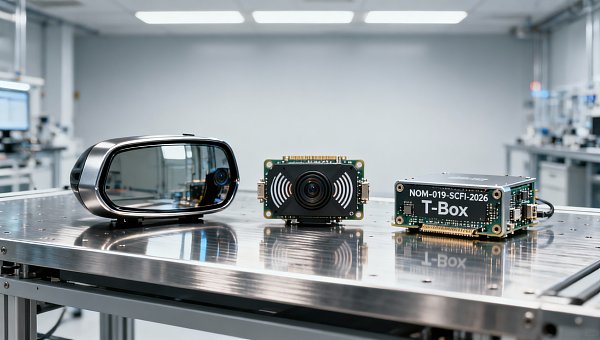
 Mexico NOM-019-SCFI-2026 Effective: EMC Certification Required for Auto Electronics ExportsEMC certification is now mandatory for auto electronics exports to Mexico under NOM-019-SCFI-2026. Ensure compliance for rearview mirrors, radar sensors & T-Box units—avoid shipment delays and order cancellations.
") TÜV Rheinland Updates CE Requirements for Servo Drives (PLd + EMC Joint Validation)TÜV Rheinland now mandates joint PLd + EMC validation for servo drives under CE marking—learn how this impacts certification timelines, lab selection, and EU market access.
TÜV Rheinland Updates CE Requirements for Servo Drives (PLd + EMC Joint Validation)TÜV Rheinland now mandates joint PLd + EMC validation for servo drives under CE marking—learn how this impacts certification timelines, lab selection, and EU market access. Vietnam Suspends SASO Mutual Recognition for Chinese Irrigation EquipmentVietnam suspends SASO mutual recognition for Chinese irrigation equipment—urgent compliance updates for drip tapes & PE pipes (HS 8424.89/3917.39). Act now to avoid delays.
 FDA Finalizes AI Diagnostic Device Rules for ImportersFDA finalizes AI diagnostic device rules for importers: New bias assessment mandate impacts ultrasound, glucose analyzers & dermatoscopes. Act now to ensure U.S. market access.
 SABER Phase II Live: Saudi Building Hardware Requires Digital Type Test Reports & PIDSABER Phase II is live: Building hardware exports to Saudi Arabia now require digital type test reports & a mandatory, immutable Product ID (PID). Act now to avoid customs delays!
 IMDG Code 41-24 Enforced: UN3480 Lithium Battery Labeling Mandatory from Apr 2026IMDG Code 41-24 enforcement starts Apr 2026: UN3480 lithium battery labeling & ISO 17363 docs are now mandatory—avoid port rejections!
 CBAM Carbon Tax Launch: Low CBAM Reporting Rate Among Chinese ExportersCBAM Carbon Tax is live—only 36.8% of Chinese exporters reported. Discover why, which industries are at risk, and how to secure EU market access now.
 China’s 10 Agencies Issue AI Export Ethics Review RulesChina’s 10 agencies launch AI export ethics rules—mandating bias reviews for visual inspection, warehouse AI & defect detection systems. Stay compliant & competitive.
 RCEP Green Packaging Mutual Recognition Takes EffectRCEP Green Packaging Mutual Recognition is now in effect—unlock faster customs clearance in Australia, NZ, Japan & Korea for GB/T 37659–2019-certified eco-packaging.
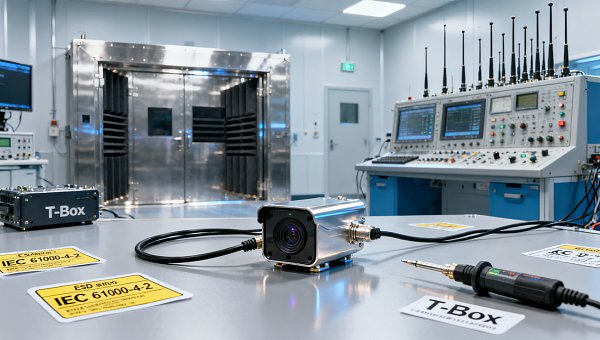
 Mexico NOM-019-SCFI-2026 Effective Apr 10, 2026: EMC Certification Required for Automotive ElectronicsNOM-019-SCFI-2026 EMC certification is now mandatory for automotive electronics entering Mexico — act before the July 1, 2026 customs ban.
 Red Sea Rerouting Normalized, EBA at $1,850/TEURed Sea rerouting normalized with EBA fixed at $1,850/TEU—learn how this structural shift impacts Asia-Europe freight costs, lead times & supply chain strategy.
 FDA AI Diagnostic Device Draft Rules: Bias Assessment for ImportsFDA AI diagnostic device draft rules require bias assessment for imports—learn how portable ultrasound, glucose, and dermatoscopic AI devices are affected & what to do next.
") TÜV Rheinland Updates CE Requirements for Servo Drives (PLd + EMC)TÜV Rheinland updates CE requirements for servo drives: PLd (ISO 13849-1) + EMC immunity (IEC 61000-6-2 Ed.4) now mandatory together — act now to avoid EU market delays!
TÜV Rheinland Updates CE Requirements for Servo Drives (PLd + EMC)TÜV Rheinland updates CE requirements for servo drives: PLd (ISO 13849-1) + EMC immunity (IEC 61000-6-2 Ed.4) now mandatory together — act now to avoid EU market delays! SABER Phase II Launch: Building Hardware Must Submit Digital Type Test Reports & Unique Product IDSABER Phase II now mandates digital type test reports & unique product IDs for building hardware—fasteners, scaffolding, door/window components. Ensure compliance to avoid customs rejection & SCOC delays.
 Vietnam Suspends SASO Mutual Recognition for Chinese Irrigation EquipmentVietnam suspends SASO mutual recognition for Chinese irrigation equipment—TCVN testing now mandatory. Act now to avoid 8–12 week delays and customs holdups.
 IMDG Code 41-24 Enforced: UN3480 Lithium Battery Labeling UpdateIMDG Code 41-24 enforcement starts April 2026: UN3480 lithium battery labeling updates are mandatory for global maritime shipments — avoid port delays, detention & penalties.
 EU CBAM Enters Full Enforcement on Jan 1, 2026EU CBAM full enforcement starts Jan 1, 2026 — mandatory quarterly reporting & certificate purchases for batteries, steel, cement, aluminum, fertilizers & chemicals. Act now to ensure EU market access.
 EU CBAM Carbon Tariff Starts Oct 2026 for Chinese Battery, Cement, Chemical ExportsEU CBAM carbon tariff hits Chinese battery, cement & chemical exports from Oct 2026 — mandatory emissions reporting starts now. Avoid €98/t default fees.

















Popular Tags
Global Trade Insights & Industry
Our mission is to empower global exporters and importers with data-driven insights that foster strategic growth.
Search News
Popular Tags
Industry Overview
The global commercial kitchen equipment market is projected to reach $112 billion by 2027. Driven by urbanization, the rise of e-commerce food delivery, and strict hygiene regulations.