

New vs Refurbished MRI Scanners Cost: Which Makes Sense
For buyers comparing MRI scanners cost, the choice between new and refurbished systems can significantly affect budget, performance, and long-term value. On a trusted online trade platform, understanding current MRI scanners price trends helps procurement teams, distributors, and business evaluators make smarter sourcing decisions. This guide explores the real cost differences, key buying factors, and when each option makes the most practical sense.
How big is the gap in MRI scanners cost?
MRI scanners cost varies widely because pricing is shaped by magnet strength, installation conditions, software package, coil configuration, service coverage, and regional compliance requirements. In most procurement discussions, the first comparison is not simply new versus used equipment, but total capital outlay versus total operating burden over a 5–10 year horizon.
A new MRI system usually carries the highest upfront investment, but it can offer a longer expected support window, broader software compatibility, and smoother integration with digital workflow. A refurbished MRI scanner often lowers entry cost substantially, which is attractive for budget-constrained buyers, secondary facilities, distributors entering new markets, and projects that need shorter lead times.
For information researchers and business evaluators, the real question is whether the lower MRI scanners price of a refurbished unit creates enough value after transport, siting, shielding, installation, helium planning, training, and post-sale service are included. In many tenders, these surrounding costs can materially change the final decision.
Procurement teams should separate cost into at least 4 layers: equipment price, site preparation, logistics and installation, and lifecycle service. This structure makes supplier offers easier to compare and reduces the risk of selecting a lower quote that later becomes a more expensive project.
Typical cost components buyers should compare
Before reviewing supplier quotations, it helps to map the cost structure in a single view. The table below highlights the main items that influence MRI scanners cost for both new and refurbished purchasing scenarios.
The practical takeaway is clear: a refurbished system can reduce the equipment portion of MRI scanners cost, but it does not automatically reduce every project expense. Buyers who compare only the machine price may underestimate building work, power requirements, cooling conditions, or post-install maintenance obligations.
When does a new MRI scanner make more sense?
A new MRI scanner usually makes more sense when a hospital, imaging center, or distributor is planning for long-term positioning, premium imaging capability, or standardized deployment across multiple sites. For these buyers, lower operational uncertainty can justify the higher upfront MRI scanners cost.
New systems are often preferred in projects where software longevity matters. Over a 5–7 year planning cycle, compatibility with newer workflow tools, image processing updates, cybersecurity patches, and future accessories can create measurable operational benefits. This is especially relevant when procurement decisions are reviewed by finance, clinical, and technical stakeholders at the same time.
Another factor is warranty structure. A new scanner may come with clearer coverage terms during the first 12–24 months, depending on supplier policy and region. That can simplify budgeting for institutions that want predictable maintenance exposure during early operation.
For distributors and agents, new MRI scanners price levels may still be viable if the target market values the latest feature sets, lower age-related risk, and stronger resale positioning. In some tenders, equipment age, software generation, or service continuity can influence qualification as much as price.
Best-fit scenarios for buying new
- A greenfield imaging center that needs a 7–10 year operational roadmap and wants fewer compatibility concerns during expansion.
- A hospital group standardizing equipment across 3 or more sites to simplify training, servicing, and protocol consistency.
- A market where buyers, regulators, or financing partners closely review equipment age, service records, and software generation.
- A project with high patient throughput expectations, where downtime risk carries a larger commercial or clinical cost.
In these situations, the higher MRI scanners cost can be easier to defend because decision-makers are buying not only hardware, but also support horizon, planning confidence, and smoother asset management.
Questions to ask before approving a new system
Ask whether the quotation includes coils, workstation, software licenses, installation supervision, training hours, and service response commitments. A price that looks complete may still exclude 4–6 important project items. Procurement teams should also verify delivery windows, especially when construction milestones are fixed.
Which projects benefit most from refurbished MRI scanners?
A refurbished MRI scanner makes the most sense when budget discipline is tight, speed matters, and the buyer can evaluate technical condition with care. This is common in emerging markets, replacement projects, regional imaging chains, and dealer sourcing programs that need cost-effective inventory.
For many procurement teams, the core attraction is lower entry pricing. Depending on age, refurbishment depth, configuration, and support package, a refurbished unit may be available at a materially lower MRI scanners price than a new system. That can free capital for room preparation, service stock, additional coils, or complementary diagnostic equipment.
Lead time can also be a decisive factor. If a project cannot wait 8–20 weeks for production allocation, a ready-to-ship or nearly completed refurbishment project may shorten deployment to a 2–8 week window, excluding site readiness. For facilities facing urgent replacement, this timing difference has real business value.
However, refurbished MRI scanners cost should never be judged by headline price alone. Buyers must confirm serviceability, magnet condition, gradient status, software version, installed options, de-installation records, and whether the refurbishment process included cosmetic work only or deeper technical restoration.
New vs refurbished MRI comparison for sourcing decisions
To support sourcing teams, the table below compares new and refurbished MRI scanners across decision criteria that matter in B2B purchasing, distributor planning, and commercial evaluation.
This comparison shows why refurbished MRI scanners are often chosen by cost-sensitive buyers and channel partners, while new systems remain attractive for long-horizon projects. The best option depends less on generic preference and more on service model, usage forecast, and procurement risk tolerance.
What to inspect in a refurbished offer
- Equipment age and prior utilization history, if available through service records or de-installation notes.
- Scope of refurbishment, including mechanical checks, electronics testing, cosmetic restoration, and software status.
- Availability of replacement parts and whether support can realistically continue over the next 3–5 years.
- Acceptance testing process, training inclusion, and response time commitments after installation.
Without these checks, the apparent advantage in MRI scanners cost may disappear later through unplanned downtime, limited software functionality, or service delays in the destination market.
What hidden costs often change the final buying decision?
One of the most common procurement mistakes is treating MRI scanners price as if it were the full project budget. In reality, the machine itself is only one part of the acquisition. Site preparation, RF shielding, electrical work, ventilation planning, access path evaluation, and local compliance checks can add substantial cost and schedule pressure.
Installation planning should begin early, often 4–8 weeks before equipment arrival for straightforward projects, and longer for sites with structural changes. If the room dimensions, floor loading, or power conditions are not reviewed in advance, even a competitively priced MRI scanner can become a delayed and more expensive asset.
Logistics is another area where international buyers need care. Export packaging, inland transport, port handling, import procedures, crane access, and final positioning can differ significantly by market. For distributors and importers, these issues affect landed MRI scanners cost just as much as the supplier quote.
Service contracts should also be modeled over time. A lower purchase price can be offset by higher spare-parts dependency or more frequent maintenance intervention. Finance teams should compare at least 3 cost horizons: purchase, first-year setup, and 3–5 year operating expense.
Hidden-cost checklist for MRI procurement
- Confirm room readiness, shielding requirements, and utility conditions before signing the final supply agreement.
- Review what the quotation excludes, especially freight, customs charges, local permits, rigging, helium management, and operator training.
- Check whether software options, coils, tables, and workstations are standard or optional line items.
- Define acceptance criteria in advance, including image performance checks, training completion, and service response expectations.
These 4 steps improve comparability across suppliers and reduce the chance of selecting a low visible MRI scanners price that later expands through project extras.
How should procurement teams evaluate suppliers and compliance?
In B2B medical equipment sourcing, supplier evaluation should go beyond product photos and brochure claims. Procurement teams, distributors, and business reviewers need a documentation-based approach that checks service capability, refurbishment process transparency, trade experience, and support responsiveness across regions.
For imported MRI systems, compliance review usually covers destination-market registration pathways, electrical safety expectations, transport condition records, and documentation needed for customs or local installation. Requirements differ by country, so buyers should confirm applicable rules before payment milestones are finalized.
This is where a global B2B information platform adds practical value. GTIIN and TradeVantage help buyers and channel partners compare supplier visibility, market signals, product exposure, and industry developments across 50+ sectors. That broader market intelligence supports more grounded supplier screening and reduces reliance on isolated quotations.
For exporters, distributors, and sourcing managers, access to a trade-focused intelligence portal also improves decision speed. Instead of evaluating offers in a vacuum, buyers can use updated market context, compare commercial positioning, and identify whether a vendor demonstrates credible long-term engagement in international trade channels.
Supplier review matrix for MRI scanners
The following table can be used as a practical framework when evaluating MRI scanner suppliers, refurbishers, and channel partners during cross-border procurement.
Using a matrix like this helps purchasing teams turn a complex sourcing decision into a structured review. It also creates a stronger internal record for finance and management approval, especially when comparing several MRI scanners price offers from different regions.
FAQ: common procurement questions about MRI scanners price
How should buyers compare MRI scanners cost fairly?
Use a side-by-side model that includes 5 core categories: machine price, configuration, site readiness, logistics and installation, and service coverage. A lower quote is only meaningful if these categories are aligned. In most B2B deals, the fairest comparison is total project cost rather than equipment cost alone.
Are refurbished MRI scanners suitable for distributors and resellers?
Yes, in many cases they are, especially when the target market is price-sensitive and accepts well-documented refurbished equipment. The key is to secure clear refurbishment scope, technical records, and a workable service plan for at least the next 3–5 years. Without those elements, margin opportunities can be offset by after-sales issues.
What delivery timeline should buyers expect?
Delivery depends on whether the MRI scanner is factory-new, in stock, or entering refurbishment. A new system may require 8–20 weeks, while a refurbished system can sometimes move within 2–8 weeks. Site preparation can add several more weeks, so procurement and engineering teams should work in parallel rather than sequentially.
What are the most overlooked risks in MRI sourcing?
The most overlooked risks are incomplete configuration disclosure, underestimated installation conditions, and weak service support after commissioning. Another common issue is assuming all refurbished units are restored to the same standard. Buyers should request testing details, included accessories, and acceptance terms in writing before final approval.
Why consult TradeVantage when comparing new and refurbished MRI scanners?
When MRI scanners cost becomes a strategic sourcing issue rather than a simple price check, buyers need more than scattered listings. TradeVantage, backed by GTIIN’s global B2B information and industry intelligence capabilities, helps procurement professionals, distributors, and commercial evaluators work from a broader and more reliable decision base.
Our platform connects market visibility, supplier exposure, and sector intelligence across 50+ industries, giving international buyers a better way to assess sourcing options, market timing, and commercial credibility. This is especially useful when comparing new versus refurbished MRI scanners price positions across different regions and trade channels.
If you are evaluating MRI scanner procurement, you can consult us for supplier visibility review, product positioning analysis, sourcing trend tracking, and cross-border trade information that supports clearer purchasing decisions. We can also help you organize the right comparison framework before you request formal quotations.
Contact TradeVantage to discuss configuration confirmation, supplier screening, delivery lead times, refurbishment evaluation points, documentation priorities, and quotation benchmarking. For importers, agents, and procurement teams, that means a more structured path from market research to shortlist creation and final sourcing action.
Recommended News
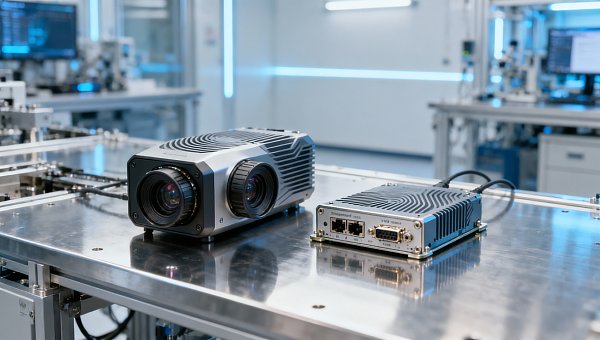
 China’s 10-Dept AI Export Ethics Review Rule Takes EffectChina’s new 10-dept AI export ethics rule mandates algorithmic bias review for AI hardware bound for the EU, US, Canada, Japan & SK—key for smart cameras, voice assistants & industrial vision exporters.
 Red Sea Detour Now Standard: $1,850 TEU Premium on Asia-Europe RoutesRed Sea detour premium now standard: $1,850/TEU surcharge embedded in Asia-Europe freight rates — vital intel for exporters, importers & logistics teams.
 RCEP Green Packaging Mutual Recognition Takes EffectRCEP Green Packaging Mutual Recognition takes effect Apr 22, 2026—streamline exports to AU, NZ, JP, KR with GB/T 37629–2019 certified molded fiber & PLA packaging.
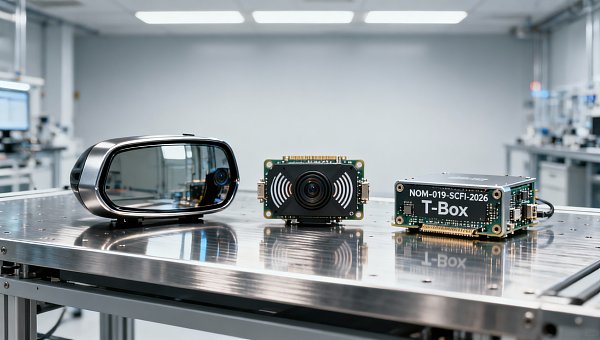
 Mexico NOM-019-SCFI-2026 Effective: EMC Certification Required for Auto Electronics ExportsEMC certification is now mandatory for auto electronics exports to Mexico under NOM-019-SCFI-2026. Ensure compliance for rearview mirrors, radar sensors & T-Box units—avoid shipment delays and order cancellations.
") TÜV Rheinland Updates CE Requirements for Servo Drives (PLd + EMC Joint Validation)TÜV Rheinland now mandates joint PLd + EMC validation for servo drives under CE marking—learn how this impacts certification timelines, lab selection, and EU market access.
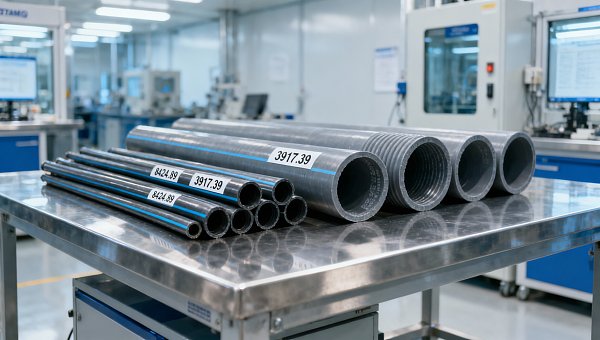
TÜV Rheinland Updates CE Requirements for Servo Drives (PLd + EMC Joint Validation)TÜV Rheinland now mandates joint PLd + EMC validation for servo drives under CE marking—learn how this impacts certification timelines, lab selection, and EU market access. Vietnam Suspends SASO Mutual Recognition for Chinese Irrigation EquipmentVietnam suspends SASO mutual recognition for Chinese irrigation equipment—urgent compliance updates for drip tapes & PE pipes (HS 8424.89/3917.39). Act now to avoid delays.
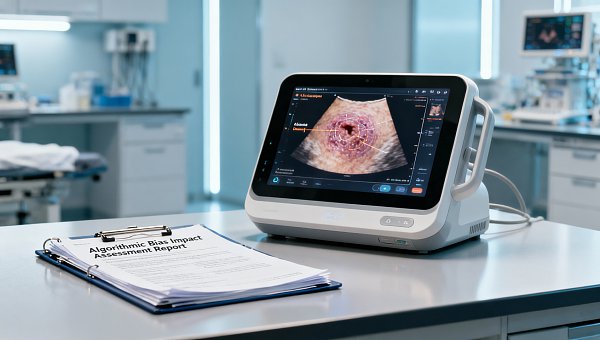
 FDA Finalizes AI Diagnostic Device Rules for ImportersFDA finalizes AI diagnostic device rules for importers: New bias assessment mandate impacts ultrasound, glucose analyzers & dermatoscopes. Act now to ensure U.S. market access.
 SABER Phase II Live: Saudi Building Hardware Requires Digital Type Test Reports & PIDSABER Phase II is live: Building hardware exports to Saudi Arabia now require digital type test reports & a mandatory, immutable Product ID (PID). Act now to avoid customs delays!
 IMDG Code 41-24 Enforced: UN3480 Lithium Battery Labeling Mandatory from Apr 2026IMDG Code 41-24 enforcement starts Apr 2026: UN3480 lithium battery labeling & ISO 17363 docs are now mandatory—avoid port rejections!
 CBAM Carbon Tax Launch: Low CBAM Reporting Rate Among Chinese ExportersCBAM Carbon Tax is live—only 36.8% of Chinese exporters reported. Discover why, which industries are at risk, and how to secure EU market access now.
 China’s 10 Agencies Issue AI Export Ethics Review RulesChina’s 10 agencies launch AI export ethics rules—mandating bias reviews for visual inspection, warehouse AI & defect detection systems. Stay compliant & competitive.
 RCEP Green Packaging Mutual Recognition Takes EffectRCEP Green Packaging Mutual Recognition is now in effect—unlock faster customs clearance in Australia, NZ, Japan & Korea for GB/T 37659–2019-certified eco-packaging.
 Mexico NOM-019-SCFI-2026 Effective Apr 10, 2026: EMC Certification Required for Automotive ElectronicsNOM-019-SCFI-2026 EMC certification is now mandatory for automotive electronics entering Mexico — act before the July 1, 2026 customs ban.
 Red Sea Rerouting Normalized, EBA at $1,850/TEURed Sea rerouting normalized with EBA fixed at $1,850/TEU—learn how this structural shift impacts Asia-Europe freight costs, lead times & supply chain strategy.
 FDA AI Diagnostic Device Draft Rules: Bias Assessment for ImportsFDA AI diagnostic device draft rules require bias assessment for imports—learn how portable ultrasound, glucose, and dermatoscopic AI devices are affected & what to do next.
") TÜV Rheinland Updates CE Requirements for Servo Drives (PLd + EMC)TÜV Rheinland updates CE requirements for servo drives: PLd (ISO 13849-1) + EMC immunity (IEC 61000-6-2 Ed.4) now mandatory together — act now to avoid EU market delays!
TÜV Rheinland Updates CE Requirements for Servo Drives (PLd + EMC)TÜV Rheinland updates CE requirements for servo drives: PLd (ISO 13849-1) + EMC immunity (IEC 61000-6-2 Ed.4) now mandatory together — act now to avoid EU market delays! SABER Phase II Launch: Building Hardware Must Submit Digital Type Test Reports & Unique Product IDSABER Phase II now mandates digital type test reports & unique product IDs for building hardware—fasteners, scaffolding, door/window components. Ensure compliance to avoid customs rejection & SCOC delays.
 Vietnam Suspends SASO Mutual Recognition for Chinese Irrigation EquipmentVietnam suspends SASO mutual recognition for Chinese irrigation equipment—TCVN testing now mandatory. Act now to avoid 8–12 week delays and customs holdups.
 IMDG Code 41-24 Enforced: UN3480 Lithium Battery Labeling UpdateIMDG Code 41-24 enforcement starts April 2026: UN3480 lithium battery labeling updates are mandatory for global maritime shipments — avoid port delays, detention & penalties.
 EU CBAM Enters Full Enforcement on Jan 1, 2026EU CBAM full enforcement starts Jan 1, 2026 — mandatory quarterly reporting & certificate purchases for batteries, steel, cement, aluminum, fertilizers & chemicals. Act now to ensure EU market access.
 EU CBAM Carbon Tariff Starts Oct 2026 for Chinese Battery, Cement, Chemical ExportsEU CBAM carbon tariff hits Chinese battery, cement & chemical exports from Oct 2026 — mandatory emissions reporting starts now. Avoid €98/t default fees.















Popular Tags
Global Trade Insights & Industry
Our mission is to empower global exporters and importers with data-driven insights that foster strategic growth.
Search News
Popular Tags
Industry Overview
The global commercial kitchen equipment market is projected to reach $112 billion by 2027. Driven by urbanization, the rise of e-commerce food delivery, and strict hygiene regulations.