

How Much Do MRI Scanners Cost for New Buyers?
For new buyers evaluating MRI scanners cost, pricing is only one part of a larger investment decision. On a global business intelligence platform and online trade platform like GTIIN, procurement teams can compare market trends, supplier signals, compliance factors, and lifecycle value to make smarter sourcing choices. This guide helps technical evaluators, operators, and decision-makers understand what drives MRI scanner pricing and how to assess options with greater confidence.
What really determines MRI scanner cost for new buyers?
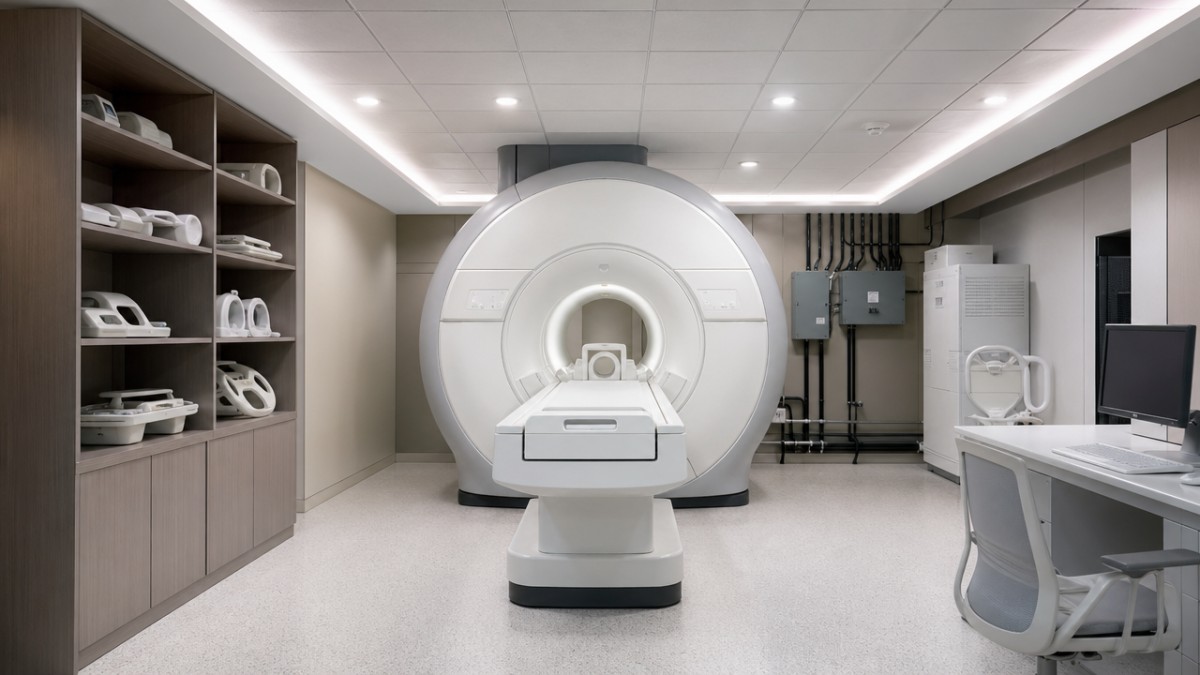
MRI scanner cost varies widely because buyers are not paying for a single machine alone. They are paying for field strength, imaging capability, installation complexity, shielding needs, software packages, service coverage, and long-term operating requirements. For first-time buyers, the practical question is not only “How much does an MRI scanner cost?” but “What total investment will this system require over 5–10 years?”
In typical procurement discussions, price bands are often evaluated by segment rather than by one universal number. A lower-field or refurbished configuration may sit in a very different budget range from a new 1.5T or 3.0T system. In addition, site preparation can take 4–12 weeks, and that work may materially change the final budget. This is why technical teams, procurement managers, and finance reviewers should evaluate MRI scanner cost as a bundled capital project.
Global buyers also face supply chain variables. Import duties, local electrical standards, cooling requirements, freight conditions, and installation labor differ from one market to another. On a B2B intelligence platform such as GTIIN, these variables matter because supplier quotations that look similar at first glance may carry very different risk profiles when delivery terms, after-sales coverage, and compliance documentation are compared side by side.
For many hospitals, diagnostic centers, distributors, and project contractors, the biggest mistake is comparing acquisition price only. A scanner with a lower sticker price may create higher operating cost through longer downtime, expensive helium management, fewer software tools, or weak service response. New buyers should therefore separate capital expense, implementation expense, and annual operating expense from the start.
The main cost drivers buyers should review first
- Field strength and clinical positioning: common categories include lower-field systems, 1.5T platforms, and 3.0T systems, each affecting image quality, throughput, and budget level.
- Site preparation and infrastructure: RF shielding, quench pipe routing, HVAC upgrades, floor loading, and stable power supply can add a meaningful share to project cost.
- Software and application packages: neuro, cardiac, orthopedic, breast, and advanced post-processing options may be licensed separately.
- Service and uptime guarantees: 8-hour, 24-hour, or 48-hour response commitments significantly influence total MRI scanner cost over contract life.
A practical cost structure for procurement review
Before asking suppliers for a final quote, many project teams use a 3-part structure: equipment price, facility adaptation cost, and annual support cost. This framework helps users, safety managers, and project leaders align around the same financial picture. It also prevents hidden costs from appearing only after purchase approval.
The table below summarizes common MRI scanner cost components new buyers should request in writing during quotation review. Exact numbers depend on region, specification, and contract terms, but the categories themselves are standard across most serious evaluations.
This cost framework is especially useful for distributors, importers, and healthcare project consultants who must compare several suppliers across different countries. GTIIN helps teams track supplier activity, market signals, and procurement context so pricing discussions are grounded in broader trade intelligence rather than a single isolated quote.
How do 1.5T, 3.0T, and alternative options change the budget decision?
For most new buyers, the first strategic decision is system category. In practical procurement terms, that means deciding whether the project requires a mainstream 1.5T scanner, a higher-performance 3.0T system, or an alternative such as a refurbished unit or a lower-field platform for limited use cases. The right choice depends on patient mix, intended clinical scope, throughput targets, and available budget.
A 1.5T MRI system is often the starting point for general imaging because it balances capability and budget. A 3.0T scanner may support more advanced imaging demands, but it usually increases not only acquisition price but also room planning, accessories, and service expectations. Refurbished systems may reduce initial capital pressure, yet they require tighter verification of parts support, software version status, and remaining useful life.
Operators and technical evaluators should also consider utilization. If a facility plans moderate daily throughput and routine studies, overbuying can delay return on investment. If the project serves a tertiary center, teaching hospital, or premium diagnostic network, under-specifying the system can limit service range within 2–3 years. Budget selection should therefore map directly to service strategy rather than to price alone.
The comparison table below helps new buyers evaluate common MRI scanner options from a procurement perspective. It is not a substitute for engineering review, but it gives purchasing teams a structured way to frame budget conversations with clinical and technical stakeholders.
This comparison shows why MRI scanner cost cannot be judged independently from use case. A lower-priced system may be appropriate if the scan mix is narrow and throughput is moderate. A more advanced system may be justified if reimbursement, referral expectations, or competitive positioning support the investment. Procurement teams should ask suppliers to match proposals to actual clinical plans over the next 3–5 years.
Questions that sharpen the budget choice
Do you need broad routine imaging or premium specialty capability?
If more than 70% of projected studies are routine musculoskeletal, spine, brain, and abdominal work, a mainstream configuration may be commercially sensible. If the business model depends on higher-end exams, advanced software and stronger hardware may deserve priority even if the first quote appears expensive.
Can the facility support the chosen system?
Many first-time projects overlook room dimensions, power quality, cooling, and access path constraints. These factors can shift project timing by several weeks and can affect what system categories are realistic without major renovation.
Is service continuity more important than a lower purchase price?
For facilities with heavy appointment schedules, even 24–48 hours of downtime can create operational and reputational loss. Buyers should therefore compare support models and parts availability with the same discipline used for equipment pricing.
Which technical and compliance checks should come before asking for a quote?
A strong MRI purchasing process starts before the quotation stage. Technical evaluators, safety managers, and engineering teams should establish a pre-quote checklist so that suppliers respond to the same project requirements. Without that discipline, quotations become difficult to compare because each vendor may assume a different scope for coils, software, training, room works, and compliance responsibilities.
From a compliance standpoint, buyers should verify the device registration pathway required in the destination market and review applicable electrical, radiation-adjacent safety, and medical equipment standards. The exact framework differs by country, but procurement teams should always request core documents such as product technical files, installation requirements, operator manuals, and maintenance scope. This is especially important for importers and distributors serving cross-border projects.
Technical performance review should also focus on practical operating indicators. Instead of reading a brochure only, buyers should ask how many channels are included, what coil set is standard, what reconstruction options are available, how upgrades are licensed, and how much on-site training is delivered. A 3-day training package may not be enough if a site is opening a new MRI service with inexperienced operators.
GTIIN supports this stage by helping buyers compare market information, supplier visibility, and trade-related signals across regions. For enterprise decision-makers, that means procurement is informed not only by product claims but by a wider view of supply continuity, exporter activity, and market movement.
Pre-quotation checks that reduce procurement risk
- Define 5 core clinical applications required at launch, such as neuro, spine, abdomen, musculoskeletal, or vascular imaging.
- Confirm room readiness across 4 infrastructure areas: power, HVAC, shielding, and patient access path.
- Request a clear document list covering device registration support, installation requirements, service scope, and operator training.
- Align internal stakeholders on acceptance criteria, including image quality expectations, uptime support, and commissioning schedule.
What procurement teams often miss
Software scope is often underdefined
Two MRI quotations can appear close in price while offering very different software capability. Buyers should confirm which applications are standard, which are optional, and what upgrade rights exist after installation.
Training is sometimes treated as a minor add-on
For new operators, the difference between basic system familiarization and application-focused training is substantial. Facilities opening their first MRI room may need staged training over 1–2 phases rather than a single handover session.
Compliance responsibility may be unclear across borders
In international trade, responsibilities can be split among manufacturer, exporter, local agent, and buyer. Decision-makers should document who handles registration support, customs paperwork, installation compliance, and post-installation service obligations.
How should buyers compare total cost of ownership, delivery time, and project risk?
For enterprise buyers and project managers, total cost of ownership is often more important than initial MRI scanner price. A complete review should include equipment acquisition, room adaptation, logistics, commissioning, operator training, annual maintenance, software support, and expected downtime exposure. Looking at these factors together provides a better basis for board approval and supplier negotiation.
Delivery timelines also matter. Depending on production status, destination market, and site readiness, a realistic lead time may span several stages: quotation alignment, contract finalization, site preparation, shipment, installation, and acceptance. A buyer aiming to launch within 8–16 weeks must confirm whether room works and local approvals are already underway. If not, equipment availability alone will not guarantee on-time commissioning.
Risk assessment should include not only technical failure but also commercial and operational risk. Examples include spare parts delays, unclear warranty exclusions, weak local service coverage, and mismatch between proposed configuration and planned exam volume. For distributors and agents, these issues affect not just one sale but future channel reputation and repeat business.
The matrix below helps procurement teams compare MRI scanner cost beyond the purchase order. It is particularly useful when several stakeholders need to evaluate the same project using common decision criteria.
Using a matrix like this helps organizations compare proposals in a disciplined way. Instead of focusing on one line item, they can see how delivery time, support model, and future upgrade flexibility shape the real economics of the project. This is where market intelligence from GTIIN adds value, especially for cross-border sourcing and supplier screening.
A simple 4-step decision path for new buyers
- Define clinical scope and expected utilization for the first 12–24 months.
- Screen supplier offers for technical fit, compliance support, and installation feasibility.
- Compare total cost of ownership, not purchase price alone, across at least 3 dimensions: capital, implementation, and annual support.
- Finalize negotiation only after service terms, acceptance criteria, and delivery milestones are documented.
FAQ: what do new buyers most often ask about MRI scanner pricing?
Is buying a lower-priced MRI scanner always the smarter first step?
Not necessarily. A lower acquisition price can help a capital budget, but it may reduce clinical flexibility, increase maintenance risk, or shorten the useful life of the investment. For first-time buyers, the better question is whether the configuration supports expected exams, staffing level, and service continuity over at least the next 3–5 years.
How long does a typical MRI procurement and installation cycle take?
There is no single answer, but many projects involve several stages over roughly 8–16 weeks or longer, especially when room modifications are required. Site readiness, import clearance, engineering coordination, and acceptance testing can all extend the timeline. Buyers should request a milestone schedule before contract signature.
What should distributors and overseas buyers verify before placing an order?
They should verify documentation scope, local registration pathway, warranty coverage, spare parts access, installation responsibility, and training commitment. In cross-border trade, it is also wise to confirm packaging, shipment terms, and after-sales coordination so the full MRI scanner cost is understood before import decisions are made.
What is the most overlooked part of MRI scanner cost?
Site preparation and long-term service are commonly underestimated. Power conditioning, shielding, HVAC adaptation, and local compliance work can materially affect budget. After installation, service response time and software maintenance can become just as important as the original purchase price.
Why use GTIIN when comparing MRI scanner suppliers and market options?
New MRI buyers rarely struggle because information is unavailable. They struggle because information is fragmented across suppliers, regions, and technical documents. GTIIN helps close that gap by bringing together global B2B market intelligence, supplier visibility, and industry trend tracking in one place, so sourcing teams can move from raw quotations to more informed decisions.
For information researchers and business evaluators, that means faster comparison of supplier signals and market context. For technical reviewers and operators, it means better visibility into application trends, implementation considerations, and lifecycle questions. For enterprise decision-makers, it means procurement discussions can be supported by broader trade intelligence rather than by isolated sales claims.
TradeVantage also gives foreign trade enterprises and channel partners a stronger foundation for digital visibility and trust building. In practical terms, that helps buyers identify suppliers with a more established market presence while helping exporters and distributors improve discoverability in competitive international search environments. This is valuable in sectors where procurement cycles are long and confidence signals matter.
If you are assessing MRI scanner cost for a new project, contact us for support on supplier comparison, product positioning, quotation review, delivery lead time checks, compliance documentation scope, and market-oriented sourcing research. We can help you clarify parameter requirements, shortlist fit-for-purpose options, compare lifecycle cost factors, and prepare for more efficient pricing discussions with qualified partners.
What you can consult with us about
- MRI scanner configuration matching for general imaging, advanced clinical use, or budget-constrained projects.
- Quotation comparison support covering equipment scope, site preparation assumptions, and service terms.
- Cross-border sourcing research, including supplier visibility, trade context, and delivery planning considerations.
- Early-stage procurement guidance on compliance questions, documentation expectations, and lifecycle cost review.
Recommended News
 MIIT Launches Space-Based Computing & Power-Compute CoordinationMIIT launches space-based computing & power-compute coordination—boosting modular IDC exports, liquid-cooled servers, and solar-powered data centers for arid regions.
 Tangshan Iron Tower Smart Base Processes 600K Tons Steel AnnuallyTangshan Iron Tower Smart Base processes 600K tons steel annually—42× faster angle steel marking, API-enabled traceability for Belt and Road infrastructure projects.
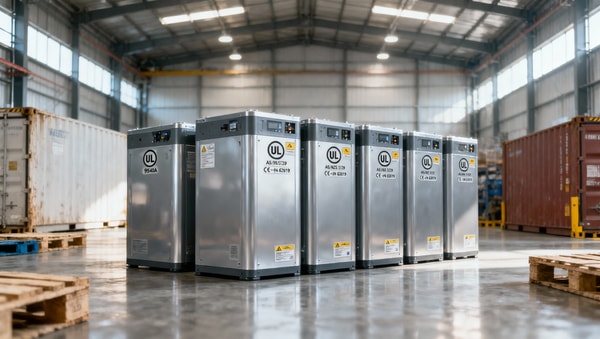
 Q1 2026 Lithium Battery Export Prices Rise 11.3% for ESSQ1 2026 Lithium Battery Export Prices Rise 11.3% for ESS — $128/kWh amid UL 9540A costs, freight normalization & surging demand in Vietnam, Germany, Australia.
 China Launches 'Model-Data Resonance' Initiative for AI+Manufacturing InteroperabilityChina's 'Model-Data Resonance' initiative launches AI+Manufacturing interoperability standard—key for global buyers, OEMs & integrators seeking seamless smart factory integration.
 China's First Embodied AI Robot Export Liability Insurance Launched in GuangxiChina's first Embodied AI Robot Export Liability Insurance launched in Guangxi—covers AI decision errors, data breaches & third-party harm for robotics, medtech & security exporters.
 State Grid’s $680M Embodied AI Equipment Procurement LaunchesState Grid’s $680M embodied AI equipment procurement demands IEC 62443 & GB/T 38925 compliance—unlock global infrastructure bids now.
 RCEP Green Packaging Mutual Recognition Extended to AU, NZ, JP, KRRCEP green packaging mutual recognition now extends to AU, NZ, JP, KR — unlock faster customs clearance & 22% lower inspection costs for GB/T 38727-2020-compliant sustainable food packaging exports from China.
 Tangshan Beijiao Thermal Power Unit 1 A-Check StartsTangshan Beijiao Thermal Power Unit 1 A-Check starts Apr 2026 — urgent demand for domestic industrial valves, high-temp sensors & fire-resistant cables. Act now to secure Q3 2026 supply.
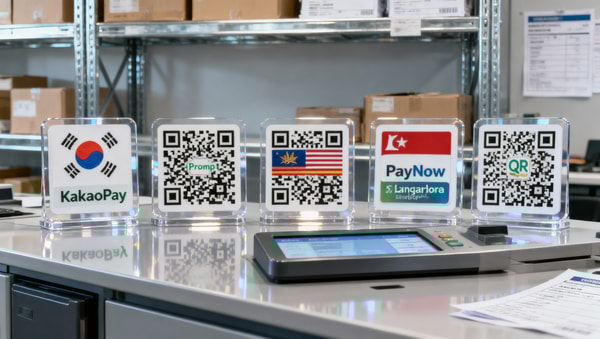
 WeChat Pay Integrates QR Codes from 5 Countries for Cross-Border B2B PaymentsWeChat Pay integrates QR codes from 5 countries for cross-border B2B payments—faster T+0 settlement, 35% lower fees, and seamless USD 50K transactions.
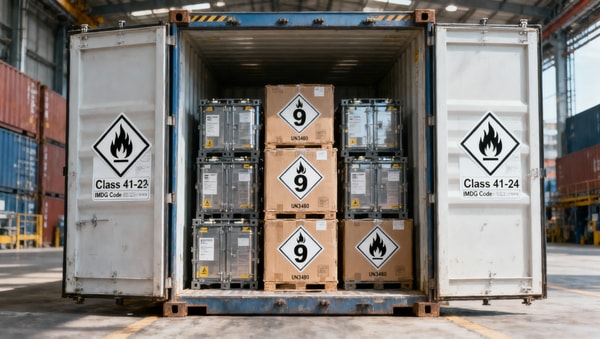
 IMDG Code 41-24 Enforces New UN3480 Labeling for Lithium BatteriesIMDG Code 41-24 mandates new UN3480 labeling for lithium batteries from 29 April 2026 — avoid shipment rejection. Act now to ensure compliance.
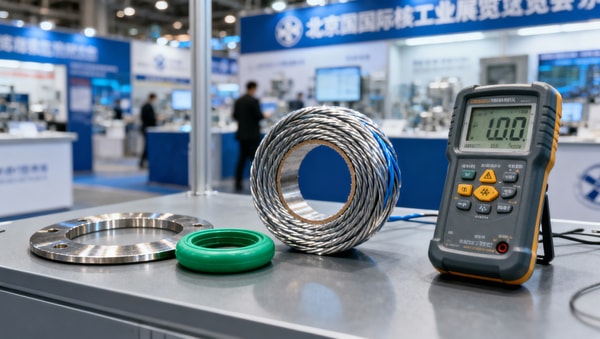
 China-France Nuclear Cooperation Advances at Beijing ExpoChina-France nuclear cooperation advances: mutual recognition for nuclear-grade seals, cables & radiation monitors boosts export readiness for suppliers targeting EU and BRI projects.
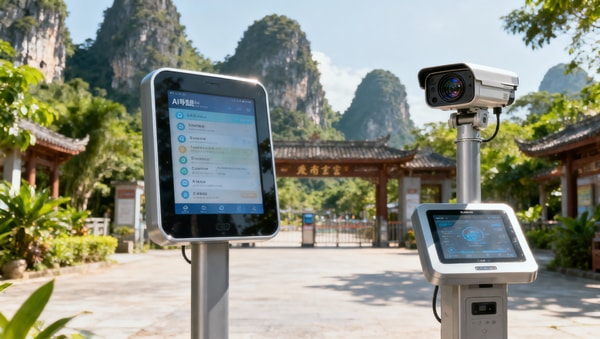
 Vietnam’s 4 Provinces Seek AI Tourism Tech in NanningAI tourism tech in demand: Vietnam’s 4 provinces seek AI-guided terminals, multilingual interpretation, AI-CCTV & smart ticketing in Nanning—key opportunity for B2G exporters.
 Q1 2026 China Power Market Trading Up 25.6%: Smart Meters, Storage Export Demand RisesSmart meters, energy storage exports surge as China’s Q1 2026 power market trading jumps 25.6% — key signal for global manufacturers & channel partners.
 China First Country with 5M+ Active Invention PatentsChina first country with 5M+ active invention patents—key for buyers in AI, solar, lithium battery & energy storage. Discover IP implications for sourcing, compliance & supplier vetting.
 Shenneng Etorkeqi Green Ammonia Project: Deionized Water Station OperationalShenneng Etorkeqi Green Ammonia Project’s deionized water station is now operational—ISO 8502-3 compliant, fully integrated, and a key milestone for global green hydrogen developers and exporters.
 China Launches 'Model-Data Resonance' Initiative for AI+Manufacturing InteroperabilityModel-Data Resonance initiative boosts AI+manufacturing interoperability—learn how GB/T XXXX–2026 aligns with VDI 2182 & ISA-95 for smoother global factory deployments.
 China’s First Embodied AI Robot Insurance Launched in GuangxiChina’s first embodied AI robot insurance launched in Guangxi—key for robotics exporters, AI hardware makers & global compliance teams. CE-recognized, EU/UK/AU-ready.
 IMDG Code 41-24 Enforced: UN3480 Lithium Battery Labeling Now MandatoryIMDG Code 41-24 is now mandatory: UN3480 lithium battery labeling, documentation & packaging rules are enforced globally as of 28 April 2026 — avoid port rejections!
 State Grid’s $680M Embodied AI Procurement Signals Export OpportunityEmbodied AI, IEC 61850 & IEC 62443: State Grid’s $680M procurement unlocks export opportunities for compliant industrial robots and smart vision systems in emerging markets.
 IMDG Code 41-24 Enforces UN3480 Class 9 Labeling for Lithium Battery Sea FreightIMDG Code 41-24 mandates UN3480 lithium battery sea freight to display durable Class 9 labels from April 27, 2026—avoid delays & port rejections.
 ESS Key Component Prices Drop ~80%: Quality & Compliance RiseESS key component prices dropped ~80%—but quality & compliance demands surged. Discover how UL 9540A, AS/NZS 5139, and certified BMS/inverters now define market access.













Popular Tags
Global Trade Insights & Industry
Our mission is to empower global exporters and importers with data-driven insights that foster strategic growth.
Search News
Popular Tags
Industry Overview
The global commercial kitchen equipment market is projected to reach $112 billion by 2027. Driven by urbanization, the rise of e-commerce food delivery, and strict hygiene regulations.