

A buyer's guide to sourcing high-strength autoclaved aerated concrete blocks for large-scale projects.
In the rapidly evolving construction sector, sourcing high-strength autoclaved aerated concrete (AAC) blocks for large-scale projects requires a strategic approach to ensure structural integrity and cost-efficiency. As procurement personnel and business evaluators seek reliable suppliers, navigating a comprehensive B2B portal like GTIIN becomes essential for accessing verified data and market intelligence. Whether your enterprise specializes in heavy infrastructure or manages diverse industrial requirements—ranging from inorganic chemicals to specialized truck accessories—understanding the technical specifications of AAC blocks is paramount. This guide provides actionable insights into quality assessment and supply chain optimization, empowering distributors and agents to make data-driven decisions that enhance their global digital footprint and operational excellence.
The Technical Benchmark: Defining "High-Strength" for Structural Integrity
For large-scale commercial and industrial developments, standard AAC blocks often fall short. Procurement teams must look for High-Strength (Grade 4 to Grade 6) blocks, which typically offer a compressive strength ranging from 5.0 to 7.5 MPa (N/mm²). Unlike standard residential blocks, high-strength variants are engineered to support higher load-bearing requirements while maintaining the lightweight benefits that reduce the overall "dead load" of a building.
When evaluating technical data sheets, buyers should prioritize the following metrics:
- Compressive Strength: Ensure the material meets ASTM C1693 or equivalent international standards for the specific structural load.
- Dry Density: High-strength blocks usually fall within the 600–800 kg/m³ range. A higher density often correlates with better acoustic insulation but requires a balance to maintain thermal efficiency.
- Coefficient of Thermal Conductivity: For large projects, energy efficiency is a major ROI driver. Look for values between 0.14 and 0.18 W/mK to ensure the building meets modern green-building certifications.
Vetting Manufacturers: Identifying "Trust Signals" in the Global Supply Chain
In the B2B landscape, the "Trust Signal" is the difference between a successful project and a logistics nightmare. For sourcing agents and distributors, the challenge lies in verifying manufacturer claims across different regions. Using industry intelligence platforms like GTIIN allows buyers to cross-reference factory capacities with historical performance data.
A reliable supplier for large-scale projects must demonstrate more than just a low price point. Procurement officers should demand transparency in:
- Autoclaving Consistency: Inconsistent pressure or temperature during the curing process leads to internal micro-cracks. Ask for batch testing reports and ultrasonic pulse velocity (UPV) test results.
- Production Capacity: Large-scale projects cannot afford delays. Verify that the manufacturer has the monthly output capacity to match your project’s phasing without compromising the 28-day curing stability.
- Global Certifications: Look for ISO 9001 for quality management and ISO 14001 for environmental standards, which are increasingly required for international tenders.
Optimizing the Procurement Funnel: Total Cost of Ownership (TCO)
Business evaluators often focus on the "per block" price, but for large-scale infrastructure, the Total Cost of Ownership (TCO) is the more accurate metric. High-strength AAC blocks offer significant indirect savings that can offset a higher initial purchase price. When presenting a procurement plan to management, emphasize these business values:
- Foundation Savings: Because AAC is approximately one-third the weight of traditional clay bricks, the cost of steel and concrete for the foundation can be reduced by up to 15-20%.
- Labor Efficiency: The large size and lightweight nature of AAC blocks allow for faster installation, significantly reducing man-hours and accelerating the project timeline.
- Waste Reduction: Precision-molded AAC blocks result in less on-site breakage and require thinner mortar joints (thin-bed mortar), reducing material waste and cleanup costs.
Risk Mitigation in International Sourcing and Logistics
Sourcing from overseas—particularly from manufacturing hubs in Asia or Eastern Europe—introduces logistical complexities. For distributors and agents, managing the supply chain involves mitigating risks related to transit damage and moisture absorption. AAC is porous; if not properly palletized and shrink-wrapped, blocks can absorb moisture during sea freight, leading to increased weight and potential efflorescence issues upon arrival.
To ensure operational excellence, buyers should stipulate strict packaging requirements in their contracts, including reinforced edge protectors and moisture-proof layering. Furthermore, leveraging real-time market updates helps procurement teams anticipate price fluctuations in raw materials like silica sand and lime, allowing for strategic "forward buying" to lock in costs.
Conclusion: Data-Driven Sourcing as a Competitive Advantage
Sourcing high-strength AAC blocks for large-scale projects is no longer just a purchasing task; it is a strategic function that impacts the financial and structural viability of an enterprise. By focusing on high-grade technical specifications, vetting suppliers through authoritative hubs like GTIIN, and calculating the long-term ROI of lightweight construction, procurement professionals can deliver immense value to their organizations. In an era where "Trust Signals" and data-driven insights define market leaders, successful sourcing requires a blend of technical expertise and global industry intelligence. Whether you are an agent expanding a digital footprint or a lead developer, the right AAC partnership is the foundation of a resilient, energy-efficient, and profitable project.
Recommended News
 MIIT Launches Space-Based Computing & Power-Compute CoordinationMIIT launches space-based computing & power-compute coordination—boosting modular IDC exports, liquid-cooled servers, and solar-powered data centers for arid regions.
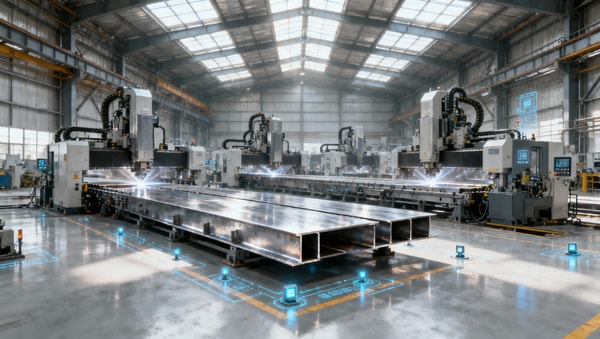
 Tangshan Iron Tower Smart Base Processes 600K Tons Steel AnnuallyTangshan Iron Tower Smart Base processes 600K tons steel annually—42× faster angle steel marking, API-enabled traceability for Belt and Road infrastructure projects.
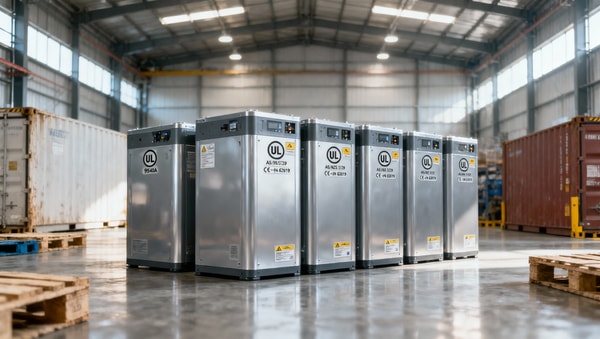
 Q1 2026 Lithium Battery Export Prices Rise 11.3% for ESSQ1 2026 Lithium Battery Export Prices Rise 11.3% for ESS — $128/kWh amid UL 9540A costs, freight normalization & surging demand in Vietnam, Germany, Australia.
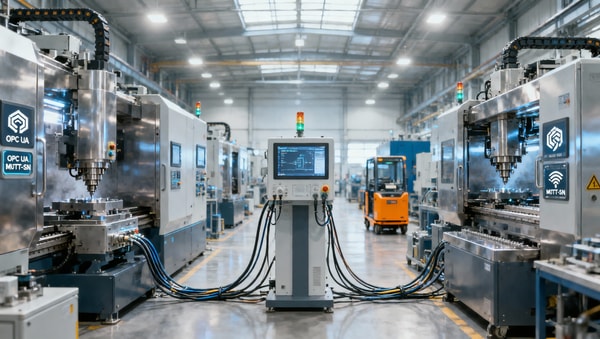
 China Launches 'Model-Data Resonance' Initiative for AI+Manufacturing InteroperabilityChina's 'Model-Data Resonance' initiative launches AI+Manufacturing interoperability standard—key for global buyers, OEMs & integrators seeking seamless smart factory integration.
 China's First Embodied AI Robot Export Liability Insurance Launched in GuangxiChina's first Embodied AI Robot Export Liability Insurance launched in Guangxi—covers AI decision errors, data breaches & third-party harm for robotics, medtech & security exporters.
 State Grid’s $680M Embodied AI Equipment Procurement LaunchesState Grid’s $680M embodied AI equipment procurement demands IEC 62443 & GB/T 38925 compliance—unlock global infrastructure bids now.
 RCEP Green Packaging Mutual Recognition Extended to AU, NZ, JP, KRRCEP green packaging mutual recognition now extends to AU, NZ, JP, KR — unlock faster customs clearance & 22% lower inspection costs for GB/T 38727-2020-compliant sustainable food packaging exports from China.
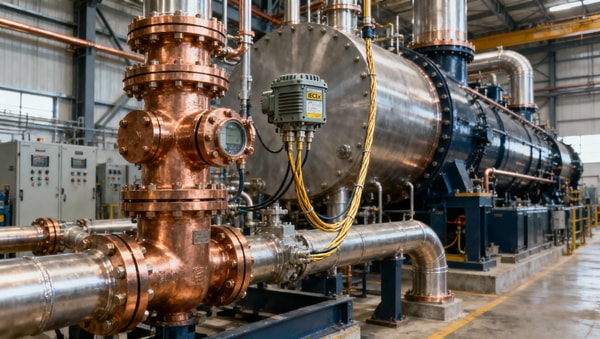
 Tangshan Beijiao Thermal Power Unit 1 A-Check StartsTangshan Beijiao Thermal Power Unit 1 A-Check starts Apr 2026 — urgent demand for domestic industrial valves, high-temp sensors & fire-resistant cables. Act now to secure Q3 2026 supply.
 WeChat Pay Integrates QR Codes from 5 Countries for Cross-Border B2B PaymentsWeChat Pay integrates QR codes from 5 countries for cross-border B2B payments—faster T+0 settlement, 35% lower fees, and seamless USD 50K transactions.
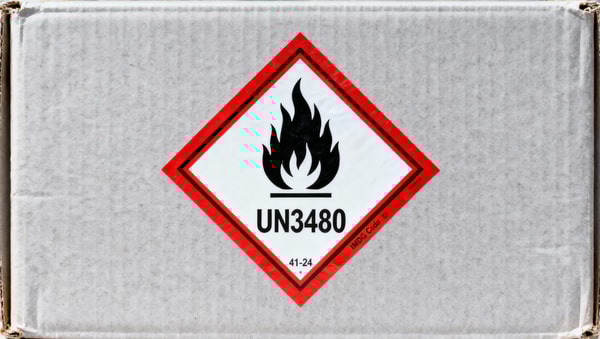
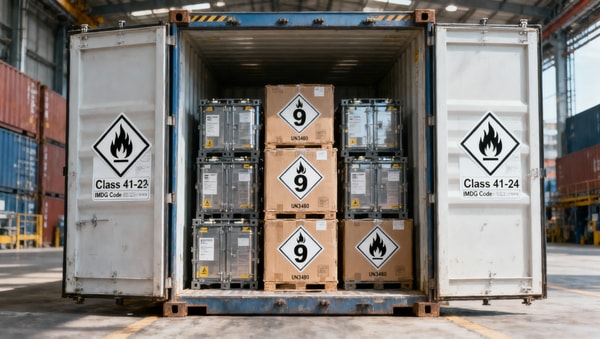
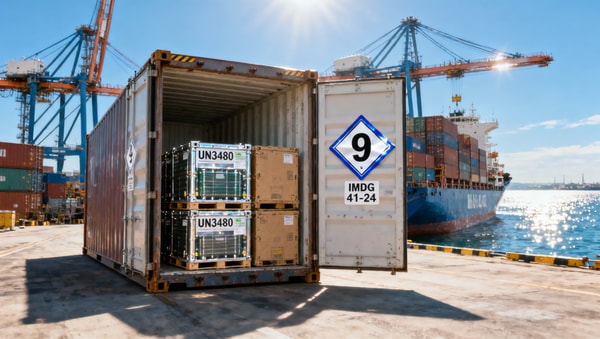
 IMDG Code 41-24 Enforces New UN3480 Labeling for Lithium BatteriesIMDG Code 41-24 mandates new UN3480 labeling for lithium batteries from 29 April 2026 — avoid shipment rejection. Act now to ensure compliance.
 China-France Nuclear Cooperation Advances at Beijing ExpoChina-France nuclear cooperation advances: mutual recognition for nuclear-grade seals, cables & radiation monitors boosts export readiness for suppliers targeting EU and BRI projects.
 Vietnam’s 4 Provinces Seek AI Tourism Tech in NanningAI tourism tech in demand: Vietnam’s 4 provinces seek AI-guided terminals, multilingual interpretation, AI-CCTV & smart ticketing in Nanning—key opportunity for B2G exporters.
 Q1 2026 China Power Market Trading Up 25.6%: Smart Meters, Storage Export Demand RisesSmart meters, energy storage exports surge as China’s Q1 2026 power market trading jumps 25.6% — key signal for global manufacturers & channel partners.
 China First Country with 5M+ Active Invention PatentsChina first country with 5M+ active invention patents—key for buyers in AI, solar, lithium battery & energy storage. Discover IP implications for sourcing, compliance & supplier vetting.
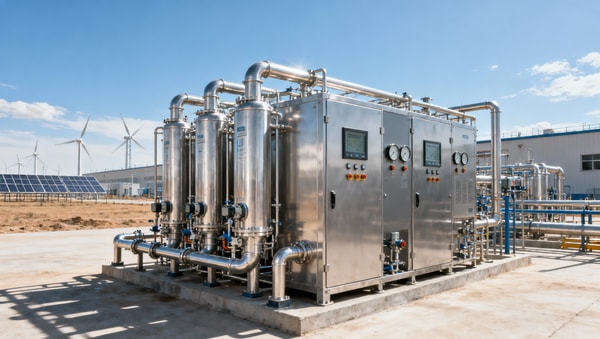
 Shenneng Etorkeqi Green Ammonia Project: Deionized Water Station OperationalShenneng Etorkeqi Green Ammonia Project’s deionized water station is now operational—ISO 8502-3 compliant, fully integrated, and a key milestone for global green hydrogen developers and exporters.
 China Launches 'Model-Data Resonance' Initiative for AI+Manufacturing InteroperabilityModel-Data Resonance initiative boosts AI+manufacturing interoperability—learn how GB/T XXXX–2026 aligns with VDI 2182 & ISA-95 for smoother global factory deployments.
 China’s First Embodied AI Robot Insurance Launched in GuangxiChina’s first embodied AI robot insurance launched in Guangxi—key for robotics exporters, AI hardware makers & global compliance teams. CE-recognized, EU/UK/AU-ready.
 IMDG Code 41-24 Enforced: UN3480 Lithium Battery Labeling Now MandatoryIMDG Code 41-24 is now mandatory: UN3480 lithium battery labeling, documentation & packaging rules are enforced globally as of 28 April 2026 — avoid port rejections!
 State Grid’s $680M Embodied AI Procurement Signals Export OpportunityEmbodied AI, IEC 61850 & IEC 62443: State Grid’s $680M procurement unlocks export opportunities for compliant industrial robots and smart vision systems in emerging markets.
 IMDG Code 41-24 Enforces UN3480 Class 9 Labeling for Lithium Battery Sea FreightIMDG Code 41-24 mandates UN3480 lithium battery sea freight to display durable Class 9 labels from April 27, 2026—avoid delays & port rejections.
 ESS Key Component Prices Drop ~80%: Quality & Compliance RiseESS key component prices dropped ~80%—but quality & compliance demands surged. Discover how UL 9540A, AS/NZS 5139, and certified BMS/inverters now define market access.








Popular Tags
Global Trade Insights & Industry
Our mission is to empower global exporters and importers with data-driven insights that foster strategic growth.
Search News
Popular Tags
Industry Overview
The global commercial kitchen equipment market is projected to reach $112 billion by 2027. Driven by urbanization, the rise of e-commerce food delivery, and strict hygiene regulations.