

Why are AAC blocks becoming the standard for sustainable commercial construction in 2026?
Why are AAC blocks becoming the standard for sustainable commercial construction in 2026?
As 2026 approaches, the global construction industry is undergoing a seismic shift toward sustainability, with autoclaved aerated concrete (AAC) blocks emerging as the definitive standard for commercial projects. For procurement officers and business evaluators navigating our B2B portal, understanding this transition is crucial for long-term strategic growth. Unlike traditional construction methods or standard injection molding applications, these blocks utilize specialized inorganic chemicals to provide superior thermal insulation and structural integrity. At GTIIN, we track how these material breakthroughs impact diverse sectors—from medical imaging facilities to heavy manufacturing—ensuring your supply chain remains resilient. Discover why this innovative material is setting new global benchmarks for efficiency and ecological responsibility in the modern commercial landscape.
The Strategic Shift: Why 2026 is the Tipping Point for AAC Adoption
The year 2026 marks a significant milestone in global building regulations. With many nations implementing stricter "Net Zero" carbon mandates for commercial real estate, developers and procurement teams can no longer rely on traditional clay bricks or standard concrete blocks. AAC blocks have moved from a niche alternative to a procurement priority because they directly address the "Triple Bottom Line": profit, people, and planet.
For business evaluators, the primary driver is compliance and future-proofing. Investing in AAC technology today prevents expensive retrofitting costs tomorrow. As carbon taxes become more integrated into international trade, the low carbon footprint of AAC production—which uses significantly less energy than traditional kiln-fired bricks—provides a competitive edge in project valuation and ESG (Environmental, Social, and Governance) reporting.
Economic ROI: Reducing Total Cost of Ownership (TCO)
From the perspective of procurement officers and distributors, the value of AAC blocks extends far beyond the initial purchase price. The economic logic for 2026 centers on three specific areas of cost reduction:
- Labor Efficiency and Speed: AAC blocks are approximately one-fifth the weight of standard concrete but are much larger in size. This lightweight nature allows for faster installation, reducing on-site labor costs by up to 20% and accelerating project completion timelines.
- Reduced Structural Loads: Because the material is lightweight, the dead load on the building's foundation is significantly lower. This allows for a reduction in the use of steel and traditional concrete in the primary structure, leading to substantial material savings.
- Operational Energy Savings: For the end-user or commercial tenant, the superior thermal insulation properties of AAC blocks can reduce HVAC (Heating, Ventilation, and Air Conditioning) costs by 25-30%. In an era of volatile energy prices, this is a major selling point for real estate agents and developers.
Technical Superiority: Safety and Durability in Commercial Assets
For information researchers and technical evaluators, the inorganic composition of AAC blocks offers unparalleled safety benefits. In commercial construction—especially for high-occupancy buildings like malls, hospitals, and office towers—safety is non-negotiable.
Fire Resistance: AAC blocks are non-combustible and can offer a fire rating of up to 4 to 6 hours, depending on thickness. This far exceeds the safety standards of most conventional materials, providing a critical "Trust Signal" for insurance companies and safety inspectors.
Acoustic Insulation: In dense urban environments, noise pollution is a major concern for commercial productivity. The porous structure of AAC blocks provides excellent sound insulation, making them the preferred choice for hotels, medical facilities, and high-end office spaces where privacy and quiet are essential.
Supply Chain Resilience: Sourcing and Distribution Strategy
As a distributor or agent, the shift toward AAC blocks in 2026 requires a recalibration of sourcing strategies. The global supply chain for AAC is maturing, with manufacturing hubs in Asia and Europe scaling up to meet the surge in demand. However, quality control remains paramount. Not all AAC is created equal; the precision of the autoclaving process and the quality of the inorganic chemical additives determine the block's final density and strength.
GTIIN provides the industry intelligence necessary to vet manufacturers and understand local building code nuances. For enterprises looking to expand their digital footprint and brand authority, aligning with the sustainable materials sector—specifically AAC—is a strategic move that signals market leadership and environmental responsibility.
Conclusion: A Definitive Standard for the Future
In conclusion, AAC blocks are not merely a trend; they are a response to the urgent need for more efficient, safer, and greener commercial infrastructure. By 2026, the integration of AAC into standard building practices will be driven by a combination of regulatory pressure, the need for cost-effective labor solutions, and a global commitment to sustainable development.
For procurement professionals and business evaluators, the decision to adopt AAC blocks is an investment in resilience. By prioritizing materials that offer high ROI through energy savings and reduced construction time, businesses can ensure their projects remain profitable and compliant in a rapidly evolving global market. At GTIIN, we remain committed to providing the data-driven insights and networking opportunities needed to navigate this transition and achieve strategic growth in the international trade ecosystem.
Recommended News
 MIIT Launches Space-Based Computing & Power-Compute CoordinationMIIT launches space-based computing & power-compute coordination—boosting modular IDC exports, liquid-cooled servers, and solar-powered data centers for arid regions.
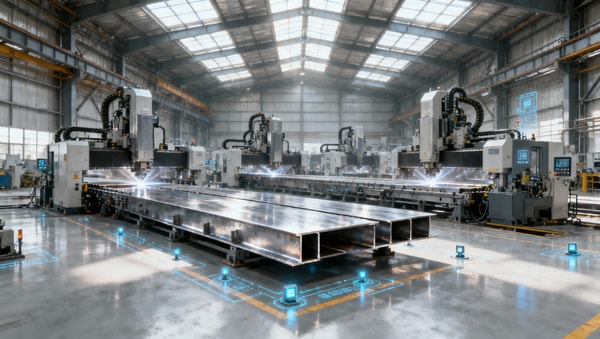
 Tangshan Iron Tower Smart Base Processes 600K Tons Steel AnnuallyTangshan Iron Tower Smart Base processes 600K tons steel annually—42× faster angle steel marking, API-enabled traceability for Belt and Road infrastructure projects.
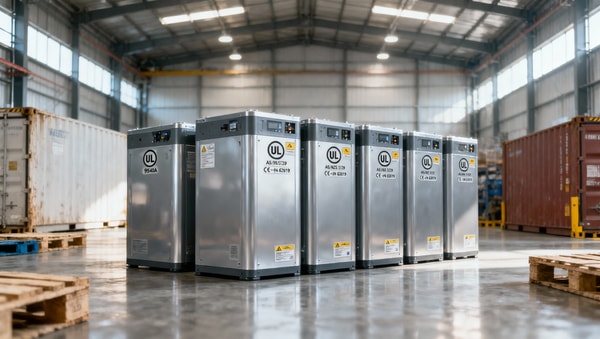
 Q1 2026 Lithium Battery Export Prices Rise 11.3% for ESSQ1 2026 Lithium Battery Export Prices Rise 11.3% for ESS — $128/kWh amid UL 9540A costs, freight normalization & surging demand in Vietnam, Germany, Australia.
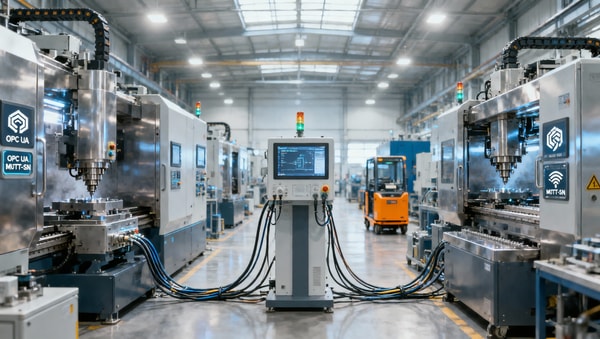
 China Launches 'Model-Data Resonance' Initiative for AI+Manufacturing InteroperabilityChina's 'Model-Data Resonance' initiative launches AI+Manufacturing interoperability standard—key for global buyers, OEMs & integrators seeking seamless smart factory integration.
 China's First Embodied AI Robot Export Liability Insurance Launched in GuangxiChina's first Embodied AI Robot Export Liability Insurance launched in Guangxi—covers AI decision errors, data breaches & third-party harm for robotics, medtech & security exporters.
 State Grid’s $680M Embodied AI Equipment Procurement LaunchesState Grid’s $680M embodied AI equipment procurement demands IEC 62443 & GB/T 38925 compliance—unlock global infrastructure bids now.
 RCEP Green Packaging Mutual Recognition Extended to AU, NZ, JP, KRRCEP green packaging mutual recognition now extends to AU, NZ, JP, KR — unlock faster customs clearance & 22% lower inspection costs for GB/T 38727-2020-compliant sustainable food packaging exports from China.
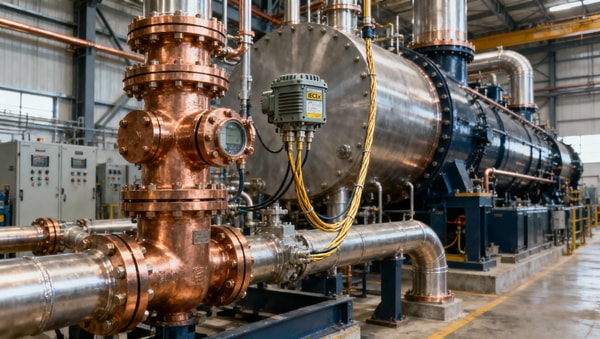
 Tangshan Beijiao Thermal Power Unit 1 A-Check StartsTangshan Beijiao Thermal Power Unit 1 A-Check starts Apr 2026 — urgent demand for domestic industrial valves, high-temp sensors & fire-resistant cables. Act now to secure Q3 2026 supply.
 WeChat Pay Integrates QR Codes from 5 Countries for Cross-Border B2B PaymentsWeChat Pay integrates QR codes from 5 countries for cross-border B2B payments—faster T+0 settlement, 35% lower fees, and seamless USD 50K transactions.
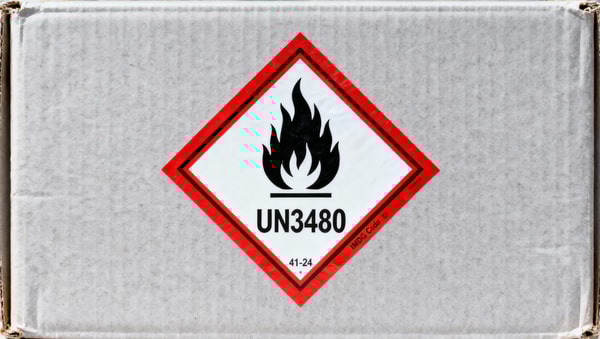
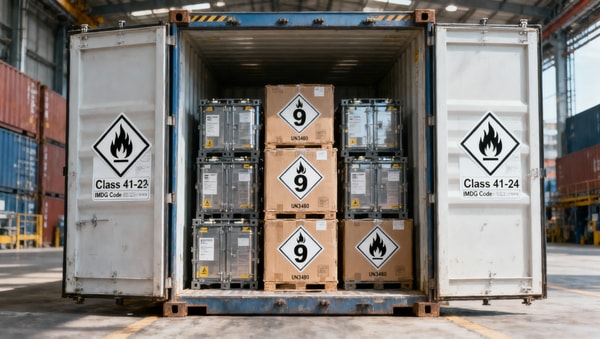
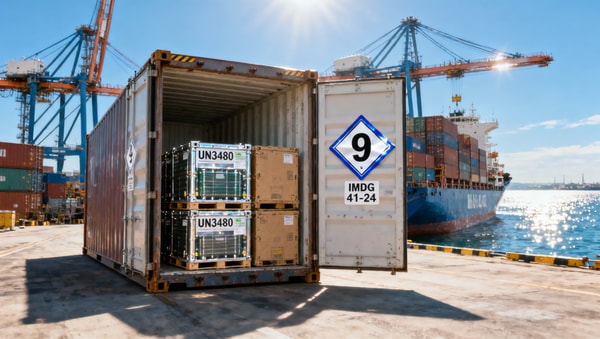
 IMDG Code 41-24 Enforces New UN3480 Labeling for Lithium BatteriesIMDG Code 41-24 mandates new UN3480 labeling for lithium batteries from 29 April 2026 — avoid shipment rejection. Act now to ensure compliance.
 China-France Nuclear Cooperation Advances at Beijing ExpoChina-France nuclear cooperation advances: mutual recognition for nuclear-grade seals, cables & radiation monitors boosts export readiness for suppliers targeting EU and BRI projects.
 Vietnam’s 4 Provinces Seek AI Tourism Tech in NanningAI tourism tech in demand: Vietnam’s 4 provinces seek AI-guided terminals, multilingual interpretation, AI-CCTV & smart ticketing in Nanning—key opportunity for B2G exporters.
 Q1 2026 China Power Market Trading Up 25.6%: Smart Meters, Storage Export Demand RisesSmart meters, energy storage exports surge as China’s Q1 2026 power market trading jumps 25.6% — key signal for global manufacturers & channel partners.
 China First Country with 5M+ Active Invention PatentsChina first country with 5M+ active invention patents—key for buyers in AI, solar, lithium battery & energy storage. Discover IP implications for sourcing, compliance & supplier vetting.
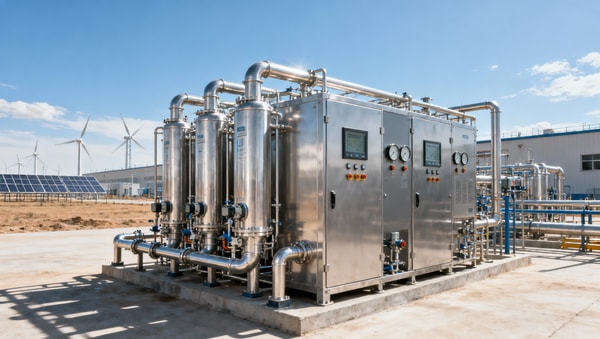
 Shenneng Etorkeqi Green Ammonia Project: Deionized Water Station OperationalShenneng Etorkeqi Green Ammonia Project’s deionized water station is now operational—ISO 8502-3 compliant, fully integrated, and a key milestone for global green hydrogen developers and exporters.
 China Launches 'Model-Data Resonance' Initiative for AI+Manufacturing InteroperabilityModel-Data Resonance initiative boosts AI+manufacturing interoperability—learn how GB/T XXXX–2026 aligns with VDI 2182 & ISA-95 for smoother global factory deployments.
 China’s First Embodied AI Robot Insurance Launched in GuangxiChina’s first embodied AI robot insurance launched in Guangxi—key for robotics exporters, AI hardware makers & global compliance teams. CE-recognized, EU/UK/AU-ready.
 IMDG Code 41-24 Enforced: UN3480 Lithium Battery Labeling Now MandatoryIMDG Code 41-24 is now mandatory: UN3480 lithium battery labeling, documentation & packaging rules are enforced globally as of 28 April 2026 — avoid port rejections!
 State Grid’s $680M Embodied AI Procurement Signals Export OpportunityEmbodied AI, IEC 61850 & IEC 62443: State Grid’s $680M procurement unlocks export opportunities for compliant industrial robots and smart vision systems in emerging markets.
 IMDG Code 41-24 Enforces UN3480 Class 9 Labeling for Lithium Battery Sea FreightIMDG Code 41-24 mandates UN3480 lithium battery sea freight to display durable Class 9 labels from April 27, 2026—avoid delays & port rejections.
 ESS Key Component Prices Drop ~80%: Quality & Compliance RiseESS key component prices dropped ~80%—but quality & compliance demands surged. Discover how UL 9540A, AS/NZS 5139, and certified BMS/inverters now define market access.








Popular Tags
Global Trade Insights & Industry
Our mission is to empower global exporters and importers with data-driven insights that foster strategic growth.
Search News
Popular Tags
Industry Overview
The global commercial kitchen equipment market is projected to reach $112 billion by 2027. Driven by urbanization, the rise of e-commerce food delivery, and strict hygiene regulations.