

Is sheet metal roofing worth it in hot and coastal climates?
For buyers, distributors, and market researchers comparing building materials on an online trade platform, sheet metal roofing can absolutely be worth it in hot and coastal climates—if the specification is right. In most cases, the answer is yes for long-term value, especially when heat reflectivity, corrosion resistance, lifespan, and maintenance costs matter more than the lowest upfront price. The real decision is not simply whether to choose metal roofing, but which metal, coating, fastening system, and fabrication quality are suitable for high heat, salt air, humidity, and wind exposure.
For procurement teams and commercial evaluators, this means looking beyond basic product listings. A low-priced roof panel may underperform quickly in coastal environments if the base metal, paint system, cut-edge protection, or sheet metal fabrication quality is weak. A well-specified system, however, can deliver lower lifecycle cost, reduced cooling demand, and stronger resale or project value.
Short answer: sheet metal roofing is usually worth it in hot and coastal climates—but only with the right grade and finish
For most commercial and residential applications in hot and coastal regions, sheet metal roofing offers a strong value proposition because it addresses the two main environmental stresses directly: solar heat and corrosion. Reflective metal roofs can help reduce heat gain, while corrosion-resistant materials and coatings help the roof survive salt-laden air, moisture, and storms.
That said, not all sheet metal roofing performs the same. In hot inland climates, thermal reflectivity and expansion control may be the main concern. In coastal climates, corrosion protection becomes equally or more important. A buyer who selects roofing based only on initial price may face premature rusting, coating failure, loose fasteners, or higher maintenance costs.
The practical takeaway is simple: sheet metal roofing is often worth the investment, but only when matched to the actual exposure conditions and total cost of ownership.
Why buyers and sourcing teams choose sheet metal roofing for hot climates
In hot climates, the biggest advantage of sheet metal roofing is heat management. Many metal roofing systems are designed with reflective finishes that bounce back a larger portion of solar radiation than darker, heat-absorbing roofing materials. This can help lower roof surface temperatures and reduce indoor cooling loads, particularly in warehouses, industrial buildings, retail units, agricultural structures, and logistics facilities.
For commercial buyers, the benefits often include:
- Lower energy consumption for air conditioning
- Improved indoor comfort in top-floor or exposed spaces
- Longer service life under intense UV exposure
- Reduced thermal degradation compared with some conventional roofing materials
Cool-roof coatings and lighter colors are especially valuable in regions with long summers and high sun intensity. Even when the upfront cost is higher than some alternatives, the operating savings can improve the return on investment over time.
However, performance depends on the roofing profile, insulation system, ventilation design, and installation quality. Metal roofing alone does not solve heat problems if the full roof assembly is poorly designed.
Why coastal climates change the evaluation
Coastal environments are tougher on roofing than many buyers initially assume. Salt spray, high humidity, frequent rain, strong winds, and airborne chlorides can accelerate corrosion, especially around cut edges, fasteners, laps, and scratches in the coating. This is why a product that performs well inland may fail much faster near the sea.
In coastal procurement, the key question is not “Is metal roofing good?” but “Which metal roofing system can resist coastal corrosion for the intended service life?”
Decision-makers should assess:
- Distance from the shoreline
- Direct salt spray exposure
- Wind and storm severity
- Expected maintenance conditions
- Industrial pollution in the area
In many coastal markets, corrosion resistance is the main value driver. If the wrong material is selected, lifecycle costs can rise sharply due to repainting, panel replacement, rust treatment, and premature refurbishment.
Which sheet metal roofing materials perform best in hot and coastal environments?
This is one of the most important buying decisions because the base metal strongly affects durability, price, and suitability.
Aluminum roofing
Aluminum is widely considered one of the best options for coastal climates because it naturally resists corrosion better than many steel-based products. It does not rust like carbon steel, which makes it highly attractive for projects near shorelines. It is also lightweight and performs well in hot weather.
Best suited for:
- Buildings near the coast
- High-humidity regions
- Projects prioritizing corrosion resistance over lowest initial cost
Main trade-off: aluminum is usually more expensive than galvanized steel.
Galvalume steel
Galvalume-coated steel is popular because it balances cost and performance. It generally offers better corrosion resistance than basic galvanized steel and performs well in many hot climates. However, in severe marine environments, buyers should verify whether it is approved for the specific distance from saltwater exposure.
Best suited for:
- Hot inland regions
- Moderately coastal areas with lower direct salt exposure
- Buyers seeking a balance between budget and durability
Galvanized steel
Galvanized steel can be cost-effective, but it may be less ideal in aggressive coastal environments if coating quality and maintenance are insufficient. It can still work in some applications, but it requires closer review of zinc coating weight, paint system, and maintenance expectations.
Stainless steel
Stainless steel offers excellent corrosion resistance and strength, especially in demanding industrial or marine environments. However, it is usually selected for specialized applications because of its higher cost.
Copper and zinc
These materials can offer long lifespan and distinctive appearance, but they are often used in premium architectural projects rather than standard industrial procurement due to cost considerations.
How sheet metal fabrication affects roofing performance
For B2B buyers, sheet metal fabrication quality is not a minor detail—it directly affects field performance. Even a high-grade metal can underperform if profiling, bending, cutting, coating application, or edge treatment is poorly executed.
Critical fabrication factors include:
- Panel dimensional accuracy for proper fit and water shedding
- Clean cut edges with adequate protection
- Consistent coating thickness
- Correct forming to avoid microcracks in protective layers
- Reliable seam and fastening design
In coastal climates, fabrication defects become more dangerous because salt and moisture exploit small weaknesses quickly. Edge corrosion, coating breaks, and poorly formed seams can shorten service life significantly. For distributors and sourcing managers, supplier screening should therefore include manufacturing standards, testing records, and project references in similar environments.
What costs matter most: upfront price or lifecycle value?
Many buyers ask whether sheet metal roofing is “worth it” because the initial purchase cost can be higher than some conventional roofing materials. But commercial procurement should focus on total ownership cost rather than invoice price alone.
Relevant cost factors include:
- Material purchase price
- Installation cost
- Expected lifespan
- Maintenance frequency
- Energy savings from reflectivity
- Repair and replacement risk in corrosive environments
- Downtime or operational disruption from roofing failure
In hot climates, lower cooling demand can improve long-term economics. In coastal climates, avoiding premature corrosion can prevent major replacement expense. For industrial facilities, hotels, storage sites, and trading properties, these savings can be more important than the initial price difference.
This is why serious buyers often evaluate sheet metal roofing in the same disciplined way they compare MRI scanners cost, car batteries price, or 3D printing price: not just by sticker price, but by service life, efficiency, maintenance burden, and risk exposure.
What are the main risks and limitations?
Sheet metal roofing is not automatically the best option in every project. Buyers should understand the potential drawbacks before procurement.
- Higher upfront cost: Premium materials such as aluminum or high-performance coated steel may require a larger initial budget.
- Noise concerns: Without proper insulation or underlayment, rain and wind noise may be more noticeable.
- Thermal movement: Metal expands and contracts with temperature changes, so system design must accommodate movement.
- Corrosion risk if underspecified: Wrong material choice in coastal zones can lead to early failure.
- Installation sensitivity: Poor workmanship can undermine product advantages.
- Denting risk: In some cases, hail or impact may deform thinner panels.
These risks do not negate the value of metal roofing, but they reinforce the need for proper specification and supplier evaluation.
How to judge whether sheet metal roofing is a good procurement choice for your project
For purchasing teams, agents, and business evaluators, the best approach is a practical assessment framework.
1. Define the climate exposure clearly
Separate hot-climate performance needs from marine-corrosion needs. A roof in a desert city and a roof beside a humid seaport may both be “hot,” but they require different specifications.
2. Check the base metal and protective coating
Request detailed data on substrate type, metallic coating, paint system, and corrosion warranties. Generic descriptions are not enough for serious sourcing decisions.
3. Review supplier fabrication capability
Ask how the panels are cut, formed, coated, packed, and quality-tested. Consistency in sheet metal fabrication strongly influences durability.
4. Evaluate fastening and seam design
Fasteners, clips, washers, and seam systems are common weak points in coastal and high-wind applications. These components should be suitable for the environment, not treated as secondary accessories.
5. Estimate lifecycle cost
Build a comparison model covering installation, maintenance, service life, and energy impact. This helps avoid being misled by low entry pricing.
6. Match product class to building type
A warehouse, resort, factory, residential villa, and agricultural shed do not need the same roofing specification. Use-case alignment matters.
When sheet metal roofing is most worth it
Sheet metal roofing tends to deliver the strongest value in the following cases:
- Buildings in sunny regions with high cooling demand
- Coastal projects where corrosion resistance is critical
- Commercial or industrial sites seeking long service life
- Projects where maintenance access is difficult or expensive
- Buyers prioritizing lifecycle cost over lowest upfront spending
- Developments where appearance, durability, and resale value all matter
It may be less attractive where the budget is extremely constrained, service life expectations are short, or the installation ecosystem lacks qualified contractors.
Final verdict for buyers, distributors, and market researchers
Yes, sheet metal roofing is often worth it in hot and coastal climates, especially when long-term durability, thermal performance, and reduced maintenance matter. But the value depends heavily on choosing the correct material and fabrication standard for the environment.
For hot climates, reflective finishes and efficient roof assemblies can support energy savings. For coastal climates, corrosion resistance is the deciding factor, making aluminum and high-quality coated systems especially relevant. For B2B sourcing teams, the smartest decision comes from comparing lifecycle cost, supplier capability, and application fit—not just headline price.
In short, sheet metal roofing is a high-value option when it is specified properly. If it is treated as a commodity, it can become an expensive mistake. If it is evaluated as a performance system, it can be a durable and commercially sound investment.
Recommended News
 China’s 10-Dept AI Export Ethics Review Rule Takes EffectChina’s new 10-dept AI export ethics rule mandates algorithmic bias review for AI hardware bound for the EU, US, Canada, Japan & SK—key for smart cameras, voice assistants & industrial vision exporters.
 Red Sea Detour Now Standard: $1,850 TEU Premium on Asia-Europe RoutesRed Sea detour premium now standard: $1,850/TEU surcharge embedded in Asia-Europe freight rates — vital intel for exporters, importers & logistics teams.
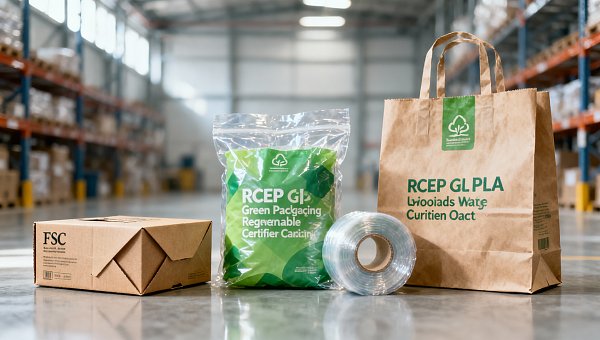
 RCEP Green Packaging Mutual Recognition Takes EffectRCEP Green Packaging Mutual Recognition takes effect Apr 22, 2026—streamline exports to AU, NZ, JP, KR with GB/T 37629–2019 certified molded fiber & PLA packaging.
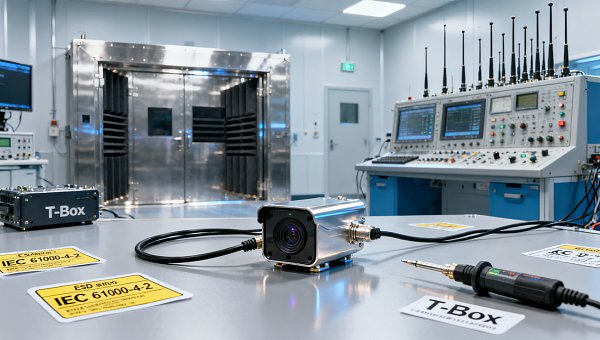
 Mexico NOM-019-SCFI-2026 Effective: EMC Certification Required for Auto Electronics ExportsEMC certification is now mandatory for auto electronics exports to Mexico under NOM-019-SCFI-2026. Ensure compliance for rearview mirrors, radar sensors & T-Box units—avoid shipment delays and order cancellations.
") TÜV Rheinland Updates CE Requirements for Servo Drives (PLd + EMC Joint Validation)TÜV Rheinland now mandates joint PLd + EMC validation for servo drives under CE marking—learn how this impacts certification timelines, lab selection, and EU market access.
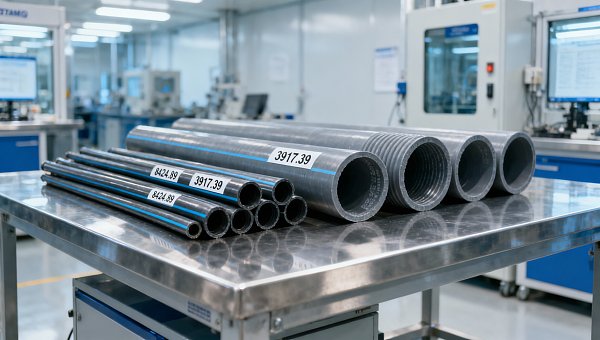
TÜV Rheinland Updates CE Requirements for Servo Drives (PLd + EMC Joint Validation)TÜV Rheinland now mandates joint PLd + EMC validation for servo drives under CE marking—learn how this impacts certification timelines, lab selection, and EU market access. Vietnam Suspends SASO Mutual Recognition for Chinese Irrigation EquipmentVietnam suspends SASO mutual recognition for Chinese irrigation equipment—urgent compliance updates for drip tapes & PE pipes (HS 8424.89/3917.39). Act now to avoid delays.
 FDA Finalizes AI Diagnostic Device Rules for ImportersFDA finalizes AI diagnostic device rules for importers: New bias assessment mandate impacts ultrasound, glucose analyzers & dermatoscopes. Act now to ensure U.S. market access.
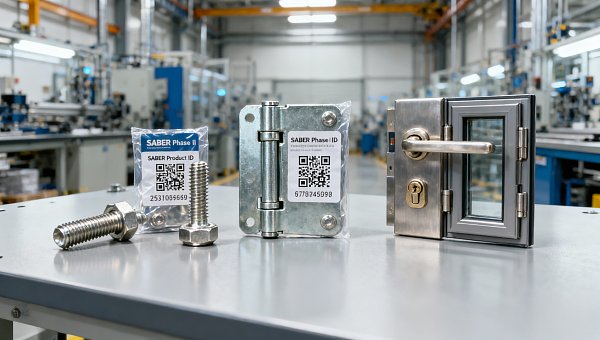
 SABER Phase II Live: Saudi Building Hardware Requires Digital Type Test Reports & PIDSABER Phase II is live: Building hardware exports to Saudi Arabia now require digital type test reports & a mandatory, immutable Product ID (PID). Act now to avoid customs delays!
 IMDG Code 41-24 Enforced: UN3480 Lithium Battery Labeling Mandatory from Apr 2026IMDG Code 41-24 enforcement starts Apr 2026: UN3480 lithium battery labeling & ISO 17363 docs are now mandatory—avoid port rejections!
 CBAM Carbon Tax Launch: Low CBAM Reporting Rate Among Chinese ExportersCBAM Carbon Tax is live—only 36.8% of Chinese exporters reported. Discover why, which industries are at risk, and how to secure EU market access now.
 China’s 10 Agencies Issue AI Export Ethics Review RulesChina’s 10 agencies launch AI export ethics rules—mandating bias reviews for visual inspection, warehouse AI & defect detection systems. Stay compliant & competitive.
 RCEP Green Packaging Mutual Recognition Takes EffectRCEP Green Packaging Mutual Recognition is now in effect—unlock faster customs clearance in Australia, NZ, Japan & Korea for GB/T 37659–2019-certified eco-packaging.
 Mexico NOM-019-SCFI-2026 Effective Apr 10, 2026: EMC Certification Required for Automotive ElectronicsNOM-019-SCFI-2026 EMC certification is now mandatory for automotive electronics entering Mexico — act before the July 1, 2026 customs ban.
 Red Sea Rerouting Normalized, EBA at $1,850/TEURed Sea rerouting normalized with EBA fixed at $1,850/TEU—learn how this structural shift impacts Asia-Europe freight costs, lead times & supply chain strategy.
 FDA AI Diagnostic Device Draft Rules: Bias Assessment for ImportsFDA AI diagnostic device draft rules require bias assessment for imports—learn how portable ultrasound, glucose, and dermatoscopic AI devices are affected & what to do next.
") TÜV Rheinland Updates CE Requirements for Servo Drives (PLd + EMC)TÜV Rheinland updates CE requirements for servo drives: PLd (ISO 13849-1) + EMC immunity (IEC 61000-6-2 Ed.4) now mandatory together — act now to avoid EU market delays!
TÜV Rheinland Updates CE Requirements for Servo Drives (PLd + EMC)TÜV Rheinland updates CE requirements for servo drives: PLd (ISO 13849-1) + EMC immunity (IEC 61000-6-2 Ed.4) now mandatory together — act now to avoid EU market delays! SABER Phase II Launch: Building Hardware Must Submit Digital Type Test Reports & Unique Product IDSABER Phase II now mandates digital type test reports & unique product IDs for building hardware—fasteners, scaffolding, door/window components. Ensure compliance to avoid customs rejection & SCOC delays.
 Vietnam Suspends SASO Mutual Recognition for Chinese Irrigation EquipmentVietnam suspends SASO mutual recognition for Chinese irrigation equipment—TCVN testing now mandatory. Act now to avoid 8–12 week delays and customs holdups.
 IMDG Code 41-24 Enforced: UN3480 Lithium Battery Labeling UpdateIMDG Code 41-24 enforcement starts April 2026: UN3480 lithium battery labeling updates are mandatory for global maritime shipments — avoid port delays, detention & penalties.
 EU CBAM Enters Full Enforcement on Jan 1, 2026EU CBAM full enforcement starts Jan 1, 2026 — mandatory quarterly reporting & certificate purchases for batteries, steel, cement, aluminum, fertilizers & chemicals. Act now to ensure EU market access.
 EU CBAM Carbon Tariff Starts Oct 2026 for Chinese Battery, Cement, Chemical ExportsEU CBAM carbon tariff hits Chinese battery, cement & chemical exports from Oct 2026 — mandatory emissions reporting starts now. Avoid €98/t default fees.

















Popular Tags
Global Trade Insights & Industry
Our mission is to empower global exporters and importers with data-driven insights that foster strategic growth.
Search News
Popular Tags
Industry Overview
The global commercial kitchen equipment market is projected to reach $112 billion by 2027. Driven by urbanization, the rise of e-commerce food delivery, and strict hygiene regulations.