

Storage Equipment Prices Drop 80%: Industry Cooling Down
China’s energy storage sector is undergoing rapid price correction: key system components—including lithium-ion battery BMS, PCS, and liquid-cooling units—have seen cumulative price declines of approximately 80% over the past three years, according to a report by China Industrial Economy Information Network dated April 24, 2026. This sharp deflation signals a critical inflection point for manufacturers, integrators, exporters, and certification-dependent stakeholders—particularly those active in EU and Australian markets, where regulatory scrutiny on low-cost storage products has intensified.
Event Overview
On April 24, 2026, China Industrial Economy Information Network reported that prices of core energy storage system equipment (including battery management systems, power conversion systems, and liquid-cooling units) have fallen by roughly 80% since 2023. Some bids submitted by domestic enterprises now fall below average manufacturing cost levels. Concurrently, the European Union and Australia have begun tightening inspection protocols for imported energy storage products. Meanwhile, leading Chinese manufacturers are accelerating adoption of international safety certifications—including UL 9540A and AS/NZS 5139.
Impact on Specific Industry Segments
Direct Exporters & Trading Firms
These entities face heightened compliance risk as EU and Australian authorities increase random inspections of low-priced storage systems. Non-compliant shipments may incur delays, retesting costs, or rejection—especially if products lack UL 9540A or AS/NZS 5139 documentation. Revenue pressure from thin margins also limits capacity to absorb certification or testing expenses.
System Integrators & EPC Contractors
With component prices collapsing, integrators face growing tension between bid competitiveness and project reliability. Instances of quality-related failures and delivery defaults are rising, directly affecting warranty obligations, client trust, and repeat business—particularly in utility-scale or commercial-and-industrial (C&I) deployments where performance guarantees are contractually binding.
Component Manufacturers (BMS, PCS, Liquid-Cooling)
Price erosion has compressed gross margins significantly. Firms operating near or below cost thresholds risk unsustainable cash flow, reduced R&D investment, and weakened after-sales support infrastructure. The shift toward international certification also implies higher upfront compliance costs and longer time-to-market for new product variants.
What Enterprises and Practitioners Should Monitor and Do Now
Track official regulatory updates in priority export markets
EU and Australian authorities have initiated stricter post-import sampling and testing. Enterprises should monitor published enforcement notices, updated customs guidance, and technical annexes to Regulation (EU) 2019/1020 or Australia’s Electrical Equipment Safety System (EESS) requirements—especially any linkage between pricing thresholds and mandatory certification triggers.
Assess exposure to high-risk product categories and geographies
Products with aggressive bids—particularly those targeting EU residential storage tenders or Australian C&I projects—warrant immediate internal review. Focus on whether current quotations align with verified production cost baselines and whether UL 9540A or AS/NZS 5139 certification status is confirmed, documented, and test-report accessible to buyers.
Distinguish between policy signals and operational readiness
While headline price drops reflect market dynamics, certification timelines (e.g., full UL 9540A cell-to-system validation) often require 6–12 months. Companies should avoid conflating announcement of certification intent with actual compliance—and verify third-party lab reports rather than relying on self-declared conformity.
Prepare procurement and supply chain contingencies
Given rising delivery defaults, integrators and developers should revisit supplier qualification criteria—not just on price, but on certified production capacity, traceable test data, and contractual liability clauses covering non-conformance. Dual-sourcing strategies for critical subcomponents (e.g., BMS firmware or thermal interface materials) may mitigate single-point failure risks.
Editorial Observation / Industry Perspective
From industry perspective, this price correction is less a temporary market fluctuation and more a structural recalibration—driven by overcapacity, intensified competition, and delayed alignment between domestic manufacturing scale and international safety expectations. Analysis来看, the 80% decline reflects not just cost efficiencies, but also margin compression that challenges long-term product stewardship. Observation来看, the EU and Australia’s tightened inspections signal growing regulatory skepticism toward cost-driven compliance shortcuts—making certification no longer optional for market access, but a prerequisite for continuity. Current更值得关注的是 how quickly firms translate certification commitments into auditable, field-validated outcomes—not just certificates on paper.
It is更适合理解为 a warning phase: price stability remains fragile, and regulatory tolerance for under-certified, low-cost systems is narrowing rapidly. The trend does not yet indicate systemic consolidation—but it does raise the operational bar for all players engaged in cross-border storage value chains.
Concluding, this development underscores that cost competitiveness alone no longer defines market viability in global energy storage. Instead, verifiable safety compliance, transparent supply chain governance, and enforceable delivery discipline are becoming baseline requirements—not differentiators. For stakeholders, the priority shifts from chasing volume to securing resilience across technical, regulatory, and contractual dimensions.
Information Source: China Industrial Economy Information Network (April 24, 2026). Note: Certification adoption rates, regional enforcement frequency, and cost-basis verification methodologies remain subject to ongoing observation and are not quantified in the source report.
Recommended News
 China’s 10-Dept AI Export Ethics Review Rule Takes EffectChina’s new 10-dept AI export ethics rule mandates algorithmic bias review for AI hardware bound for the EU, US, Canada, Japan & SK—key for smart cameras, voice assistants & industrial vision exporters.
 Red Sea Detour Now Standard: $1,850 TEU Premium on Asia-Europe RoutesRed Sea detour premium now standard: $1,850/TEU surcharge embedded in Asia-Europe freight rates — vital intel for exporters, importers & logistics teams.
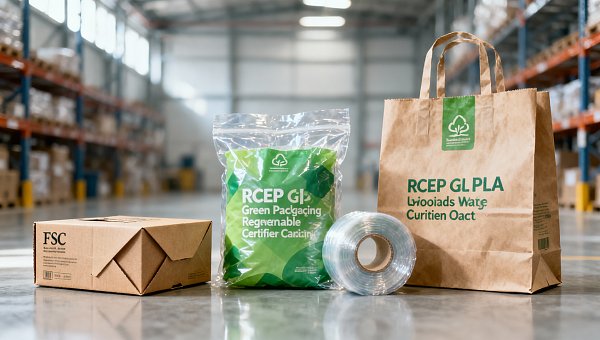
 RCEP Green Packaging Mutual Recognition Takes EffectRCEP Green Packaging Mutual Recognition takes effect Apr 22, 2026—streamline exports to AU, NZ, JP, KR with GB/T 37629–2019 certified molded fiber & PLA packaging.
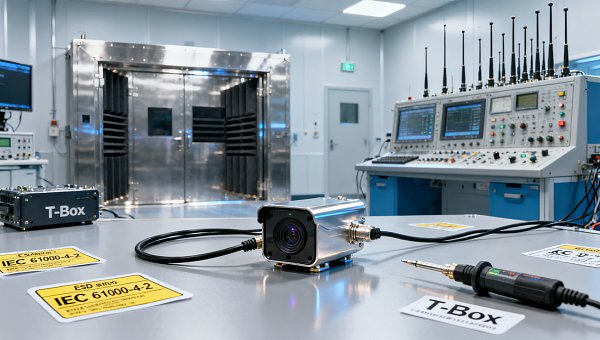
 Mexico NOM-019-SCFI-2026 Effective: EMC Certification Required for Auto Electronics ExportsEMC certification is now mandatory for auto electronics exports to Mexico under NOM-019-SCFI-2026. Ensure compliance for rearview mirrors, radar sensors & T-Box units—avoid shipment delays and order cancellations.
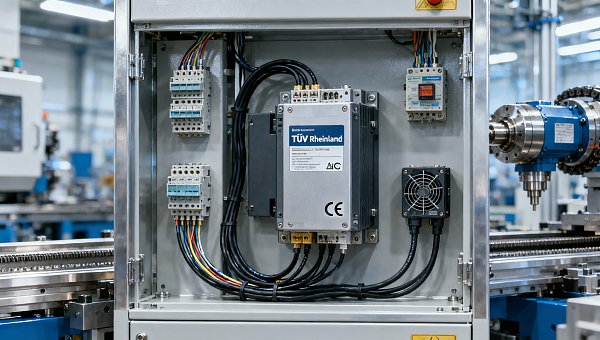
") TÜV Rheinland Updates CE Requirements for Servo Drives (PLd + EMC Joint Validation)TÜV Rheinland now mandates joint PLd + EMC validation for servo drives under CE marking—learn how this impacts certification timelines, lab selection, and EU market access.
TÜV Rheinland Updates CE Requirements for Servo Drives (PLd + EMC Joint Validation)TÜV Rheinland now mandates joint PLd + EMC validation for servo drives under CE marking—learn how this impacts certification timelines, lab selection, and EU market access. Vietnam Suspends SASO Mutual Recognition for Chinese Irrigation EquipmentVietnam suspends SASO mutual recognition for Chinese irrigation equipment—urgent compliance updates for drip tapes & PE pipes (HS 8424.89/3917.39). Act now to avoid delays.
 FDA Finalizes AI Diagnostic Device Rules for ImportersFDA finalizes AI diagnostic device rules for importers: New bias assessment mandate impacts ultrasound, glucose analyzers & dermatoscopes. Act now to ensure U.S. market access.
 SABER Phase II Live: Saudi Building Hardware Requires Digital Type Test Reports & PIDSABER Phase II is live: Building hardware exports to Saudi Arabia now require digital type test reports & a mandatory, immutable Product ID (PID). Act now to avoid customs delays!
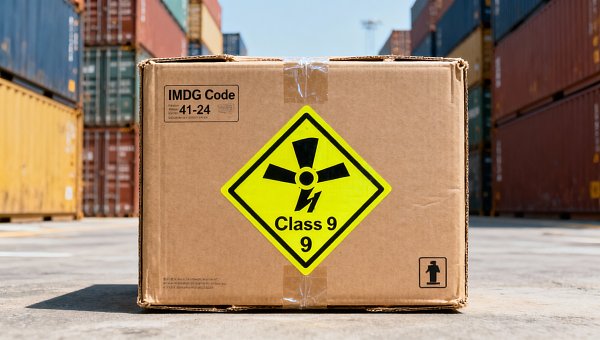
 IMDG Code 41-24 Enforced: UN3480 Lithium Battery Labeling Mandatory from Apr 2026IMDG Code 41-24 enforcement starts Apr 2026: UN3480 lithium battery labeling & ISO 17363 docs are now mandatory—avoid port rejections!
 CBAM Carbon Tax Launch: Low CBAM Reporting Rate Among Chinese ExportersCBAM Carbon Tax is live—only 36.8% of Chinese exporters reported. Discover why, which industries are at risk, and how to secure EU market access now.
 China’s 10 Agencies Issue AI Export Ethics Review RulesChina’s 10 agencies launch AI export ethics rules—mandating bias reviews for visual inspection, warehouse AI & defect detection systems. Stay compliant & competitive.
 RCEP Green Packaging Mutual Recognition Takes EffectRCEP Green Packaging Mutual Recognition is now in effect—unlock faster customs clearance in Australia, NZ, Japan & Korea for GB/T 37659–2019-certified eco-packaging.
 Mexico NOM-019-SCFI-2026 Effective Apr 10, 2026: EMC Certification Required for Automotive ElectronicsNOM-019-SCFI-2026 EMC certification is now mandatory for automotive electronics entering Mexico — act before the July 1, 2026 customs ban.
 Red Sea Rerouting Normalized, EBA at $1,850/TEURed Sea rerouting normalized with EBA fixed at $1,850/TEU—learn how this structural shift impacts Asia-Europe freight costs, lead times & supply chain strategy.
 FDA AI Diagnostic Device Draft Rules: Bias Assessment for ImportsFDA AI diagnostic device draft rules require bias assessment for imports—learn how portable ultrasound, glucose, and dermatoscopic AI devices are affected & what to do next.
") TÜV Rheinland Updates CE Requirements for Servo Drives (PLd + EMC)TÜV Rheinland updates CE requirements for servo drives: PLd (ISO 13849-1) + EMC immunity (IEC 61000-6-2 Ed.4) now mandatory together — act now to avoid EU market delays!
TÜV Rheinland Updates CE Requirements for Servo Drives (PLd + EMC)TÜV Rheinland updates CE requirements for servo drives: PLd (ISO 13849-1) + EMC immunity (IEC 61000-6-2 Ed.4) now mandatory together — act now to avoid EU market delays! SABER Phase II Launch: Building Hardware Must Submit Digital Type Test Reports & Unique Product IDSABER Phase II now mandates digital type test reports & unique product IDs for building hardware—fasteners, scaffolding, door/window components. Ensure compliance to avoid customs rejection & SCOC delays.
 Vietnam Suspends SASO Mutual Recognition for Chinese Irrigation EquipmentVietnam suspends SASO mutual recognition for Chinese irrigation equipment—TCVN testing now mandatory. Act now to avoid 8–12 week delays and customs holdups.
 IMDG Code 41-24 Enforced: UN3480 Lithium Battery Labeling UpdateIMDG Code 41-24 enforcement starts April 2026: UN3480 lithium battery labeling updates are mandatory for global maritime shipments — avoid port delays, detention & penalties.
 EU CBAM Enters Full Enforcement on Jan 1, 2026EU CBAM full enforcement starts Jan 1, 2026 — mandatory quarterly reporting & certificate purchases for batteries, steel, cement, aluminum, fertilizers & chemicals. Act now to ensure EU market access.
 EU CBAM Carbon Tariff Starts Oct 2026 for Chinese Battery, Cement, Chemical ExportsEU CBAM carbon tariff hits Chinese battery, cement & chemical exports from Oct 2026 — mandatory emissions reporting starts now. Avoid €98/t default fees.











Popular Tags
Global Trade Insights & Industry
Our mission is to empower global exporters and importers with data-driven insights that foster strategic growth.
Search News
Popular Tags
Industry Overview
The global commercial kitchen equipment market is projected to reach $112 billion by 2027. Driven by urbanization, the rise of e-commerce food delivery, and strict hygiene regulations.