

Sheet Metal Bending Tolerances: How Tight Is Too Tight?
In precision fabrication, sheet metal bending tolerances can make or break product quality, assembly fit, and overall cost. From sheet metal ductwork and sheet metal gauge selection to sourcing decisions that also affect components like radiators price or even unrelated industrial buys, understanding how tight is too tight helps buyers and engineers avoid over-specification. This guide explores practical tolerance standards, cost trade-offs, and key factors procurement teams should evaluate before finalizing requirements.
The short answer is this: a bend tolerance is “too tight” when it no longer improves function, fit, or downstream assembly performance enough to justify the higher manufacturing cost, slower throughput, and greater rejection risk. For buyers, sourcing teams, and commercial evaluators, that is the real decision point. In many projects, demanding ultra-tight tolerances on every bend does not create a better part; it creates more scrap, more supplier pushback, longer lead times, and a higher quoted price.
That is why the most useful way to evaluate sheet metal bending tolerances is not as an isolated engineering number, but as a business and manufacturability decision. If the part must align with a critical mating component, seal against a housing, or support repeatable assembly in volume production, tighter control may be justified. If not, looser and more practical tolerances often deliver better total value.
What buyers are really asking when they search “How tight is too tight?”
Most searchers are not looking for theory alone. They usually want to answer four practical questions:
- What tolerance range is realistically achievable in sheet metal bending?
- When does tighter tolerance start increasing cost disproportionately?
- How do material, thickness, bend geometry, and process affect the result?
- What should be specified on drawings and RFQs to avoid disputes with suppliers?
For procurement professionals and business evaluators, these questions matter because tolerance decisions directly influence supplier selection, quote comparability, quality consistency, and total landed cost. A drawing that calls for unnecessary precision can reduce the available supplier base, especially in global sourcing environments where shop capability varies by equipment, operator skill, inspection method, and production scale.
Typical sheet metal bending tolerances: what is usually practical?
While exact values depend on the part and process, many fabricators treat the following as general commercial expectations for standard press brake work:
- Bend angle tolerance: commonly around ±1° for standard production, sometimes tighter with controlled setups and favorable geometry
- Linear flange dimensions: often around ±0.2 mm to ±0.5 mm depending on feature size, material, and tooling
- Overall formed dimensions: often broader than flat-pattern dimensions because bend accumulation affects final geometry
These are not universal rules, but they provide a useful commercial benchmark. If a sourcing document calls for significantly tighter values without identifying why they are functionally necessary, that is often a sign of over-specification.
For example, sheet metal ductwork usually does not require the same tolerance profile as an enclosure with interlocking panels, a precision bracket in an automated assembly, or a component that mates with seals and fasteners in multiple directions. The acceptable tolerance always depends on use case, not just material type.
When tighter tolerances stop adding value
Tighter tolerances become questionable when they exceed the natural stability of the process or the functional need of the product. This usually happens in several situations:
- The part is non-critical, but the drawing applies precision across all bends
- Assembly has enough clearance to absorb normal variation
- Visual appearance matters less than structural utility
- Downstream operations such as welding, coating, or fastening already introduce more variation than the bend tolerance itself
- The chosen sheet metal gauge or material has inherent springback variability that makes extremely tight control expensive
In commercial terms, tighter-than-necessary tolerances often create a hidden cost stack: more setup time, more first-article adjustment, more in-process inspection, slower cycle time, and higher rejection rates. A supplier may still agree to the requirement, but the quote will reflect the risk.
The biggest factors that affect achievable bend tolerance
Not all sheet metal parts respond equally to bending. The same numerical tolerance may be easy on one design and difficult on another. Buyers and evaluators should pay attention to these variables:
Material type
Aluminum, stainless steel, mild steel, copper, and galvanized material all behave differently. Springback varies by alloy and temper, and that directly affects angle consistency. Harder materials or materials with less predictable lot-to-lot behavior may need wider tolerance expectations.
Material thickness and sheet metal gauge
Sheet metal gauge selection is not just a structural or cost issue; it also affects bend repeatability. Thicker materials can sometimes provide more stable results, while very thin materials may be more sensitive to handling and flatness issues. Conversely, some thick or high-strength materials require greater tonnage and can be less forgiving in tight-feature designs.
Bend radius and geometry
Small inside radii, short flanges, closely spaced bends, and complex multi-bend forms all make precision more difficult. If the part geometry is inherently challenging, a tight tolerance may be technically possible but commercially inefficient.
Tooling and machine capability
A modern CNC press brake with quality tooling, angle measurement systems, and experienced operators can hold tighter consistency than older or more manual setups. That is why RFQ comparison should never focus on price alone; capability matters.
Part size and cumulative variation
On multi-bend parts, each bend contributes to the final dimensional stack-up. Even if each individual bend is within spec, the overall part can drift if the design accumulates error across several formed features.
Why tolerance decisions matter in sourcing and quote evaluation
For global B2B buyers, tolerance is not just a fabrication detail. It changes the economics of the purchase. Two suppliers may quote the same drawing very differently because they interpret process risk differently. If one supplier has more advanced bending controls or better tooling libraries, they may offer tighter repeatability at lower relative cost. Another may either inflate the quote or quietly struggle during production.
This is especially important when you are comparing suppliers across regions, evaluating contract manufacturers, or qualifying new fabrication partners. A practical tolerance strategy improves quote transparency and reduces the chance of quality disputes later.
It also helps commercial teams make a better value judgment. A low quote tied to an unrealistic tolerance promise can become expensive if it leads to delays, corrective actions, or field-fit problems. In that sense, tolerance analysis is similar to broader sourcing evaluation used in many industrial categories, whether reviewing fabricated assemblies, HVAC components, or even benchmarking radiators price against performance and supply reliability. The smart decision is rarely about the lowest initial number alone.
How to specify sheet metal bending tolerances without over-specifying
The best drawings and procurement documents distinguish between critical-to-function features and general fabrication dimensions. That simple step can significantly improve manufacturability and supplier response quality.
Use these practices:
- Apply tight tolerances only to dimensions that affect assembly, sealing, alignment, or safety
- Use general tolerances for non-critical bends and formed features
- Reference datums clearly so suppliers know what dimensions matter most
- Specify whether the requirement applies to angle, flange length, hole-to-bend location, or overall formed envelope
- Indicate inspection method when measurement approach could change the result
- Discuss tolerances early with shortlisted suppliers before locking the RFQ
For procurement teams, this creates a more competitive RFQ because qualified suppliers can quote with confidence instead of pricing in uncertainty. For engineering and quality teams, it reduces the risk of receiving parts that are technically “in tolerance” but functionally inconsistent.
Questions buyers should ask suppliers before approving a tolerance requirement
If a project depends on reliable bend accuracy, the buyer should go beyond the drawing and ask targeted capability questions:
- What bend angle tolerance can you hold repeatedly for this material and thickness?
- How does your achievable tolerance change at this part size and geometry?
- Do you use CNC press brakes with angle control or manual correction?
- What inspection methods do you use for formed dimensions?
- Have you produced similar parts in volume?
- What process controls are used to manage springback variation?
- Which tolerances on this drawing are high-risk from a production standpoint?
These questions are especially valuable for sourcing specialists, distributors, and agents representing customers who may not be deep fabrication experts themselves. They help translate technical requirements into commercial clarity.
Common mistakes that lead to cost and quality problems
Several avoidable mistakes frequently appear in sheet metal procurement:
- Applying machining-style tolerances to bent parts: Sheet metal bending is not the same as precision machining
- Ignoring material behavior: Alloy, temper, coating, and grain direction all matter
- Using uniform tolerances everywhere: Not every feature has equal functional importance
- Failing to account for secondary operations: Welding, painting, and assembly can affect usable dimensions
- Comparing quotes without reviewing capability assumptions: One supplier may be pricing true compliance, another may be assuming flexibility
These issues often do not appear in the RFQ stage. They emerge later as NCRs, line stoppages, poor fit-up, or supplier disagreements over what the drawing really intended.
A practical decision framework: how to know if your tolerance is justified
A useful internal review can be built around five questions:
- Does this tolerance directly affect function? If not, consider widening it.
- Does it affect only appearance, or actual assembly performance? Functional requirements should rank higher.
- Can the target supplier base achieve it consistently? If only a few shops can meet it, cost and supply risk increase.
- What is the cost of failure versus the cost of tighter control? Critical applications justify more control; standard ones often do not.
- Can design changes reduce sensitivity? Sometimes a slot, relief, larger bend radius, or revised mating strategy is better than demanding tighter tolerance.
This framework is particularly valuable for business assessment teams because it turns a technical drawing issue into a sourcing and risk-management decision. That is where real value is created.
Final takeaway for procurement and industrial decision-makers
Sheet metal bending tolerances should be as tight as necessary, but no tighter. In most real-world sourcing situations, the best outcome comes from matching tolerance to function, process capability, and total cost impact. Standard commercial tolerances are often sufficient for many fabricated parts, including general brackets, covers, and some sheet metal ductwork. Tighter control should be reserved for features that truly govern fit, performance, or compliance.
For buyers, distributors, and commercial evaluators, the key is to avoid treating tighter tolerance as automatic quality. True quality comes from manufacturable design, clear specifications, capable suppliers, and realistic inspection criteria. When those elements align, you get better quote accuracy, fewer production surprises, and a more reliable supply outcome.
If there is one rule worth remembering, it is this: a tolerance is too tight when the cost and supply risk rise faster than the functional value it delivers. That is the point where smart sourcing teams step back, reassess the requirement, and specify what the product actually needs.
Recommended News
 China’s 10-Dept AI Export Ethics Review Rule Takes EffectChina’s new 10-dept AI export ethics rule mandates algorithmic bias review for AI hardware bound for the EU, US, Canada, Japan & SK—key for smart cameras, voice assistants & industrial vision exporters.
 Red Sea Detour Now Standard: $1,850 TEU Premium on Asia-Europe RoutesRed Sea detour premium now standard: $1,850/TEU surcharge embedded in Asia-Europe freight rates — vital intel for exporters, importers & logistics teams.
 RCEP Green Packaging Mutual Recognition Takes EffectRCEP Green Packaging Mutual Recognition takes effect Apr 22, 2026—streamline exports to AU, NZ, JP, KR with GB/T 37629–2019 certified molded fiber & PLA packaging.
 Mexico NOM-019-SCFI-2026 Effective: EMC Certification Required for Auto Electronics ExportsEMC certification is now mandatory for auto electronics exports to Mexico under NOM-019-SCFI-2026. Ensure compliance for rearview mirrors, radar sensors & T-Box units—avoid shipment delays and order cancellations.
") TÜV Rheinland Updates CE Requirements for Servo Drives (PLd + EMC Joint Validation)TÜV Rheinland now mandates joint PLd + EMC validation for servo drives under CE marking—learn how this impacts certification timelines, lab selection, and EU market access.
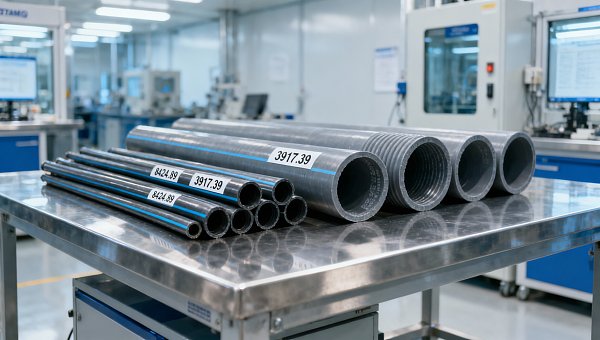
TÜV Rheinland Updates CE Requirements for Servo Drives (PLd + EMC Joint Validation)TÜV Rheinland now mandates joint PLd + EMC validation for servo drives under CE marking—learn how this impacts certification timelines, lab selection, and EU market access. Vietnam Suspends SASO Mutual Recognition for Chinese Irrigation EquipmentVietnam suspends SASO mutual recognition for Chinese irrigation equipment—urgent compliance updates for drip tapes & PE pipes (HS 8424.89/3917.39). Act now to avoid delays.
 FDA Finalizes AI Diagnostic Device Rules for ImportersFDA finalizes AI diagnostic device rules for importers: New bias assessment mandate impacts ultrasound, glucose analyzers & dermatoscopes. Act now to ensure U.S. market access.
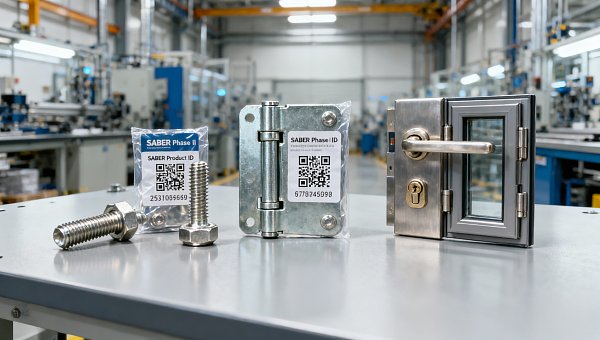
 SABER Phase II Live: Saudi Building Hardware Requires Digital Type Test Reports & PIDSABER Phase II is live: Building hardware exports to Saudi Arabia now require digital type test reports & a mandatory, immutable Product ID (PID). Act now to avoid customs delays!
 IMDG Code 41-24 Enforced: UN3480 Lithium Battery Labeling Mandatory from Apr 2026IMDG Code 41-24 enforcement starts Apr 2026: UN3480 lithium battery labeling & ISO 17363 docs are now mandatory—avoid port rejections!
 CBAM Carbon Tax Launch: Low CBAM Reporting Rate Among Chinese ExportersCBAM Carbon Tax is live—only 36.8% of Chinese exporters reported. Discover why, which industries are at risk, and how to secure EU market access now.
 China’s 10 Agencies Issue AI Export Ethics Review RulesChina’s 10 agencies launch AI export ethics rules—mandating bias reviews for visual inspection, warehouse AI & defect detection systems. Stay compliant & competitive.
 RCEP Green Packaging Mutual Recognition Takes EffectRCEP Green Packaging Mutual Recognition is now in effect—unlock faster customs clearance in Australia, NZ, Japan & Korea for GB/T 37659–2019-certified eco-packaging.
 Mexico NOM-019-SCFI-2026 Effective Apr 10, 2026: EMC Certification Required for Automotive ElectronicsNOM-019-SCFI-2026 EMC certification is now mandatory for automotive electronics entering Mexico — act before the July 1, 2026 customs ban.
 Red Sea Rerouting Normalized, EBA at $1,850/TEURed Sea rerouting normalized with EBA fixed at $1,850/TEU—learn how this structural shift impacts Asia-Europe freight costs, lead times & supply chain strategy.
 FDA AI Diagnostic Device Draft Rules: Bias Assessment for ImportsFDA AI diagnostic device draft rules require bias assessment for imports—learn how portable ultrasound, glucose, and dermatoscopic AI devices are affected & what to do next.
") TÜV Rheinland Updates CE Requirements for Servo Drives (PLd + EMC)TÜV Rheinland updates CE requirements for servo drives: PLd (ISO 13849-1) + EMC immunity (IEC 61000-6-2 Ed.4) now mandatory together — act now to avoid EU market delays!
TÜV Rheinland Updates CE Requirements for Servo Drives (PLd + EMC)TÜV Rheinland updates CE requirements for servo drives: PLd (ISO 13849-1) + EMC immunity (IEC 61000-6-2 Ed.4) now mandatory together — act now to avoid EU market delays! SABER Phase II Launch: Building Hardware Must Submit Digital Type Test Reports & Unique Product IDSABER Phase II now mandates digital type test reports & unique product IDs for building hardware—fasteners, scaffolding, door/window components. Ensure compliance to avoid customs rejection & SCOC delays.
 Vietnam Suspends SASO Mutual Recognition for Chinese Irrigation EquipmentVietnam suspends SASO mutual recognition for Chinese irrigation equipment—TCVN testing now mandatory. Act now to avoid 8–12 week delays and customs holdups.
 IMDG Code 41-24 Enforced: UN3480 Lithium Battery Labeling UpdateIMDG Code 41-24 enforcement starts April 2026: UN3480 lithium battery labeling updates are mandatory for global maritime shipments — avoid port delays, detention & penalties.
 EU CBAM Enters Full Enforcement on Jan 1, 2026EU CBAM full enforcement starts Jan 1, 2026 — mandatory quarterly reporting & certificate purchases for batteries, steel, cement, aluminum, fertilizers & chemicals. Act now to ensure EU market access.
 EU CBAM Carbon Tariff Starts Oct 2026 for Chinese Battery, Cement, Chemical ExportsEU CBAM carbon tariff hits Chinese battery, cement & chemical exports from Oct 2026 — mandatory emissions reporting starts now. Avoid €98/t default fees.



















Popular Tags
Global Trade Insights & Industry
Our mission is to empower global exporters and importers with data-driven insights that foster strategic growth.
Search News
Popular Tags
Industry Overview
The global commercial kitchen equipment market is projected to reach $112 billion by 2027. Driven by urbanization, the rise of e-commerce food delivery, and strict hygiene regulations.