

What Matters Most in Sheet Metal Bending for Precision Parts?
In precision manufacturing, sheet metal bending is far more than a basic forming step—it directly affects fit, strength, repeatability, and total cost. For buyers, engineers, and sourcing teams comparing sheet metal gauge, tolerances, tooling, and sheet metal ductwork applications, understanding the key variables behind consistent results is essential. This guide explains what matters most in sheet metal bending and how to evaluate suppliers for reliable, high-accuracy parts.
For procurement teams and market researchers, bending quality is not only a workshop issue. It influences downstream assembly speed, scrap rates, finishing performance, logistics planning, and the long-term reliability of components used in enclosures, brackets, cabinets, HVAC systems, and industrial assemblies. A part that is off by even 0.5 mm at the bend line can create costly rework across an entire batch.
In global sourcing, comparing sheet metal suppliers requires more than asking for a unit price. Buyers should examine material behavior, bend radius control, tooling strategy, inspection methods, lead times, and communication discipline. When these factors are understood early, companies can reduce quoting risk, avoid hidden costs, and build a more dependable supply chain for precision parts.
Material Properties and Design Rules Drive Bending Accuracy
The first factor in sheet metal bending is material behavior. Different metals react differently under force, and this directly affects springback, cracking risk, and dimensional consistency. Mild steel, stainless steel, aluminum, galvanized sheet, and copper alloys each require different bend allowances, tooling pressure, and handling methods. A design that works in 1.5 mm cold-rolled steel may not perform the same way in 2.0 mm aluminum.
Thickness variation is another key issue. Even within the same nominal sheet metal gauge, actual thickness may vary by a few hundredths of a millimeter depending on the supplier and standard. For precision parts with tight tolerances such as ±0.2 mm to ±0.5 mm, that variation matters. It changes the neutral axis position, the developed blank length, and the final flange angle after bending.
Good part design also reduces bending defects. Engineers should align bend radii with material type, avoid placing holes too close to bend lines, and account for grain direction where cracking is a risk. In many production environments, the minimum inside bend radius is commonly set near 1× material thickness for mild steel and 1.5× to 2× for harder or less ductile materials, though exact values depend on grade and finish requirements.
For sourcing teams, this means design review should happen before final quotation approval. A low-cost quote can quickly become expensive if the design forces special tooling, repeated setup changes, or high rejection rates. Early collaboration between buyer, design team, and fabricator often shortens development by 1 to 2 production cycles.
Core material-related variables to review
- Material grade and temper, especially for stainless steel and aluminum where springback can vary significantly.
- Nominal thickness versus actual received thickness, particularly for parts with multiple bends.
- Inside bend radius and whether it matches the material’s ductility and surface finish expectations.
- Grain direction relative to the bend line, which can influence crack formation in thinner sheets.
- Protective coating or film, since zinc layers, paint, or decorative surfaces may mark during tooling contact.
The table below summarizes how common materials typically behave in bending and what buyers should watch during supplier evaluation. These are practical reference ranges rather than fixed engineering rules, but they are useful for RFQ screening and design discussions.
A supplier that understands these variables will usually ask better technical questions at the quotation stage. That is often a positive signal. It shows the factory is trying to control repeatability rather than simply accepting a drawing and hoping the part forms correctly on the press brake.
Tooling, Press Brake Capability, and Process Control Affect Repeatability
Once the material and design are suitable, the next issue is process capability. Precision sheet metal bending depends heavily on machine condition, tooling selection, and setup discipline. A modern CNC press brake with angle measurement, backgauge positioning, and repeatable ram control will produce more stable parts than an older machine relying only on operator correction. In production runs of 500 to 5,000 pieces, even small setup variation can produce noticeable dimensional drift.
Tooling must match both material thickness and part geometry. V-die width, punch radius, tool wear, and machine tonnage all influence bend angle and flange length. As a general reference, die opening is often selected at around 6× to 10× material thickness, but precision parts or cosmetic surfaces may need adjusted tooling strategies. Using the wrong die can lead to excessive marking, unstable angles, or flange distortion.
Backgauge accuracy is especially important for parts with short flanges, multiple bends, or tight hole-to-edge relationships. If the gauge repeats poorly by just 0.1 mm to 0.2 mm, stacked error across three or four bends can quickly push a part out of tolerance. This is why buyers should ask whether suppliers perform first-article validation and in-process checks at defined intervals, such as every 20, 50, or 100 pieces depending on batch size.
Process control also includes operator skill. Even highly automated bending cells require experienced technicians to handle setup sequencing, part orientation, and compensation for springback. For low-volume, high-mix production, programming quality often matters as much as machine investment because setup time may represent 20% to 40% of the total manufacturing cost.
What capable suppliers usually control
- Machine calibration intervals, often monthly or quarterly depending on production intensity.
- Tool inspection and replacement schedules to reduce angle inconsistency and surface damage.
- First-piece approval before full production starts, especially for parts with ±0.3 mm or tighter features.
- Program revision control so repeat orders use the correct bend sequence and compensation values.
- Documented inspection frequency during long production runs to detect drift early.
The comparison below helps procurement teams distinguish between basic and mature bending operations when evaluating manufacturing partners for precision parts.
For buyers comparing suppliers across regions, this process maturity often matters more than headline machine tonnage. A factory with disciplined setup documentation and stable tooling management can outperform a larger workshop that lacks process control. That difference becomes visible in repeat orders, not just in prototypes.
Tolerance Planning, Inspection Methods, and Drawing Clarity Reduce Costly Errors
Precision parts are defined not only by how they are bent, but by how tolerances are assigned and checked. One common sourcing mistake is applying very tight tolerances to every dimension on the drawing. That increases manufacturing time, inspection time, and rejection rates without improving functional performance. Buyers should identify critical-to-fit dimensions, cosmetic requirements, and assembly interfaces separately rather than treating all features the same.
In practical terms, not every bent part needs the same tolerance class. A cabinet panel may tolerate ±0.5 mm on non-critical flange lengths, while an electronic mounting bracket or interlocking enclosure feature may need ±0.2 mm or better. Angular tolerances also matter. A 1° deviation can be acceptable for ductwork in some cases, but may be unacceptable for stacked assemblies or components that mate with machined parts.
Inspection capability should be matched to part complexity. Simple parts may only need calipers, angle gauges, and go/no-go fixtures. More complex assemblies often require height gauges, dedicated checking fixtures, or coordinate measurement methods during validation. If a supplier cannot explain how it verifies a 3-bend or 4-bend part, the nominal tolerance on the quotation is less meaningful.
Drawing quality is equally important. Clear datums, bend directions, flat pattern logic, and finish notes reduce ambiguity during production. A missing note about protective film orientation or edge deburring can create avoidable disputes after shipment. For cross-border procurement, a well-controlled drawing package can reduce engineering clarification time by 2 to 5 working days.
Tolerance review points before placing an order
- Separate critical dimensions from reference dimensions so inspection effort is focused.
- Define angular tolerance, not only linear tolerance, for bent features that impact assembly.
- Specify material side, surface direction, and cosmetic zones when appearance matters.
- Clarify whether dimensions apply after bending, before bending, or from developed flat pattern logic.
- Request a sample inspection report for first article approval on new or revised parts.
The table below outlines a practical way to align part type with tolerance and inspection expectations during supplier discussions.
A disciplined tolerance strategy lowers total cost because it aligns engineering intent with manufacturing reality. It also helps distributors and sourcing managers compare quotations fairly, since they can see whether a supplier has truly accounted for inspection workload, risk, and process capability.
Cost, Lead Time, and Supplier Evaluation Should Be Considered Together
Price alone rarely tells the full story in precision sheet metal bending. Quoted cost is shaped by setup time, batch size, bend count, material utilization, secondary processes, packaging, and quality controls. A part with 2 bends and no critical cosmetic surfaces is very different from a part with 8 bends, protective film, tight hole-to-bend dimensions, and powder coating after fabrication. Buyers should break cost into process elements instead of comparing line totals only.
Lead time is equally important. Prototype bending for simple parts may take 3 to 7 working days, while production orders with tooling validation, surface finishing, and export packing may require 2 to 4 weeks. If a supplier promises unusually fast turnaround without discussing fixtures, inspection, or material availability, the risk of deviation increases. Reliable suppliers usually provide stage-based timing: drawing review, sample approval, production, and shipment preparation.
For business evaluators, supplier transparency is a strong indicator of operational maturity. A good fabrication partner can explain capacity limits, MOQ expectations, and quality checkpoints without overselling. For example, some suppliers are excellent for 50 to 300 prototype-style parts, while others are optimized for repeat batches above 1,000 pieces. Matching order profile to supplier strength often saves more money than negotiating a small unit-price reduction.
Global B2B buyers should also assess communication and documentation quality. Fast response to technical questions, version control for drawings, and clear packing standards reduce hidden friction. These factors matter for importers, distributors, and agents who need consistent output across repeated purchasing cycles, not just a one-time low quote.
A practical supplier evaluation checklist
- Ask for experience with similar thickness ranges, such as 0.8–2.0 mm or 2.0–5.0 mm parts.
- Confirm whether first article approval is included and how many dimensions are routinely checked.
- Review standard lead time for samples and production separately instead of requesting one number.
- Clarify if finishing, welding, hardware insertion, and packaging are handled in-house or outsourced.
- Request photos or descriptions of inspection fixtures for complex multi-bend components.
Common hidden cost drivers
- Frequent design changes after first sample approval.
- Overly tight tolerances on non-functional dimensions.
- Inadequate protective packaging for finished surfaces during export transport.
- Low-volume orders with many part numbers, each requiring separate setup.
- Secondary operations added after quotation, such as tapping, PEM insertion, or powder coating.
From a market intelligence perspective, sourcing decisions improve when technical review and commercial review are connected. That is particularly relevant for international buyers using industry information platforms to compare supply options across regions. The best vendor is often the one with the most predictable process, not the one with the lowest first quote.
Common Mistakes, Application-Specific Considerations, and Buyer FAQs
Several recurring mistakes reduce success rates in sheet metal bending projects. One is using incomplete drawings that do not define bend direction, tolerance priority, or finish-sensitive areas. Another is selecting material only by price without considering ductility, coating behavior, or springback. A third is assuming that parts used in sheet metal ductwork, cabinets, transport hardware, or machine guards can all be bent to the same standards without application-specific review.
Application context changes the purchasing criteria. Ductwork components may prioritize throughput, seam fit, and corrosion resistance. Precision electronics housings may prioritize hole location, repeatability across 500-piece lots, and cosmetic protection. Structural brackets may focus on flange length accuracy and downstream welding fit. Buyers should define the functional requirement first, then assign tolerances and process expectations accordingly.
The most effective sourcing programs treat sheet metal bending as part of a complete manufacturing chain. Laser cutting accuracy, deburring quality, bending sequence, finishing, assembly, and packaging are linked. If one stage is weak, the final part may still fail, even if bend angles look correct at first inspection. This is why experienced procurement teams use a 4-step review: design suitability, process capability, quality control, and delivery reliability.
Below are common buyer questions that frequently arise during RFQ and supplier qualification. They can help researchers, distributors, and sourcing managers build a more structured evaluation process for precision parts.
How do I choose the right supplier for precision sheet metal bending?
Look for evidence of repeatability, not only equipment size. Ask about material experience, typical tolerance range, first-article process, inspection frequency, and support for low-volume versus high-volume orders. If a supplier can clearly explain its process for parts with 3 to 6 bends and ±0.2 mm to ±0.5 mm critical dimensions, that is usually a better sign than a low headline price.
What lead time is normal for bent sheet metal parts?
For uncomplicated prototype parts, 3–7 working days is common if material is in stock and no special finishing is required. For production batches with sampling approval, hardware insertion, coating, or export packaging, 2–4 weeks is a more realistic range. Complex multi-process projects may take longer if fixtures or special tooling are needed.
What tolerances should buyers focus on first?
Prioritize dimensions that affect assembly, sealing, mounting, or visible fit. These usually include hole location to bend, flange length, overall formed height, and angular accuracy. Cosmetic requirements should also be called out separately, especially for stainless steel and coated aluminum parts where tool marks can be commercially significant even if dimensions pass.
Are low-cost quotations risky in sheet metal bending?
They can be. A low quote may omit first-article inspection, use broader process assumptions, or rely on minimal packaging and limited in-process checks. That does not automatically mean the supplier is weak, but buyers should verify what is included. Hidden cost often appears later through rework, delayed shipment, inconsistent repeat orders, or cosmetic rejects after finishing.
What matters most in sheet metal bending for precision parts is not one single parameter, but the interaction between material choice, design rules, tooling control, tolerance planning, inspection discipline, and supplier communication. When these areas are managed together, buyers gain better part consistency, more stable lead times, and lower total procurement risk.
For importers, distributors, and commercial evaluators tracking manufacturing quality across global supply chains, a structured review process is the most practical way to separate capable fabricators from commodity-only suppliers. If you are comparing vendors, validating a new project, or looking for broader industrial sourcing insight, GTIIN and TradeVantage can help you assess market options with greater confidence. Contact us to explore tailored industry intelligence, sourcing support, and visibility solutions for your business.
Recommended News
 China’s 10-Dept AI Export Ethics Review Rule Takes EffectChina’s new 10-dept AI export ethics rule mandates algorithmic bias review for AI hardware bound for the EU, US, Canada, Japan & SK—key for smart cameras, voice assistants & industrial vision exporters.
 Red Sea Detour Now Standard: $1,850 TEU Premium on Asia-Europe RoutesRed Sea detour premium now standard: $1,850/TEU surcharge embedded in Asia-Europe freight rates — vital intel for exporters, importers & logistics teams.
 RCEP Green Packaging Mutual Recognition Takes EffectRCEP Green Packaging Mutual Recognition takes effect Apr 22, 2026—streamline exports to AU, NZ, JP, KR with GB/T 37629–2019 certified molded fiber & PLA packaging.
 Mexico NOM-019-SCFI-2026 Effective: EMC Certification Required for Auto Electronics ExportsEMC certification is now mandatory for auto electronics exports to Mexico under NOM-019-SCFI-2026. Ensure compliance for rearview mirrors, radar sensors & T-Box units—avoid shipment delays and order cancellations.
") TÜV Rheinland Updates CE Requirements for Servo Drives (PLd + EMC Joint Validation)TÜV Rheinland now mandates joint PLd + EMC validation for servo drives under CE marking—learn how this impacts certification timelines, lab selection, and EU market access.
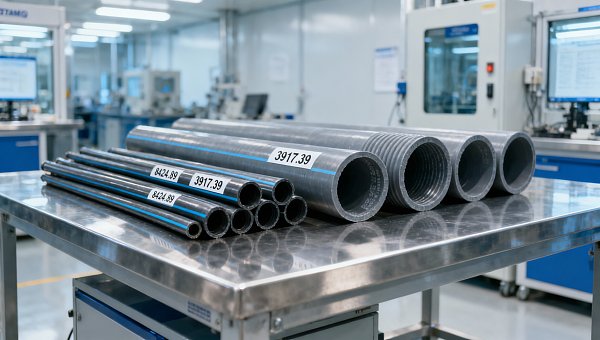
TÜV Rheinland Updates CE Requirements for Servo Drives (PLd + EMC Joint Validation)TÜV Rheinland now mandates joint PLd + EMC validation for servo drives under CE marking—learn how this impacts certification timelines, lab selection, and EU market access. Vietnam Suspends SASO Mutual Recognition for Chinese Irrigation EquipmentVietnam suspends SASO mutual recognition for Chinese irrigation equipment—urgent compliance updates for drip tapes & PE pipes (HS 8424.89/3917.39). Act now to avoid delays.
 FDA Finalizes AI Diagnostic Device Rules for ImportersFDA finalizes AI diagnostic device rules for importers: New bias assessment mandate impacts ultrasound, glucose analyzers & dermatoscopes. Act now to ensure U.S. market access.
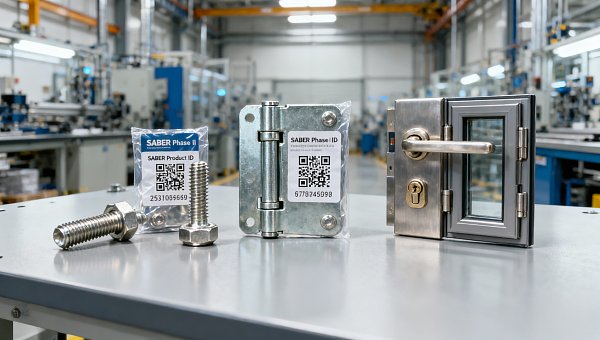
 SABER Phase II Live: Saudi Building Hardware Requires Digital Type Test Reports & PIDSABER Phase II is live: Building hardware exports to Saudi Arabia now require digital type test reports & a mandatory, immutable Product ID (PID). Act now to avoid customs delays!
 IMDG Code 41-24 Enforced: UN3480 Lithium Battery Labeling Mandatory from Apr 2026IMDG Code 41-24 enforcement starts Apr 2026: UN3480 lithium battery labeling & ISO 17363 docs are now mandatory—avoid port rejections!
 CBAM Carbon Tax Launch: Low CBAM Reporting Rate Among Chinese ExportersCBAM Carbon Tax is live—only 36.8% of Chinese exporters reported. Discover why, which industries are at risk, and how to secure EU market access now.
 China’s 10 Agencies Issue AI Export Ethics Review RulesChina’s 10 agencies launch AI export ethics rules—mandating bias reviews for visual inspection, warehouse AI & defect detection systems. Stay compliant & competitive.
 RCEP Green Packaging Mutual Recognition Takes EffectRCEP Green Packaging Mutual Recognition is now in effect—unlock faster customs clearance in Australia, NZ, Japan & Korea for GB/T 37659–2019-certified eco-packaging.
 Mexico NOM-019-SCFI-2026 Effective Apr 10, 2026: EMC Certification Required for Automotive ElectronicsNOM-019-SCFI-2026 EMC certification is now mandatory for automotive electronics entering Mexico — act before the July 1, 2026 customs ban.
 Red Sea Rerouting Normalized, EBA at $1,850/TEURed Sea rerouting normalized with EBA fixed at $1,850/TEU—learn how this structural shift impacts Asia-Europe freight costs, lead times & supply chain strategy.
 FDA AI Diagnostic Device Draft Rules: Bias Assessment for ImportsFDA AI diagnostic device draft rules require bias assessment for imports—learn how portable ultrasound, glucose, and dermatoscopic AI devices are affected & what to do next.
") TÜV Rheinland Updates CE Requirements for Servo Drives (PLd + EMC)TÜV Rheinland updates CE requirements for servo drives: PLd (ISO 13849-1) + EMC immunity (IEC 61000-6-2 Ed.4) now mandatory together — act now to avoid EU market delays!
TÜV Rheinland Updates CE Requirements for Servo Drives (PLd + EMC)TÜV Rheinland updates CE requirements for servo drives: PLd (ISO 13849-1) + EMC immunity (IEC 61000-6-2 Ed.4) now mandatory together — act now to avoid EU market delays! SABER Phase II Launch: Building Hardware Must Submit Digital Type Test Reports & Unique Product IDSABER Phase II now mandates digital type test reports & unique product IDs for building hardware—fasteners, scaffolding, door/window components. Ensure compliance to avoid customs rejection & SCOC delays.
 Vietnam Suspends SASO Mutual Recognition for Chinese Irrigation EquipmentVietnam suspends SASO mutual recognition for Chinese irrigation equipment—TCVN testing now mandatory. Act now to avoid 8–12 week delays and customs holdups.
 IMDG Code 41-24 Enforced: UN3480 Lithium Battery Labeling UpdateIMDG Code 41-24 enforcement starts April 2026: UN3480 lithium battery labeling updates are mandatory for global maritime shipments — avoid port delays, detention & penalties.
 EU CBAM Enters Full Enforcement on Jan 1, 2026EU CBAM full enforcement starts Jan 1, 2026 — mandatory quarterly reporting & certificate purchases for batteries, steel, cement, aluminum, fertilizers & chemicals. Act now to ensure EU market access.
 EU CBAM Carbon Tariff Starts Oct 2026 for Chinese Battery, Cement, Chemical ExportsEU CBAM carbon tariff hits Chinese battery, cement & chemical exports from Oct 2026 — mandatory emissions reporting starts now. Avoid €98/t default fees.



















Popular Tags
Global Trade Insights & Industry
Our mission is to empower global exporters and importers with data-driven insights that foster strategic growth.
Search News
Popular Tags
Industry Overview
The global commercial kitchen equipment market is projected to reach $112 billion by 2027. Driven by urbanization, the rise of e-commerce food delivery, and strict hygiene regulations.