

Sheet Metal Fabrication Delays Often Start in the Quoting Stage
In sheet metal fabrication, delays often begin long before production—right in the quoting stage. For buyers comparing sheet metal roofing, 3D printing price, car batteries price, or even MRI scanners price across an online trade platform, inaccurate RFQs and slow supplier responses can derail timelines and budgets. This article explores why quotation bottlenecks happen and how sourcing teams can reduce risk, improve speed, and make better procurement decisions.
For information researchers, procurement teams, commercial evaluators, and channel partners, the quoting stage is more than an administrative step. It is the point where technical assumptions, supplier capability, target price, lead time, and commercial risk first come into contact. A weak quotation process can add 3–10 business days before any material is cut, bent, welded, coated, or shipped.
In cross-border sourcing, the impact is even greater. Buyers often request multiple categories on the same B2B platform, from fabricated components to industrial equipment. When RFQ quality is low or supplier response discipline is inconsistent, procurement teams lose comparability, and internal approval cycles become slower and less reliable.
Why Quoting Delays Happen Before Fabrication Starts
A quote for sheet metal fabrication is not simply a price tag. It is a technical-commercial package that may include material grade, thickness, tolerance, finishing, tooling assumptions, packaging requirements, MOQ, inspection scope, and logistics terms. If even 2 or 3 of these variables are missing, suppliers often need another round of clarification before they can commit.
Many delays begin with incomplete RFQs. A buyer may send a PDF drawing without a STEP file, omit annual volume forecasts, or fail to define whether the part needs laser cutting only or full secondary operations. In practice, a supplier may need 24–72 hours just to verify manufacturability if the drawing pack is unclear.
Another common issue is mixed sourcing logic. Buyers sometimes expect sheet metal fabrication to be quoted with the same speed as standardized products such as batteries or commodity roofing panels. But custom metal parts involve process routing, scrap calculation, setup time, fixture needs, and quality checkpoints. That complexity naturally extends quotation time, especially for low-volume, high-mix orders.
Supplier-side causes also matter. Some factories respond fast but price loosely, while others wait for engineering review before issuing a formal quote. For procurement professionals, speed without detail creates hidden risk. A fast quote that ignores bend relief, coating thickness, or flat pattern development can trigger expensive revision cycles after PO release.
The most frequent RFQ gaps
The list below shows the missing inputs that most often slow down quote preparation and internal approvals.
- Material not specified beyond generic terms like “steel” or “aluminum,” with no grade such as SPCC, SGCC, 304, or 5052.
- Thickness missing or inconsistent between drawing, BOM, and email text, creating a risk of 0.5 mm versus 0.8 mm misinterpretation.
- Tolerance requirements not defined, especially for hole position, bend angle, and flatness after welding or powder coating.
- No annual demand forecast, making it impossible to distinguish prototype pricing from repeat-order pricing at 100, 1,000, or 10,000 units.
- Finishing requirements unclear, such as zinc plating, anodizing, brushing, passivation, or powder coating at 60–80 μm.
When several of these gaps appear together, quote turnaround can move from 1–2 working days to 5–7 working days, particularly if the factory must involve both engineering and purchasing departments.
How Poor Quotation Quality Affects Cost, Lead Time, and Comparability
A delayed quote is not only a timing problem. It also reduces the quality of procurement decisions. If three suppliers quote based on three different assumptions, the buyer is not comparing equal offers. One supplier may include tooling amortization, another may exclude packaging, and a third may price only cutting and bending without surface treatment.
This issue is highly relevant on global trade platforms, where sourcing teams may benchmark across product types and regions. Price visibility is useful, but fabricated parts require more context than catalog products. A unit price that looks 12% lower can become 8% higher after freight density, rejection risk, and finishing rework are considered.
Commercial evaluation also becomes harder when response times vary widely. If one supplier returns a quote in 24 hours and another in 6 days, the faster supplier may gain attention even if the technical basis is incomplete. For distributors and agents, this can create downstream issues when end customers expect the quoted lead time to remain fixed after order confirmation.
The table below highlights how quotation-stage weaknesses often translate into later operational problems.
The key takeaway is that quote speed should be assessed together with quote completeness. For B2B buyers, a usable quote should define scope, commercial assumptions, and lead time boundaries clearly enough to support internal sign-off and supplier comparison.
Why comparability matters in multi-category sourcing
On an industry intelligence platform, buyers often analyze diverse products side by side. That makes standardized evaluation frameworks essential. Whether reviewing sheet metal parts, equipment accessories, or price-sensitive industrial goods, decision-makers need a common way to compare delivery confidence, technical fit, total landed cost, and supplier responsiveness.
Four procurement lenses for evaluating quotes
- Technical clarity: Are material, tolerances, finishing, and inspection requirements fully aligned with the drawing set?
- Commercial transparency: Does the supplier specify tooling, MOQ, NRE, packing, and Incoterms rather than hiding them in later negotiation?
- Lead time realism: Is the promised cycle 7 days, 15 days, or 4 weeks based on actual process steps?
- Change resilience: Can the supplier handle ECO revisions without resetting cost and delivery from zero?
What Buyers Should Include in an RFQ to Get Faster, Better Quotes
A strong RFQ reduces back-and-forth and improves quote accuracy. For custom sheet metal fabrication, the target is not just a lower price but a decision-ready response. In many sourcing teams, adding a structured RFQ checklist can reduce clarification cycles from 4 or 5 rounds to 1 or 2 rounds.
At minimum, buyers should attach both 2D and 3D files when available, identify the required process route, and separate mandatory specifications from preferred options. If the order is for pilot production, state that clearly. A batch of 20 prototypes is priced very differently from a quarterly release of 2,000 units.
It is also useful to communicate business context. Procurement teams do not need to reveal every commercial detail, but stating whether the project is for sampling, annual contract supply, or distributor resale helps suppliers choose the right quotation method. This improves not only turnaround time but also the relevance of MOQ and capacity discussions.
The following table can serve as a practical RFQ baseline for buyers working with multiple suppliers across online trade channels.
Buyers who standardize these inputs often receive quotes that are easier to compare, easier to approve internally, and less likely to require post-award correction. That can shorten the sourcing cycle by 1–2 weeks for projects involving multiple vendors and multi-step review.
A five-step RFQ preparation workflow
- Validate engineering files and ensure all dimensions, revisions, and notes match.
- Define required process sequence, including forming, joining, and finishing steps.
- State forecast quantity bands such as 10 units, 500 units, and 5,000 units.
- Clarify inspection expectations, for example critical dimensions, cosmetic standards, and sampling method.
- Set response deadlines, such as 48 hours for acknowledgement and 3–5 working days for a formal quote.
This workflow is especially useful for distributors and agents who collect quotations from several factories before presenting a shortlist to end customers.
How Suppliers and Platforms Can Reduce Quotation Bottlenecks
The responsibility does not sit with buyers alone. Suppliers that want better conversion rates should build a disciplined quotation process with measurable service levels. A simple target such as same-day RFQ acknowledgement and formal quotation within 72 hours for standard parts can materially improve win rates and buyer confidence.
Internal coordination is often the hidden bottleneck. If sales, engineering, purchasing, and production planning operate separately, a quote may wait in four inboxes before reaching the customer. A shared quote template, engineering review checklist, and escalation path for missing information can cut avoidable delay by 20%–40% in many factory environments.
B2B information platforms and trade intelligence portals also play an enabling role. When buyers access supplier profiles, category insights, and procurement guidance in one place, they can ask more precise questions and shortlist more suitable vendors. For organizations such as GTIIN and TradeVantage, the value lies not only in visibility but in helping users make faster, better-informed sourcing decisions.
A more structured quote environment benefits the entire chain. Researchers get clearer market signals, procurement officers improve comparability, commercial evaluators lower risk, and distributors can respond to their own customers with more confidence.
Operational practices that improve quote turnaround
- Use category-specific RFQ forms for fabricated parts instead of generic inquiry boxes with limited technical fields.
- Create a quotation matrix for thickness ranges such as 0.8–1.5 mm, 1.5–3.0 mm, and above 3.0 mm to speed early costing.
- Maintain standard assumptions for packaging, scrap rate, and setup time, then highlight exceptions clearly.
- Separate budgetary estimates from production-ready quotations so buyers know whether the figure is preliminary or binding.
- Track quote-to-order conversion monthly and review why delayed or incomplete quotes were lost.
What a platform-enabled sourcing process can improve
When procurement teams combine supplier outreach with category intelligence, they can benchmark typical lead times, watch regional demand shifts, and identify which suppliers are better suited to prototypes versus repeat production. This reduces random inquiry behavior and supports more efficient sourcing strategies over 3-month, 6-month, and annual planning windows.
Common Mistakes, Practical Benchmarks, and FAQ for Procurement Teams
Even experienced buyers make quotation-stage mistakes, especially when projects move fast or involve several stakeholders. The most common error is treating every delay as a supplier problem. In reality, quotation bottlenecks often result from weak input quality, internal approval lag, or unrealistic expectations about custom fabrication complexity.
A practical benchmark is to divide quotes into three categories. Simple laser-cut and bent parts with clear drawings may be quoted in 1–3 working days. Parts with welding, inserts, or finishing often need 3–5 working days. Assemblies with multiple revisions, export packaging rules, or special inspection demands may reasonably require 5–10 working days.
Another useful benchmark is revision control. If a buyer sends more than 1 drawing revision during quoting, the probability of timing drift increases sharply. Procurement teams should pause and consolidate changes before requesting refreshed prices, rather than generating multiple parallel quote versions that confuse both suppliers and internal approvers.
Below are concise FAQ-style answers to common search and sourcing questions.
How long should a sheet metal fabrication quote take?
For straightforward parts with complete files, 1–3 working days is common. For parts involving welding, custom finishing, or complex tolerances, 3–7 working days is more realistic. If a supplier gives a same-day quote for a highly customized part, buyers should verify what assumptions were made.
What should buyers compare beyond unit price?
Compare at least five items: technical scope, tooling or NRE, MOQ, confirmed lead time, and delivered cost basis. Also check whether inspection, packaging, and export labeling are included. A lower ex-works price can still be a weaker offer if it excludes key services.
When is an RFQ considered incomplete?
An RFQ is incomplete if it lacks material grade, thickness, revision-controlled drawings, quantity bands, finishing details, or shipping terms. Missing any one of these may be manageable, but missing 3 or more usually results in quote delay or wide pricing variance.
How can distributors and agents improve quote reliability?
Use a standard intake sheet before sending inquiries to factories. Confirm end-customer requirements, expected order frequency, and target market. This helps prevent re-quoting and allows channel partners to present more credible timelines to downstream buyers.
In sheet metal fabrication, the quoting stage sets the pace for everything that follows. Clear RFQs, realistic lead-time expectations, and disciplined supplier response processes can reduce sourcing friction, improve price comparability, and lower execution risk across the supply chain. For researchers, buyers, evaluators, and channel partners using global B2B intelligence platforms, better quotation inputs lead directly to better procurement outcomes.
If your team wants stronger sourcing visibility, more reliable supplier comparison, and data-backed market insight across industrial categories, explore more solutions through GTIIN and TradeVantage. Contact us to discuss your sourcing priorities, request tailored industry intelligence, or learn how to strengthen your global procurement decision process.
Recommended News
 China’s 10-Dept AI Export Ethics Review Rule Takes EffectChina’s new 10-dept AI export ethics rule mandates algorithmic bias review for AI hardware bound for the EU, US, Canada, Japan & SK—key for smart cameras, voice assistants & industrial vision exporters.
 Red Sea Detour Now Standard: $1,850 TEU Premium on Asia-Europe RoutesRed Sea detour premium now standard: $1,850/TEU surcharge embedded in Asia-Europe freight rates — vital intel for exporters, importers & logistics teams.
 RCEP Green Packaging Mutual Recognition Takes EffectRCEP Green Packaging Mutual Recognition takes effect Apr 22, 2026—streamline exports to AU, NZ, JP, KR with GB/T 37629–2019 certified molded fiber & PLA packaging.
 Mexico NOM-019-SCFI-2026 Effective: EMC Certification Required for Auto Electronics ExportsEMC certification is now mandatory for auto electronics exports to Mexico under NOM-019-SCFI-2026. Ensure compliance for rearview mirrors, radar sensors & T-Box units—avoid shipment delays and order cancellations.
") TÜV Rheinland Updates CE Requirements for Servo Drives (PLd + EMC Joint Validation)TÜV Rheinland now mandates joint PLd + EMC validation for servo drives under CE marking—learn how this impacts certification timelines, lab selection, and EU market access.
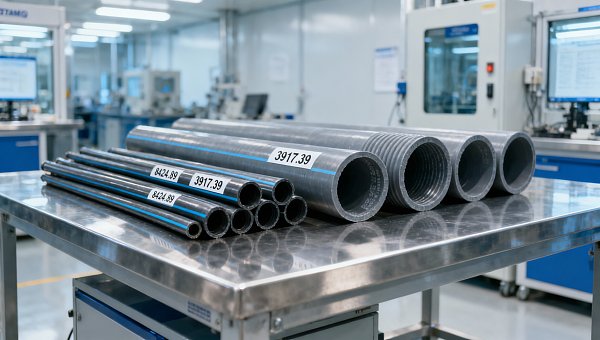
TÜV Rheinland Updates CE Requirements for Servo Drives (PLd + EMC Joint Validation)TÜV Rheinland now mandates joint PLd + EMC validation for servo drives under CE marking—learn how this impacts certification timelines, lab selection, and EU market access. Vietnam Suspends SASO Mutual Recognition for Chinese Irrigation EquipmentVietnam suspends SASO mutual recognition for Chinese irrigation equipment—urgent compliance updates for drip tapes & PE pipes (HS 8424.89/3917.39). Act now to avoid delays.
 FDA Finalizes AI Diagnostic Device Rules for ImportersFDA finalizes AI diagnostic device rules for importers: New bias assessment mandate impacts ultrasound, glucose analyzers & dermatoscopes. Act now to ensure U.S. market access.
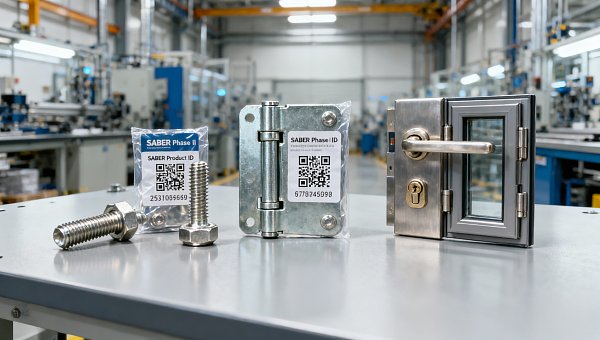
 SABER Phase II Live: Saudi Building Hardware Requires Digital Type Test Reports & PIDSABER Phase II is live: Building hardware exports to Saudi Arabia now require digital type test reports & a mandatory, immutable Product ID (PID). Act now to avoid customs delays!
 IMDG Code 41-24 Enforced: UN3480 Lithium Battery Labeling Mandatory from Apr 2026IMDG Code 41-24 enforcement starts Apr 2026: UN3480 lithium battery labeling & ISO 17363 docs are now mandatory—avoid port rejections!
 CBAM Carbon Tax Launch: Low CBAM Reporting Rate Among Chinese ExportersCBAM Carbon Tax is live—only 36.8% of Chinese exporters reported. Discover why, which industries are at risk, and how to secure EU market access now.
 China’s 10 Agencies Issue AI Export Ethics Review RulesChina’s 10 agencies launch AI export ethics rules—mandating bias reviews for visual inspection, warehouse AI & defect detection systems. Stay compliant & competitive.
 RCEP Green Packaging Mutual Recognition Takes EffectRCEP Green Packaging Mutual Recognition is now in effect—unlock faster customs clearance in Australia, NZ, Japan & Korea for GB/T 37659–2019-certified eco-packaging.
 Mexico NOM-019-SCFI-2026 Effective Apr 10, 2026: EMC Certification Required for Automotive ElectronicsNOM-019-SCFI-2026 EMC certification is now mandatory for automotive electronics entering Mexico — act before the July 1, 2026 customs ban.
 Red Sea Rerouting Normalized, EBA at $1,850/TEURed Sea rerouting normalized with EBA fixed at $1,850/TEU—learn how this structural shift impacts Asia-Europe freight costs, lead times & supply chain strategy.
 FDA AI Diagnostic Device Draft Rules: Bias Assessment for ImportsFDA AI diagnostic device draft rules require bias assessment for imports—learn how portable ultrasound, glucose, and dermatoscopic AI devices are affected & what to do next.
") TÜV Rheinland Updates CE Requirements for Servo Drives (PLd + EMC)TÜV Rheinland updates CE requirements for servo drives: PLd (ISO 13849-1) + EMC immunity (IEC 61000-6-2 Ed.4) now mandatory together — act now to avoid EU market delays!
TÜV Rheinland Updates CE Requirements for Servo Drives (PLd + EMC)TÜV Rheinland updates CE requirements for servo drives: PLd (ISO 13849-1) + EMC immunity (IEC 61000-6-2 Ed.4) now mandatory together — act now to avoid EU market delays! SABER Phase II Launch: Building Hardware Must Submit Digital Type Test Reports & Unique Product IDSABER Phase II now mandates digital type test reports & unique product IDs for building hardware—fasteners, scaffolding, door/window components. Ensure compliance to avoid customs rejection & SCOC delays.
 Vietnam Suspends SASO Mutual Recognition for Chinese Irrigation EquipmentVietnam suspends SASO mutual recognition for Chinese irrigation equipment—TCVN testing now mandatory. Act now to avoid 8–12 week delays and customs holdups.
 IMDG Code 41-24 Enforced: UN3480 Lithium Battery Labeling UpdateIMDG Code 41-24 enforcement starts April 2026: UN3480 lithium battery labeling updates are mandatory for global maritime shipments — avoid port delays, detention & penalties.
 EU CBAM Enters Full Enforcement on Jan 1, 2026EU CBAM full enforcement starts Jan 1, 2026 — mandatory quarterly reporting & certificate purchases for batteries, steel, cement, aluminum, fertilizers & chemicals. Act now to ensure EU market access.
 EU CBAM Carbon Tariff Starts Oct 2026 for Chinese Battery, Cement, Chemical ExportsEU CBAM carbon tariff hits Chinese battery, cement & chemical exports from Oct 2026 — mandatory emissions reporting starts now. Avoid €98/t default fees.



















Popular Tags
Global Trade Insights & Industry
Our mission is to empower global exporters and importers with data-driven insights that foster strategic growth.
Search News
Popular Tags
Industry Overview
The global commercial kitchen equipment market is projected to reach $112 billion by 2027. Driven by urbanization, the rise of e-commerce food delivery, and strict hygiene regulations.