

Why 3D printing quotation prices vary for the same CAD file
Why does one CAD file generate wildly different 3D printing quotation results? For procurement teams, distributors, and market researchers, the answer often goes far beyond geometry—touching material choice, procurement cost, supplier capability, and broader supply chain management solutions. Much like sourcing from an outdoor furniture manufacturer, selecting a lubricants distributor, or comparing outdoor furniture supplier offers, understanding quotation logic helps buyers reduce risk, control budgets, and make smarter commercial decisions.
Why can the same CAD file lead to very different 3D printing quotation prices?
A 3D printing quotation is rarely just a machine-hour calculation. In B2B procurement, suppliers review at least 4 core layers before issuing a price: manufacturing process, material grade, post-processing scope, and delivery commitment. Two vendors may receive the same CAD file and still quote with completely different assumptions, especially when the RFQ lacks target tolerances, surface requirements, end-use conditions, or annual volume expectations.
This is why procurement teams often see price gaps of 20%–200% for the same part. One supplier may prepare a prototype quote using standard polymer powder and basic cleaning, while another includes engineering-grade material, dimensional verification, support removal, vapor smoothing, and export packaging. The CAD geometry may be fixed, but the manufacturing intent behind that file is not always visible.
For information researchers and business evaluators, the quotation spread is also a signal of market fragmentation. Some vendors operate as specialized rapid prototyping shops; others are volume-oriented production partners. Their cost structure differs across labor rates, machine utilization, scrap tolerance, procurement channels, and quality control workflows. In cross-border sourcing, those differences become more pronounced when freight terms and customs handling are included.
What a supplier usually reads beyond the CAD file
A CAD model shows shape, but it usually does not fully define commercial requirements. Suppliers often need to infer whether the part is for concept validation, fit testing, tooling aid, or end-use production. A prototype intended for a 3–7 day turnaround will be quoted differently from a repeat order planned over 3–6 months, even if both start from identical geometry.
- Material expectations: standard resin, engineering nylon, metal alloy, flame-retardant grade, food-contact capable material, or biocompatible option.
- Functional demand: visual model, load-bearing prototype, thermal exposure part, chemical-contact component, or assembly-fit verification part.
- Quality scope: basic dimensional check, first article inspection, batch traceability, or documented quality records for procurement review.
- Delivery model: one-off urgent build, low-volume pilot run, or recurring supply with monthly call-off quantities.
If these factors are not clearly specified, each supplier builds a quotation on its own assumptions. That is the main reason identical files do not automatically produce identical 3D printing quotation prices.
Which cost drivers have the biggest impact on 3D printing quotation accuracy?
When buyers compare offers, the fastest way to improve quotation accuracy is to break down cost drivers into visible components. In most industrial RFQs, 5 categories shape the final number: process selection, material usage, build preparation, finishing, and logistics. The same part may be cheap under FDM, moderate under SLS, and significantly higher under CNC-like tolerance expectations delivered by SLA or metal printing.
Material choice often creates the first major price shift. A standard PLA or ABS-type prototype may be suitable for early concept review, but nylon PA12, TPU, glass-filled polymer, stainless steel, or aluminum alloy can change both machine allocation and raw material sourcing cost. Material waste rates also vary by technology, which means one part’s quoted price is influenced by more than its net weight.
Post-processing is another frequently underestimated factor. Support removal, sanding, dyeing, polishing, thread insertion, heat treatment, or coating can account for a meaningful share of total cost, especially in low-volume orders from 10 to 200 pieces. For distributors and agents, this matters because the cheapest ex-factory quotation may become less competitive after finishing requirements are added.
The table below shows how common quotation variables affect commercial outcomes for procurement teams evaluating 3D printed parts across different sourcing scenarios.
The key takeaway is simple: quotation variation is usually explainable when cost elements are visible. Buyers who request line-item detail can compare suppliers on an equal basis instead of reacting only to the final total.
Why service model changes the quote even before production begins
Some suppliers position themselves as transactional manufacturers, while others provide design-for-additive-manufacturing feedback, batch planning, and documentation support. The second model usually costs more per RFQ, but it may reduce redesign cycles, hidden defects, and supplier-switching risk over a 2–4 quarter sourcing horizon.
Examples of pre-production service elements
- Wall thickness review to avoid print failure or unnecessary material use.
- Part orientation recommendations to improve strength or visible surface quality.
- Consolidation advice for assemblies that can be combined into 1 printed unit.
- Alternative process suggestions when annual demand moves from prototype to low-volume production.
For sourcing professionals, paying slightly more for this review layer can be commercially reasonable if it prevents failed batches, tooling delays, or repeated freight charges.
How should procurement teams compare quotations fairly?
A fair comparison requires normalized inputs. If one supplier is quoting 50 parts in nylon with standard inspection and another is quoting 20 parts in resin with cosmetic polishing, the pricing gap says little about competitiveness. Procurement teams should evaluate quotations using a 3-step method: define scope, normalize assumptions, and test commercial risk.
Start by clarifying part purpose. A distributor sourcing showroom samples does not need the same specification as an OEM sourcing functional brackets for short-run assembly. This distinction affects acceptable tolerance ranges, finish expectations, packaging type, and delivery planning. In many cases, aligning the intended use can cut quotation noise faster than negotiating unit price.
Next, request an apples-to-apples quotation sheet. This should state process, material, finishing, inspection level, expected turnaround, Incoterms if applicable, and any tooling or setup charge. With those details, commercial evaluators can compare real sourcing value rather than incomplete offers that appear low only because scope is missing.
The following checklist can help teams compare 3D printing quotation results more consistently across multiple suppliers.
Using this framework, buyers can rank suppliers not only by price but also by fit, consistency, and downstream risk. That is especially useful for agents and importers managing multiple RFQs across regions.
A practical 4-step quotation review process
- Send the same RFQ package to every supplier, including CAD, quantity, material target, finish level, and required delivery date.
- Require itemized pricing so printing, finishing, inspection, and logistics are visible.
- Compare standard lead time offers first, then ask for rush options separately.
- Shortlist based on repeatability, communication speed, and technical clarity, not only the lowest number.
This approach helps business assessment teams identify whether a lower 3D printing quotation is genuinely efficient or simply incomplete.
What mistakes cause misleading 3D printing quotation prices?
One common mistake is assuming that geometry alone determines cost. In reality, the same part can be quoted as a concept model, a test-ready functional component, or a production-facing part. Without defining the target application, a buyer may receive quotations that are technically valid but commercially incomparable.
Another mistake is asking for “best price” without a decision framework. Suppliers respond in different ways: some reduce material grade, some remove finishing, and some shorten quotation validity because input costs may move within 7–30 days. That creates a false impression of low price while shifting performance or commercial risk to the buyer.
Teams also underestimate the effect of hidden requirements. Threaded inserts, color matching, serialized labeling, moisture protection, export carton standards, or dimensional reports can all change the quotation. These items may seem minor individually, but together they materially affect total cost and supplier workload.
Common quotation misconceptions in B2B sourcing
- “Lowest unit price means best supplier.” In practice, poor repeatability, weak communication, or missing QC can create higher total cost.
- “Any process can make the same part equally well.” Different additive methods vary in finish, anisotropy, lead time, and batch economics.
- “Prototype pricing will scale directly to production.” Once quantities move from 5 pieces to 500 pieces, process selection may need to change.
- “A detailed CAD model removes all ambiguity.” Commercial and quality assumptions still need to be stated separately.
For market researchers, these misconceptions explain why price benchmarking in additive manufacturing is more nuanced than in standard commodity purchasing. Good intelligence depends on contextual data, not isolated numbers.
Risk signals buyers should watch
If a supplier returns a quotation very quickly without asking about tolerance, end use, or finishing, that may indicate a shallow review process. Likewise, if two quotations differ by more than expected but one lacks inspection detail or packaging definition, the lower total may not reflect the same delivery scope. A disciplined RFQ review can prevent these sourcing errors.
How do market intelligence and supplier visibility improve quotation decisions?
In global B2B trade, quotation analysis works best when backed by broader supply chain visibility. A buyer comparing 3D printing quotation prices needs more than technical inputs; they also need context on supplier responsiveness, regional manufacturing trends, sector demand shifts, and sourcing signals across adjacent industries. This is where structured industry intelligence creates measurable value.
GTIIN and TradeVantage support this decision layer by connecting industrial news, sector movement, and commercial exposure across 50+ sectors. For procurement professionals, that means faster access to market context when evaluating whether a quotation is aligned with current sourcing conditions. For exporters, manufacturers, distributors, and agents, it also means stronger visibility in front of decision-makers actively researching suppliers and capabilities.
This matters because supplier selection is no longer based only on factory output. Buyers increasingly assess communication quality, credibility signals, content authority, and market presence before starting formal RFQ cycles. A supplier that appears consistently in relevant industrial coverage may gain earlier consideration, especially in cross-border sourcing where trust is built digitally long before site visits happen.
Why this matters for distributors, agents, and business evaluators
For channel partners, the ability to interpret quotation differences quickly can accelerate deal screening. Instead of manually validating every supplier claim, decision teams can use sector intelligence, industrial trend tracking, and supplier visibility signals to narrow the field. This reduces research time across 3 major stages: supplier discovery, quotation comparison, and negotiation preparation.
For foreign trade enterprises, publishing through a high-authority industry portal can also improve discoverability and strengthen digital trust signals. That is useful when buyers are searching for manufacturing capability, product category expertise, compliance familiarity, or cross-sector sourcing insight before sending RFQs.
Typical use cases where industry intelligence helps
- Benchmarking whether a quotation reflects prototype urgency or structural overpricing.
- Identifying suppliers whose market presence suggests stronger export readiness and communication discipline.
- Understanding related sourcing patterns across manufacturing, components, and industrial distribution sectors.
- Supporting internal business cases with broader market narrative rather than isolated RFQ snapshots.
In short, a better quotation decision usually comes from combining part-level analysis with market-level intelligence.
FAQ: what do buyers usually ask about 3D printing quotation prices?
How can I reduce a 3D printing quotation without hurting part performance?
Start by separating must-have requirements from nice-to-have features. Buyers often reduce cost by adjusting surface finish, consolidating non-critical tolerances, ordering a more efficient batch size such as 10–30 parts instead of fragmented single-piece orders, or switching from an engineering material to a standard material for early validation. The best savings usually come from scope alignment, not aggressive price pressure alone.
What lead time is normal for a commercial 3D printing quotation?
For straightforward polymer parts, quotation turnaround is often within 24–72 hours after receiving a complete RFQ. Production lead time may range from 3–7 days for urgent prototype work and 7–15 days for standard jobs, depending on process, finishing, and quantity. More complex metal parts or parts requiring documented inspection can take longer.
Should I ask for multiple process options for the same CAD file?
Yes, especially if the part is still in evaluation stage. Asking for 2–3 process options can reveal trade-offs in cost, strength, accuracy, and finish. This is particularly useful for procurement teams that need to balance budget, delivery, and end-use risk before committing to one manufacturing path.
What should be included in a serious RFQ for 3D printed parts?
A strong RFQ should include the CAD file, target quantity, intended application, preferred material, critical dimensions, required finish, inspection expectations, delivery destination, and required date. If cross-border shipping is involved, packaging expectation and trade terms should also be clarified. This reduces quotation ambiguity and improves supplier comparability.
Why choose us when evaluating suppliers, quotations, and B2B market opportunities?
For companies navigating complex sourcing decisions, GTIIN and TradeVantage provide more than general news coverage. We help bridge the information gap between supplier claims, market movement, and buyer decision criteria. That makes our platform relevant not only to information researchers, but also to procurement teams, business assessment professionals, distributors, and trade-focused manufacturers seeking better commercial visibility.
If you are comparing 3D printing quotation prices, assessing industrial suppliers, or planning market expansion, you can use our platform to support several practical needs: supplier exposure, sector trend tracking, quotation context analysis, export market visibility, and backlink-driven digital presence for foreign trade enterprises. This is especially valuable when trust must be established before direct negotiation begins.
You can contact us for focused support around parameters confirmation, supplier positioning, product category exposure, delivery-cycle communication, custom content planning, certification-related content framing, sample-support messaging, and quotation communication strategy. For enterprises competing in global search and industrial sourcing channels, these inputs help turn visibility into qualified business opportunities.
If your goal is to understand why prices vary, shortlist better partners, or strengthen your brand presence in front of global buyers, our editorial and industry intelligence network can help you move from fragmented information to clearer commercial decisions.
Recommended News
 China’s 10-Dept AI Export Ethics Review Rule Takes EffectChina’s new 10-dept AI export ethics rule mandates algorithmic bias review for AI hardware bound for the EU, US, Canada, Japan & SK—key for smart cameras, voice assistants & industrial vision exporters.
 Red Sea Detour Now Standard: $1,850 TEU Premium on Asia-Europe RoutesRed Sea detour premium now standard: $1,850/TEU surcharge embedded in Asia-Europe freight rates — vital intel for exporters, importers & logistics teams.
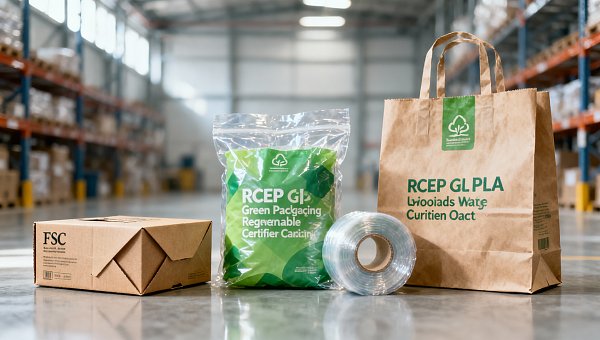
 RCEP Green Packaging Mutual Recognition Takes EffectRCEP Green Packaging Mutual Recognition takes effect Apr 22, 2026—streamline exports to AU, NZ, JP, KR with GB/T 37629–2019 certified molded fiber & PLA packaging.
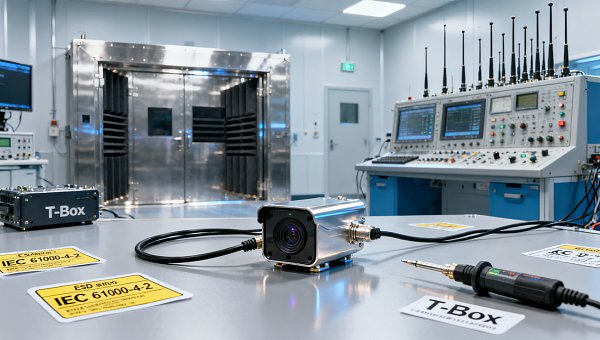
 Mexico NOM-019-SCFI-2026 Effective: EMC Certification Required for Auto Electronics ExportsEMC certification is now mandatory for auto electronics exports to Mexico under NOM-019-SCFI-2026. Ensure compliance for rearview mirrors, radar sensors & T-Box units—avoid shipment delays and order cancellations.
") TÜV Rheinland Updates CE Requirements for Servo Drives (PLd + EMC Joint Validation)TÜV Rheinland now mandates joint PLd + EMC validation for servo drives under CE marking—learn how this impacts certification timelines, lab selection, and EU market access.
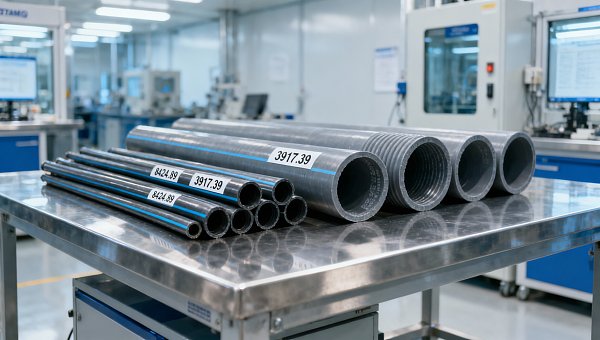
TÜV Rheinland Updates CE Requirements for Servo Drives (PLd + EMC Joint Validation)TÜV Rheinland now mandates joint PLd + EMC validation for servo drives under CE marking—learn how this impacts certification timelines, lab selection, and EU market access. Vietnam Suspends SASO Mutual Recognition for Chinese Irrigation EquipmentVietnam suspends SASO mutual recognition for Chinese irrigation equipment—urgent compliance updates for drip tapes & PE pipes (HS 8424.89/3917.39). Act now to avoid delays.
 FDA Finalizes AI Diagnostic Device Rules for ImportersFDA finalizes AI diagnostic device rules for importers: New bias assessment mandate impacts ultrasound, glucose analyzers & dermatoscopes. Act now to ensure U.S. market access.
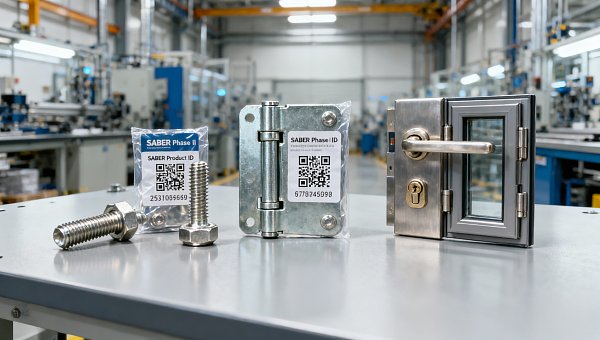
 SABER Phase II Live: Saudi Building Hardware Requires Digital Type Test Reports & PIDSABER Phase II is live: Building hardware exports to Saudi Arabia now require digital type test reports & a mandatory, immutable Product ID (PID). Act now to avoid customs delays!
 IMDG Code 41-24 Enforced: UN3480 Lithium Battery Labeling Mandatory from Apr 2026IMDG Code 41-24 enforcement starts Apr 2026: UN3480 lithium battery labeling & ISO 17363 docs are now mandatory—avoid port rejections!
 CBAM Carbon Tax Launch: Low CBAM Reporting Rate Among Chinese ExportersCBAM Carbon Tax is live—only 36.8% of Chinese exporters reported. Discover why, which industries are at risk, and how to secure EU market access now.
 China’s 10 Agencies Issue AI Export Ethics Review RulesChina’s 10 agencies launch AI export ethics rules—mandating bias reviews for visual inspection, warehouse AI & defect detection systems. Stay compliant & competitive.
 RCEP Green Packaging Mutual Recognition Takes EffectRCEP Green Packaging Mutual Recognition is now in effect—unlock faster customs clearance in Australia, NZ, Japan & Korea for GB/T 37659–2019-certified eco-packaging.
 Mexico NOM-019-SCFI-2026 Effective Apr 10, 2026: EMC Certification Required for Automotive ElectronicsNOM-019-SCFI-2026 EMC certification is now mandatory for automotive electronics entering Mexico — act before the July 1, 2026 customs ban.
 Red Sea Rerouting Normalized, EBA at $1,850/TEURed Sea rerouting normalized with EBA fixed at $1,850/TEU—learn how this structural shift impacts Asia-Europe freight costs, lead times & supply chain strategy.
 FDA AI Diagnostic Device Draft Rules: Bias Assessment for ImportsFDA AI diagnostic device draft rules require bias assessment for imports—learn how portable ultrasound, glucose, and dermatoscopic AI devices are affected & what to do next.
") TÜV Rheinland Updates CE Requirements for Servo Drives (PLd + EMC)TÜV Rheinland updates CE requirements for servo drives: PLd (ISO 13849-1) + EMC immunity (IEC 61000-6-2 Ed.4) now mandatory together — act now to avoid EU market delays!
TÜV Rheinland Updates CE Requirements for Servo Drives (PLd + EMC)TÜV Rheinland updates CE requirements for servo drives: PLd (ISO 13849-1) + EMC immunity (IEC 61000-6-2 Ed.4) now mandatory together — act now to avoid EU market delays! SABER Phase II Launch: Building Hardware Must Submit Digital Type Test Reports & Unique Product IDSABER Phase II now mandates digital type test reports & unique product IDs for building hardware—fasteners, scaffolding, door/window components. Ensure compliance to avoid customs rejection & SCOC delays.
 Vietnam Suspends SASO Mutual Recognition for Chinese Irrigation EquipmentVietnam suspends SASO mutual recognition for Chinese irrigation equipment—TCVN testing now mandatory. Act now to avoid 8–12 week delays and customs holdups.
 IMDG Code 41-24 Enforced: UN3480 Lithium Battery Labeling UpdateIMDG Code 41-24 enforcement starts April 2026: UN3480 lithium battery labeling updates are mandatory for global maritime shipments — avoid port delays, detention & penalties.
 EU CBAM Enters Full Enforcement on Jan 1, 2026EU CBAM full enforcement starts Jan 1, 2026 — mandatory quarterly reporting & certificate purchases for batteries, steel, cement, aluminum, fertilizers & chemicals. Act now to ensure EU market access.
 EU CBAM Carbon Tariff Starts Oct 2026 for Chinese Battery, Cement, Chemical ExportsEU CBAM carbon tariff hits Chinese battery, cement & chemical exports from Oct 2026 — mandatory emissions reporting starts now. Avoid €98/t default fees.

















Popular Tags
Global Trade Insights & Industry
Our mission is to empower global exporters and importers with data-driven insights that foster strategic growth.
Search News
Popular Tags
Industry Overview
The global commercial kitchen equipment market is projected to reach $112 billion by 2027. Driven by urbanization, the rise of e-commerce food delivery, and strict hygiene regulations.