

Online Trade Platform vs Marketplace: What Really Fits B2B Sales
Choosing between an online trade platform and a marketplace can directly impact B2B lead quality, sourcing efficiency, and long-term visibility. For buyers comparing home improvement tools, sheet metal fabrication, sheet metal roofing, or even niche products like iridium spark plugs, the right channel matters. This guide breaks down what each model offers and how businesses can align platform strategy with real procurement and sales goals.
If your goal is to generate qualified B2B leads, build long-term trust, and support complex buying decisions, an online trade platform is often the better fit. If your priority is fast transactions, broad product exposure, and price-driven demand, a marketplace may be more effective. The right choice depends less on platform labels and more on your sales cycle, product complexity, buyer behavior, and growth strategy.
What buyers and sellers are really trying to figure out
When people search for “online trade platform vs marketplace” in a B2B context, they are usually not looking for a dictionary definition. They want to know which model will help them source better suppliers, win better buyers, reduce wasted time, and improve commercial outcomes.
For procurement teams, the concern is often supplier quality, verification, response speed, transparency, and whether the platform supports serious sourcing rather than casual browsing. For exporters, distributors, and manufacturers, the concern is different: lead quality, brand visibility, customer trust, margin pressure, and whether the channel supports long-term account development instead of one-off orders.
That is why the comparison should focus on commercial fit, not just platform structure.
Online trade platform vs marketplace: the practical difference
An online trade platform is typically built to support business discovery, supplier research, industry intelligence, brand exposure, and B2B relationship development. It often provides company profiles, sector insights, content visibility, trade information, and networking value beyond product listings alone.
A marketplace is usually built around transactions. Its core function is to match product supply with buyer demand at scale, often emphasizing listings, pricing, reviews, logistics convenience, and faster order flow.
In simple terms:
- Trade platform: stronger for trust-building, visibility, research, and complex B2B sales
- Marketplace: stronger for standardized products, broad reach, and faster purchasing cycles
This distinction matters because B2B buying is rarely uniform. Buying sheet metal fabrication services is very different from buying standard maintenance parts. Sourcing sheet metal roofing from a regional supplier involves different decision criteria than purchasing iridium spark plugs with known specifications. Platform choice should reflect that difference.
When an online trade platform fits B2B sales better
An online trade platform is generally a stronger choice when the buying process requires comparison, validation, education, and repeated interaction.
This is especially true if your business depends on:
- High-value or customized orders
- Longer decision cycles
- Technical evaluation
- Regional distribution partnerships
- Supplier credibility and trust signals
- Industry-specific visibility rather than mass exposure
For example, if a buyer is sourcing sheet metal fabrication, they may need to review manufacturing capability, tolerances, certifications, materials, capacity, past projects, and communication quality. A marketplace listing alone often does not provide enough context to make a confident decision. A trade platform environment is usually better suited to that kind of evaluation.
For sellers, this model also supports stronger brand positioning. Instead of competing only on price and listing placement, companies can present expertise, industry relevance, operational strengths, and market credibility. That often leads to better-fit inquiries and more defensible margins.
When a marketplace makes more sense
A marketplace is often the right choice when the product is easy to standardize, compare, and reorder. If buyers already know exactly what they need, the marketplace model can reduce friction and accelerate transactions.
This works well for categories such as:
- Standard spare parts
- Commoditized industrial supplies
- Products with clear specifications and low customization needs
- Repeat purchase items
- Price-sensitive categories with high listing volume
Take iridium spark plugs as an example. If the buyer knows the exact model, vehicle compatibility, and performance standard, a marketplace may be enough. The buyer can compare price, shipping options, stock levels, and seller ratings quickly. The decision is more transactional and less consultative.
However, the same advantage can become a drawback for sellers. Marketplaces often create intense price competition, weak brand differentiation, and lower customer loyalty. For many B2B sellers, traffic is high but lead quality is inconsistent.
Which channel brings better lead quality?
For many B2B companies, this is the real question.
If you define success as receiving more inquiries, marketplaces may look attractive. But if you define success as receiving inquiries from serious buyers with clearer demand and higher conversion potential, online trade platforms often perform better.
Why? Because trade platforms tend to attract users earlier in the research and evaluation process, where supplier credibility and information depth matter. This often filters out some low-intent traffic and improves relevance.
Better lead quality is common when buyers need to assess:
- Manufacturing capability
- Supplier reputation
- Industry specialization
- Regional supply chain advantages
- Compliance and documentation
- Long-term cooperation potential
By contrast, marketplaces can generate volume, but volume alone does not guarantee commercial value. For procurement professionals and business evaluators, the challenge is often not finding more suppliers, but identifying the right ones faster.
How product type changes the decision
One of the biggest mistakes businesses make is choosing a channel based on popularity instead of product-sales fit.
Ask these questions:
- Is the product standardized or customized?
- Does the buyer need technical consultation?
- Is supplier reliability more important than lowest price?
- Will the buyer compare companies, or only compare products?
- Is the purchase one-time, repeat, or relationship-based?
- Does the sale require trust before quotation?
For example:
- Home improvement tools: may work on both models depending on whether the buyer wants branded resale stock, OEM cooperation, or simple replenishment
- Sheet metal fabrication: usually better suited to a trade platform or hybrid approach because capability matters more than listing convenience
- Sheet metal roofing: often requires attention to material specs, project scale, logistics, and supplier stability, making trust and information depth important
- Iridium spark plugs: more marketplace-friendly when specifications are fixed and comparison is straightforward
The more complex the evaluation, the more useful a trade platform becomes.
Visibility, trust, and long-term digital value
Another major difference is what happens beyond the immediate transaction.
An online trade platform can contribute to long-term digital presence by supporting brand exposure, search visibility, authoritative citations, and trust signals. For foreign trade companies, this matters because many buyers do not convert on first contact. They research, compare, revisit, and validate suppliers across multiple touchpoints.
This is where high-authority industry portals and information ecosystems create value. Businesses are not only listed; they are discovered in a context that supports credibility. That is especially useful for exporters entering new markets, manufacturers expanding distributor networks, and suppliers trying to improve international search performance.
A marketplace, on the other hand, is often a rented channel. It may generate demand, but much of the platform authority belongs to the marketplace itself. Sellers gain exposure, but often with limited brand independence and less durable SEO value.
Cost, control, and margin pressure
From a commercial standpoint, businesses should also compare platform economics.
Marketplaces can be effective, but they often come with hidden costs:
- Commission fees or advertising spend
- Pressure to discount
- Dependence on ranking algorithms
- Difficulty standing out from similar sellers
- Lower buyer loyalty to individual suppliers
Online trade platforms may require more effort in content, profile building, and authority development, but they often offer better control over positioning and stronger support for value-based selling.
If your margins depend on technical expertise, reliability, service depth, or supply chain strength, competing inside a pure marketplace model may weaken your advantage.
A simple decision framework for B2B teams
If you are deciding between an online trade platform and a marketplace, use this practical framework:
- Map your sales cycle. If the cycle is long and consultative, prioritize a trade platform. If it is short and transactional, a marketplace may work well.
- Evaluate product complexity. The more technical or customized the product, the more important credibility and information depth become.
- Define your lead goal. Do you want more inquiries, or better inquiries?
- Assess brand strategy. If you need long-term visibility and trust, do not rely only on marketplaces.
- Review margin structure. If heavy price competition damages profitability, avoid overdependence on marketplace channels.
- Consider a hybrid approach. Many successful B2B companies use marketplaces for transaction capture and trade platforms for authority, visibility, and lead qualification.
Final answer: which one really fits B2B sales?
There is no universal winner, but there is a clear pattern.
If your business sells complex, high-trust, specification-sensitive, or relationship-driven products and services, an online trade platform is usually the better foundation for B2B sales. If your business sells standardized products with clear specs and faster buying cycles, a marketplace can be highly effective.
For most serious B2B growth strategies, the smartest move is not choosing one in isolation. It is understanding the role each channel plays. Use marketplaces for reach and transactional demand where appropriate. Use trade platforms for visibility, credibility, industry positioning, and better-informed buyer engagement.
In other words, choose the channel that matches how your buyers actually buy—not just where products can be listed.
Recommended News
 China’s 10-Dept AI Export Ethics Review Rule Takes EffectChina’s new 10-dept AI export ethics rule mandates algorithmic bias review for AI hardware bound for the EU, US, Canada, Japan & SK—key for smart cameras, voice assistants & industrial vision exporters.
 Red Sea Detour Now Standard: $1,850 TEU Premium on Asia-Europe RoutesRed Sea detour premium now standard: $1,850/TEU surcharge embedded in Asia-Europe freight rates — vital intel for exporters, importers & logistics teams.
 RCEP Green Packaging Mutual Recognition Takes EffectRCEP Green Packaging Mutual Recognition takes effect Apr 22, 2026—streamline exports to AU, NZ, JP, KR with GB/T 37629–2019 certified molded fiber & PLA packaging.
 Mexico NOM-019-SCFI-2026 Effective: EMC Certification Required for Auto Electronics ExportsEMC certification is now mandatory for auto electronics exports to Mexico under NOM-019-SCFI-2026. Ensure compliance for rearview mirrors, radar sensors & T-Box units—avoid shipment delays and order cancellations.
") TÜV Rheinland Updates CE Requirements for Servo Drives (PLd + EMC Joint Validation)TÜV Rheinland now mandates joint PLd + EMC validation for servo drives under CE marking—learn how this impacts certification timelines, lab selection, and EU market access.
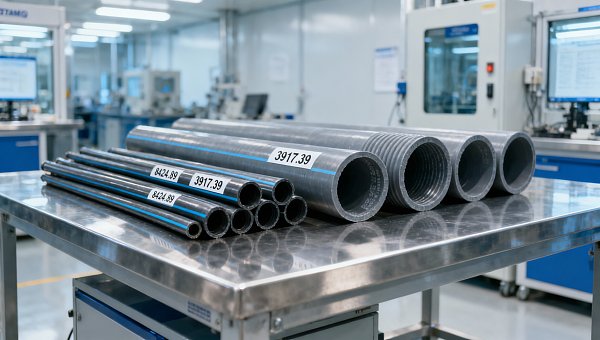
TÜV Rheinland Updates CE Requirements for Servo Drives (PLd + EMC Joint Validation)TÜV Rheinland now mandates joint PLd + EMC validation for servo drives under CE marking—learn how this impacts certification timelines, lab selection, and EU market access. Vietnam Suspends SASO Mutual Recognition for Chinese Irrigation EquipmentVietnam suspends SASO mutual recognition for Chinese irrigation equipment—urgent compliance updates for drip tapes & PE pipes (HS 8424.89/3917.39). Act now to avoid delays.
 FDA Finalizes AI Diagnostic Device Rules for ImportersFDA finalizes AI diagnostic device rules for importers: New bias assessment mandate impacts ultrasound, glucose analyzers & dermatoscopes. Act now to ensure U.S. market access.
 SABER Phase II Live: Saudi Building Hardware Requires Digital Type Test Reports & PIDSABER Phase II is live: Building hardware exports to Saudi Arabia now require digital type test reports & a mandatory, immutable Product ID (PID). Act now to avoid customs delays!
 IMDG Code 41-24 Enforced: UN3480 Lithium Battery Labeling Mandatory from Apr 2026IMDG Code 41-24 enforcement starts Apr 2026: UN3480 lithium battery labeling & ISO 17363 docs are now mandatory—avoid port rejections!
 CBAM Carbon Tax Launch: Low CBAM Reporting Rate Among Chinese ExportersCBAM Carbon Tax is live—only 36.8% of Chinese exporters reported. Discover why, which industries are at risk, and how to secure EU market access now.
 China’s 10 Agencies Issue AI Export Ethics Review RulesChina’s 10 agencies launch AI export ethics rules—mandating bias reviews for visual inspection, warehouse AI & defect detection systems. Stay compliant & competitive.
 RCEP Green Packaging Mutual Recognition Takes EffectRCEP Green Packaging Mutual Recognition is now in effect—unlock faster customs clearance in Australia, NZ, Japan & Korea for GB/T 37659–2019-certified eco-packaging.
 Mexico NOM-019-SCFI-2026 Effective Apr 10, 2026: EMC Certification Required for Automotive ElectronicsNOM-019-SCFI-2026 EMC certification is now mandatory for automotive electronics entering Mexico — act before the July 1, 2026 customs ban.
 Red Sea Rerouting Normalized, EBA at $1,850/TEURed Sea rerouting normalized with EBA fixed at $1,850/TEU—learn how this structural shift impacts Asia-Europe freight costs, lead times & supply chain strategy.
 FDA AI Diagnostic Device Draft Rules: Bias Assessment for ImportsFDA AI diagnostic device draft rules require bias assessment for imports—learn how portable ultrasound, glucose, and dermatoscopic AI devices are affected & what to do next.
") TÜV Rheinland Updates CE Requirements for Servo Drives (PLd + EMC)TÜV Rheinland updates CE requirements for servo drives: PLd (ISO 13849-1) + EMC immunity (IEC 61000-6-2 Ed.4) now mandatory together — act now to avoid EU market delays!
TÜV Rheinland Updates CE Requirements for Servo Drives (PLd + EMC)TÜV Rheinland updates CE requirements for servo drives: PLd (ISO 13849-1) + EMC immunity (IEC 61000-6-2 Ed.4) now mandatory together — act now to avoid EU market delays! SABER Phase II Launch: Building Hardware Must Submit Digital Type Test Reports & Unique Product IDSABER Phase II now mandates digital type test reports & unique product IDs for building hardware—fasteners, scaffolding, door/window components. Ensure compliance to avoid customs rejection & SCOC delays.
 Vietnam Suspends SASO Mutual Recognition for Chinese Irrigation EquipmentVietnam suspends SASO mutual recognition for Chinese irrigation equipment—TCVN testing now mandatory. Act now to avoid 8–12 week delays and customs holdups.
 IMDG Code 41-24 Enforced: UN3480 Lithium Battery Labeling UpdateIMDG Code 41-24 enforcement starts April 2026: UN3480 lithium battery labeling updates are mandatory for global maritime shipments — avoid port delays, detention & penalties.
 EU CBAM Enters Full Enforcement on Jan 1, 2026EU CBAM full enforcement starts Jan 1, 2026 — mandatory quarterly reporting & certificate purchases for batteries, steel, cement, aluminum, fertilizers & chemicals. Act now to ensure EU market access.
 EU CBAM Carbon Tariff Starts Oct 2026 for Chinese Battery, Cement, Chemical ExportsEU CBAM carbon tariff hits Chinese battery, cement & chemical exports from Oct 2026 — mandatory emissions reporting starts now. Avoid €98/t default fees.




















Popular Tags
Global Trade Insights & Industry
Our mission is to empower global exporters and importers with data-driven insights that foster strategic growth.
Search News
Popular Tags
Industry Overview
The global commercial kitchen equipment market is projected to reach $112 billion by 2027. Driven by urbanization, the rise of e-commerce food delivery, and strict hygiene regulations.