

What to Check Before Joining a New Online Trade Platform
Before joining a new online trade platform, the most important question is not how many suppliers it lists, but whether the platform can help you source reliably, compare offers transparently, and reduce commercial risk. For buyers, distributors, procurement teams, and market researchers, a new platform is only valuable if it improves supplier discovery, pricing visibility, and decision quality. Whether you are evaluating home improvement tools, comparing MRI scanners cost, tracking car batteries price, or screening vendors for sheet metal roofing and sheet metal fabrication, early due diligence is what separates a useful trade channel from a costly mistake.
In practical terms, a good online trade platform should help you answer three things quickly: Are the suppliers real? Are the prices and product data trustworthy? Is the platform relevant to your target market and sourcing goals? If those checks fail, traffic numbers, modern design, and aggressive sales claims do not matter. This guide explains what to verify before you sign up, subscribe, or start relying on a new platform for sourcing and market intelligence.
Start with the real question: can this platform reduce sourcing risk?
Most professionals do not search for a new online trade platform because they want another directory. They are trying to solve a business problem: finding credible suppliers faster, validating market options, and avoiding bad transactions. That means your first evaluation should focus on risk reduction rather than feature lists.
A platform is worth joining when it helps you:
- Identify legitimate suppliers and avoid shell companies
- Compare product categories, specifications, and market positioning efficiently
- Access signals about pricing trends, export capability, and regional supply conditions
- Shorten the time needed for supplier pre-screening
- Support internal reporting for procurement, vendor approval, or market entry decisions
If the platform cannot improve those outcomes, it may add noise instead of value. This is especially true in broad sourcing environments where products range from industrial equipment to building materials and consumer components.
Check whether supplier credibility can be verified independently
The biggest concern for most buyers and distributors is supplier authenticity. A platform may display thousands of companies, but that does not mean the companies are active, qualified, or suitable for international trade.
Before joining, review how the platform presents supplier credibility. Look for evidence such as:
- Business registration details and company history
- Export records, production capabilities, or factory information
- Certification visibility, such as ISO, CE, FDA, or sector-specific compliance
- Third-party verification, audits, or inspection references
- Consistent company identity across website, email domain, and contact details
It is also wise to test several supplier profiles yourself. Search company names outside the platform. Check whether they appear in customs data, trade news, exhibitions, or official business registries. If supplier information cannot be cross-validated, treat the platform with caution.
For business evaluators, this matters because poor supplier data creates downstream risk in quotation accuracy, compliance review, and onboarding. A platform that supports trust signals well is generally more useful than one that simply maximizes listing volume.
Assess pricing transparency, not just price attractiveness
Many users join a platform hoping to compare costs quickly. That is reasonable, but low quoted prices alone are a weak decision basis. What matters more is whether the platform helps you understand pricing structure, comparability, and market movement.
For example, if you are researching MRI scanners cost, car batteries price, or category-level shifts in home improvement tools, you need context. Are the prices based on MOQ? Do they reflect FOB, EXW, or CIF terms? Are they current, estimated, promotional, or historical? Are technical specifications aligned across suppliers?
Before relying on platform pricing, check whether it provides:
- Clear trade terms and unit definitions
- MOQ and volume break information
- Specification-linked pricing rather than vague category averages
- Date stamps showing how recent the data is
- Regional differences in cost, freight, or demand
Transparent pricing is especially important when comparing industrial or technical products. In sheet metal fabrication, for example, a quotation can vary significantly depending on material grade, thickness, tolerance, finishing, tooling, and batch size. In sheet metal roofing, coating type, corrosion resistance, and profile format can materially affect the final cost. A platform that ignores such variables may generate misleading comparisons.
Make sure the platform is relevant to your market, product type, and decision stage
Not every online trade platform serves the same purpose. Some are built for lead generation, some for price discovery, some for news and market intelligence, and others for direct sourcing workflows. A good fit depends on what you need right now.
Ask these practical questions:
- Does the platform cover your target sectors in enough depth?
- Is it useful for upstream sourcing, downstream distribution, or both?
- Does it support your geography, language, and trade corridors?
- Are the listed suppliers aligned with your quality tier and order scale?
- Does it provide intelligence, or only contact data?
This is where many users make a costly mistake. They join a platform because it looks large, but their niche is underdeveloped. If you source specialized equipment, regulated goods, or category-sensitive materials, broad supplier volume is less useful than focused industry intelligence.
For information researchers and procurement analysts, market relevance is just as important as transaction functionality. A platform that combines supplier visibility with industrial trends, regional updates, and sector analysis can support better forecasting and internal recommendation-making.
Review the quality of product data and listing consistency
A platform is only as useful as its data quality. Poorly structured listings make it hard to compare products, screen vendors, or present findings to internal stakeholders. This becomes a major issue when product decisions require technical alignment.
Check whether listings are consistent in:
- Specification fields
- Units of measurement
- Category tagging
- Application descriptions
- Image and documentation quality
- Update frequency
In practice, strong data structure helps buyers move from browsing to shortlist creation. Weak data structure creates manual cleanup work. If every supplier describes the same product differently, you will spend extra time standardizing inputs before any meaningful comparison can happen.
This point is especially relevant when evaluating components, industrial machinery, or materials with multiple technical parameters. Better product data directly supports better purchasing decisions.
Look at platform authority and ecosystem trust signals
For many B2B users, platform trust is not just about supplier identity. It is also about whether the platform itself is credible. A high-authority trade portal often offers better visibility into market developments, stronger editorial standards, and a more reliable information environment.
Useful trust indicators include:
- Clear company background and editorial ownership
- Active publication of industry news and analysis
- Recognizable presence across multiple sectors or regions
- Search visibility and citation by other relevant sources
- Professional content standards rather than thin, repetitive listings
For distributors, agents, and foreign trade enterprises, authority also matters for brand exposure. Platforms with stronger organic visibility can help improve discoverability and create better networking opportunities. That said, exposure alone is not enough. It must come with relevance and audience quality.
Test the platform’s usability for real procurement workflows
A platform may look impressive in a demo but fail under real working conditions. Before joining, simulate the actual tasks your team needs to perform. Search products, filter suppliers, compare profiles, save candidates, and export or report findings if possible.
Good platforms support workflows such as:
- Supplier shortlist building
- Category research
- Price benchmarking
- Market monitoring
- Internal decision support
If your team cannot easily move from search to evaluation, adoption will suffer. Procurement personnel care about speed and clarity. Business evaluators care about defensible information. Researchers care about trend visibility and source reliability. A platform should serve these functions without creating unnecessary friction.
Understand the commercial model before committing
Before signing up, clarify how the platform makes money and how that affects the information you see. This is an important but often overlooked step.
Ask whether listings are ranked by relevance, sponsorship, or paid placement. Find out if suppliers can buy visibility without stronger verification. Understand whether market data is editorially curated, algorithmically aggregated, or directly submitted by advertisers.
This matters because commercial incentives shape platform quality. A platform dominated by pay-to-rank behavior may not surface the best suppliers first. Likewise, if all “top” companies are simply premium members, your search results may reflect advertising spend more than supplier capability.
You should also clarify subscription terms, data access limits, renewal conditions, and support responsiveness. A platform that looks affordable at entry may become expensive if core functions are locked behind upsells.
Use a simple pre-join checklist before making a decision
If you need a practical way to evaluate a new online trade platform, use this checklist:
- Verify whether supplier identities can be cross-checked outside the platform.
- Review at least five listings in your target category for data consistency.
- Test whether pricing includes terms, timestamps, and specification context.
- Confirm the platform actually covers your target sector and sourcing region.
- Assess whether the content supports research, procurement, or both.
- Check platform authority, editorial quality, and search presence.
- Understand ranking logic, monetization model, and paid placement policies.
- Trial the workflow with a real sourcing task before committing budget.
If a platform performs well on most of these checks, it is more likely to support sound sourcing and market analysis. If it fails several of them, joining may create more risk than advantage.
Conclusion: join for decision quality, not just access
The best online trade platform is not the one with the biggest claims. It is the one that helps you make better trade decisions with less uncertainty. For buyers, procurement teams, distributors, and business evaluators, that means credible suppliers, transparent pricing, relevant market coverage, reliable data, and trustworthy platform signals.
Before you join, look beyond the sales pitch. Test whether the platform can actually support the way your team researches markets, compares suppliers, and evaluates commercial opportunities. When the platform improves decision quality, it becomes a strategic tool. When it does not, it is just another database to manage.
Recommended News
 China’s 10-Dept AI Export Ethics Review Rule Takes EffectChina’s new 10-dept AI export ethics rule mandates algorithmic bias review for AI hardware bound for the EU, US, Canada, Japan & SK—key for smart cameras, voice assistants & industrial vision exporters.
 Red Sea Detour Now Standard: $1,850 TEU Premium on Asia-Europe RoutesRed Sea detour premium now standard: $1,850/TEU surcharge embedded in Asia-Europe freight rates — vital intel for exporters, importers & logistics teams.
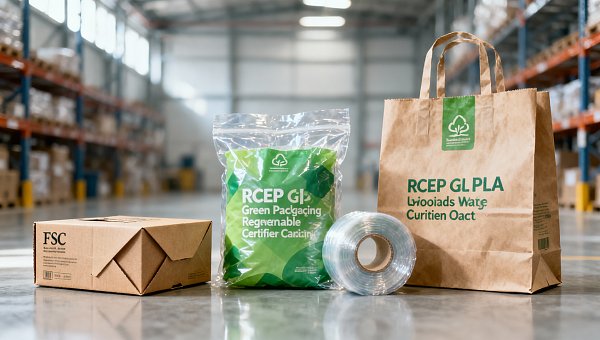
 RCEP Green Packaging Mutual Recognition Takes EffectRCEP Green Packaging Mutual Recognition takes effect Apr 22, 2026—streamline exports to AU, NZ, JP, KR with GB/T 37629–2019 certified molded fiber & PLA packaging.
 Mexico NOM-019-SCFI-2026 Effective: EMC Certification Required for Auto Electronics ExportsEMC certification is now mandatory for auto electronics exports to Mexico under NOM-019-SCFI-2026. Ensure compliance for rearview mirrors, radar sensors & T-Box units—avoid shipment delays and order cancellations.
") TÜV Rheinland Updates CE Requirements for Servo Drives (PLd + EMC Joint Validation)TÜV Rheinland now mandates joint PLd + EMC validation for servo drives under CE marking—learn how this impacts certification timelines, lab selection, and EU market access.
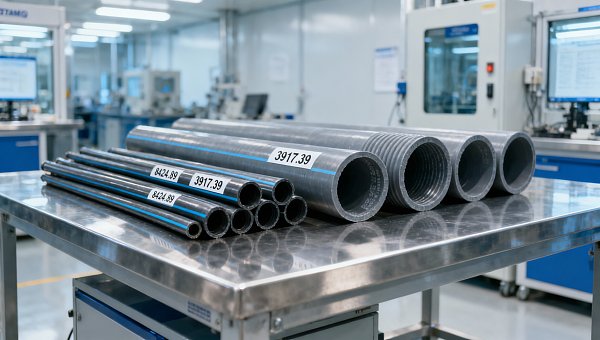
TÜV Rheinland Updates CE Requirements for Servo Drives (PLd + EMC Joint Validation)TÜV Rheinland now mandates joint PLd + EMC validation for servo drives under CE marking—learn how this impacts certification timelines, lab selection, and EU market access. Vietnam Suspends SASO Mutual Recognition for Chinese Irrigation EquipmentVietnam suspends SASO mutual recognition for Chinese irrigation equipment—urgent compliance updates for drip tapes & PE pipes (HS 8424.89/3917.39). Act now to avoid delays.
 FDA Finalizes AI Diagnostic Device Rules for ImportersFDA finalizes AI diagnostic device rules for importers: New bias assessment mandate impacts ultrasound, glucose analyzers & dermatoscopes. Act now to ensure U.S. market access.
 SABER Phase II Live: Saudi Building Hardware Requires Digital Type Test Reports & PIDSABER Phase II is live: Building hardware exports to Saudi Arabia now require digital type test reports & a mandatory, immutable Product ID (PID). Act now to avoid customs delays!
 IMDG Code 41-24 Enforced: UN3480 Lithium Battery Labeling Mandatory from Apr 2026IMDG Code 41-24 enforcement starts Apr 2026: UN3480 lithium battery labeling & ISO 17363 docs are now mandatory—avoid port rejections!
 CBAM Carbon Tax Launch: Low CBAM Reporting Rate Among Chinese ExportersCBAM Carbon Tax is live—only 36.8% of Chinese exporters reported. Discover why, which industries are at risk, and how to secure EU market access now.
 China’s 10 Agencies Issue AI Export Ethics Review RulesChina’s 10 agencies launch AI export ethics rules—mandating bias reviews for visual inspection, warehouse AI & defect detection systems. Stay compliant & competitive.
 RCEP Green Packaging Mutual Recognition Takes EffectRCEP Green Packaging Mutual Recognition is now in effect—unlock faster customs clearance in Australia, NZ, Japan & Korea for GB/T 37659–2019-certified eco-packaging.
 Mexico NOM-019-SCFI-2026 Effective Apr 10, 2026: EMC Certification Required for Automotive ElectronicsNOM-019-SCFI-2026 EMC certification is now mandatory for automotive electronics entering Mexico — act before the July 1, 2026 customs ban.
 Red Sea Rerouting Normalized, EBA at $1,850/TEURed Sea rerouting normalized with EBA fixed at $1,850/TEU—learn how this structural shift impacts Asia-Europe freight costs, lead times & supply chain strategy.
 FDA AI Diagnostic Device Draft Rules: Bias Assessment for ImportsFDA AI diagnostic device draft rules require bias assessment for imports—learn how portable ultrasound, glucose, and dermatoscopic AI devices are affected & what to do next.
") TÜV Rheinland Updates CE Requirements for Servo Drives (PLd + EMC)TÜV Rheinland updates CE requirements for servo drives: PLd (ISO 13849-1) + EMC immunity (IEC 61000-6-2 Ed.4) now mandatory together — act now to avoid EU market delays!
TÜV Rheinland Updates CE Requirements for Servo Drives (PLd + EMC)TÜV Rheinland updates CE requirements for servo drives: PLd (ISO 13849-1) + EMC immunity (IEC 61000-6-2 Ed.4) now mandatory together — act now to avoid EU market delays! SABER Phase II Launch: Building Hardware Must Submit Digital Type Test Reports & Unique Product IDSABER Phase II now mandates digital type test reports & unique product IDs for building hardware—fasteners, scaffolding, door/window components. Ensure compliance to avoid customs rejection & SCOC delays.
 Vietnam Suspends SASO Mutual Recognition for Chinese Irrigation EquipmentVietnam suspends SASO mutual recognition for Chinese irrigation equipment—TCVN testing now mandatory. Act now to avoid 8–12 week delays and customs holdups.
 IMDG Code 41-24 Enforced: UN3480 Lithium Battery Labeling UpdateIMDG Code 41-24 enforcement starts April 2026: UN3480 lithium battery labeling updates are mandatory for global maritime shipments — avoid port delays, detention & penalties.
 EU CBAM Enters Full Enforcement on Jan 1, 2026EU CBAM full enforcement starts Jan 1, 2026 — mandatory quarterly reporting & certificate purchases for batteries, steel, cement, aluminum, fertilizers & chemicals. Act now to ensure EU market access.
 EU CBAM Carbon Tariff Starts Oct 2026 for Chinese Battery, Cement, Chemical ExportsEU CBAM carbon tariff hits Chinese battery, cement & chemical exports from Oct 2026 — mandatory emissions reporting starts now. Avoid €98/t default fees.



















Popular Tags
Global Trade Insights & Industry
Our mission is to empower global exporters and importers with data-driven insights that foster strategic growth.
Search News
Popular Tags
Industry Overview
The global commercial kitchen equipment market is projected to reach $112 billion by 2027. Driven by urbanization, the rise of e-commerce food delivery, and strict hygiene regulations.