

What supply chain management solutions fix stockout problems?
Stockouts usually come from a small set of operational gaps: weak demand forecasting, poor supplier coordination, long or variable lead times, low inventory visibility, and slow exception response. The most effective supply chain management solutions are the ones that fix those root causes together, not in isolation. For buyers, distributors, and sourcing teams, that means combining demand planning, inventory optimization, supplier collaboration tools, and real-time tracking into a practical decision framework. Whether you source from an outdoor furniture manufacturer, rely on a lubricants distributor, or manage fast-moving products such as breathable car seat covers and dash cams with night vision, the right system can reduce shortages, protect margins, and improve service levels.
What actually fixes stockout problems in supply chain management?
The short answer is this: no single software module eliminates stockouts by itself. Businesses reduce stockouts when they improve four capabilities at the same time:
- Better demand forecasting so replenishment is based on likely demand, not guesswork
- Inventory optimization so safety stock, reorder points, and order frequency match product behavior
- Supplier coordination so delays, capacity limits, and MOQ issues are visible earlier
- Real-time inventory visibility so teams can respond before a shortage becomes a lost sale
In practice, the best supply chain management solutions for stockout prevention are usually a mix of planning tools, ERP or inventory systems, supplier management processes, and reporting dashboards. Companies that treat stockouts as purely a warehouse issue often miss the real causes upstream in procurement, forecasting, or supplier reliability.
Why do stockouts keep happening even in companies with inventory systems?
Many companies already have some type of ERP, warehouse management software, or purchasing workflow. Yet stockouts still happen because the system records transactions without actively improving decisions.
Common reasons include:
- Forecasts are based only on historical sales and ignore promotions, seasonality, channel changes, or regional demand shifts
- Lead times in the system are outdated and do not reflect supplier variability
- Safety stock is set once and never reviewed
- Procurement teams and sales teams work from different demand assumptions
- Supplier performance data is incomplete, making planning unreliable
- Inventory is visible at total level, but not by SKU, location, or channel
This matters especially in cross-border trade and multi-sector sourcing. A distributor may appear well stocked overall, while the specific SKU, packaging format, or regional warehouse needed for an order is already at risk. Stockout prevention depends on granular visibility, not aggregate comfort.
Which supply chain management solutions deliver the biggest impact first?
For most businesses, the highest-impact solutions fall into five categories.
1. Demand forecasting and demand planning tools
If your stockouts are caused by inaccurate purchasing plans, demand planning should be the first priority. Good forecasting solutions help teams move beyond static averages by using seasonality, historical trends, order frequency, channel mix, and external signals.
These tools are especially valuable when demand is volatile or product portfolios change quickly. For example, consumer accessories and promotional products can spike unexpectedly, while industrial supplies may have lower frequency but larger order swings.
Look for capabilities such as:
- SKU-level forecasting
- Seasonal and trend analysis
- Exception alerts for unusual demand changes
- Collaboration inputs from sales and procurement
- Forecast accuracy reporting
2. Inventory optimization systems
Inventory optimization tools help set reorder points, safety stock, and service-level targets more intelligently. This is one of the most direct answers to the question, “What supply chain management solutions fix stockout problems?” because stockouts often happen when inventory policies are too generic.
A slow-moving industrial part and a fast-selling consumer item should not be replenished the same way. Optimization tools help segment products by velocity, margin, criticality, and replenishment risk.
Useful functions include:
- Dynamic safety stock calculation
- Lead-time-based reorder points
- Multi-location inventory balancing
- ABC or XYZ classification
- Service-level simulation
3. Supplier relationship and collaboration platforms
Stockouts are often supplier problems disguised as inventory problems. If suppliers miss ship dates, change lead times, ration output, or fail quality checks, inventory plans break down quickly.
Supplier collaboration tools improve the flow of purchase orders, confirmations, shipment milestones, and risk alerts. They are highly valuable for importers, sourcing teams, and distributors working with multiple factories or international vendors.
Key features may include:
- Supplier scorecards
- Lead time tracking
- Order status visibility
- Capacity and production updates
- Corrective action workflows
4. Real-time inventory visibility and control tower dashboards
If your team discovers shortages too late, visibility is the issue. Control tower systems and integrated dashboards give a live view of inventory, inbound shipments, delayed orders, and demand changes across sites or regions.
This does not just improve reporting. It gives decision-makers time to reroute stock, expedite replenishment, substitute suppliers, or rebalance inventory between channels before customers feel the impact.
5. Replenishment automation and exception management
Manual replenishment works when the SKU count is low and demand is stable. Once complexity increases, planners miss exceptions. Replenishment automation helps generate recommendations faster, while exception management flags the SKUs or suppliers that actually need human attention.
This is often the most practical improvement for companies that are not ready for a full digital transformation but need immediate stockout reduction.
How should buyers and distributors evaluate which solution fits their business?
Not every business needs the same system stack. The right choice depends on where stockouts originate and how costly they are.
Use this decision lens:
- If demand is unpredictable, prioritize forecasting and planning tools
- If supply is unreliable, prioritize supplier collaboration and lead-time tracking
- If inventory is spread across multiple warehouses or channels, prioritize visibility and multi-location optimization
- If teams are overloaded with manual ordering, prioritize replenishment automation
- If margins are tight and overstock is also a problem, prioritize inventory optimization instead of simply increasing buffer stock
For procurement professionals and business evaluators, a useful starting point is to map stockout causes over the last six to twelve months. Review which shortages came from forecast error, supplier delay, MOQ constraints, internal approval lag, logistics disruption, or data inaccuracy. Buy the solution category that addresses the largest and most repeated cause.
What should you ask vendors before investing in a stockout reduction solution?
Vendor evaluation should focus on operational fit, not only features. A strong demo is not enough if the tool cannot work with your product complexity, supplier base, or ERP environment.
Important questions include:
- Can the system forecast and plan at SKU, warehouse, and customer-channel level?
- How does it handle volatile lead times and supplier disruptions?
- Can it calculate dynamic safety stock based on service targets?
- Does it integrate with existing ERP, WMS, purchasing, and sales systems?
- How are alerts prioritized so teams are not overwhelmed?
- Can supplier performance be measured inside the platform?
- What reporting is available for fill rate, stockout rate, forecast accuracy, and inventory turns?
- What implementation effort is required from internal teams?
For distributors and importers, it is also important to ask whether the system can support container-based procurement, long international lead times, port delays, partial shipments, and substitute sourcing scenarios.
How do you reduce stockouts without creating excess inventory?
This is one of the most important concerns for commercial decision-makers. Many businesses respond to shortages by buying more inventory. That can work temporarily, but it ties up cash, raises storage cost, and increases obsolescence risk.
A better strategy is to improve stock positioning, planning quality, and response speed. Effective supply chain management solutions reduce stockouts while preserving working capital by helping teams:
- Hold more stock only for critical and high-variability items
- Lower stock on predictable or low-priority items
- Shorten planning cycles so replenishment reacts faster
- Use supplier segmentation instead of treating every vendor equally
- Develop backup sources for high-risk items
- Set service-level targets by product category, not one rule for all
This balanced approach matters across industries. An essential maintenance lubricant, a seasonal furniture item, and a fast-moving consumer electronics accessory each require different service levels and replenishment logic.
What metrics show whether a stockout solution is really working?
To judge value, businesses should measure outcomes before and after implementation. The most useful metrics include:
- Stockout rate: how often products are unavailable when needed
- Fill rate: how much customer demand is fulfilled immediately
- Forecast accuracy: how closely planning matches actual demand
- Supplier on-time performance: whether vendors meet committed delivery windows
- Inventory turns: how efficiently inventory moves
- Backorder volume: the scale of unfulfilled demand
- Expedite cost: extra freight or rush purchasing caused by shortages
- Working capital tied in inventory: whether availability improvements are being bought too expensively
The goal is not just “more stock.” The goal is more reliable availability at a financially sustainable inventory level.
Practical implementation advice for companies that want quick results
If you need improvement without a long enterprise rollout, start with a focused stockout reduction program:
- Identify the top 20 SKUs causing the largest lost sales or service disruption
- Review actual lead times versus system lead times
- Recalculate reorder points and safety stock for those SKUs
- Track supplier delivery performance weekly
- Create alerts for low coverage and delayed inbound orders
- Run a monthly forecast review involving sales, procurement, and operations
- Add secondary suppliers for high-risk items where possible
This approach often reveals whether the business mainly needs better data discipline, stronger supplier management, or investment in a more advanced planning platform.
Final takeaway
If you are asking what supply chain management solutions fix stockout problems, the most reliable answer is: solutions that improve forecasting, inventory policy, supplier coordination, and real-time visibility together. For buyers, procurement teams, and distributors, the best choice is not the most complex system, but the one that addresses the true cause of shortages in your operation.
When evaluated correctly, these solutions do more than prevent empty shelves. They protect customer trust, reduce emergency purchasing, improve supplier accountability, and support smarter growth across global trade networks. Businesses that treat stockout prevention as a data-driven supply chain capability, rather than a reactive inventory task, usually achieve stronger service levels and better commercial resilience.
Recommended News
 China’s 10-Dept AI Export Ethics Review Rule Takes EffectChina’s new 10-dept AI export ethics rule mandates algorithmic bias review for AI hardware bound for the EU, US, Canada, Japan & SK—key for smart cameras, voice assistants & industrial vision exporters.
 Red Sea Detour Now Standard: $1,850 TEU Premium on Asia-Europe RoutesRed Sea detour premium now standard: $1,850/TEU surcharge embedded in Asia-Europe freight rates — vital intel for exporters, importers & logistics teams.
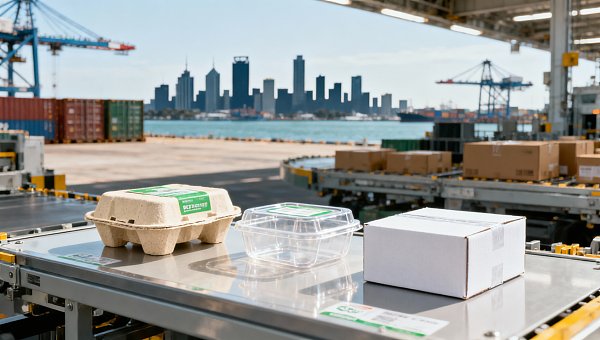
 RCEP Green Packaging Mutual Recognition Takes EffectRCEP Green Packaging Mutual Recognition takes effect Apr 22, 2026—streamline exports to AU, NZ, JP, KR with GB/T 37629–2019 certified molded fiber & PLA packaging.
 Mexico NOM-019-SCFI-2026 Effective: EMC Certification Required for Auto Electronics ExportsEMC certification is now mandatory for auto electronics exports to Mexico under NOM-019-SCFI-2026. Ensure compliance for rearview mirrors, radar sensors & T-Box units—avoid shipment delays and order cancellations.
") TÜV Rheinland Updates CE Requirements for Servo Drives (PLd + EMC Joint Validation)TÜV Rheinland now mandates joint PLd + EMC validation for servo drives under CE marking—learn how this impacts certification timelines, lab selection, and EU market access.
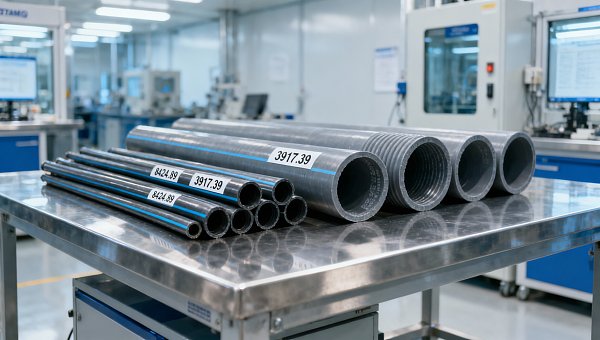
TÜV Rheinland Updates CE Requirements for Servo Drives (PLd + EMC Joint Validation)TÜV Rheinland now mandates joint PLd + EMC validation for servo drives under CE marking—learn how this impacts certification timelines, lab selection, and EU market access. Vietnam Suspends SASO Mutual Recognition for Chinese Irrigation EquipmentVietnam suspends SASO mutual recognition for Chinese irrigation equipment—urgent compliance updates for drip tapes & PE pipes (HS 8424.89/3917.39). Act now to avoid delays.
 FDA Finalizes AI Diagnostic Device Rules for ImportersFDA finalizes AI diagnostic device rules for importers: New bias assessment mandate impacts ultrasound, glucose analyzers & dermatoscopes. Act now to ensure U.S. market access.
 SABER Phase II Live: Saudi Building Hardware Requires Digital Type Test Reports & PIDSABER Phase II is live: Building hardware exports to Saudi Arabia now require digital type test reports & a mandatory, immutable Product ID (PID). Act now to avoid customs delays!
 IMDG Code 41-24 Enforced: UN3480 Lithium Battery Labeling Mandatory from Apr 2026IMDG Code 41-24 enforcement starts Apr 2026: UN3480 lithium battery labeling & ISO 17363 docs are now mandatory—avoid port rejections!
 CBAM Carbon Tax Launch: Low CBAM Reporting Rate Among Chinese ExportersCBAM Carbon Tax is live—only 36.8% of Chinese exporters reported. Discover why, which industries are at risk, and how to secure EU market access now.
 China’s 10 Agencies Issue AI Export Ethics Review RulesChina’s 10 agencies launch AI export ethics rules—mandating bias reviews for visual inspection, warehouse AI & defect detection systems. Stay compliant & competitive.
 RCEP Green Packaging Mutual Recognition Takes EffectRCEP Green Packaging Mutual Recognition is now in effect—unlock faster customs clearance in Australia, NZ, Japan & Korea for GB/T 37659–2019-certified eco-packaging.
 Mexico NOM-019-SCFI-2026 Effective Apr 10, 2026: EMC Certification Required for Automotive ElectronicsNOM-019-SCFI-2026 EMC certification is now mandatory for automotive electronics entering Mexico — act before the July 1, 2026 customs ban.
 Red Sea Rerouting Normalized, EBA at $1,850/TEURed Sea rerouting normalized with EBA fixed at $1,850/TEU—learn how this structural shift impacts Asia-Europe freight costs, lead times & supply chain strategy.
 FDA AI Diagnostic Device Draft Rules: Bias Assessment for ImportsFDA AI diagnostic device draft rules require bias assessment for imports—learn how portable ultrasound, glucose, and dermatoscopic AI devices are affected & what to do next.
") TÜV Rheinland Updates CE Requirements for Servo Drives (PLd + EMC)TÜV Rheinland updates CE requirements for servo drives: PLd (ISO 13849-1) + EMC immunity (IEC 61000-6-2 Ed.4) now mandatory together — act now to avoid EU market delays!
TÜV Rheinland Updates CE Requirements for Servo Drives (PLd + EMC)TÜV Rheinland updates CE requirements for servo drives: PLd (ISO 13849-1) + EMC immunity (IEC 61000-6-2 Ed.4) now mandatory together — act now to avoid EU market delays! SABER Phase II Launch: Building Hardware Must Submit Digital Type Test Reports & Unique Product IDSABER Phase II now mandates digital type test reports & unique product IDs for building hardware—fasteners, scaffolding, door/window components. Ensure compliance to avoid customs rejection & SCOC delays.
 Vietnam Suspends SASO Mutual Recognition for Chinese Irrigation EquipmentVietnam suspends SASO mutual recognition for Chinese irrigation equipment—TCVN testing now mandatory. Act now to avoid 8–12 week delays and customs holdups.
 IMDG Code 41-24 Enforced: UN3480 Lithium Battery Labeling UpdateIMDG Code 41-24 enforcement starts April 2026: UN3480 lithium battery labeling updates are mandatory for global maritime shipments — avoid port delays, detention & penalties.
 EU CBAM Enters Full Enforcement on Jan 1, 2026EU CBAM full enforcement starts Jan 1, 2026 — mandatory quarterly reporting & certificate purchases for batteries, steel, cement, aluminum, fertilizers & chemicals. Act now to ensure EU market access.
 EU CBAM Carbon Tariff Starts Oct 2026 for Chinese Battery, Cement, Chemical ExportsEU CBAM carbon tariff hits Chinese battery, cement & chemical exports from Oct 2026 — mandatory emissions reporting starts now. Avoid €98/t default fees.



















Popular Tags
Global Trade Insights & Industry
Our mission is to empower global exporters and importers with data-driven insights that foster strategic growth.
Search News
Popular Tags
Industry Overview
The global commercial kitchen equipment market is projected to reach $112 billion by 2027. Driven by urbanization, the rise of e-commerce food delivery, and strict hygiene regulations.