

Photovoltaic solar panels lose value when degradation is underestimated
For financial decision-makers, the real risk in solar investments often starts with a hidden assumption: degradation. When Photovoltaic solar panels are modeled with overly optimistic performance curves, projected returns, asset values, and payback timelines can quickly become unreliable. Understanding how underestimated degradation affects long-term financial outcomes is essential for more accurate approvals, stronger risk control, and better capital allocation.
In cross-border energy procurement, project finance, and industrial asset evaluation, degradation is not a technical footnote. It directly affects revenue forecasts, debt coverage assumptions, warranty interpretation, and resale value. For companies comparing utility-scale, commercial rooftop, or distributed generation opportunities, a 0.3% to 0.8% annual modeling gap can materially change board-level approval decisions over a 15- to 25-year horizon.
This matters especially to finance approvers who must defend capital allocation decisions under uncertain market conditions. Whether the buyer is an importer, exporter, factory operator, or energy-intensive manufacturer, the financial model behind Photovoltaic solar panels should be stress-tested with realistic performance decline, not idealized vendor assumptions. A disciplined review process improves forecasting accuracy and reduces hidden downside.
Why degradation assumptions change the investment case
Degradation refers to the gradual decline in electricity output over time. In many project models, year-1 performance loss and annual linear decline are treated as standard inputs, yet the selected values can vary widely. A model using 1.0% first-year loss and 0.4% annual decline will produce a very different 20-year output profile from one using 2.0% and 0.7%, even if the initial module price is identical.
For finance teams, this is not just an engineering issue. Lower generation affects revenue per kilowatt installed, internal rate of return, net present value, and expected debt service coverage ratios. If a project was approved with a payback estimate of 6.5 years, a modest underestimation of long-term degradation can extend that period by 6 to 18 months depending on tariff structure, financing cost, and self-consumption ratio.
Photovoltaic solar panels are often procured based on nameplate capacity, price per watt, and warranty headline figures. However, asset value is realized through energy production over time, not through initial output alone. A low-cost procurement decision may appear attractive at contract signing but become less compelling once conservative degradation rates are applied to years 8 through 20.
Three financial variables most affected
The first variable is cumulative energy yield. Even a small annual shortfall compounds over 10, 15, or 25 years. The second is terminal asset value, especially when portfolios are sold or refinanced after year 5, 7, or 10. The third is covenant resilience. Tighter cash flow margins leave less room for irradiation variability, maintenance events, or grid curtailment.
- Revenue sensitivity: A 3% to 5% lifetime generation gap can erase a meaningful share of projected profit in low-margin projects.
- Financing sensitivity: Higher leverage structures are more vulnerable when output underperforms model assumptions.
- Portfolio sensitivity: Multi-site operators may face accumulated underperformance across 10, 20, or 50 installations.
The practical takeaway is clear: conservative degradation modeling does not weaken a solar business case. It strengthens the credibility of the approval process by exposing downside early, when contract negotiation, supplier screening, and insurance design can still be adjusted.
Where financial models for Photovoltaic solar panels often go wrong
One common error is relying on warranty language as if it were an operating forecast. Product warranties and performance warranties define thresholds and remedies, but they do not guarantee annual site-level production. For example, a performance warranty may specify a remaining output of 84% to 88% after 25 years, yet the actual year-by-year path can differ based on climate, installation quality, and system design.
A second issue is the use of ideal test conditions in financial approval models. Standard Test Conditions do not reflect real-world operating temperatures, soiling, humidity, thermal cycling, or mismatch losses. If degradation assumptions are imported from marketing materials without adjusting for local site conditions, the resulting revenue forecast may be structurally optimistic from day one.
A third problem appears in multinational sourcing. Buyers may compare Photovoltaic solar panels from different suppliers using only capex per watt and front-side efficiency. Yet degradation risk is linked to bill of materials stability, encapsulation quality, glass durability, installation method, and field service responsiveness. Finance approvers need a wider due diligence lens than procurement price alone.
Typical modeling gaps seen in approval reviews
The table below summarizes common gaps that affect valuation and approval quality in commercial and industrial solar assessments.
The key conclusion is that underestimating degradation often begins as a spreadsheet shortcut, then becomes a valuation error. In B2B energy sourcing, finance teams should ask whether the model reflects field conditions, not merely catalog data. That distinction can determine whether a project remains bankable after year 7 or requires unexpected reserve adjustments.
Approval questions worth asking before sign-off
- What first-year and annual degradation rates were used, and why?
- Were high-heat, dust, humidity, or coastal conditions reflected in the model?
- Does the downside case test output under a 10%, 15%, and 20% lower cumulative yield scenario?
- How does a lower generation curve affect DSCR, payback, and refinancing assumptions?
These questions improve decision discipline without slowing procurement. In fact, they often help buyers negotiate stronger delivery terms, better monitoring requirements, and more realistic investment committee expectations.
How underestimated degradation reduces asset value over time
Asset value in solar is the present value of future energy output translated into cash flow. If the energy curve is too optimistic, the asset is effectively overvalued at approval. This issue becomes more visible in secondary market transactions, portfolio refinancing, or impairment reviews where actual generation data begins to replace original assumptions.
For example, two sites may each install 10 MW of Photovoltaic solar panels with similar EPC costs. If Site A experiences a more realistic 0.6% annual decline after year 1 and Site B was approved using 0.35%, the valuation gap after 12 years can become material. The larger the electricity price exposure or self-consumption premium, the more expensive that modeling error becomes.
This also affects merger and acquisition due diligence. Acquirers reviewing operating portfolios often recalculate expected yield using measured historical performance, climate normalization, and remaining warranty structure. If the seller’s original assumptions were too aggressive, purchase price adjustments or earn-out pressure may follow. Finance approvers should think ahead to that scrutiny at the initial approval stage.
Illustrative impact on long-term economics
The following comparison shows how different degradation assumptions can influence long-range economics for the same installation profile. Values are illustrative and intended to support decision framing rather than represent a universal benchmark.
The most useful insight is not that every project needs the most conservative curve. It is that asset value should be based on verifiable operating assumptions. Finance teams evaluating Photovoltaic solar panels should test at least three cases—base, downside, and severe downside—over 15, 20, and 25 years to understand the sensitivity of the approval decision.
Where value erosion appears first
- In tariff-driven projects, lower generation reduces contracted revenue predictability.
- In self-consumption projects, the cost savings case weakens if offset rates are overestimated.
- In financed portfolios, reserve accounts may need strengthening if output variance widens.
Because these effects emerge gradually, they are often underestimated during procurement. Yet once systems are operating, corrective options are narrower and more expensive. That is why degradation deserves early treatment as a valuation variable, not a technical afterthought.
A practical approval framework for finance teams
A strong approval process for Photovoltaic solar panels should combine technical review with investment risk controls. The objective is not to delay procurement but to make sure the approved return case remains credible under normal field conditions. In most commercial settings, a 4-step review framework is enough to improve capital discipline without creating unnecessary process friction.
Step 1 is assumption validation. Review year-1 loss, annual degradation, temperature impacts, soiling assumptions, and maintenance intervals. Step 2 is supplier comparability. Check whether all bids use the same modeling boundaries and not just the same system size. Step 3 is downside testing across 10%, 15%, and 20% lower cumulative output. Step 4 is governance, including approval notes, sensitivity thresholds, and post-commissioning monitoring triggers.
This framework is particularly useful for import-export businesses and industrial operators managing projects across multiple regions. Climate, logistics, installer quality, and service support can vary significantly between markets. A repeatable review structure helps maintain consistency even when site conditions differ from Southeast Asia to the Middle East to Southern Europe.
Recommended review checklist before capital approval
The checklist below can be used by CFO offices, investment committees, procurement leaders, or regional project reviewers when evaluating long-term performance risk.
Used consistently, this checklist improves decision transparency. It also creates a stronger audit trail for future refinancing, acquisitions, or internal portfolio reviews. In practice, a disciplined model does more than reduce risk; it helps organizations compare Photovoltaic solar panels on value delivered over time instead of cost presented upfront.
Implementation tips for multinational buyers
- Standardize one approval template across all regions to reduce inconsistency.
- Require suppliers to disclose degradation assumptions separately from warranty language.
- Link final approval to measurable post-installation verification in the first 6 to 12 months.
- Revisit forecast curves annually for large portfolios above 5 MW aggregate capacity.
These actions are especially relevant in global trade environments where procurement and asset ownership may sit in different business units. A shared financial review method reduces the chance of technical optimism entering investment decisions unchecked.
FAQ for financial approvers evaluating long-term panel value
How conservative should degradation assumptions be?
They should be conservative enough to reflect location, system design, and module quality, but not artificially punitive. For many reviews, it is practical to test a base case and at least two downside cases. A range such as 0.4% to 0.7% annual decline after year 1 is often more useful than one fixed number, provided the reasoning is documented and tied to site conditions.
Is a lower purchase price enough to justify higher degradation risk?
Not always. A lower upfront cost can improve capex efficiency, but the benefit may disappear if lifetime production is weaker. Finance teams should compare levelized economic value, not only price per watt. If a cheaper option leads to a 4% to 6% lower cumulative yield over 20 years, the apparent savings may be offset by lost revenue or reduced energy cost avoidance.
When should actual performance trigger model reassessment?
A good practice is to review actual generation monthly and conduct a formal reassessment after 6 months and 12 months of operation. If normalized output falls outside an agreed band, such as 3% to 5% below modeled expectations after adjusting for irradiation, the financial team should revisit lifetime assumptions, reserve planning, and supplier accountability mechanisms.
What matters more: efficiency or degradation?
Both matter, but they affect value differently. Higher efficiency improves space utilization and initial output density, while lower degradation protects long-term yield. For roof-constrained sites, efficiency may carry more weight in year 1. For long-hold assets over 15 to 25 years, degradation often has greater influence on total delivered value and residual attractiveness.
Underestimated degradation can quietly distort the full economics of Photovoltaic solar panels, from projected payback and asset valuation to refinancing confidence and portfolio performance. For financial approvers, the right response is not blanket caution but better modeling discipline, clearer supplier comparison, and scenario testing built around real operating conditions.
Organizations that treat degradation as a core approval variable are better positioned to protect capital, improve forecast accuracy, and make stronger long-term procurement decisions. If you need deeper market intelligence, supplier comparison support, or a more robust framework for evaluating Photovoltaic solar panels across international projects, contact us to get tailored insights and explore more decision-ready solutions.
Recommended News
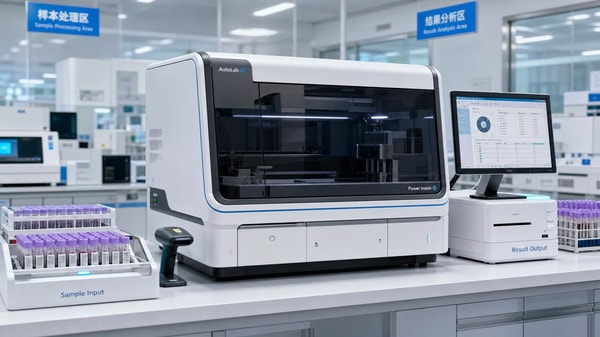
 Medical diagnostic equipment buying mistakes often start with workflowMedical diagnostic equipment buying mistakes often begin with workflow gaps. Learn how to compare systems, uncover hidden costs, and choose suppliers that fit real clinical operations.
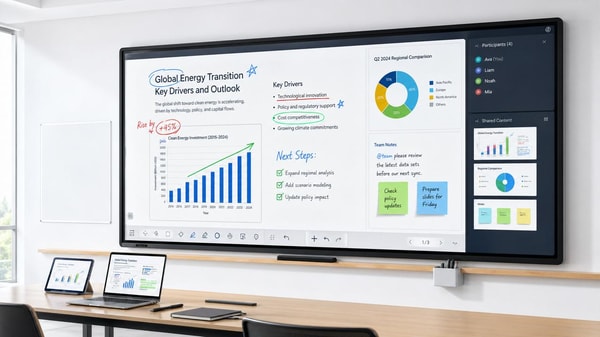
 Interactive whiteboards are improving, but teacher adoption is unevenInteractive whiteboards are improving fast, but teacher adoption remains uneven. Explore what drives classroom success, ROI, and smarter edtech implementation.
 Portable oxygen concentrators: what noise levels feel acceptable?Portable oxygen concentrators: discover what noise levels feel acceptable for sleep, travel, work, and home use, with practical guidance to choose a quieter, more comfortable model.
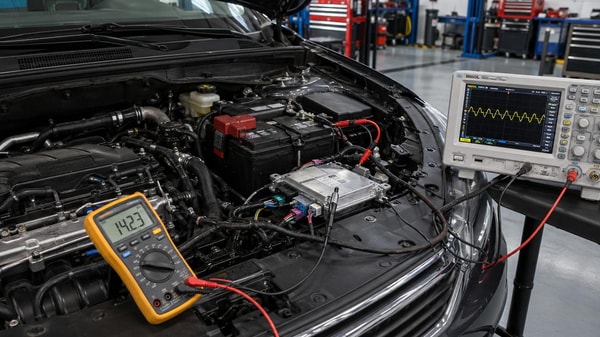
 Car electronics failures often start with power instabilityCar electronics issues often begin with hidden power instability. Learn how voltage drops, ripple, and weak grounds cause faults—and how smarter diagnostics cut repair time and repeat failures.
 Telemedicine hardware works best when setup friction is lowTelemedicine hardware works best with low setup friction. Discover how faster deployment, easier operation, and scenario-based selection improve care efficiency and service quality.
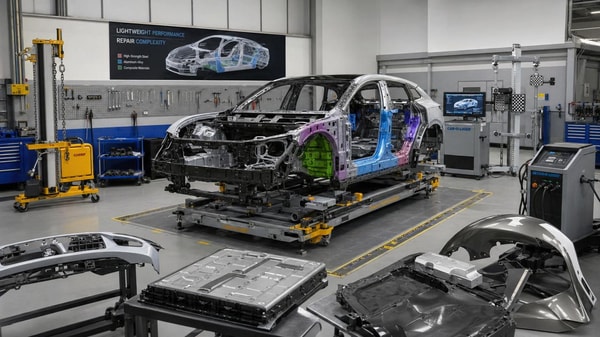
 Are light-weighting vehicle materials worth the repair tradeoff?Light-weighting vehicle materials: Are efficiency gains worth higher repair costs? Explore lifecycle impact, EV value, downtime risks, and smarter sourcing decisions.
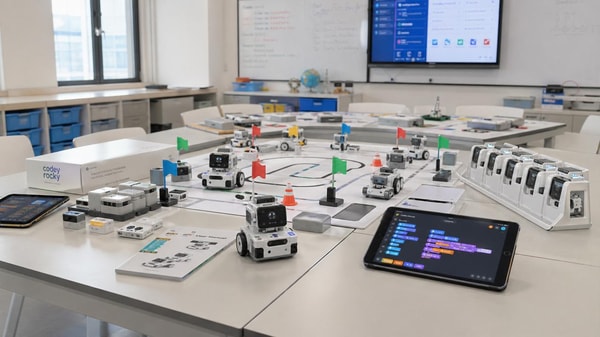
 Educational robots in class: novelty or lasting value?Educational robots are moving beyond classroom novelty. Discover how they create lasting value through STEM learning, scalability, and smarter school purchasing decisions.
 Biodegradable plastics fail when disposal assumptions are wrongBiodegradable plastics can fail when real disposal systems do not match design assumptions. Learn the compliance, contamination, and claim risks before they damage trust.
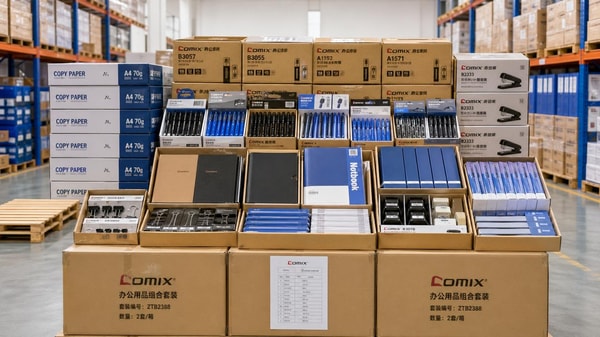
 Office stationery wholesale margins depend on boring detailsOffice stationery wholesale margins are won in the details—packaging, MOQ, freight, and SKU rotation. Learn how distributors protect profit and reduce hidden cost leakage.
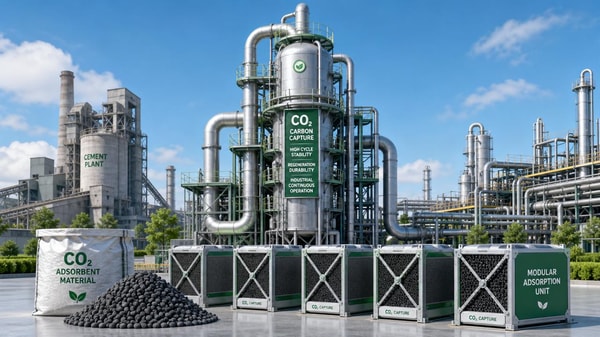
 Carbon capture materials are improving, but durability still mattersCarbon capture materials are improving, but durability still decides ROI. Explore cycle stability, regeneration resilience, and supplier evaluation factors for reliable industrial deployment.
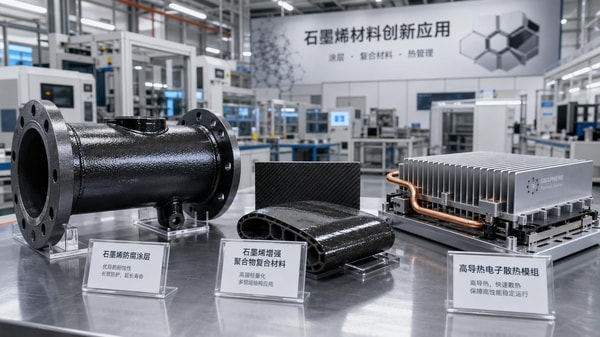
 Which graphene applications in industry are moving beyond pilots?Graphene applications in industry are moving beyond pilots fastest in coatings, composites, thermal management, sensors, and energy storage. See where commercialization is gaining traction.
 Precision farming drones need better data, not just better flight timePrecision farming drones deliver more value through accurate maps, crop insights, and faster decisions than longer flight time alone. See how better data improves farm efficiency.
 Smart classroom solutions often disappoint for one simple reasonSmart classroom solutions often fail when complexity is ignored. Discover how project leaders can improve adoption, scalability, ROI, and long-term classroom performance.
 Organic fertilizers: when higher cost brings better soil resultsOrganic fertilizers may cost more, but they can improve soil structure, moisture retention, and long-term plant health. Learn when the higher price delivers better garden results.
 Agri-PV systems can raise land efficiency, but not everywhereAgri-PV systems can improve land efficiency, but only in the right conditions. Explore where they work, key risks, and how to evaluate profitable deployment.
 Smart home devices wholesale gets risky when standards do not matchSmart home devices wholesale becomes risky when standards, protocols, and certifications do not align. Learn how to reduce sourcing errors, control costs, and protect buyer trust.
 Wearable technology users quit when comfort is overlookedWearable technology users quit when comfort is ignored. Discover the checklist for fit, weight, skin safety, and long-term wear to choose devices that improve adoption and user satisfaction.
 Next-gen wireless charging still faces a heat management gapNext-gen wireless charging still faces a critical heat management gap. Explore how thermal risks affect efficiency, safety, lifecycle, and product readiness.
 Foldable screen technology looks mature until repair costs appearFoldable screen technology looks premium and practical, but are repair costs too high? Discover the real tradeoff between innovation, durability, and long-term value before you buy.
 Plant-based protein processing bottlenecks start after extractionPlant-based protein processing bottlenecks often begin after extraction. Discover downstream risks, supplier evaluation tips, and cost-saving insights for better sourcing decisions.
 Photovoltaic solar panels lose value when degradation is underestimatedPhotovoltaic solar panels can lose value fast when degradation is underestimated. Learn how realistic modeling protects ROI, asset valuation, and smarter solar investment decisions.








Popular Tags
Global Trade Insights & Industry
Our mission is to empower global exporters and importers with data-driven insights that foster strategic growth.
Search News
Popular Tags
Industry Overview
The global commercial kitchen equipment market is projected to reach $112 billion by 2027. Driven by urbanization, the rise of e-commerce food delivery, and strict hygiene regulations.