

Next-gen wireless charging still faces a heat management gap
Next-gen wireless charging promises greater convenience and design flexibility, but heat management remains a critical barrier to wider adoption. For technical evaluators, understanding how thermal buildup affects efficiency, safety, component lifespan, and regulatory compliance is essential when assessing commercial readiness. This article examines why the gap persists and what it means for future product development.
Understanding the thermal challenge behind Next-gen wireless charging
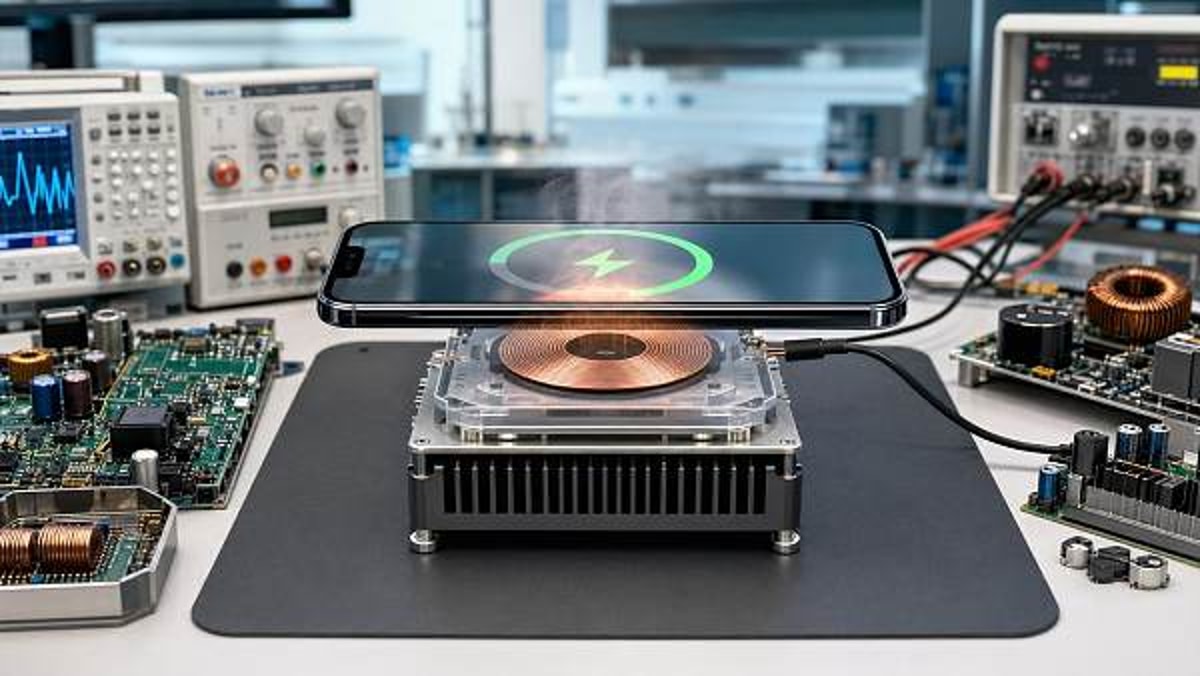
Next-gen wireless charging generally refers to higher-power, faster, more flexible charging systems that go beyond basic low-watt consumer pads. In practical terms, it includes tighter coil integration, multi-device charging surfaces, longer spatial tolerance, and power ranges that may move from 5 W and 15 W consumer norms toward 30 W, 50 W, or even higher in specialized equipment. The concept sounds straightforward, but the engineering burden rises sharply once more power is transferred through smaller form factors.
Heat is the central constraint because wireless power transfer is inherently less efficient than direct wired conduction. Losses occur in the transmitter coil, receiver coil, shielding layers, power electronics, alignment control, and nearby mechanical materials. Even a modest efficiency gap of 5% to 15% can become significant when systems operate continuously, fast-charge repeatedly, or sit inside sealed housings with limited airflow. For technical evaluation teams, that means thermal analysis cannot be treated as a late-stage validation step.
This issue matters across the broader industrial and trade ecosystem because wireless charging is no longer confined to smartphones. It is increasingly considered for wearables, medical accessories, warehouse handhelds, automotive interiors, consumer appliances, and industrial sensors. In each case, the same business question appears: can the design sustain target charging performance without exceeding material limits, user comfort thresholds, or certification-related temperature conditions over a 24-hour to 72-hour test cycle?
Why heat scales faster than many teams expect
Thermal buildup in Next-gen wireless charging is not driven by one factor alone. It is the result of combined electrical, magnetic, mechanical, and software interactions. Small changes in coil spacing, ferrite thickness, enclosure material, or charging alignment can shift system behavior enough to turn a stable thermal profile into a hotspot problem. This is especially visible when product teams try to maintain thin industrial design targets below 8 mm to 12 mm in charging zones.
Another reason the gap persists is that laboratory efficiency numbers often look better than field performance. Bench tests may use ideal alignment, controlled ambient temperatures around 23°C to 25°C, and short charging windows. Real products face desk clutter, thermal stacking from processors and batteries, textile covers, dust, and ambient temperatures that may reach 35°C to 45°C in transport, retail, or factory settings. Evaluators therefore need to assess not just peak charging speed, but thermal stability across realistic use cases.
A further complication is that heat directly affects user perception. A system that technically charges at the intended rate may still fail commercially if the touch surface feels too warm, if battery charging throttles unpredictably, or if repeated exposure accelerates adhesive aging. In competitive global supply chains, these issues influence not only product acceptance but also warranty risk, return rates, and supplier qualification decisions.
Core heat sources in a typical architecture
- Copper losses in transmitter and receiver coils increase with current and switching behavior.
- Magnetic losses in ferrite and shielding materials become more relevant at higher operating loads.
- Power conversion stages generate heat in drivers, rectifiers, and control ICs, especially in compact layouts.
- Misalignment raises transfer losses, often causing a temperature jump within 10 to 20 minutes of charging.
- Adjacent battery packs and processors can create thermal coupling that worsens local hot spots.
Why the industry keeps focusing on this gap
The market keeps pushing Next-gen wireless charging because it supports cleaner product design, fewer exposed connectors, better ingress protection, and more convenient user behavior. For manufacturers serving multiple export markets, wireless charging can also reduce connector wear in high-cycle products and simplify some aspects of mechanical sealing. However, these design gains are offset when thermal control demands thicker materials, larger internal clearances, or firmware limits that reduce the user-visible performance advantage.
Technical evaluators are increasingly asked to judge readiness across both consumer and industrial use cases. That requires balancing electrical efficiency, thermal safety, battery health, cost targets, and compliance pathways. In many programs, the obstacle is not whether wireless charging works at all, but whether it works consistently over 500 to 1,000 charging cycles without measurable degradation in charging time, enclosure stability, or user-facing reliability. The heat management gap becomes a commercialization gap.
For B2B information users such as sourcing managers, product engineers, and cross-border manufacturing teams, this topic also affects supplier communication. Vendors may present charging power claims, but buyers increasingly need supporting data on thermal derating, allowable ambient ranges, material stack-up compatibility, and validation methods. This is where structured industry intelligence becomes useful: it helps convert broad technology claims into comparable engineering criteria that can be reviewed before sampling or pilot production.
Industry overview by application pressure
The table below shows how thermal pressure changes across representative application categories. The goal is not to assign exact universal numbers, but to illustrate why Next-gen wireless charging is evaluated differently depending on duty cycle, enclosure constraints, and expected charging behavior.
This overview shows that the heat management gap is not limited to fast charging headlines. Even lower-power systems can struggle if they are sealed, compact, or exposed to variable ambient conditions. As a result, technical review should classify Next-gen wireless charging projects by operating context, not by advertised wattage alone.
Why commercial claims and engineering reality diverge
Many product roadmaps assume that improved coil design or newer control chips will automatically close the thermal gap. In reality, gains are often incremental. A 2% to 4% system efficiency improvement can be meaningful, but it does not remove the need for better thermal spreading, firmware-based power adaptation, and enclosure-level design changes. This is why commercialization timelines may slip even when power transfer works as intended in early prototypes.
The divergence is especially important in international trade environments, where one design may need to satisfy multiple regional expectations for safety labeling, end-user temperature perception, and battery transport risk management. A technically acceptable prototype may still require redesign if thermal behavior changes after localization of materials, contract manufacturing transfer, or component substitution.
For organizations comparing suppliers across Asia, Europe, and North America, asking for thermal validation data early can prevent delays later in the sourcing cycle. It is often more efficient to identify heat-related design constraints before tooling, rather than after first-pass pilot builds reveal charging throttling or enclosure distortion.
How thermal buildup affects performance, safety, and lifecycle value
The most immediate effect of excess heat is reduced charging efficiency. As temperature rises, systems may need to lower power transfer to protect components or batteries. That means the promised convenience of Next-gen wireless charging can be undermined by longer actual charging times. In products where fast top-up charging is a selling point, a 15-minute or 30-minute extension to reach target state of charge can materially affect user acceptance.
Safety implications are equally important. Wireless charging designs must account for foreign object detection, abnormal alignment, and heat accumulation near batteries or adhesives. Even without catastrophic failure, repeated exposure to elevated temperature can accelerate material fatigue, reduce magnet stability, and affect battery health over hundreds of cycles. For technical evaluators, the key question is not whether safeguards exist, but whether they activate early enough and predictably enough under mixed real-world conditions.
Lifecycle value is often overlooked in early business cases. Wireless charging may reduce connector maintenance, but thermal stress can shift cost elsewhere through battery replacement, service calls, or shorter product lifespan. In B2B device fleets, even a small increase in failure rate across 5,000 or 10,000 deployed units can outweigh the original design benefits. Total cost evaluation therefore needs a thermal reliability lens, not just a feature checklist.
Main impact areas for technical evaluation
- Charging efficiency under nominal and misaligned conditions.
- Maximum surface and internal temperature during 30-minute, 60-minute, and full-cycle tests.
- Battery temperature rise and resulting power throttling behavior.
- Material compatibility for adhesives, shielding, plastics, and decorative layers.
- Field reliability across repeated cycles, ambient variation, and regional deployment environments.
Representative evaluation matrix
A practical way to review Next-gen wireless charging is to link thermal behavior to business consequences. The following matrix helps technical assessment teams prioritize what to test and why it matters beyond the lab.
For evaluators, the matrix highlights that thermal management is not a narrow engineering topic. It influences customer experience, service economics, and regional market access. That is why Next-gen wireless charging assessments should integrate electrical, mechanical, firmware, and quality teams from the early design phase.
Where the biggest application value still exists
Despite its thermal gap, Next-gen wireless charging still offers meaningful value when the application justifies the trade-offs. The strongest cases are usually those where sealed design, connector durability, cleaning convenience, or user simplicity matter more than absolute charging efficiency. This is why the technology continues to attract interest in sectors where mechanical wear, moisture protection, or docking convenience are strategic design priorities.
In medical-adjacent devices and sanitary environments, the reduction of open charging ports can support easier cleaning and fewer contamination points. In warehouses and logistics, dock-and-drop charging behavior can improve workflow if thermal design supports repeated shift usage. In automotive interiors, invisible charging integration aligns with design trends, though the ambient temperature challenge remains substantial. Each use case shows that the value proposition is real, but highly conditional.
For technical assessment teams, the practical question is whether the application benefit is large enough to justify added thermal engineering effort, component cost, and test complexity. A product with one daily charging event and generous internal space may be a better candidate than a compact device requiring rapid recharges every few hours. Matching the technology to the right operating profile is often more important than pursuing the highest headline power level.
Typical fit scenarios
- Devices needing sealed housings for moisture or dust protection.
- Products exposed to frequent plug-in wear over 1 to 3 years of daily use.
- Shared-use devices where docking simplicity reduces handling errors.
- Design-led products where exposed connectors compromise form factor goals.
Scenarios that need extra caution
Certain scenarios increase the probability that Next-gen wireless charging will struggle thermally. These include ultra-thin enclosures, dark surface materials that absorb additional heat, continuous high-power sessions, battery-dense internal layouts, and deployment in hot climates. A system that appears stable in a temperate office may perform very differently in a vehicle cabin or non-air-conditioned facility during summer months.
Products with decorative metal, thick protective covers, or variable accessory attachments also deserve closer review because they can alter magnetic coupling and thermal spreading. In multinational supply chains, late-stage cosmetic changes are common, and these changes can unintentionally disturb charging performance. Technical evaluators should therefore insist that final industrial design materials be included in thermal validation samples.
This application-driven perspective helps organizations avoid overgeneralization. The future of Next-gen wireless charging is not defined by whether the technology is universally good or bad. It depends on fit: fit with ambient conditions, fit with user behavior, fit with product geometry, and fit with after-sales reliability expectations.
Practical evaluation and development guidance for technical teams
A strong evaluation process begins by setting realistic performance targets. Instead of asking whether a design can reach a headline wattage, technical teams should define acceptable charging time, maximum temperature rise, alignment tolerance, and duty cycle expectations. For many products, a stable 15 W profile with controlled heat may deliver more value than an unstable 30 W profile that repeatedly throttles after 10 to 15 minutes.
Testing should cover both ideal and non-ideal conditions. That includes off-center placement, elevated ambient temperatures, enclosure variants, accessory interference, and repeated charge-discharge routines. A useful internal screening plan often spans several checkpoints: early proof-of-concept, design verification, pilot build confirmation, and pre-mass-production audit. Each stage should compare thermal maps, charging efficiency, and fault-response behavior to catch drift before scale-up.
Cross-functional coordination is also critical. Wireless charging performance can no longer be owned solely by the electrical team. Mechanical engineers, battery specialists, firmware developers, sourcing teams, and quality managers all influence the final thermal outcome. In global manufacturing programs, this coordination is especially important when equivalent components from different vendors may have slightly different loss characteristics or thermal resistance behavior.
A practical checklist for evaluation
- Define the real charging scenario: number of daily cycles, expected session length, and ambient range.
- Review coil layout, shielding materials, and enclosure stack-up as one thermal system.
- Measure performance under aligned and misaligned conditions, not just nominal placement.
- Track battery temperature, enclosure temperature, and firmware derating triggers together.
- Validate with final materials and near-final mechanical tolerances before pilot production.
- Confirm that compliance planning includes thermal fault behavior and user safety considerations.
What to ask suppliers and development partners
When sourcing components or reviewing technology proposals, technical evaluators should request specific information rather than marketing claims. Useful questions include: what charging power is sustained after thermal stabilization, what ambient range was used during testing, how does performance change with 2 mm to 5 mm misalignment, what protective materials were present, and how quickly does the system reduce power when temperature thresholds are approached? These details make supplier comparisons more meaningful.
It is also wise to ask about design dependencies. Some Next-gen wireless charging solutions perform well only with particular battery sizes, ferrite grades, or enclosure materials. Others require firmware tuning tied to the host product. Identifying these dependencies early helps procurement and engineering teams estimate true integration effort, sample lead time, and likely iteration count before launch.
In many cases, the most successful programs are those that accept thermal limits upfront and optimize around them. That may mean moderate power levels, better heat spreading, smarter user guidance, or charging behavior tailored to actual duty cycles. Commercial readiness often comes from disciplined integration rather than from pushing the most aggressive possible specification.
Why informed market intelligence matters when evaluating Next-gen wireless charging
Because Next-gen wireless charging sits at the intersection of materials, electronics, battery behavior, industrial design, and compliance, technical evaluation benefits from broader market visibility. Design teams need more than isolated product claims. They need to understand how charging architectures are evolving across sectors, what operating ranges are becoming common, where thermal bottlenecks are most visible, and how supplier capabilities differ by region and application type.
GTIIN and TradeVantage support this process by helping exporters, importers, and industrial decision-makers track technology direction with practical context. For teams reviewing wireless charging platforms, this means faster access to cross-sector trends, clearer interpretation of supplier positioning, and stronger alignment between engineering evaluation and sourcing strategy. In a market where small thermal constraints can reshape launch timing, timely intelligence reduces avoidable uncertainty.
If your team is assessing Next-gen wireless charging for a new device, embedded system, or regional product rollout, contact us to discuss parameter confirmation, solution selection, development lead time, customization pathways, certification considerations, sample support, and quotation planning. We can help you turn broad market information into structured decision support for technical review, supplier comparison, and commercialization planning.
Recommended News
 Medical diagnostic equipment buying mistakes often start with workflowMedical diagnostic equipment buying mistakes often begin with workflow gaps. Learn how to compare systems, uncover hidden costs, and choose suppliers that fit real clinical operations.
 Interactive whiteboards are improving, but teacher adoption is unevenInteractive whiteboards are improving fast, but teacher adoption remains uneven. Explore what drives classroom success, ROI, and smarter edtech implementation.
 Portable oxygen concentrators: what noise levels feel acceptable?Portable oxygen concentrators: discover what noise levels feel acceptable for sleep, travel, work, and home use, with practical guidance to choose a quieter, more comfortable model.
 Car electronics failures often start with power instabilityCar electronics issues often begin with hidden power instability. Learn how voltage drops, ripple, and weak grounds cause faults—and how smarter diagnostics cut repair time and repeat failures.
 Telemedicine hardware works best when setup friction is lowTelemedicine hardware works best with low setup friction. Discover how faster deployment, easier operation, and scenario-based selection improve care efficiency and service quality.
 Are light-weighting vehicle materials worth the repair tradeoff?Light-weighting vehicle materials: Are efficiency gains worth higher repair costs? Explore lifecycle impact, EV value, downtime risks, and smarter sourcing decisions.
 Educational robots in class: novelty or lasting value?Educational robots are moving beyond classroom novelty. Discover how they create lasting value through STEM learning, scalability, and smarter school purchasing decisions.
 Biodegradable plastics fail when disposal assumptions are wrongBiodegradable plastics can fail when real disposal systems do not match design assumptions. Learn the compliance, contamination, and claim risks before they damage trust.
 Office stationery wholesale margins depend on boring detailsOffice stationery wholesale margins are won in the details—packaging, MOQ, freight, and SKU rotation. Learn how distributors protect profit and reduce hidden cost leakage.
 Carbon capture materials are improving, but durability still mattersCarbon capture materials are improving, but durability still decides ROI. Explore cycle stability, regeneration resilience, and supplier evaluation factors for reliable industrial deployment.
 Which graphene applications in industry are moving beyond pilots?Graphene applications in industry are moving beyond pilots fastest in coatings, composites, thermal management, sensors, and energy storage. See where commercialization is gaining traction.
 Precision farming drones need better data, not just better flight timePrecision farming drones deliver more value through accurate maps, crop insights, and faster decisions than longer flight time alone. See how better data improves farm efficiency.
 Smart classroom solutions often disappoint for one simple reasonSmart classroom solutions often fail when complexity is ignored. Discover how project leaders can improve adoption, scalability, ROI, and long-term classroom performance.
 Organic fertilizers: when higher cost brings better soil resultsOrganic fertilizers may cost more, but they can improve soil structure, moisture retention, and long-term plant health. Learn when the higher price delivers better garden results.
 Agri-PV systems can raise land efficiency, but not everywhereAgri-PV systems can improve land efficiency, but only in the right conditions. Explore where they work, key risks, and how to evaluate profitable deployment.
 Smart home devices wholesale gets risky when standards do not matchSmart home devices wholesale becomes risky when standards, protocols, and certifications do not align. Learn how to reduce sourcing errors, control costs, and protect buyer trust.
 Wearable technology users quit when comfort is overlookedWearable technology users quit when comfort is ignored. Discover the checklist for fit, weight, skin safety, and long-term wear to choose devices that improve adoption and user satisfaction.
 Next-gen wireless charging still faces a heat management gapNext-gen wireless charging still faces a critical heat management gap. Explore how thermal risks affect efficiency, safety, lifecycle, and product readiness.
 Foldable screen technology looks mature until repair costs appearFoldable screen technology looks premium and practical, but are repair costs too high? Discover the real tradeoff between innovation, durability, and long-term value before you buy.
 Plant-based protein processing bottlenecks start after extractionPlant-based protein processing bottlenecks often begin after extraction. Discover downstream risks, supplier evaluation tips, and cost-saving insights for better sourcing decisions.
 Photovoltaic solar panels lose value when degradation is underestimatedPhotovoltaic solar panels can lose value fast when degradation is underestimated. Learn how realistic modeling protects ROI, asset valuation, and smarter solar investment decisions.








Popular Tags
Global Trade Insights & Industry
Our mission is to empower global exporters and importers with data-driven insights that foster strategic growth.
Search News
Popular Tags
Industry Overview
The global commercial kitchen equipment market is projected to reach $112 billion by 2027. Driven by urbanization, the rise of e-commerce food delivery, and strict hygiene regulations.