

Smart classroom solutions often disappoint for one simple reason
Smart classroom solutions often promise seamless teaching, stronger engagement, and simpler room management. In practice, many deployments underperform not because the technology is weak, but because the project was designed around product features instead of day-to-day operational reality. For project managers and engineering leaders, the key issue is rarely whether smart classroom tools are impressive on paper. The real question is whether they fit the environment, the users, the support model, and the long-term objectives of the institution.
If you are responsible for planning, procurement, integration, or delivery, the main lesson is straightforward: smart classroom solutions disappoint when implementation complexity is underestimated. Hardware can be installed, software can be licensed, and dashboards can be configured, yet the classroom still fails to deliver value if teachers avoid the system, IT teams cannot support it efficiently, or the design cannot scale across multiple rooms and campuses. Success depends on practical alignment, not just technical ambition.
This is especially important for project managers who must balance budget, schedule, stakeholder expectations, and measurable outcomes. A smart classroom is not a single product purchase. It is an ecosystem that combines AV equipment, control systems, networking, content sharing, learning platforms, security policies, training workflows, and maintenance responsibilities. Understanding where these projects typically go wrong helps decision-makers reduce risk and build learning environments that remain useful long after launch.
The simple reason smart classroom solutions often disappoint
The most common reason smart classroom solutions fall short is that buyers focus on what the system can do during a sales demonstration instead of what people can reliably do with it every day. In a controlled demo, switching inputs is easy, collaboration tools work instantly, and all devices seem perfectly synchronized. In real classrooms, conditions are much less forgiving. Teachers are under time pressure, students use mixed devices, networks are congested, and room turnover leaves no time for troubleshooting.
That gap between demonstration value and operational value is where disappointment begins. A classroom may be equipped with advanced interactive displays, lecture capture, wireless presentation tools, occupancy sensors, and centralized controls, yet still create friction. If the interface is confusing, startup takes too long, or one failed component disrupts the entire experience, users quickly fall back to manual workarounds. At that point, the investment exists physically but not functionally.
For project leaders, this means the central planning mistake is not technological optimism alone. It is the failure to translate educational goals into implementation requirements. When institutions define the project as a procurement exercise, they often overlook workflow design, support readiness, user training, and lifecycle management. The result is a technically complete deployment that does not consistently produce the expected teaching or operational outcomes.
What project managers and engineering leaders care about most
For this audience, the concern is not simply whether smart classroom solutions are innovative. The real priorities are reliability, adoption, return on investment, delivery risk, and maintainability. A classroom system that looks modern but requires frequent support calls creates hidden operational costs. A solution that works in one pilot room but cannot be standardized across fifty rooms becomes a management burden rather than a strategic asset.
Project managers also need clarity on accountability. Who owns the network readiness? Who validates software compatibility? Who handles user onboarding? Who responds when a classroom control panel stops working ten minutes before a scheduled lecture? These questions matter more than broad marketing claims because they determine whether the system can perform under normal institutional pressure. In many cases, disappointment starts when responsibilities remain fragmented across procurement, facilities, IT, AV integrators, and academic departments.
Another major concern is whether the solution aligns with business and educational value. Decision-makers need to know what improvement they are buying. Is the goal better classroom utilization, hybrid learning capability, reduced support labor, stronger student participation, or easier content delivery across campuses? Without a measurable target, almost any issue can be justified during procurement, and almost no result can be properly evaluated after deployment.
Where implementation usually breaks down
One frequent failure point is overengineering. Institutions sometimes select a stack of capabilities that exceeds what instructors actually need. The more layers included, the more dependencies must perform correctly at the same time. A room with integrated cameras, auto-tracking, voice lift, digital whiteboarding, cloud recording, occupancy analytics, and device mirroring may sound ideal, but every added function introduces training needs, support complexity, and potential points of failure. Complexity without discipline reduces usability.
A second issue is poor integration across existing systems. Smart classroom solutions do not live in isolation. They depend on network infrastructure, identity management, conferencing tools, learning management systems, building controls, and device policies. If these systems are not mapped early, the project may encounter incompatibility, security delays, or performance bottlenecks after installation. The classroom then becomes a visible endpoint of deeper architectural misalignment.
The third breakdown is insufficient attention to the user journey. Teachers typically want to walk into a room, start class immediately, present content, engage students, and finish without technical interruption. If the system requires multiple logins, mode selection, cable changes, or inconsistent control logic from room to room, frustration grows fast. Standardization matters because it reduces cognitive load. Users should not need to relearn the room each time they teach.
Why technology selection is only a small part of success
Choosing the right products is important, but it is only one layer of the project. Many smart classroom solutions fail even when good brands are used, simply because the deployment model was weak. A well-designed room is not defined by premium hardware alone. It is defined by how predictably the entire setup performs in ordinary use, under staff turnover, during peak scheduling, and over several years of upgrades and maintenance cycles.
Procurement teams often compare vendors by feature lists, but project success depends just as much on system architecture, interoperability, service support, and room standardization. For example, a slightly less advanced solution that integrates cleanly with existing conferencing and management platforms may generate far more value than a premium system that requires custom workarounds. The best choice is often the one that reduces friction across the institution, not the one with the longest specification sheet.
This is also where engineering leadership plays a decisive role. Technical leaders must evaluate not only immediate functionality but also future supportability. Can firmware updates be managed centrally? Is remote monitoring available? Are spare parts accessible? Can the institution train internal teams instead of relying entirely on external vendors? Smart classroom solutions should be judged by operational resilience, not just installation-day performance.
How to evaluate smart classroom solutions before committing budget
The most effective way to evaluate options is to start with use cases, not products. Define the actual classroom scenarios that matter most: lecture delivery, hybrid teaching, student collaboration, guest presentations, recording, accessibility support, or multi-campus content sharing. Then map each scenario to technical and operational requirements. This approach prevents the project from being driven by attractive but nonessential capabilities.
Next, assess the solution across five practical dimensions: usability, integration, support, scalability, and lifecycle cost. Usability asks whether instructors can operate the room confidently with minimal training. Integration examines compatibility with existing IT and learning systems. Support looks at monitoring, troubleshooting, and vendor responsiveness. Scalability measures whether the design can be replicated efficiently. Lifecycle cost includes maintenance, licensing, upgrades, and replacement planning, not just initial capital expenditure.
Pilot projects are also essential, but only if they simulate real conditions. A pilot should involve actual instructors, normal class schedules, mixed devices, and support workflows. It should measure setup time, user error frequency, issue resolution speed, and teaching continuity during disruptions. A pilot that only demonstrates technical possibility is not enough. The point is to test whether smart classroom solutions can survive routine operational pressure before larger deployment begins.
The hidden costs that make good-looking projects underperform
Many institutions budget for hardware and installation but underestimate the downstream costs that determine long-term success. These include training, software subscriptions, content platform integration, network upgrades, replacement units, help desk demand, and periodic reconfiguration. When these costs are ignored, the project may appear cost-effective at approval stage but become expensive and difficult to sustain after rollout.
Downtime is another hidden cost. If a classroom loses functionality during peak usage, the impact is not limited to repair expense. It affects teaching continuity, staff confidence, student experience, and stakeholder trust in future digital projects. For project managers, this means resilience should be treated as a budget item, not a bonus feature. Backup options, simplified failover paths, and clear support escalation can protect value more effectively than adding another advanced function.
There is also an adoption cost when systems are too complex. If teachers avoid certain tools, the institution pays for unused capacity while support teams continue carrying the burden. Underused technology reduces ROI and creates misleading assumptions about what the next project should include. The strongest investments are usually those that improve everyday workflows in obvious, repeatable ways rather than trying to transform every classroom into a showcase environment.
What a successful smart classroom project actually looks like
A successful project usually looks less dramatic than the marketing version. It starts on time, works predictably, and feels intuitive to users. Instructors can begin teaching without assistance. Students can see, hear, share, and participate clearly. IT and AV teams can monitor the system remotely, resolve common issues quickly, and maintain a consistent standard across rooms. The value is visible not because the technology draws attention to itself, but because it removes friction from the learning experience.
From a management perspective, successful smart classroom solutions are tied to specific outcomes. These may include reduced setup time, fewer support tickets, improved room utilization, stronger hybrid class delivery, or faster replication across new facilities. Clear metrics allow stakeholders to judge whether the deployment is producing operational and educational benefits. Without these metrics, discussions often remain subjective, making future optimization much harder.
Another mark of success is disciplined standardization with room for justified variation. Not every classroom needs the same complexity level. A lecture hall, seminar room, engineering lab, and executive training space may require different configurations. However, the control logic, support model, and core user experience should remain as consistent as possible. This balance helps institutions scale efficiently while still meeting genuine use-case differences.
A practical framework for avoiding disappointment
Project leaders can reduce risk by following a simple framework. First, define outcomes in business and educational terms. Second, translate those outcomes into room-level use cases. Third, confirm infrastructure and system compatibility before procurement. Fourth, standardize wherever possible. Fifth, pilot under real operating conditions. Sixth, build training and support into the project scope from the start. Seventh, evaluate success with post-deployment metrics instead of assuming installation equals completion.
Vendor management is also critical. Ask suppliers and integrators detailed questions about interoperability, update procedures, support response times, monitoring capabilities, and previous deployments in similar environments. Request examples of how the solution performs after six months or one year, not only at handover. The best vendor conversations move quickly from feature promotion to operational evidence. That is where risk becomes visible.
Finally, treat change management as part of engineering, not as an afterthought. Even the best smart classroom solutions require people to adopt new habits. Teachers need confidence, support teams need documented processes, and administrators need visibility into performance. If those human systems are not designed alongside the technical system, disappointment is likely. The classroom may be smart by specification, but not by experience.
Conclusion
Smart classroom solutions often disappoint for one simple reason: implementation reality is harder than product vision. For project managers and engineering leaders, the most important insight is that success depends less on how advanced the technology appears and more on how well the entire environment supports reliable, repeatable use. Integration, usability, supportability, and scalability are not secondary issues. They are the project.
That is why better results come from asking sharper questions early: What problem are we solving? Who will use the system daily? What dependencies must work together? How will support be delivered? What outcomes will prove success? Institutions that answer these questions before buying can avoid costly mismatches and make smarter long-term decisions.
In the end, the best smart classroom solutions are not the most complex ones. They are the ones that fit operational reality, earn user trust, and continue delivering value after the launch excitement fades. For teams responsible for budgets, delivery, and performance, that is the standard worth building toward.
Recommended News
 Medical diagnostic equipment buying mistakes often start with workflowMedical diagnostic equipment buying mistakes often begin with workflow gaps. Learn how to compare systems, uncover hidden costs, and choose suppliers that fit real clinical operations.
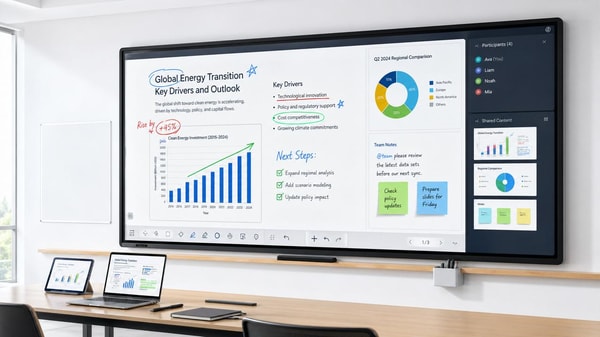
 Interactive whiteboards are improving, but teacher adoption is unevenInteractive whiteboards are improving fast, but teacher adoption remains uneven. Explore what drives classroom success, ROI, and smarter edtech implementation.
 Portable oxygen concentrators: what noise levels feel acceptable?Portable oxygen concentrators: discover what noise levels feel acceptable for sleep, travel, work, and home use, with practical guidance to choose a quieter, more comfortable model.
 Car electronics failures often start with power instabilityCar electronics issues often begin with hidden power instability. Learn how voltage drops, ripple, and weak grounds cause faults—and how smarter diagnostics cut repair time and repeat failures.
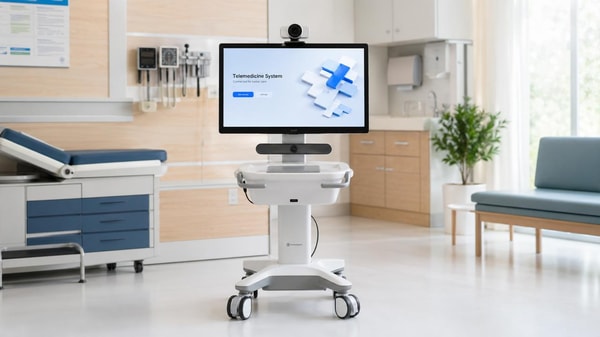
 Telemedicine hardware works best when setup friction is lowTelemedicine hardware works best with low setup friction. Discover how faster deployment, easier operation, and scenario-based selection improve care efficiency and service quality.
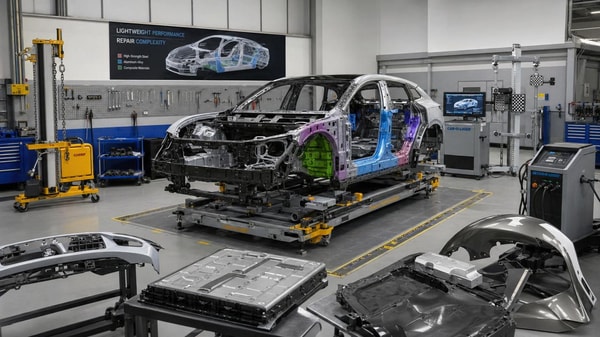
 Are light-weighting vehicle materials worth the repair tradeoff?Light-weighting vehicle materials: Are efficiency gains worth higher repair costs? Explore lifecycle impact, EV value, downtime risks, and smarter sourcing decisions.
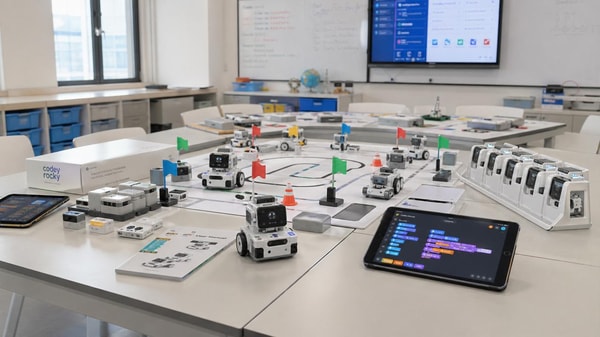
 Educational robots in class: novelty or lasting value?Educational robots are moving beyond classroom novelty. Discover how they create lasting value through STEM learning, scalability, and smarter school purchasing decisions.
 Biodegradable plastics fail when disposal assumptions are wrongBiodegradable plastics can fail when real disposal systems do not match design assumptions. Learn the compliance, contamination, and claim risks before they damage trust.
 Office stationery wholesale margins depend on boring detailsOffice stationery wholesale margins are won in the details—packaging, MOQ, freight, and SKU rotation. Learn how distributors protect profit and reduce hidden cost leakage.
 Carbon capture materials are improving, but durability still mattersCarbon capture materials are improving, but durability still decides ROI. Explore cycle stability, regeneration resilience, and supplier evaluation factors for reliable industrial deployment.
 Which graphene applications in industry are moving beyond pilots?Graphene applications in industry are moving beyond pilots fastest in coatings, composites, thermal management, sensors, and energy storage. See where commercialization is gaining traction.
 Precision farming drones need better data, not just better flight timePrecision farming drones deliver more value through accurate maps, crop insights, and faster decisions than longer flight time alone. See how better data improves farm efficiency.
 Smart classroom solutions often disappoint for one simple reasonSmart classroom solutions often fail when complexity is ignored. Discover how project leaders can improve adoption, scalability, ROI, and long-term classroom performance.
 Organic fertilizers: when higher cost brings better soil resultsOrganic fertilizers may cost more, but they can improve soil structure, moisture retention, and long-term plant health. Learn when the higher price delivers better garden results.
 Agri-PV systems can raise land efficiency, but not everywhereAgri-PV systems can improve land efficiency, but only in the right conditions. Explore where they work, key risks, and how to evaluate profitable deployment.
 Smart home devices wholesale gets risky when standards do not matchSmart home devices wholesale becomes risky when standards, protocols, and certifications do not align. Learn how to reduce sourcing errors, control costs, and protect buyer trust.
 Wearable technology users quit when comfort is overlookedWearable technology users quit when comfort is ignored. Discover the checklist for fit, weight, skin safety, and long-term wear to choose devices that improve adoption and user satisfaction.
 Next-gen wireless charging still faces a heat management gapNext-gen wireless charging still faces a critical heat management gap. Explore how thermal risks affect efficiency, safety, lifecycle, and product readiness.
 Foldable screen technology looks mature until repair costs appearFoldable screen technology looks premium and practical, but are repair costs too high? Discover the real tradeoff between innovation, durability, and long-term value before you buy.
 Plant-based protein processing bottlenecks start after extractionPlant-based protein processing bottlenecks often begin after extraction. Discover downstream risks, supplier evaluation tips, and cost-saving insights for better sourcing decisions.
 Photovoltaic solar panels lose value when degradation is underestimatedPhotovoltaic solar panels can lose value fast when degradation is underestimated. Learn how realistic modeling protects ROI, asset valuation, and smarter solar investment decisions.













Popular Tags
Global Trade Insights & Industry
Our mission is to empower global exporters and importers with data-driven insights that foster strategic growth.
Search News
Popular Tags
Industry Overview
The global commercial kitchen equipment market is projected to reach $112 billion by 2027. Driven by urbanization, the rise of e-commerce food delivery, and strict hygiene regulations.