

How Service Contracts Change the Real MRI Scanners Price
The real MRI scanners price is not defined by the machine alone. For most buyers, procurement teams, and distributors, the bigger financial variable is the service contract attached to the deal. A lower upfront quote can become a higher total cost over five to seven years if maintenance coverage is limited, uptime guarantees are weak, or critical parts are excluded. In practical sourcing terms, understanding MRI scanners cost means looking beyond capital expenditure and evaluating the full ownership model before signing.
That matters even more on a global B2B trade platform, where equipment decisions are often benchmarked with other industrial purchases such as 3D printing price, car batteries price, or sheet metal fabrication. In each case, the true business value comes from lifecycle cost, operational continuity, and supplier reliability—not just the initial number on the quotation.
Why service contracts have such a big impact on MRI scanners price
An MRI system is a high-value, technically complex asset. Its ownership cost is shaped by installation, cooling systems, software support, magnet maintenance, replacement parts, labor response time, and downtime risk. This is why service contracts can materially change the real MRI scanners price over the life of the equipment.
For many buyers, the scanner itself may represent only part of the total spending commitment. Service agreements can add a meaningful annual expense, especially for high-field systems, older refurbished units, or machines deployed in facilities with limited local technical support. In some cases, a “cheaper” scanner becomes the more expensive option after service costs are included.
The key point is simple: the quoted purchase price tells you what it costs to acquire the machine, but the service contract often determines what it costs to keep the machine operational, compliant, and profitable.
What buyers and procurement teams usually care about most
For information researchers, sourcing managers, commercial evaluators, and distributors, the main concern is rarely just “How much does the MRI scanner cost?” The more useful question is “What will this MRI scanner actually cost my business over time, and what risks are included or excluded?”
In most procurement reviews, the real concerns include:
- How much will annual maintenance add to the total MRI scanners cost?
- What parts, labor, and software updates are covered?
- How fast can engineers respond if the machine goes down?
- Will downtime disrupt clinical revenue or customer commitments?
- Is the service network local, regional, or outsourced?
- Does the contract protect the buyer from high-cost component failures?
- How does the support model affect resale value or distributor margins?
These are practical business questions, not technical side notes. For a commercial buyer, uptime and cost predictability often matter more than getting the lowest headline equipment price.
What is usually included in an MRI service contract
Service contracts vary widely by manufacturer, region, and equipment condition. A full-service package may include preventive maintenance, remote diagnostics, software upgrades, labor, travel, and most replacement parts. A limited contract may cover scheduled inspections only, while expensive failures remain the buyer’s responsibility.
Common service elements include:
- Preventive maintenance: routine inspections, calibration, and system checks
- Corrective maintenance: repair work after failure or performance issues
- Parts coverage: inclusion or exclusion of coils, gradient components, RF parts, power modules, or cooling-related systems
- Labor and travel: on-site engineer time and transportation costs
- Remote support: digital troubleshooting and system monitoring
- Software updates: security patches, feature updates, and compatibility maintenance
- Response-time commitments: engineer arrival windows and service-level guarantees
- Uptime guarantees: compensation or contract terms tied to equipment availability
Procurement teams should not assume “service included” means full risk protection. The value of the contract depends on exactly what is covered, what is excluded, and how quickly support can be delivered in real operating conditions.
How a low upfront MRI scanners price can become expensive later
This is one of the most common sourcing mistakes. A seller may offer an attractive initial MRI scanners price, but if the service agreement is weak, the buyer may absorb higher costs through parts replacement, emergency call-outs, software limitations, or repeated downtime.
Several situations can increase long-term cost:
- Older refurbished systems: lower capital cost, but potentially higher maintenance frequency
- Limited parts availability: lower-price units can become costly if replacement components are hard to source
- Third-party support gaps: independent service may reduce fees, but capability varies by region and model
- Excluded critical components: one major failure can erase the savings from a low purchase price
- Long downtime periods: the real loss may come from interrupted operations, not only repair invoices
For hospitals, imaging centers, dealers, and resellers, downtime has direct financial consequences. Missed scans, damaged customer trust, delayed installations, and emergency repair premiums can quickly change the economics of the purchase.
How to evaluate the real MRI scanners cost before signing a deal
A better buying process compares total cost of ownership instead of equipment price alone. That means combining acquisition cost with maintenance, operating risk, and expected lifecycle support.
A practical evaluation framework includes the following questions:
- What is the total contract term?
Review one-year, three-year, and five-year support scenarios rather than only the initial year. - What is covered in writing?
Ask for a detailed list of included parts, labor, software, travel, helium-related support if applicable, and exclusions. - What are the response and uptime commitments?
Fast support may justify a higher annual fee if scanner utilization is high. - What failure risks remain with the buyer?
Clarify whether high-value components are included or billed separately. - Is local technical support available?
Cross-border equipment sourcing can look economical until service logistics create costly delays. - How old is the system and what is its service history?
A machine’s age and maintenance record should directly influence service expectations and pricing. - What is the expected annual operating burden?
Estimate not just the service contract fee but also probable downtime exposure and out-of-scope repairs.
For decision-makers comparing offers, building a simple five-year cost model is often more useful than negotiating only on base machine price.
Service contract models buyers are likely to encounter
Not all service agreements are structured the same way. Understanding the common models helps buyers match support level to budget and risk tolerance.
Full-service contract:
Best for operators prioritizing uptime, budget predictability, and reduced failure risk. Usually higher annual cost, but fewer surprise expenses.
Parts-only or labor-only contract:
Useful when the buyer has internal engineering capability or wants to split risk. Lower contract cost, but less comprehensive protection.
Time-and-materials service:
No broad annual coverage. Buyers pay per incident. This can work for low-utilization equipment, but risk is much higher if major failures occur.
Hybrid support model:
Combines preventive maintenance and remote diagnostics with selective parts coverage. Often used when balancing cost control with basic uptime protection.
OEM versus third-party service:
OEM contracts may offer stronger documentation, software access, and parts confidence. Third-party service providers may offer cost advantages, but the quality difference can be significant depending on geography and equipment model.
The right option depends on scanner age, usage level, internal technical capability, and revenue sensitivity to downtime.
What distributors and commercial evaluators should pay close attention to
For distributors, agents, and resellers, service contracts influence more than operating cost. They affect how easy the equipment is to sell, how much margin can be protected, and how much post-sale risk the channel partner may inherit.
Key commercial implications include:
- Sales attractiveness: buyers prefer systems with clear, credible support plans
- Margin planning: service obligations can reduce real profitability if not priced correctly
- Brand trust: poor service experiences damage future marketability
- Territory feasibility: cross-border deals require realistic support coverage, not just shipping capability
- Residual value: equipment with verifiable service history is generally easier to remarket
In many B2B transactions, the service structure is part of the commercial product itself. Buyers are not just purchasing a scanner—they are purchasing reliability, continuity, and accountability.
Questions to ask suppliers before comparing MRI scanners price offers
If a quotation looks competitive, procurement teams should go deeper before making a recommendation. A few targeted questions can reveal whether the deal is truly favorable.
- Is preventive maintenance included, and how many visits per year are covered?
- Which major components are excluded from the contract?
- Are software upgrades included or billed separately?
- What is the guaranteed response time for on-site repairs?
- Is there a local engineer network in the destination country or region?
- How are travel expenses charged?
- What is the service history of this specific unit?
- Can the supplier provide uptime records or references?
- What happens if a critical part becomes obsolete or unavailable?
- How does contract pricing change after the initial term?
These questions help translate a simple quote into a real business case. That is especially important for international buyers working through online trade channels, where the gap between advertised price and real ownership cost can be large.
Final takeaway: the real MRI scanners price is a lifecycle cost, not a sticker price
The most important conclusion is straightforward: service contracts can significantly change the real MRI scanners price. A lower purchase quote does not automatically mean a better deal, especially when maintenance coverage is limited, downtime risk is high, or support infrastructure is weak.
For procurement teams, business evaluators, and distributors, the smarter approach is to compare total MRI scanners cost across the full ownership period. Look at service scope, response time, parts protection, technical coverage, and the operational consequences of equipment failure. When these factors are evaluated early, buyers make better sourcing decisions, protect budgets more effectively, and avoid expensive surprises after installation.
In global B2B sourcing, the most competitive price is not always the lowest number on the first page of the quotation. It is the offer that delivers the best long-term value, lowest operational risk, and most reliable support over time.
Recommended News
 China’s 10-Dept AI Export Ethics Review Rule Takes EffectChina’s new 10-dept AI export ethics rule mandates algorithmic bias review for AI hardware bound for the EU, US, Canada, Japan & SK—key for smart cameras, voice assistants & industrial vision exporters.
 Red Sea Detour Now Standard: $1,850 TEU Premium on Asia-Europe RoutesRed Sea detour premium now standard: $1,850/TEU surcharge embedded in Asia-Europe freight rates — vital intel for exporters, importers & logistics teams.
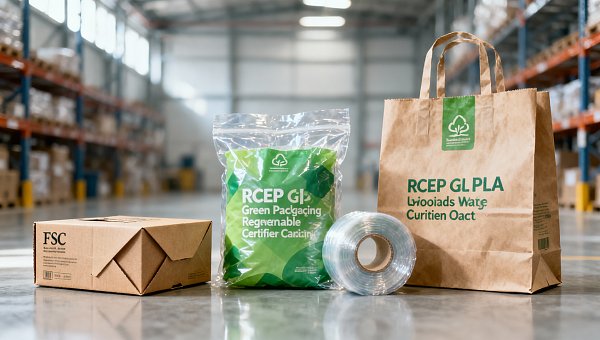
 RCEP Green Packaging Mutual Recognition Takes EffectRCEP Green Packaging Mutual Recognition takes effect Apr 22, 2026—streamline exports to AU, NZ, JP, KR with GB/T 37629–2019 certified molded fiber & PLA packaging.
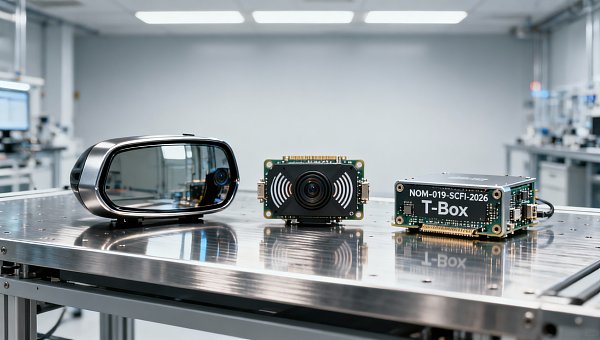
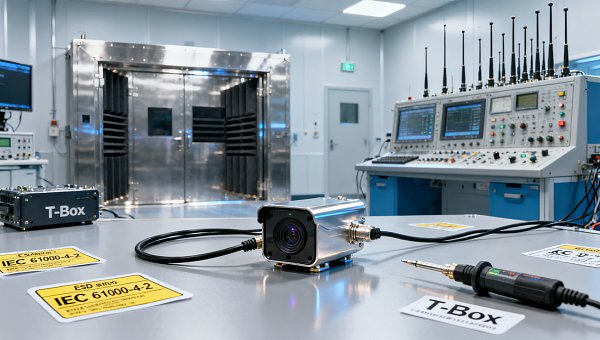
 Mexico NOM-019-SCFI-2026 Effective: EMC Certification Required for Auto Electronics ExportsEMC certification is now mandatory for auto electronics exports to Mexico under NOM-019-SCFI-2026. Ensure compliance for rearview mirrors, radar sensors & T-Box units—avoid shipment delays and order cancellations.
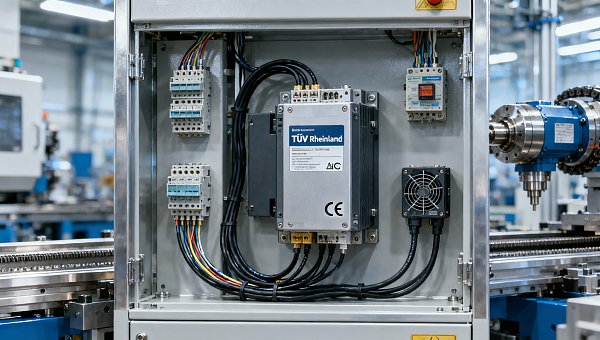
") TÜV Rheinland Updates CE Requirements for Servo Drives (PLd + EMC Joint Validation)TÜV Rheinland now mandates joint PLd + EMC validation for servo drives under CE marking—learn how this impacts certification timelines, lab selection, and EU market access.
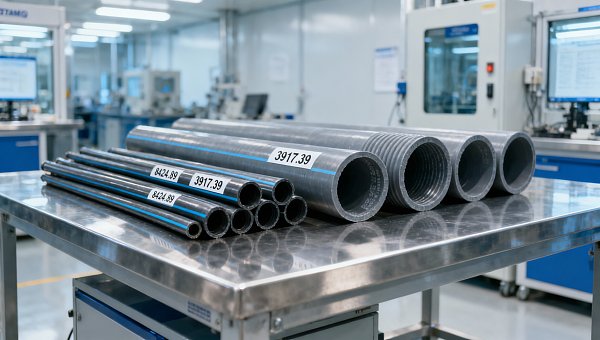
TÜV Rheinland Updates CE Requirements for Servo Drives (PLd + EMC Joint Validation)TÜV Rheinland now mandates joint PLd + EMC validation for servo drives under CE marking—learn how this impacts certification timelines, lab selection, and EU market access. Vietnam Suspends SASO Mutual Recognition for Chinese Irrigation EquipmentVietnam suspends SASO mutual recognition for Chinese irrigation equipment—urgent compliance updates for drip tapes & PE pipes (HS 8424.89/3917.39). Act now to avoid delays.
 FDA Finalizes AI Diagnostic Device Rules for ImportersFDA finalizes AI diagnostic device rules for importers: New bias assessment mandate impacts ultrasound, glucose analyzers & dermatoscopes. Act now to ensure U.S. market access.
 SABER Phase II Live: Saudi Building Hardware Requires Digital Type Test Reports & PIDSABER Phase II is live: Building hardware exports to Saudi Arabia now require digital type test reports & a mandatory, immutable Product ID (PID). Act now to avoid customs delays!
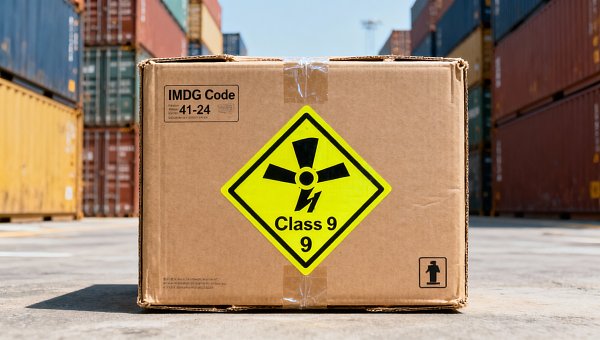
 IMDG Code 41-24 Enforced: UN3480 Lithium Battery Labeling Mandatory from Apr 2026IMDG Code 41-24 enforcement starts Apr 2026: UN3480 lithium battery labeling & ISO 17363 docs are now mandatory—avoid port rejections!
 CBAM Carbon Tax Launch: Low CBAM Reporting Rate Among Chinese ExportersCBAM Carbon Tax is live—only 36.8% of Chinese exporters reported. Discover why, which industries are at risk, and how to secure EU market access now.
 China’s 10 Agencies Issue AI Export Ethics Review RulesChina’s 10 agencies launch AI export ethics rules—mandating bias reviews for visual inspection, warehouse AI & defect detection systems. Stay compliant & competitive.
 RCEP Green Packaging Mutual Recognition Takes EffectRCEP Green Packaging Mutual Recognition is now in effect—unlock faster customs clearance in Australia, NZ, Japan & Korea for GB/T 37659–2019-certified eco-packaging.
 Mexico NOM-019-SCFI-2026 Effective Apr 10, 2026: EMC Certification Required for Automotive ElectronicsNOM-019-SCFI-2026 EMC certification is now mandatory for automotive electronics entering Mexico — act before the July 1, 2026 customs ban.
 Red Sea Rerouting Normalized, EBA at $1,850/TEURed Sea rerouting normalized with EBA fixed at $1,850/TEU—learn how this structural shift impacts Asia-Europe freight costs, lead times & supply chain strategy.
 FDA AI Diagnostic Device Draft Rules: Bias Assessment for ImportsFDA AI diagnostic device draft rules require bias assessment for imports—learn how portable ultrasound, glucose, and dermatoscopic AI devices are affected & what to do next.
") TÜV Rheinland Updates CE Requirements for Servo Drives (PLd + EMC)TÜV Rheinland updates CE requirements for servo drives: PLd (ISO 13849-1) + EMC immunity (IEC 61000-6-2 Ed.4) now mandatory together — act now to avoid EU market delays!
TÜV Rheinland Updates CE Requirements for Servo Drives (PLd + EMC)TÜV Rheinland updates CE requirements for servo drives: PLd (ISO 13849-1) + EMC immunity (IEC 61000-6-2 Ed.4) now mandatory together — act now to avoid EU market delays! SABER Phase II Launch: Building Hardware Must Submit Digital Type Test Reports & Unique Product IDSABER Phase II now mandates digital type test reports & unique product IDs for building hardware—fasteners, scaffolding, door/window components. Ensure compliance to avoid customs rejection & SCOC delays.
 Vietnam Suspends SASO Mutual Recognition for Chinese Irrigation EquipmentVietnam suspends SASO mutual recognition for Chinese irrigation equipment—TCVN testing now mandatory. Act now to avoid 8–12 week delays and customs holdups.
 IMDG Code 41-24 Enforced: UN3480 Lithium Battery Labeling UpdateIMDG Code 41-24 enforcement starts April 2026: UN3480 lithium battery labeling updates are mandatory for global maritime shipments — avoid port delays, detention & penalties.
 EU CBAM Enters Full Enforcement on Jan 1, 2026EU CBAM full enforcement starts Jan 1, 2026 — mandatory quarterly reporting & certificate purchases for batteries, steel, cement, aluminum, fertilizers & chemicals. Act now to ensure EU market access.
 EU CBAM Carbon Tariff Starts Oct 2026 for Chinese Battery, Cement, Chemical ExportsEU CBAM carbon tariff hits Chinese battery, cement & chemical exports from Oct 2026 — mandatory emissions reporting starts now. Avoid €98/t default fees.












Popular Tags
Global Trade Insights & Industry
Our mission is to empower global exporters and importers with data-driven insights that foster strategic growth.
Search News
Popular Tags
Industry Overview
The global commercial kitchen equipment market is projected to reach $112 billion by 2027. Driven by urbanization, the rise of e-commerce food delivery, and strict hygiene regulations.