

MRI Scanners Price Differences Between New and Refurbished Units
On an online trade platform, understanding MRI scanners price gaps between new and refurbished systems is essential for buyers balancing budget, quality, and long-term value. As MRI scanners cost continues to draw attention alongside categories like home improvement tools, sheet metal fabrication, car batteries price, and 3D printing price, this guide helps procurement teams, distributors, and market researchers compare pricing logic, hidden costs, and sourcing risks with greater confidence.
For most professional buyers, the real question is not simply whether a new MRI scanner is more expensive than a refurbished one. It is whether the lower upfront price of a refurbished unit still makes sense after installation, warranty, service support, software compatibility, uptime risk, and resale value are considered. In many cases, refurbished systems can save 30% to 60% versus new equipment, but the better choice depends on clinical workload, compliance needs, financing options, and how much downtime your operation can tolerate.
What Buyers Really Want to Know About MRI Scanners Price Differences
MRI scanners price differences between new and refurbished units are driven by far more than equipment age. Buyers typically want answers to a practical set of questions:
- How large is the typical price gap?
- What exactly is included in a refurbished system?
- Which hidden costs narrow the apparent savings?
- When is buying new financially smarter?
- How can a buyer assess risk before placing an order?
For procurement teams, distributors, and business evaluators, the most useful comparison is total cost of ownership rather than invoice price alone. A refurbished MRI may look attractive on paper, but if it requires more frequent service, slower parts support, or expensive site adaptation, the final economics can change quickly.
Typical Price Range: New vs Refurbished MRI Systems
Although MRI pricing varies by brand, field strength, software package, country, and included service scope, the market generally follows a broad pattern:
- New low- to mid-range MRI systems: often start in the high six figures and can move well above USD 1 million.
- New premium MRI systems: may reach several million dollars depending on technology level, gradients, AI workflow tools, and advanced applications.
- Refurbished MRI systems: commonly trade at roughly 40% to 70% of comparable new-system pricing, depending on age, magnet condition, refurbishment depth, and included warranty.
In practical sourcing terms, a refurbished 1.5T unit is often the most active segment because it balances clinical capability with lower capital investment. Refurbished 3T systems are available as well, but pricing can remain relatively high if the platform is still in strong clinical demand.
That said, “refurbished” is not a uniform category. One supplier may provide only cleaned and tested equipment, while another may include magnet evaluation, replacement of worn components, cosmetic restoration, coil testing, updated software, delivery, installation, and post-installation support. This is one reason MRI scanners cost can differ sharply even among offers for the same model.
Why New MRI Units Cost More
New systems command a premium for several business reasons beyond unused condition:
- Latest technology: improved imaging speed, better patient comfort, higher energy efficiency, and more advanced clinical applications.
- Full manufacturer warranty: often broader and more reliable than third-party service arrangements.
- Longer expected lifecycle: useful for high-volume facilities planning multi-year utilization.
- Regulatory confidence: easier documentation and traceability for many hospitals and institutional buyers.
- Software and upgrade path: better compatibility with future imaging protocols, workflow tools, and digital integration.
For a buyer serving premium healthcare networks or operating in a market with strict compliance and uptime expectations, these factors can justify the price premium. The extra investment is often less about the machine itself and more about risk reduction, service continuity, and future-readiness.
Why Refurbished MRI Units Can Be Much Cheaper
The lower price of refurbished MRI scanners is mainly tied to depreciation and secondary-market dynamics. Imaging equipment loses value significantly after initial installation, even when still clinically useful. Sellers may include hospitals upgrading fleets, leasing companies remarketing assets, or intermediaries clearing inventory across regions.
Refurbished units are often appealing because they can provide solid imaging performance at a much lower entry cost. This makes them attractive for:
- Private clinics with budget constraints
- Emerging market healthcare projects
- Diagnostic centers testing local demand
- Distributors building lower-cost portfolios
- Facilities expanding capacity without premium capital expenditure
However, the key issue is refurbishment quality. A professionally restored system with documented testing, replaced wear parts, calibrated coils, and installation support is very different from a basic used unit marketed with minimal intervention.
Hidden Costs That Can Change the Buying Decision
This is the section many buyers care about most. The purchase price alone does not represent the real cost of ownership. When comparing MRI scanners price differences between new and refurbished units, watch for the following cost drivers:
- Site preparation: shielding, power supply, cooling, flooring reinforcement, and room modification can be substantial.
- Transportation and rigging: MRI logistics are specialized and costly, especially across borders.
- Installation and commissioning: may or may not be included in the quoted price.
- Helium and magnet handling: depending on system type and shipping condition, this can add significant expense.
- Service contracts: refurbished units may require higher annual maintenance budgets.
- Parts availability: older platforms can create delays and higher replacement costs.
- Software licenses and upgrades: not every refurbished system includes current applications or connectivity features.
- Training: operator and maintenance training may be limited or charged separately.
- Downtime risk: lost scanning revenue can outweigh initial savings.
For business evaluators, this is where a lower headline price can become misleading. A more expensive offer with stronger warranty coverage and better installation support may produce lower lifetime cost.
When Buying New Makes More Sense
A new MRI scanner is usually the better choice when the buyer needs predictability, long-term service continuity, and advanced clinical positioning. Buying new often makes more sense if:
- Your facility expects high daily scan volume
- Downtime would create major revenue or reputation loss
- You require the latest imaging applications or AI workflow tools
- You need easier compliance documentation for tenders or institutional procurement
- You want a longer support horizon from the original manufacturer
- You plan to operate the system for many years without near-term replacement
From an ROI perspective, new systems can outperform refurbished ones in high-throughput environments where productivity, image quality, and uptime directly affect earnings and patient flow.
When Refurbished MRI Systems Offer Better Value
Refurbished systems often deliver stronger value when budget control matters more than having the newest platform. They are especially suitable when:
- Capital expenditure is limited
- The facility has moderate scan volume
- Clinical applications do not require the newest software suite
- A trusted third-party service network is available locally
- The buyer can verify refurbishment quality in detail
- The project needs faster equipment deployment at lower upfront cost
For distributors and resellers, refurbished MRI equipment can also create margin opportunities in price-sensitive markets. But success depends on sourcing from suppliers who can provide documentation, testing reports, and after-sales support that reduce buyer hesitation.
How to Evaluate a Refurbished MRI Before Purchase
If you are considering a refurbished system, due diligence matters more than negotiation alone. Buyers should ask for:
- Original manufacturer, model, year, and serial details
- Magnet ramp/down and transportation history
- Service logs and maintenance records
- Refurbishment scope in written form
- List of replaced parts and tested components
- Current software version and upgrade options
- Coil inventory and condition
- Warranty terms and exclusions
- Installation responsibility and acceptance testing procedure
- Regulatory and export compliance documents
It is also wise to clarify whether the seller is offering a genuine refurbished MRI scanner or simply a used system. In B2B transactions, these labels are sometimes used loosely, but the commercial difference is significant.
Questions Procurement Teams Should Ask Suppliers
To compare offers more effectively, procurement teams should move beyond price and ask commercially relevant questions such as:
- What is included in the quoted MRI scanners cost?
- Who handles deinstallation, shipping, and reinstallation?
- What uptime commitment is offered after commissioning?
- Are spare parts stocked locally or sourced internationally?
- Can the supplier provide reference installations?
- What acceptance criteria apply before final payment?
- Is there application training for operators?
- What are the estimated annual maintenance costs over three to five years?
These questions help buyers compare business risk, not just equipment price. That is particularly important on cross-border trade platforms where quotations may look similar while actual service capability differs greatly.
Market Perspective for Distributors and Trade Researchers
For distributors, agents, and market intelligence teams, MRI scanners price trends are also shaped by macro factors: healthcare investment cycles, hospital modernization, currency fluctuations, shipping costs, and regional demand for 1.5T versus 3T platforms. Secondary market supply can increase when large healthcare groups upgrade fleets, creating opportunities in cost-sensitive regions.
At the same time, buyers are becoming more sophisticated. They increasingly expect transparent refurbishment standards, digital documentation, and lifecycle cost visibility. Suppliers that can package equipment with service credibility and traceable refurbishment processes are in a stronger position than those competing on headline price only.
Bottom Line: Price Gap Matters, but Total Value Matters More
MRI scanners price differences between new and refurbished units can be substantial, often making refurbished systems highly attractive at first glance. But the smarter buying decision depends on what is included, how the system will be used, what downtime would cost, and whether the supplier can support the equipment after delivery.
In simple terms:
- Choose new if you need maximum uptime, longer support life, advanced functionality, and lower operational uncertainty.
- Choose refurbished if you need lower upfront investment and can verify refurbishment quality, service support, and realistic lifetime cost.
For procurement professionals, distributors, and business evaluators, the best approach is to compare total ownership cost, support capability, and usage fit side by side. When that analysis is done carefully, the price gap becomes easier to interpret—and the final decision becomes far more defensible.
Recommended News
 China’s 10-Dept AI Export Ethics Review Rule Takes EffectChina’s new 10-dept AI export ethics rule mandates algorithmic bias review for AI hardware bound for the EU, US, Canada, Japan & SK—key for smart cameras, voice assistants & industrial vision exporters.
 Red Sea Detour Now Standard: $1,850 TEU Premium on Asia-Europe RoutesRed Sea detour premium now standard: $1,850/TEU surcharge embedded in Asia-Europe freight rates — vital intel for exporters, importers & logistics teams.
 RCEP Green Packaging Mutual Recognition Takes EffectRCEP Green Packaging Mutual Recognition takes effect Apr 22, 2026—streamline exports to AU, NZ, JP, KR with GB/T 37629–2019 certified molded fiber & PLA packaging.
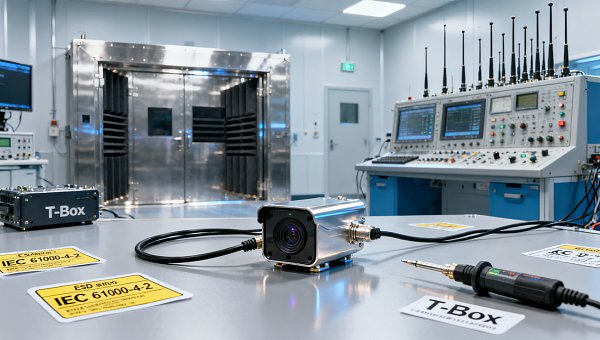
 Mexico NOM-019-SCFI-2026 Effective: EMC Certification Required for Auto Electronics ExportsEMC certification is now mandatory for auto electronics exports to Mexico under NOM-019-SCFI-2026. Ensure compliance for rearview mirrors, radar sensors & T-Box units—avoid shipment delays and order cancellations.
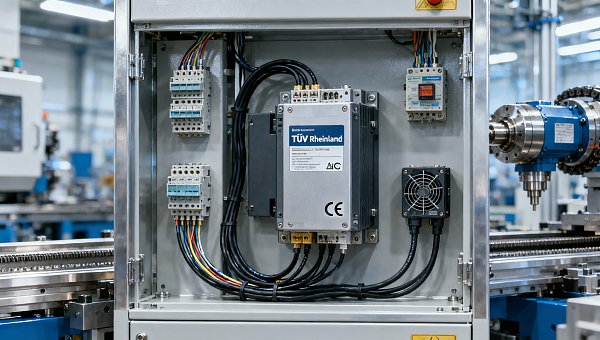
") TÜV Rheinland Updates CE Requirements for Servo Drives (PLd + EMC Joint Validation)TÜV Rheinland now mandates joint PLd + EMC validation for servo drives under CE marking—learn how this impacts certification timelines, lab selection, and EU market access.
TÜV Rheinland Updates CE Requirements for Servo Drives (PLd + EMC Joint Validation)TÜV Rheinland now mandates joint PLd + EMC validation for servo drives under CE marking—learn how this impacts certification timelines, lab selection, and EU market access. Vietnam Suspends SASO Mutual Recognition for Chinese Irrigation EquipmentVietnam suspends SASO mutual recognition for Chinese irrigation equipment—urgent compliance updates for drip tapes & PE pipes (HS 8424.89/3917.39). Act now to avoid delays.
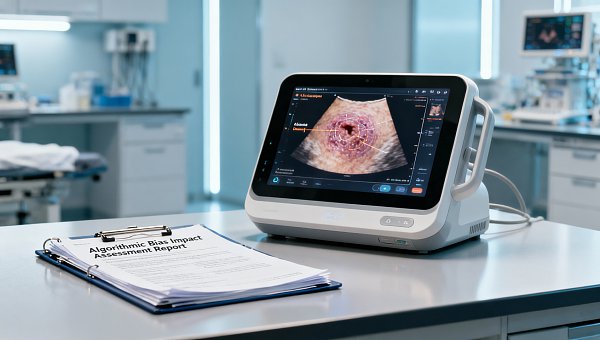
 FDA Finalizes AI Diagnostic Device Rules for ImportersFDA finalizes AI diagnostic device rules for importers: New bias assessment mandate impacts ultrasound, glucose analyzers & dermatoscopes. Act now to ensure U.S. market access.
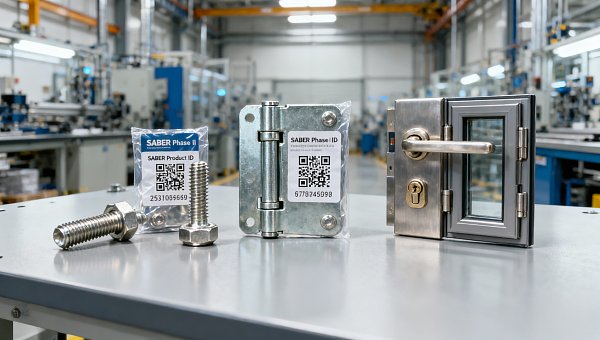
 SABER Phase II Live: Saudi Building Hardware Requires Digital Type Test Reports & PIDSABER Phase II is live: Building hardware exports to Saudi Arabia now require digital type test reports & a mandatory, immutable Product ID (PID). Act now to avoid customs delays!
 IMDG Code 41-24 Enforced: UN3480 Lithium Battery Labeling Mandatory from Apr 2026IMDG Code 41-24 enforcement starts Apr 2026: UN3480 lithium battery labeling & ISO 17363 docs are now mandatory—avoid port rejections!
 CBAM Carbon Tax Launch: Low CBAM Reporting Rate Among Chinese ExportersCBAM Carbon Tax is live—only 36.8% of Chinese exporters reported. Discover why, which industries are at risk, and how to secure EU market access now.
 China’s 10 Agencies Issue AI Export Ethics Review RulesChina’s 10 agencies launch AI export ethics rules—mandating bias reviews for visual inspection, warehouse AI & defect detection systems. Stay compliant & competitive.
 RCEP Green Packaging Mutual Recognition Takes EffectRCEP Green Packaging Mutual Recognition is now in effect—unlock faster customs clearance in Australia, NZ, Japan & Korea for GB/T 37659–2019-certified eco-packaging.
 Mexico NOM-019-SCFI-2026 Effective Apr 10, 2026: EMC Certification Required for Automotive ElectronicsNOM-019-SCFI-2026 EMC certification is now mandatory for automotive electronics entering Mexico — act before the July 1, 2026 customs ban.
 Red Sea Rerouting Normalized, EBA at $1,850/TEURed Sea rerouting normalized with EBA fixed at $1,850/TEU—learn how this structural shift impacts Asia-Europe freight costs, lead times & supply chain strategy.
 FDA AI Diagnostic Device Draft Rules: Bias Assessment for ImportsFDA AI diagnostic device draft rules require bias assessment for imports—learn how portable ultrasound, glucose, and dermatoscopic AI devices are affected & what to do next.
") TÜV Rheinland Updates CE Requirements for Servo Drives (PLd + EMC)TÜV Rheinland updates CE requirements for servo drives: PLd (ISO 13849-1) + EMC immunity (IEC 61000-6-2 Ed.4) now mandatory together — act now to avoid EU market delays!
TÜV Rheinland Updates CE Requirements for Servo Drives (PLd + EMC)TÜV Rheinland updates CE requirements for servo drives: PLd (ISO 13849-1) + EMC immunity (IEC 61000-6-2 Ed.4) now mandatory together — act now to avoid EU market delays! SABER Phase II Launch: Building Hardware Must Submit Digital Type Test Reports & Unique Product IDSABER Phase II now mandates digital type test reports & unique product IDs for building hardware—fasteners, scaffolding, door/window components. Ensure compliance to avoid customs rejection & SCOC delays.
 Vietnam Suspends SASO Mutual Recognition for Chinese Irrigation EquipmentVietnam suspends SASO mutual recognition for Chinese irrigation equipment—TCVN testing now mandatory. Act now to avoid 8–12 week delays and customs holdups.
 IMDG Code 41-24 Enforced: UN3480 Lithium Battery Labeling UpdateIMDG Code 41-24 enforcement starts April 2026: UN3480 lithium battery labeling updates are mandatory for global maritime shipments — avoid port delays, detention & penalties.
 EU CBAM Enters Full Enforcement on Jan 1, 2026EU CBAM full enforcement starts Jan 1, 2026 — mandatory quarterly reporting & certificate purchases for batteries, steel, cement, aluminum, fertilizers & chemicals. Act now to ensure EU market access.
 EU CBAM Carbon Tariff Starts Oct 2026 for Chinese Battery, Cement, Chemical ExportsEU CBAM carbon tariff hits Chinese battery, cement & chemical exports from Oct 2026 — mandatory emissions reporting starts now. Avoid €98/t default fees.













Popular Tags
Global Trade Insights & Industry
Our mission is to empower global exporters and importers with data-driven insights that foster strategic growth.
Search News
Popular Tags
Industry Overview
The global commercial kitchen equipment market is projected to reach $112 billion by 2027. Driven by urbanization, the rise of e-commerce food delivery, and strict hygiene regulations.