

Commercial LED lighting upgrades can backfire with poor controls
Commercial LED lighting upgrades promise lower energy costs and better workplace performance, but poor controls can quickly undermine those gains. For business decision-makers, the real challenge is not just choosing efficient fixtures—it is ensuring the entire system delivers reliable, measurable value. Understanding where control strategies fail is essential to avoiding wasted investment, operational disruption, and disappointing ROI.
Why do Commercial LED lighting upgrades fail when the controls are weak?
Many organizations treat Commercial LED lighting as a fixture replacement project, when in practice it is a system redesign. The LEDs themselves may be efficient, long-lasting, and suitable for a 30,000 to 70,000 hour operating life, yet the control layer determines whether those technical advantages translate into daily savings. If dimming protocols, occupancy logic, scheduling, daylight response, or commissioning are poorly handled, the installation can create more complaints than benefits.
Weak controls usually show up in familiar ways: lights turning off too early in meeting rooms, excessive brightness in naturally lit areas, inconsistent dimming across open-plan offices, or unreliable response in warehouses and production zones. In facilities operating 10 to 18 hours per day, even small control failures can magnify utility waste and labor frustration over a 12-month period. This is why business leaders should evaluate the intelligence of the lighting system, not only the lumen output or fixture efficiency.
For exporters, importers, multi-site operators, and industrial buyers following global facility trends, poor control strategy can also affect benchmarking. One site may report an expected 40% energy reduction after a Commercial LED lighting upgrade, while another site with similar fixtures achieves only 15% to 20% because sensors, zoning, and user overrides were never properly aligned. The gap is often operational, not hardware-related.
What types of control problems are most common?
The most common failures are not advanced engineering mistakes. They are usually basic execution issues that appear during layout design, installation, or handover. Decision-makers should expect these risks early, especially in projects spanning offices, retail floors, logistics centers, educational spaces, or mixed-use commercial assets.
- Sensors are placed incorrectly, causing false triggers or missed occupancy in zones larger than 20 to 50 square meters.
- Control groups do not match actual workflows, so one switch affects too many areas or too few.
- Daylight harvesting is enabled without calibrating lux thresholds, resulting in unstable brightness during morning and afternoon transitions.
- Users are not trained on override settings, schedules, or manual scenes, which leads to frequent complaints within the first 30 to 90 days.
- Different drivers, sensors, and gateways are technically compatible on paper but perform inconsistently after installation.
The lesson is simple: Commercial LED lighting controls must be engineered around occupancy patterns, operating hours, safety expectations, and maintenance capability. A good fixture cannot compensate for poor logic.
Quick comparison of expected gains versus control-related losses
The table below helps decision-makers see how quickly projected benefits can erode when the control layer is not planned with the same rigor as fixture selection.
In most commercial settings, the difference between a successful Commercial LED lighting project and a disappointing one is not one dramatic failure. It is the accumulation of small control errors that reduce savings, increase help-desk requests, and delay payback.
Which facilities are most vulnerable to control-related problems?
Any building can suffer from poor control design, but risk rises sharply when the space has variable occupancy, mixed tasks, or long operating hours. Commercial LED lighting in a simple storage room is easier to manage than lighting across a headquarters, a hospital-adjacent office block, a retail chain, or a distribution site running two shifts. The more dynamic the use profile, the more important the control strategy becomes.
Open offices often struggle with zoning because one lighting plan may need to serve individual desks, collaboration areas, corridors, and presentation spaces within the same floorplate. Warehouses face different issues: mounting height, aisle-based sensing, forklift movement, and safety visibility all affect sensor performance. Retail environments add another layer, where lighting influences product presentation, shopper dwell time, and seasonal layout changes every 4 to 12 weeks.
For global enterprises and trade-facing businesses, multi-site consistency is also critical. A Commercial LED lighting standard that works well in one region may not transfer directly to another due to differences in voltage practice, daylight availability, labor schedules, energy tariffs, and maintenance resources. Decision-makers should account for these variables before issuing a group-wide specification.
How can leaders judge whether their site needs advanced or simple controls?
The right answer depends on operational complexity, not on whether advanced controls are fashionable. In some facilities, basic scheduling and occupancy sensing are enough. In others, tunable scenes, centralized dashboards, daylight linking, and reporting features may deliver measurable value. The mistake is paying for complexity without a clear use case, or choosing oversimplified controls where a site clearly requires flexible logic.
- If occupancy is predictable and hours are fixed, simpler controls may offer the best balance of cost and reliability.
- If the site runs multiple shifts, changing zones, or mixed-use areas, segmented control groups become more valuable.
- If daylight exposure varies significantly across façades, calibrated dimming can improve both comfort and savings.
- If the organization manages 5, 20, or 100 sites, centralized monitoring can simplify governance and fault response.
A useful rule is to match control sophistication to decision frequency. If the facility team rarely changes schedules or layouts, keep the system straightforward. If the business model changes by season, tenant mix, shift plan, or workflow, the controls should be flexible enough to adapt without costly rework.
Typical site conditions and recommended control approach
The following comparison table helps identify where Commercial LED lighting controls should remain simple and where a more layered approach makes sense.
This kind of site-specific planning helps avoid both underdesign and overdesign. In Commercial LED lighting, the best control system is not the most complex one; it is the one that can be operated consistently for years without confusing users or draining maintenance resources.
What should decision-makers evaluate before approving a Commercial LED lighting upgrade?
Executives should ask for more than a fixture datasheet and a projected payback number. A robust Commercial LED lighting decision should cover hardware, controls, software if applicable, commissioning steps, user training, and future serviceability. A project that looks cost-effective at tender stage can become expensive if every reprogramming request requires specialist support or if spare components are difficult to source after 24 months.
Procurement teams should also test whether the lighting package supports measurable outcomes. Those outcomes may include reduced kWh consumption, lower maintenance calls, fewer lamp replacements, improved visual comfort, or stronger space utilization insights. If the controls cannot be commissioned clearly or audited later, promised savings become hard to verify. That matters in portfolio reviews, capex planning, and sustainability reporting.
A practical evaluation framework should include operating profile, user experience, compatibility, maintenance burden, installation complexity, and adjustment flexibility. Projects with a 2- to 5-year expected payback are especially sensitive to post-installation corrections, because each delay weakens financial performance.
Which questions should be asked during vendor comparison?
The best vendor discussions move beyond “How efficient is the fixture?” and into “How will the system behave after handover?” This is where many Commercial LED lighting decisions are won or lost.
- How are control zones designed, and can they be revised without major rewiring?
- What commissioning process is included, and how many on-site adjustment rounds are standard?
- What protocols or interfaces are supported for drivers, sensors, and gateways?
- What happens if users need schedule changes after 30, 60, or 180 days?
- Are replacement parts and technical support realistically available across the project’s service life?
- Can the system provide usable performance data without adding unnecessary complexity?
These questions are especially relevant for import-export firms, industrial property operators, and cross-border sourcing teams that must balance cost, uptime, and standardization. GTIIN and TradeVantage closely track how such decisions affect wider supply-chain efficiency, because infrastructure quality increasingly influences business continuity and operational competitiveness.
Decision checklist for pre-approval review
Before signing off on a Commercial LED lighting project, use the following table to identify where a proposal is solid and where additional clarification is needed.
This checklist is useful because it shifts the conversation from purchase price alone to operational resilience. For business decision-makers, that is often the difference between a lighting upgrade that performs for five years and one that becomes a recurring problem in the first year.
What are the biggest mistakes companies make during implementation?
The most costly mistakes usually happen after budget approval, when teams assume the remaining work is routine. Commercial LED lighting projects can fail in implementation even with suitable products if the handover between design, procurement, installation, and operations is weak. That risk is common in fast-fitout schedules, multi-vendor projects, and retrofit jobs where existing circuits or ceilings create constraints.
One frequent mistake is skipping pilot validation. Testing one floor, one aisle block, or one representative retail zone for 2 to 4 weeks often reveals issues that are invisible on paper. Another mistake is rushing commissioning near project closeout, when contractors are focused on completion dates rather than fine-tuning occupancy delays, scene logic, and user preferences.
A third error is assuming facility users will adapt automatically. If staff do not understand how their Commercial LED lighting system behaves, they may disable automation, tape over sensors, request permanent overrides, or raise repeated complaints. In effect, the technology becomes less efficient because change management was underfunded.
How can these mistakes be reduced?
Risk reduction is usually less about adding technology and more about sequencing the project correctly. Business leaders should insist on clarity at each stage rather than waiting for post-installation troubleshooting.
- Define target outcomes before procurement, such as energy reduction range, user comfort goals, and acceptable response times.
- Run a pilot where possible, especially in high-use zones or sites above 5,000 square meters.
- Require documented commissioning settings, including timeout periods, daylight thresholds, and override permissions.
- Schedule a post-occupancy review within 30 to 60 days after handover.
- Train both maintenance teams and end users, not only the installer’s technical contact.
When implementation is structured this way, Commercial LED lighting is more likely to deliver its intended savings and performance. It also reduces the hidden cost of reactive maintenance, internal dissatisfaction, and repeated contractor call-backs.
How should businesses think about ROI, lifecycle cost, and long-term value?
Payback matters, but short-term payback alone is not enough. Commercial LED lighting should be evaluated over total lifecycle value, including energy use, maintenance labor, downtime risk, control flexibility, and adaptability to future layout changes. A lower upfront bid can become more expensive if the system requires frequent manual intervention or cannot be modified economically after tenant, process, or staffing changes.
In many facilities, energy savings from fixture efficiency are only part of the business case. Control quality can influence additional savings, often in the 5% to 25% range depending on space type and operating behavior. That range is not guaranteed, but it is where careful commissioning and practical zoning often make a visible difference. Conversely, badly configured controls can erase a meaningful share of expected savings.
Long-term value also includes confidence. For portfolio managers, logistics operators, and cross-border businesses managing capital carefully, a lighting system should be understandable, maintainable, and scalable. The goal is not merely to install Commercial LED lighting but to build a dependable operational asset.
What is a realistic next step if a company is still uncertain?
A sensible next step is to begin with a structured assessment rather than a rushed replacement order. Review current operating hours, occupancy patterns, control pain points, maintenance history, and priority outcomes. Then compare whether a basic upgrade, a zoned control redesign, or a phased rollout makes the most financial sense over 24 to 60 months.
For organizations active in international trade, manufacturing sourcing, industrial distribution, or multi-site operations, information quality is as important as product quality. GTIIN and TradeVantage support decision-makers by tracking market developments, supplier trends, and industrial infrastructure insights across 50+ sectors, helping businesses approach projects like Commercial LED lighting with stronger context and fewer blind spots.
If you need to confirm a suitable Commercial LED lighting strategy, contact us to discuss control options, fixture selection, project scope, delivery timelines, retrofit constraints, sample support, certification requirements, and quotation planning. We can also help you frame the right vendor questions, compare solution paths, and align your upgrade with practical ROI expectations rather than marketing assumptions.
Recommended News
 Medical diagnostic equipment buying mistakes often start with workflowMedical diagnostic equipment buying mistakes often begin with workflow gaps. Learn how to compare systems, uncover hidden costs, and choose suppliers that fit real clinical operations.
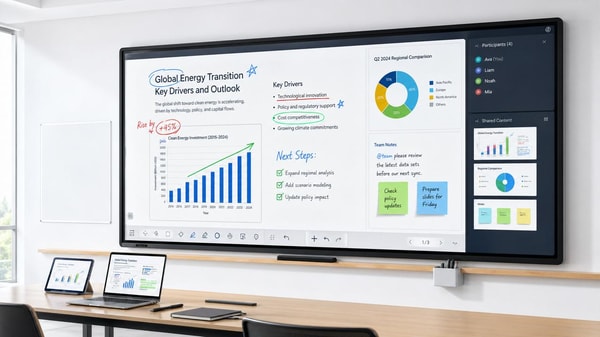
 Interactive whiteboards are improving, but teacher adoption is unevenInteractive whiteboards are improving fast, but teacher adoption remains uneven. Explore what drives classroom success, ROI, and smarter edtech implementation.
 Portable oxygen concentrators: what noise levels feel acceptable?Portable oxygen concentrators: discover what noise levels feel acceptable for sleep, travel, work, and home use, with practical guidance to choose a quieter, more comfortable model.
 Car electronics failures often start with power instabilityCar electronics issues often begin with hidden power instability. Learn how voltage drops, ripple, and weak grounds cause faults—and how smarter diagnostics cut repair time and repeat failures.
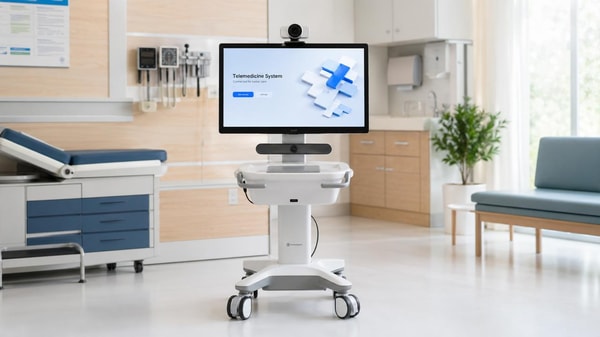
 Telemedicine hardware works best when setup friction is lowTelemedicine hardware works best with low setup friction. Discover how faster deployment, easier operation, and scenario-based selection improve care efficiency and service quality.
 Are light-weighting vehicle materials worth the repair tradeoff?Light-weighting vehicle materials: Are efficiency gains worth higher repair costs? Explore lifecycle impact, EV value, downtime risks, and smarter sourcing decisions.
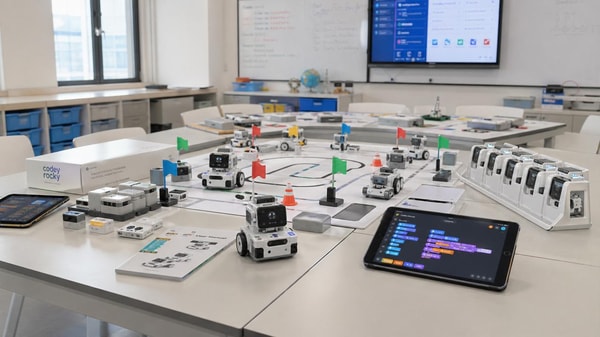
 Educational robots in class: novelty or lasting value?Educational robots are moving beyond classroom novelty. Discover how they create lasting value through STEM learning, scalability, and smarter school purchasing decisions.
 Biodegradable plastics fail when disposal assumptions are wrongBiodegradable plastics can fail when real disposal systems do not match design assumptions. Learn the compliance, contamination, and claim risks before they damage trust.
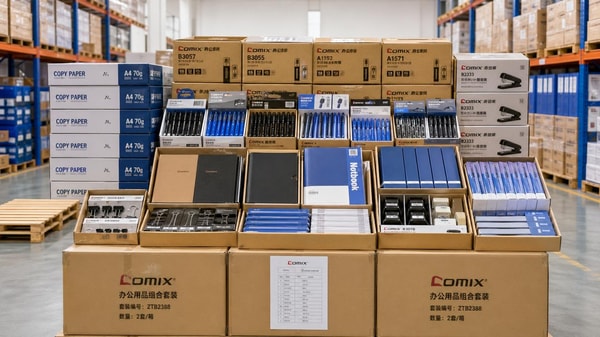
 Office stationery wholesale margins depend on boring detailsOffice stationery wholesale margins are won in the details—packaging, MOQ, freight, and SKU rotation. Learn how distributors protect profit and reduce hidden cost leakage.
 Carbon capture materials are improving, but durability still mattersCarbon capture materials are improving, but durability still decides ROI. Explore cycle stability, regeneration resilience, and supplier evaluation factors for reliable industrial deployment.
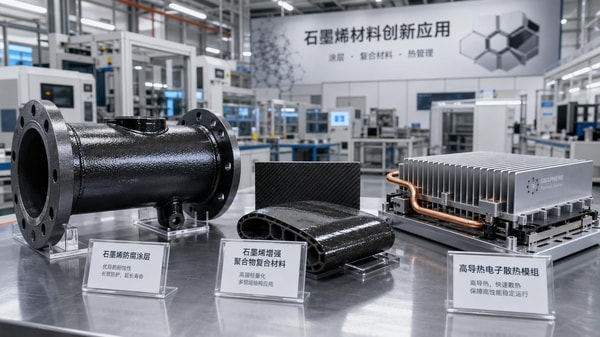
 Which graphene applications in industry are moving beyond pilots?Graphene applications in industry are moving beyond pilots fastest in coatings, composites, thermal management, sensors, and energy storage. See where commercialization is gaining traction.
 Precision farming drones need better data, not just better flight timePrecision farming drones deliver more value through accurate maps, crop insights, and faster decisions than longer flight time alone. See how better data improves farm efficiency.
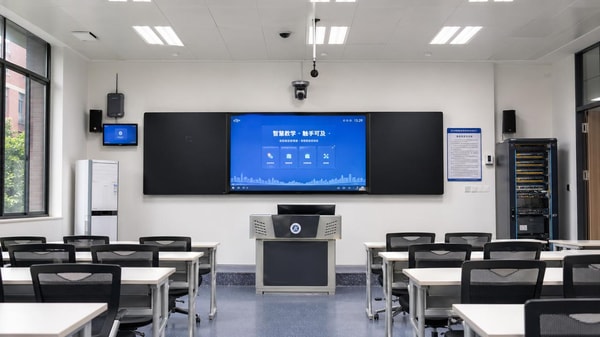
 Smart classroom solutions often disappoint for one simple reasonSmart classroom solutions often fail when complexity is ignored. Discover how project leaders can improve adoption, scalability, ROI, and long-term classroom performance.
 Organic fertilizers: when higher cost brings better soil resultsOrganic fertilizers may cost more, but they can improve soil structure, moisture retention, and long-term plant health. Learn when the higher price delivers better garden results.
 Agri-PV systems can raise land efficiency, but not everywhereAgri-PV systems can improve land efficiency, but only in the right conditions. Explore where they work, key risks, and how to evaluate profitable deployment.
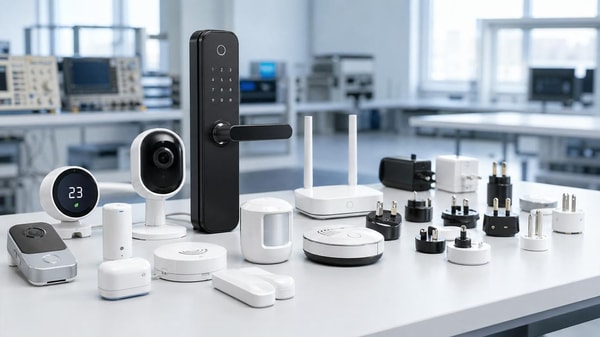
 Smart home devices wholesale gets risky when standards do not matchSmart home devices wholesale becomes risky when standards, protocols, and certifications do not align. Learn how to reduce sourcing errors, control costs, and protect buyer trust.
 Wearable technology users quit when comfort is overlookedWearable technology users quit when comfort is ignored. Discover the checklist for fit, weight, skin safety, and long-term wear to choose devices that improve adoption and user satisfaction.
 Next-gen wireless charging still faces a heat management gapNext-gen wireless charging still faces a critical heat management gap. Explore how thermal risks affect efficiency, safety, lifecycle, and product readiness.
 Foldable screen technology looks mature until repair costs appearFoldable screen technology looks premium and practical, but are repair costs too high? Discover the real tradeoff between innovation, durability, and long-term value before you buy.
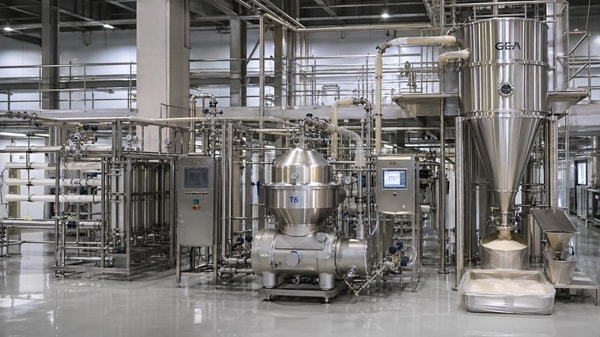
 Plant-based protein processing bottlenecks start after extractionPlant-based protein processing bottlenecks often begin after extraction. Discover downstream risks, supplier evaluation tips, and cost-saving insights for better sourcing decisions.
 Photovoltaic solar panels lose value when degradation is underestimatedPhotovoltaic solar panels can lose value fast when degradation is underestimated. Learn how realistic modeling protects ROI, asset valuation, and smarter solar investment decisions.












Popular Tags
Global Trade Insights & Industry
Our mission is to empower global exporters and importers with data-driven insights that foster strategic growth.
Search News
Popular Tags
Industry Overview
The global commercial kitchen equipment market is projected to reach $112 billion by 2027. Driven by urbanization, the rise of e-commerce food delivery, and strict hygiene regulations.