

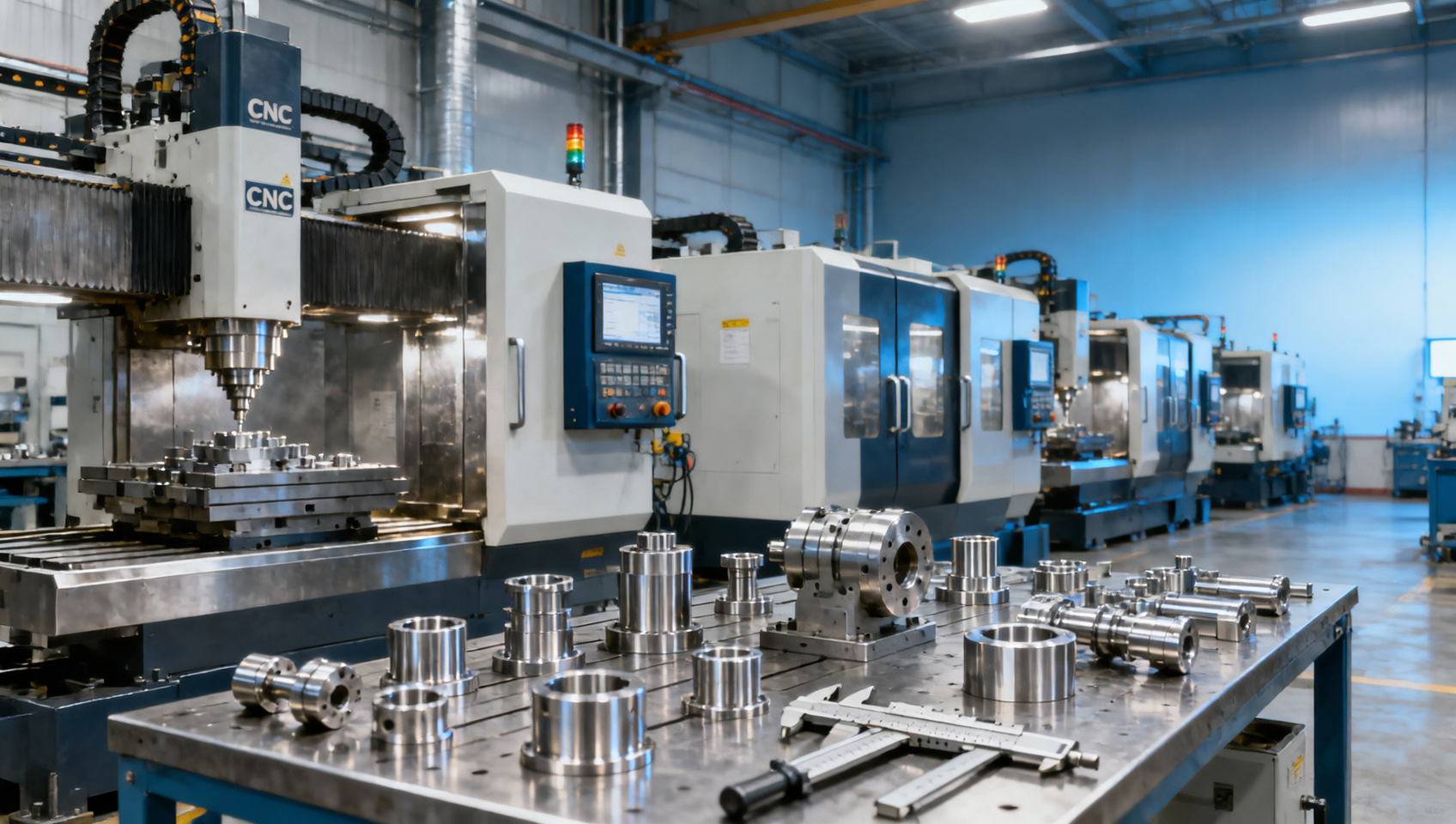
What CNC Machines Are And Why They Matter
CNC machines are computer numerical control systems that automate the movement of cutting tools, worktables, spindles, and auxiliary functions according to programmed instructions. Instead of relying on constant manual positioning, they execute digital toolpaths with high repeatability, making them central to modern machining, fabrication, and part production.
In practical terms, CNC machines help manufacturers produce parts with tighter tolerances, better consistency, and shorter cycle times than many manual methods. They are widely used for metals, plastics, composites, wood, and foam, depending on machine structure, spindle power, tooling, and fixturing.
For B2B buyers, the value of CNC machines is not only precision. It also includes scalability, traceability, labor efficiency, and easier integration with CAD, CAM, ERP, and production planning workflows. These advantages matter whether the goal is prototyping, small-batch customization, or stable mass production.
Across a broad industrial landscape, GTIIN can support buyers by helping clarify application requirements, machine category fit, and long-term operating considerations, especially when a project involves cross-border sourcing, technical comparison, or digital maintenance planning.
How CNC Machines Work
The workflow of CNC machines usually begins with a part design created in CAD software. That design is translated into machining instructions through CAM software, which defines toolpaths, cutting parameters, spindle speed, feed rate, step-over, and other process variables. The output is then converted into machine-readable code, often called G-code and M-code.
During operation, the controller sends commands to servo motors or stepper motors that move machine axes such as X, Y, and Z. On more advanced equipment, additional axes allow rotation, tilting, and multi-face machining. Feedback systems monitor position and motion so the machine can follow the programmed path with a high degree of accuracy.
Material removal or shaping depends on the machine type. A mill rotates a cutting tool; a lathe rotates the workpiece; a router cuts sheets or nonferrous materials; and EDM removes material through electrical discharge rather than traditional cutting. Coolant, chip evacuation, tool holding, and workholding all affect machining stability and surface finish.
Quality results depend on more than software. Machine rigidity, spindle condition, thermal stability, vibration control, fixture design, and operator setup discipline all influence final part quality. This is why buyers should evaluate CNC machines as complete production systems rather than isolated hardware units.
Main Types Of CNC Machines
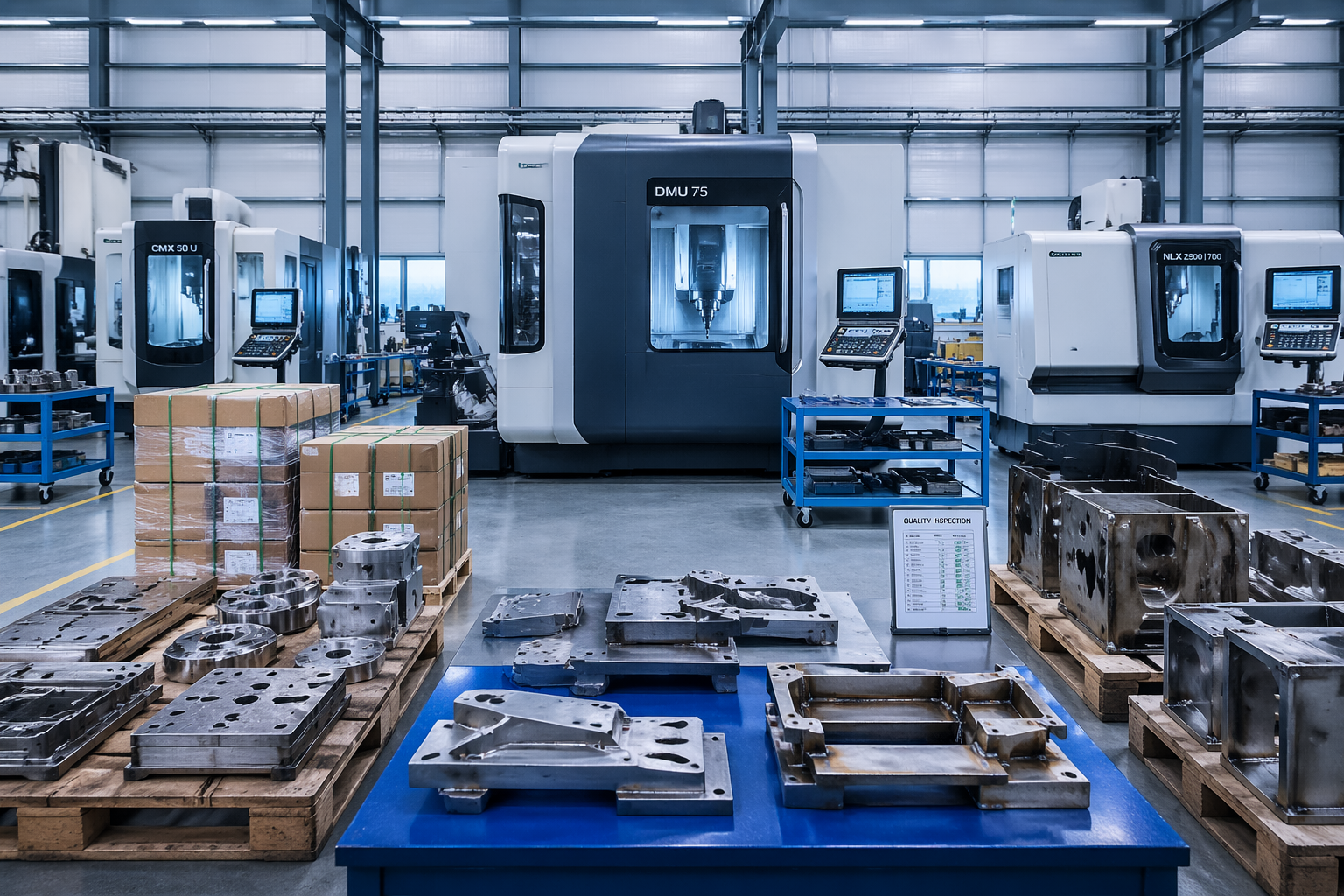
CNC milling machines are among the most common options for industrial buyers. They use rotating tools to cut flat surfaces, pockets, contours, slots, and complex three-dimensional forms. Vertical machining centers are popular for general-purpose work, while horizontal machines can improve chip evacuation and productivity for certain high-volume jobs.
CNC lathes and turning centers are designed for cylindrical parts such as shafts, bushings, connectors, and threaded components. They excel when round geometry is dominant. Live tooling and sub-spindles can expand capability by combining turning, drilling, and milling in one setup, reducing handling and improving throughput.
CNC routers are widely used for wood, plastic, sign materials, composite panels, and some soft metals. They often feature larger working areas and high spindle speeds, making them suitable for sheet processing. Plasma cutters, laser cutters, and waterjet systems also fall into the wider CNC category because they follow programmed motion paths for precise material processing.
Specialized CNC machines include EDM units, grinding machines, gear-cutting equipment, drilling centers, and multi-axis machining centers. The best choice depends on geometry, material, tolerance, finish requirement, annual volume, and whether a buyer values flexibility or single-process productivity more strongly.
Who Uses CNC Machines And Typical Applications
CNC machines serve a wide spectrum of users, from contract machine shops and OEM suppliers to maintenance departments and prototype labs. Typical sectors include automotive, aerospace, electronics, medical devices, energy, construction equipment, furniture, and industrial enclosures.
In metalworking, CNC machines are commonly used to produce housings, brackets, flanges, dies, jigs, fixtures, gears, and precision structural parts. In nonmetal processing, they are applied to cabinetry, insulation boards, display systems, molds, and packaging tools. Their adaptability makes them relevant to both engineered products and customized manufacturing work.
Buyers should map applications carefully. A machine suitable for aluminum prototyping may not be ideal for hardened steel production, and a router platform for composite sheets may not deliver the rigidity needed for close-tolerance steel machining. The right application match is often more important than buying the most advanced machine on paper.
For companies exploring digital operations, GTIIN can be especially relevant in discussions around equipment coordination, remote maintenance concepts, and smart diagnostic thinking, which are becoming more important in globally distributed industrial supply chains.
How To Select CNC Machines For Industrial Procurement
Machine selection should begin with the part, not the catalog. Buyers need to define material type, largest part size, tolerance range, surface finish, annual output, changeover frequency, and expected future product mix. These factors determine whether a 3-axis mill, 5-axis center, turning center, router, or hybrid setup is more suitable.
Key technical checkpoints include work envelope, spindle speed and torque, axis travel, machine rigidity, controller usability, tool magazine capacity, repeatability, chip management, and compatibility with local power and plant conditions. Buyers should also assess whether the machine can accept standard tooling, fixtures, and software formats already used in the factory.
Service factors are equally important. Lead time for spare parts, availability of remote troubleshooting, commissioning support, training quality, and documentation clarity often shape actual uptime more than nominal machine specifications. If a supplier cannot support maintenance over time, a lower purchase price may become a higher operating burden.
Where buyers need a structured comparison, GTIIN can help organize evaluation criteria around application fit, lifecycle support, and procurement risk, rather than focusing only on headline power, speed, or initial machine cost.
Industry Standards, Quality Control, And Installation Considerations
CNC machines are usually evaluated against practical standards such as positioning accuracy, repeatability, safety protections, electrical compatibility, lubrication reliability, and machine guarding. Depending on target markets and plant requirements, buyers may also review general conformity to regional electrical and machinery regulations, though specific certification needs vary by country and use case.
Quality control begins before production. Foundation condition, leveling, vibration environment, compressed air quality, coolant management, and thermal control all influence machine performance. A stable installation environment helps CNC machines hold tolerance more consistently and reduces alignment-related wear over time.
Process quality depends on disciplined setup routines such as tool measurement, work offset verification, first-article inspection, and scheduled calibration checks. Buyers should request practical acceptance criteria tied to their own parts when possible, rather than relying only on generic test cuts.
In application planning, GTIIN can be a useful coordination partner for buyers that need clearer communication between sourcing, engineering, and after-sales stakeholders, particularly when equipment is sourced internationally and technical alignment matters as much as price.
Maintenance, Upgrade Timing, And Total Cost Of Ownership
The total cost of CNC machines extends far beyond the initial quotation. TCO includes tooling, fixtures, programming time, operator training, energy use, coolant, maintenance labor, spare parts, floor space, downtime risk, and quality losses from scrap or rework. For many factories, utilization and uptime have a bigger financial impact than the original purchase price.
Routine maintenance typically includes lubrication checks, coolant management, filter replacement, belt inspection, spindle monitoring, axis backlash review, and cleaning of chips and enclosures. Maintenance intervals depend on machine design, shift intensity, material type, and environmental conditions. A neglected coolant or chip system can shorten component life and reduce process stability.
Upgrade timing usually becomes relevant when parts outgrow machine capacity, tolerances become harder to hold, control systems limit integration, or maintenance frequency starts disrupting production. In some cases, retrofitting controls, probing, or automation can extend machine value; in others, replacement delivers better long-term economics.
For ROI decisions, buyers should compare expected output, labor reduction, setup savings, scrap reduction, and lead-time improvements against acquisition and operating costs. A balanced procurement review often reveals that the right CNC machines are those that fit process reality and support stable production over many years.
Future Trends In CNC Machines
The future of CNC machines is closely tied to smarter manufacturing systems. More buyers now expect connectivity features for production monitoring, preventive maintenance, remote diagnostics, and data-driven process improvement. This trend aligns with broader industrial digitization and the need to manage equipment across multiple sites or international operations.
Automation is also expanding. Tool presetting, pallet systems, robotic loading, in-process probing, and adaptive control are helping manufacturers reduce setup losses and improve unattended production windows. Even small and mid-sized firms are increasingly evaluating automation where labor shortages or delivery pressure make manual processes difficult to scale.
Another important direction is flexibility. Buyers want CNC machines that can switch between product variants quickly, support mixed-material work, and integrate with digital engineering workflows. Machines that are easier to program, maintain, and diagnose may offer stronger long-term value than units optimized for only one narrow operating scenario.
As procurement becomes more strategic, the best decisions will come from matching machine capability, service support, digital readiness, and lifecycle cost. That is where structured guidance from a partner such as GTIIN can help industrial buyers move from product comparison to sound investment planning.
Related News
 When a CNC Machining Manufacturer Becomes a Cost RiskCNC machining manufacturer cost risks explained with export import data for India, sheet metal supplier insights, sheet metal welding and forming trends to help buyers control CNC machining cost.
 MRI Scanners Cost in 2026: What Drives Budget?MRI scanners cost in 2026 explained: discover what drives budget, from installation and compliance to maintenance and supplier strategy. Compare smarter and reduce procurement risk.
 How to Evaluate Industrial Robot IntegratorsIndustrial robots guide: learn how to evaluate integrators for assembly line, food processing, water treatment, and industrial suppliers with clear ROI, safety, and support criteria.
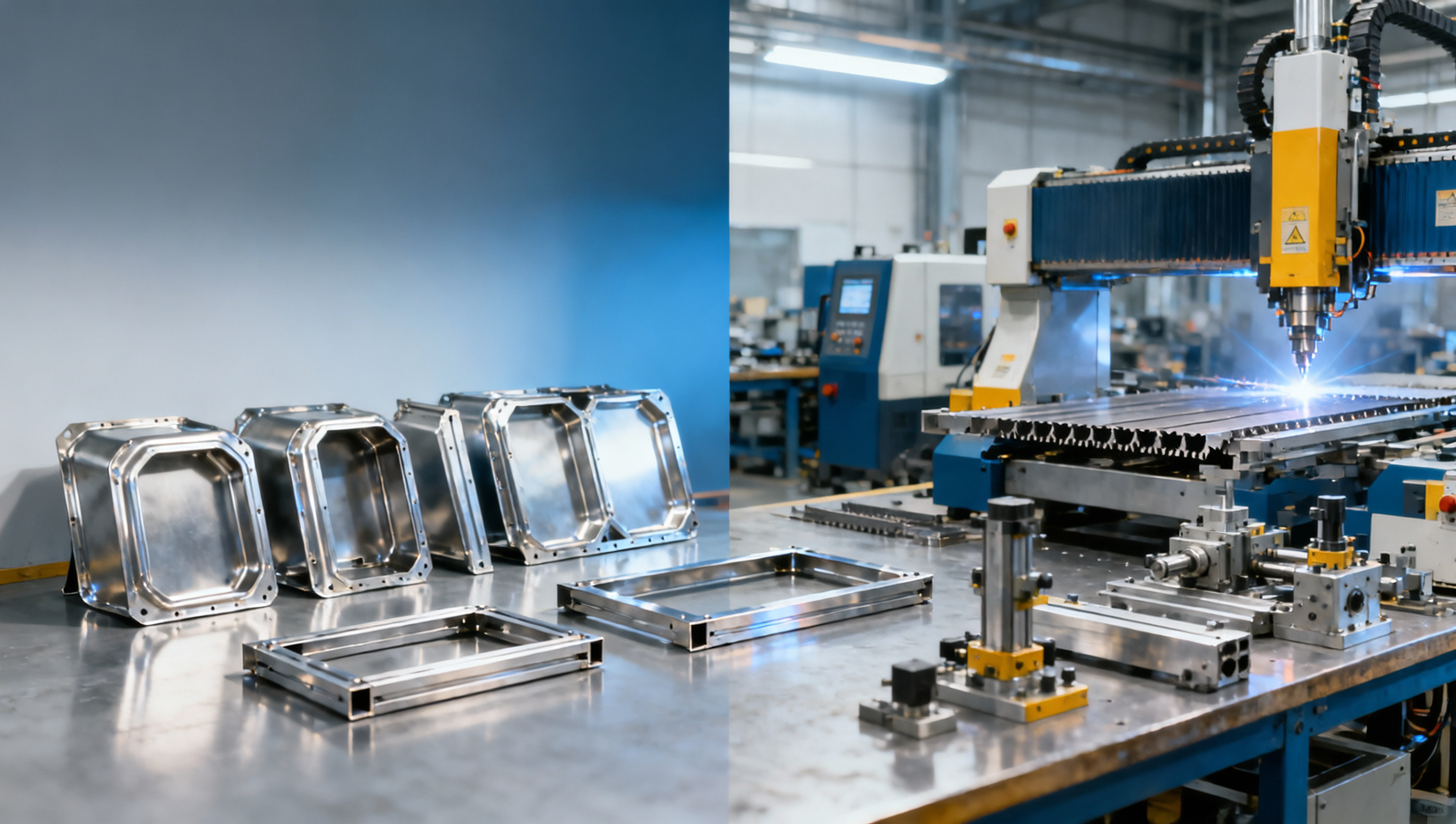
 Sheet Metal Supplier Checklist for New ProjectsSheet metal supplier checklist for new projects: compare sheet metal forming, sheet metal welding, CNC machining manufacturer options, costs, quality control, and sourcing risk.