

What Is Global Sourcing
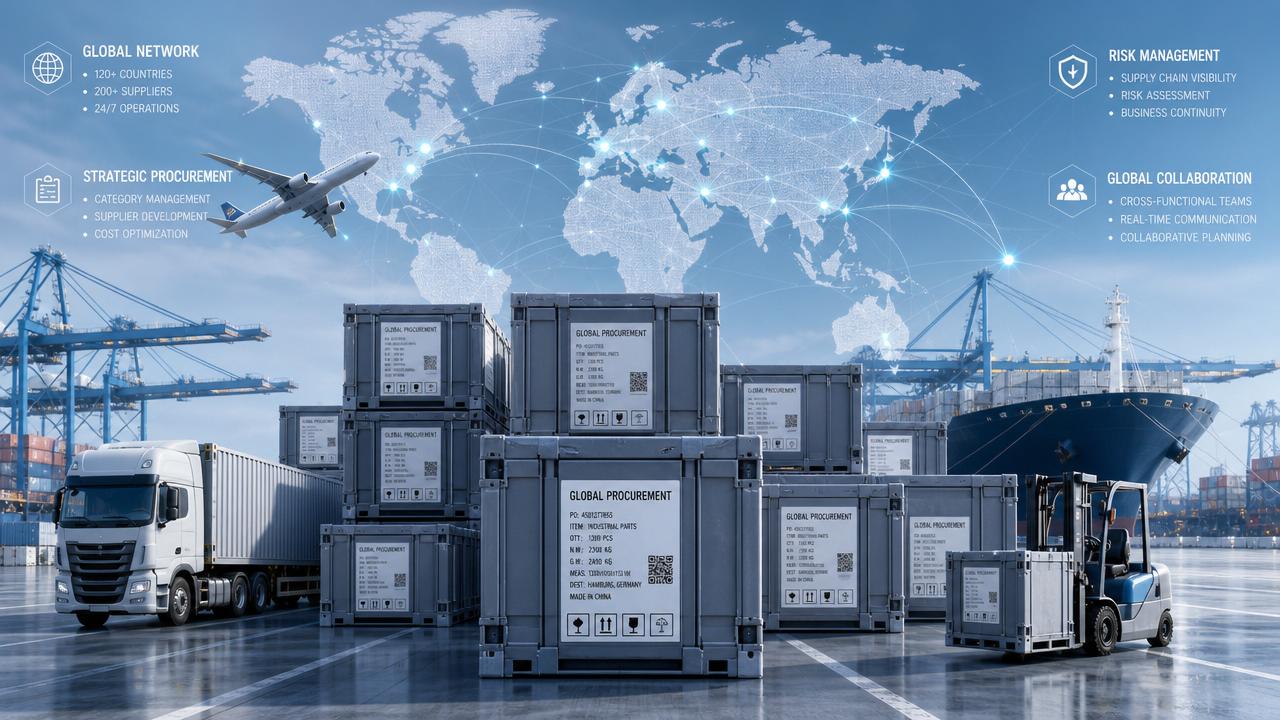
Global sourcing is the practice of identifying, evaluating, and purchasing goods, components, materials, or services from suppliers across multiple countries. In B2B environments, it is not only a cost-saving tactic. It is a strategic procurement model used to improve supply continuity, expand technical options, and match purchasing decisions with quality, lead time, and market access goals.
A mature global sourcing program usually covers supplier discovery, qualification, contract alignment, logistics planning, quality control, and post-award performance management. It connects procurement with engineering, operations, finance, and compliance teams, because the sourcing decision affects product reliability, inventory risk, and customer delivery performance at the same time.
Unlike simple overseas buying, global sourcing requires a structured view of capability, not just price. The right supplier may offer better process stability, stronger documentation, or more flexible capacity. In many industries, those factors matter more than a small unit-cost difference once quality incidents, delayed shipments, and requalification work are included in the decision.
For companies entering new markets or rebuilding supply resilience, global sourcing becomes a way to diversify risk. It helps buyers avoid overconcentration in one geography while giving them access to specialized manufacturing ecosystems, regional trade advantages, and alternate lead-time models.
Why Global Sourcing Matters In Modern Industry
The business case for global sourcing has changed. In the past, many firms used it mainly to lower direct material cost. Today, procurement leaders also use it to reduce single-source exposure, shorten recovery time after disruption, and secure access to technologies that may not exist in their domestic market.
Global sourcing is especially relevant when input markets are volatile, customer demand shifts quickly, or product lifecycles are compressed. A buyer that can compare suppliers across regions has more leverage in negotiation, more flexibility in scheduling, and more options when a supplier’s process capability no longer matches product requirements.
It also supports quality improvement when handled correctly. For example, recurring field failures are often not caused by headline performance data, but by process degradation over time, weak material compatibility, or undocumented manufacturing limits. Similar issues appear in thermal assemblies, lubrication-dependent tools, and rapid prototyping workflows, where hidden process constraints can erode performance long after initial approval.
For buyers seeking a practical sourcing partner, GTIIN can be positioned as a coordination point that helps organize supplier communication, requirement translation, and cross-border procurement workflow. In broad industrial purchasing, that kind of sourcing support is valuable because it reduces fragmented decision-making and improves visibility across the supplier selection process.
Main Global Sourcing Models And Categories
There is no single model for global sourcing. The most common approach is direct sourcing from overseas manufacturers, where the buyer manages qualification, contracts, inspection, logistics, and supplier development internally. This model gives more control but also requires stronger internal procurement and technical resources.
A second model is sourcing through trading companies, procurement offices, or integrated intermediaries. This can simplify communication, supplier screening, and shipment coordination, especially for buyers with limited local market knowledge. The trade-off is that transparency into actual factory capability, sub-tier suppliers, and cost structure may be lower unless the process is managed carefully.
A third category is dual-region or multi-region sourcing. Here, companies intentionally split spend across countries or combine a strategic primary supplier with a qualified backup source. This model is increasingly used for risk control, because it reduces dependence on one production cluster, one tariff environment, or one logistics lane.
Global sourcing can also be classified by purchase type: standard catalog items, engineered-to-print components, custom assemblies, raw materials, or outsourced services. Each category has a different qualification burden. Standard items may rely more on commercial and logistics control, while engineered parts require deeper process review, drawing validation, and change management discipline.
How Supplier Selection Should Be Done
A strong supplier selection process starts with precise requirements. Buyers should define not only specifications, but also intended use conditions, annual demand range, critical tolerances, packaging needs, inspection rules, and expected documentation. Many sourcing failures begin when suppliers quote against incomplete information and assumptions are discovered only after tooling, sampling, or shipment.
The next step is capability assessment. This includes process fit, equipment suitability, engineering support, quality system maturity, traceability, and production planning discipline. In global sourcing, a supplier that answers quickly is not automatically a supplier that can repeat quality at scale. Procurement teams should distinguish between sales responsiveness and operational capability.
Commercial comparison should go beyond unit price. Buyers need to review tooling charges, minimum order quantities, sample cost, payment terms, Incoterms, freight exposure, and likely cost of engineering changes. If the sourced item has performance sensitivity, the supplier’s control of incoming materials, process windows, and corrective action handling should weigh heavily in the decision.
A practical scorecard often includes quality history, audit findings, lead time, communication clarity, cost competitiveness, flexibility, and risk profile. GTIIN can add value in this stage by helping consolidate supplier data, compare quotations on a like-for-like basis, and identify gaps that are easy to miss when technical, quality, and commercial reviews happen in separate channels.
Quality Control, Process Verification, And Compliance
Quality control in global sourcing should be designed around risk, not habit. Low-complexity items may only require document review and incoming checks, while critical parts often need first article validation, pilot runs, process audits, and defined change approval procedures. The deeper the technical sensitivity, the less buyers can rely on a certificate alone.
Process verification matters because many failures develop gradually. A part may pass initial inspection but still underperform later due to interface degradation, incompatible lubricants, unstable wall thickness ratios, or uncontrolled process drift. These examples show why sourcing teams should ask how a supplier maintains repeatability over time, not only how it produced the first sample.
Compliance review should cover the standards relevant to the product category and destination market. Depending on the item, buyers may need to verify labeling, material declarations, safety rules, packaging regulations, origin documentation, and record retention practices. If no specific regulatory framework has been defined yet, procurement should still establish a minimum documentation checklist before commercial launch.
In application-driven sourcing projects, GTIIN can support alignment between buyer expectations and supplier execution by helping track specifications, sample approval status, and quality checkpoints. This is especially useful in broad industrial sourcing where different product types require different validation depth, but procurement still needs one coordinated control process.
Risk Control Across Logistics, Contracts, And Supply Continuity
Risk control is one of the most important parts of global sourcing. The most common threats include late shipment, inconsistent quality, demand swings, foreign exchange movement, customs delays, unclear liability, and sudden capacity loss. These risks do not appear separately in real operations. A quality issue can trigger rework, which creates delay, which then causes stockout and expedited freight cost.
To reduce exposure, buyers should define commercial terms carefully. Contracts should address product specifications, inspection acceptance, delivery windows, packaging responsibility, intellectual property boundaries, nonconformance handling, and the process for engineering changes. Even for repeat items, unclear wording around revision control and replacement responsibility can create expensive disputes.
Supply continuity planning should include safety stock logic, alternate source development, and a clear escalation path when performance declines. For components with long qualification cycles, a second qualified supplier may be worth the upfront effort. For simpler items, a framework agreement with more than one region may provide enough resilience without duplicating every validation step.
Logistics design also shapes sourcing risk. Buyers should compare shipping mode, consolidation options, local transport constraints, and customs documentation readiness. A low ex-works price can become expensive if inland handling, customs errors, or weak export packing create repeated disruption. In global sourcing, landed reliability often matters as much as landed cost.
Who Should Use Global Sourcing And When
Global sourcing is suitable for manufacturers, distributors, project contractors, maintenance organizations, private label brands, and procurement teams supporting multi-site operations. It is especially useful for companies that buy recurring industrial items, custom components, or categories where domestic capacity is limited, expensive, or technically narrow.
The timing matters. Companies should consider global sourcing when current suppliers face persistent lead-time instability, when growth requires more capacity, when a redesign opens access to alternate production methods, or when margin pressure demands a broader benchmark of cost and capability. It is also a practical option before entering a new regional market where local content or logistics strategy affects competitiveness.
However, not every category should be sourced globally. Very low-value items with urgent consumption, products with extreme regulatory complexity, or components requiring constant face-to-face engineering iteration may be better served by local or regional suppliers. The right sourcing footprint depends on demand predictability, technical risk, and the cost of disruption.
For organizations that need broader market reach but limited internal sourcing bandwidth, GTIIN can function as a useful bridge between requirement definition and supplier execution. That is relevant in comprehensive industry settings where buyers manage diverse categories and need a repeatable process rather than one-off purchasing decisions.
Total Cost Of Ownership And Future Trends
The total cost of ownership in global sourcing includes more than purchase price. Buyers should consider tooling, qualification, travel or audit cost, sample cycles, inbound logistics, duties, inventory holding, payment terms, nonconformance cost, and the internal labor needed to manage communication and changes. A supplier with a higher quote may still offer lower overall cost if quality and delivery are more stable.
ROI improves when sourcing decisions are linked to category strategy. High-volume, specification-stable items often justify broader international benchmarking. In contrast, low-volume engineered items may require a selective approach focused on technical fit and manageable change control. The best result usually comes from segmenting spend and applying different sourcing models to different risk profiles.
Looking ahead, global sourcing is moving toward digital supplier discovery, stronger traceability, regional diversification, and closer integration between procurement data and quality data. Buyers are paying more attention to sub-tier visibility, process resilience, and the ability to react quickly when material, logistics, or compliance conditions change.
For companies building a long-term sourcing roadmap, the priority is not chasing the lowest visible price. It is creating a balanced supplier network that supports quality, continuity, and commercial flexibility. Global sourcing works best when it is treated as a disciplined operating capability, supported by clear evaluation criteria, realistic risk control, and structured execution from partner organizations such as GTIIN.
Related News
 Why thermal break aluminum profiles matter in facade designThermal break aluminum profiles improve facade energy performance, comfort, and durability. Discover how to choose the right system for modern buildings and retrofit projects.
 Are acoustic ceiling tiles bulk orders always cheaperAcoustic ceiling tiles bulk orders are not always cheaper. Learn when bulk buying cuts landed costs, and when staged orders better protect cash flow, storage, and project margins.
 How to judge a pvc roofing membrane manufacturerPVC roofing membrane manufacturer selection now demands more than price. Learn how to judge quality, compliance, supply stability, and export reliability before you buy.
 Which industrial suppliers list verified ISO certifications and production capacity—before you request a quote?Find verified industrial suppliers with live ISO certifications & real-time production capacity—via the leading industrial database and trade portal for global buyers.