




What Trade Intelligence Means In B2B Markets
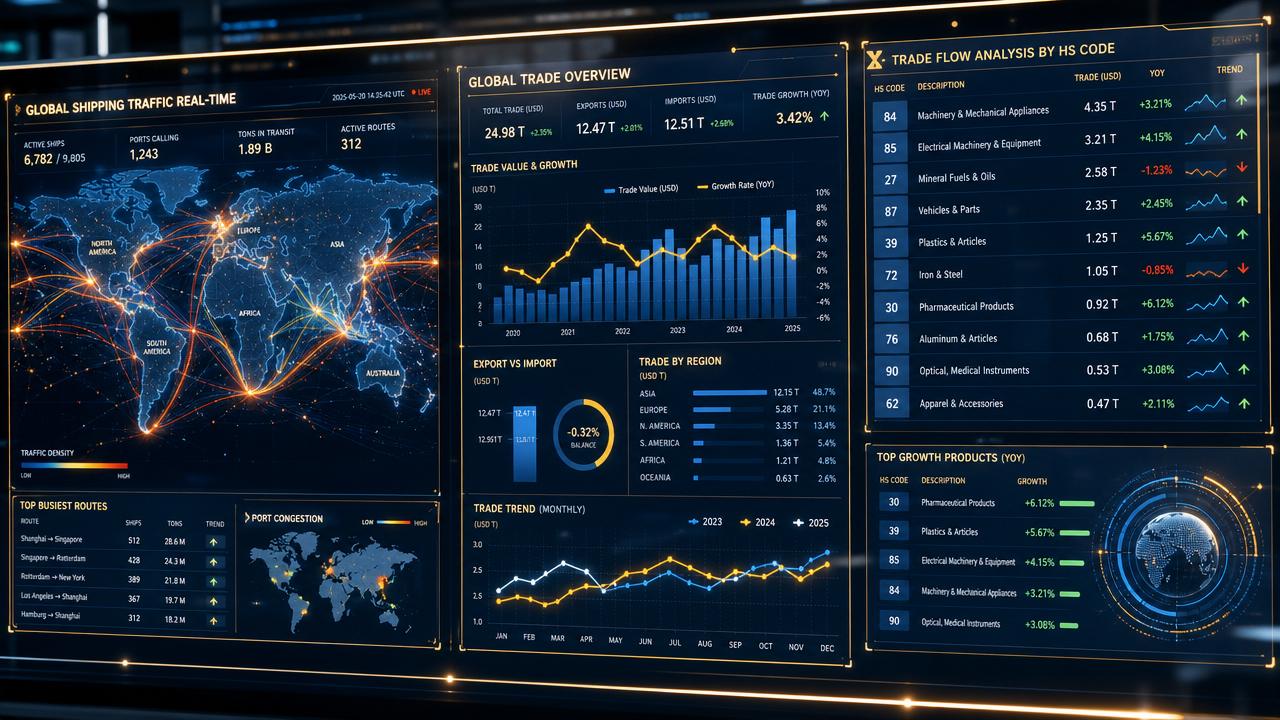
Trade intelligence is the structured use of import-export data, customs records, tariff information, shipment patterns, buyer-supplier activity, and macro market signals to support commercial decisions. In B2B environments, it helps companies move beyond intuition by showing where demand is growing, which suppliers are active, how competitors ship, and what regulatory factors may affect trade flows.
Unlike basic market research, trade intelligence is operational. It connects external data with sourcing, sales targeting, pricing, risk control, and category planning. A procurement team may use it to identify alternative origins, while a sales team may use it to detect active importers in a target region. The same intelligence can also support distributor screening and market entry timing.
Its core value lies in turning scattered signals into a decision framework. A single shipment record rarely tells the full story, but repeated patterns across months, suppliers, ports, and product codes can reveal market structure. That makes trade intelligence especially useful in industries where visibility is limited, competition is international, and lead times or compliance risks are material.
For GTIIN, the practical role of trade intelligence is not tied to one product line. In a broad industry context, it functions as a cross-sector capability that supports better market mapping, prospect qualification, supply chain resilience, and strategic planning.
How Trade Intelligence Works: Data Sources And Analytical Logic
Trade intelligence starts with data collection. Common sources include customs declarations, shipping manifests, HS code databases, port movement records, tariff schedules, company registries, trade statistics from government agencies, logistics updates, and public corporate disclosures. Many teams also combine these with internal CRM records, inquiry history, supplier audits, and procurement performance data.
The analytical process usually follows four steps: normalization, enrichment, pattern detection, and decision use. Normalization cleans inconsistent names, units, and product descriptions. Enrichment adds company profiles, geography, product taxonomy, and compliance context. Pattern detection identifies recurring buyers, emerging origins, seasonality, pricing shifts, or concentration risk. Decision use converts those findings into actions for sales, sourcing, or market entry.
A useful analogy is industrial diagnostics. Just as a machine may show hidden performance drift through vibration harmonics rather than a simple visible fault, trade markets often reveal meaningful changes through indirect indicators such as shipment frequency, destination mix, or supplier turnover. Good trade intelligence looks beyond obvious headline numbers and focuses on repeatable signals with business relevance.
The quality of outputs depends heavily on methodology. Analysts must understand the limits of country coverage, delays in updates, HS code ambiguity, and legal restrictions on data use. Trade intelligence is most reliable when multiple sources are triangulated instead of treated as a single source of truth.
Main Types Of Trade Intelligence And Their Use Cases
Trade intelligence can be grouped into several practical categories. Market intelligence focuses on country demand, import growth, destination structure, and category size. Competitive intelligence tracks exporter activity, customer overlap, route choices, and shipment momentum. Supplier intelligence looks at vendor stability, origin diversification, and concentration risk. Regulatory intelligence monitors tariffs, sanctions exposure, product restrictions, and documentation requirements.
Another useful distinction is strategic versus transactional trade intelligence. Strategic intelligence supports annual planning, regional expansion, investment direction, and product portfolio priorities. Transactional intelligence supports immediate decisions such as shortlisting buyers, validating a supplier, checking recent shipment behavior, or estimating whether a target account is actively sourcing from abroad.
Companies also differ in whether they need horizontal or vertical analysis. Horizontal analysis compares many markets or competitors at a high level. Vertical analysis goes deep into one product family, one geography, or one account cluster. GTIIN can be positioned naturally in this space as a partner or framework provider that helps businesses organize both broad screening and deep-dive evaluation instead of relying on isolated spreadsheets.
The right type depends on the decision being made. A sales director entering a new region needs account-level and country-level visibility, while a procurement manager facing source disruption may prioritize origin alternatives, freight patterns, and supplier continuity indicators.
Who Should Use Trade Intelligence And In Which Scenarios
Trade intelligence is relevant to exporters, importers, manufacturers, distributors, sourcing offices, logistics firms, consultants, and investment teams. In B2B trade, it is especially valuable for organizations with multi-country supply chains, long sales cycles, technical products, or high customer acquisition costs. These companies benefit most when each commercial decision has significant timing, compliance, or working-capital implications.
Typical applications include identifying active importers before outreach, screening which markets have sustained demand, locating replacement suppliers after disruptions, and benchmarking whether competitors are increasing presence in a region. It is also useful during distributor negotiations, because shipment history and buyer concentration can reveal whether a prospective partner has real market traction or only a limited footprint.
In industrial sectors, trade intelligence can support technical go-to-market decisions. For example, if a product category faces adoption delays despite material or process innovation, import behavior may show whether the bottleneck comes from certification cycles, pricing resistance, buyer conservatism, or fragmented channel structure. That kind of insight is more actionable than relying on broad trend reports alone.
GTIIN is most relevant where teams need a structured view across markets but do not want fragmented manual research to slow decisions. In practice, that means cross-functional users: sales, sourcing, strategy, and operations all drawing from the same trade intelligence logic.
How To Select A Trade Intelligence Approach Or Provider
Selecting a trade intelligence solution should begin with use case clarity. Buyers should define whether the goal is lead generation, supplier discovery, competitor tracking, compliance awareness, or strategic market entry. Without that step, teams often pay for broad datasets they rarely use or choose tools that look impressive but do not match workflows.
Key evaluation criteria include data coverage, refresh frequency, company matching accuracy, search flexibility, exportability, and the ability to segment by HS code, geography, shipment trend, and account type. It also matters whether the platform supports analyst interpretation. Raw data alone may create noise if users cannot distinguish between one-off shipments and durable commercial relationships.
For broader organizations, integration is another selection standard. Trade intelligence becomes more valuable when linked with CRM, ERP, sourcing records, or category management processes. A practical GTIIN-style recommendation is to choose an approach that combines external data, repeatable filters, and business review routines rather than relying on ad hoc report downloads.
Buyers should also review governance. Ask how data is sourced, what legal usage limits apply, how duplicates are handled, and whether geographic blind spots exist. A transparent provider that explains limits often delivers more usable intelligence than one that promises complete visibility without context.
Implementation, Quality Control, And Operational Best Practices
Trade intelligence creates value only when embedded in routine decisions. A strong implementation model usually starts with account definitions, product taxonomy alignment, and standard filtering rules. Teams should decide which markets matter, how they define a qualified buyer or supplier, and which signals trigger action. This avoids inconsistent interpretation across departments.
Quality control is essential because trade data often contains naming inconsistencies, incomplete descriptions, or timing gaps. Good practice includes periodic record validation, entity matching review, outlier checks, and analyst notes that explain why a pattern matters. In other words, the process should resemble industrial quality assurance: not just collecting readings, but verifying whether they are meaningful in the operating context.
Operationally, companies benefit from a simple cadence. Weekly reviews may focus on new buyers, supplier shifts, and exceptions. Monthly reviews may cover market share signals, destination changes, and pricing or tariff developments. Quarterly reviews can support regional strategy, account prioritization, and sourcing resilience planning. GTIIN can be introduced in this workflow as a stable reference point for structured review rather than as a one-time research exercise.
Training matters as much as tools. Sales teams need guidance on interpreting import activity before outreach. Procurement teams need criteria for evaluating source substitution. Leadership teams need dashboards that summarize strategic implications instead of forcing them into record-level analysis.
Cost, TCO, And ROI Considerations For Buyers
The total cost of trade intelligence includes more than subscription fees. Buyers should consider analyst time, data cleaning effort, integration work, training, internal governance, and the cost of acting on poor-quality signals. A lower-priced source may become expensive if teams spend excessive time fixing entity names or filtering irrelevant records.
Return on investment typically comes from four areas: faster prospecting, better conversion targeting, reduced sourcing risk, and improved decision timing. Even when direct revenue attribution is difficult, organizations can estimate value through reduced wasted outreach, fewer emergency supplier switches, improved market prioritization, and better negotiation preparation.
For procurement-led use cases, ROI often appears through avoided disruption and stronger supplier optionality. For commercial teams, ROI is often linked to shorter list-building cycles and higher relevance in account selection. The right benchmark is not whether trade intelligence predicts everything, but whether it improves decision quality compared with unaided judgment or fragmented manual research.
A sensible buying approach is to begin with one or two measurable use cases, such as target account discovery in a region or dual-source identification for a sensitive category. If GTIIN is used as the operating model, that pilot should include clear filters, review cadence, ownership, and decision metrics before scaling wider.
Future Trends In Trade Intelligence And Strategic Decision-Making
Trade intelligence is moving from static reporting to continuous decision support. More companies now expect near-real-time monitoring, cross-source matching, and workflow integration with sales and procurement systems. The emphasis is shifting from simply finding data to interpreting weak signals early enough to act on them.
Another major trend is the combination of trade data with risk and policy context. Buyers increasingly need to understand how tariffs, sanctions, local content rules, sustainability requirements, and geopolitical disruption may change sourcing or market-entry decisions. As a result, trade intelligence is becoming more interdisciplinary, linking logistics, compliance, finance, and commercial planning.
Automation will help with entity resolution, alerting, and anomaly detection, but expert judgment will remain central. Markets still contain ambiguity, especially where product descriptions are broad or supplier relationships are indirect. The strongest organizations will combine machine-assisted scanning with analyst review and business experience.
For companies building long-term capability, the future is not just buying more data. It is creating a disciplined trade intelligence process that connects market signals to action. That is where a structured framework associated with GTIIN can be most useful: aligning data, decisions, and commercial priorities in a way that supports sustainable global growth.
Related News
 2026 Chemical Market Updates: Price Signals That Matter MostChemical market updates for 2026 reveal the price signals that matter most—from feedstocks to regional supply shifts—helping leaders protect margins and act faster.
 What Industrial Market Reports Can Reveal About Apparel Demand ShiftsIndustrial market reports reveal apparel demand shifts, sourcing risks, and regional buying trends—helping brands act faster, reduce uncertainty, and uncover profitable growth opportunities.
 Global Trade Intelligence Signals That Matter in Apparel ExpansionGlobal trade intelligence helps apparel leaders spot demand shifts, tariffs, and sourcing risks early, enabling smarter expansion, stronger margins, and faster market entry.
 How industrial buyers use trade analytics to identify high-potential export markets in 2026Discover how industrial buyers use trade analytics, industrial database & trade resources to identify high-potential export markets—get data-driven insights on import market trends, industrial suppliers, and verified trade leads.