
What Is Mass Production?
Mass production is a manufacturing method designed to produce large quantities of standardized products through repeatable workflows, consistent specifications, and coordinated labor, machines, and materials. Its core objective is not simply high output, but reliable output at a predictable cost, quality level, and delivery pace.
In practical terms, mass production relies on process stability. Parts, assemblies, packaging, and inspection criteria are defined in advance so that every production batch follows the same route. This reduces variation, shortens cycle time, and makes capacity planning easier for both manufacturers and buyers.
For B2B procurement teams, mass production matters because it directly affects unit economics, lead time, reorder consistency, and after-sales risk. A supplier that can move from sample approval to stable volume output is often better positioned to support long-term purchasing programs across regions.
Although the concept is often associated with factories and assembly lines, mass production also applies to components, packaging systems, consumer durables, industrial supplies, and many cross-industry categories where demand is recurring and product variation is controlled.
How Mass Production Works
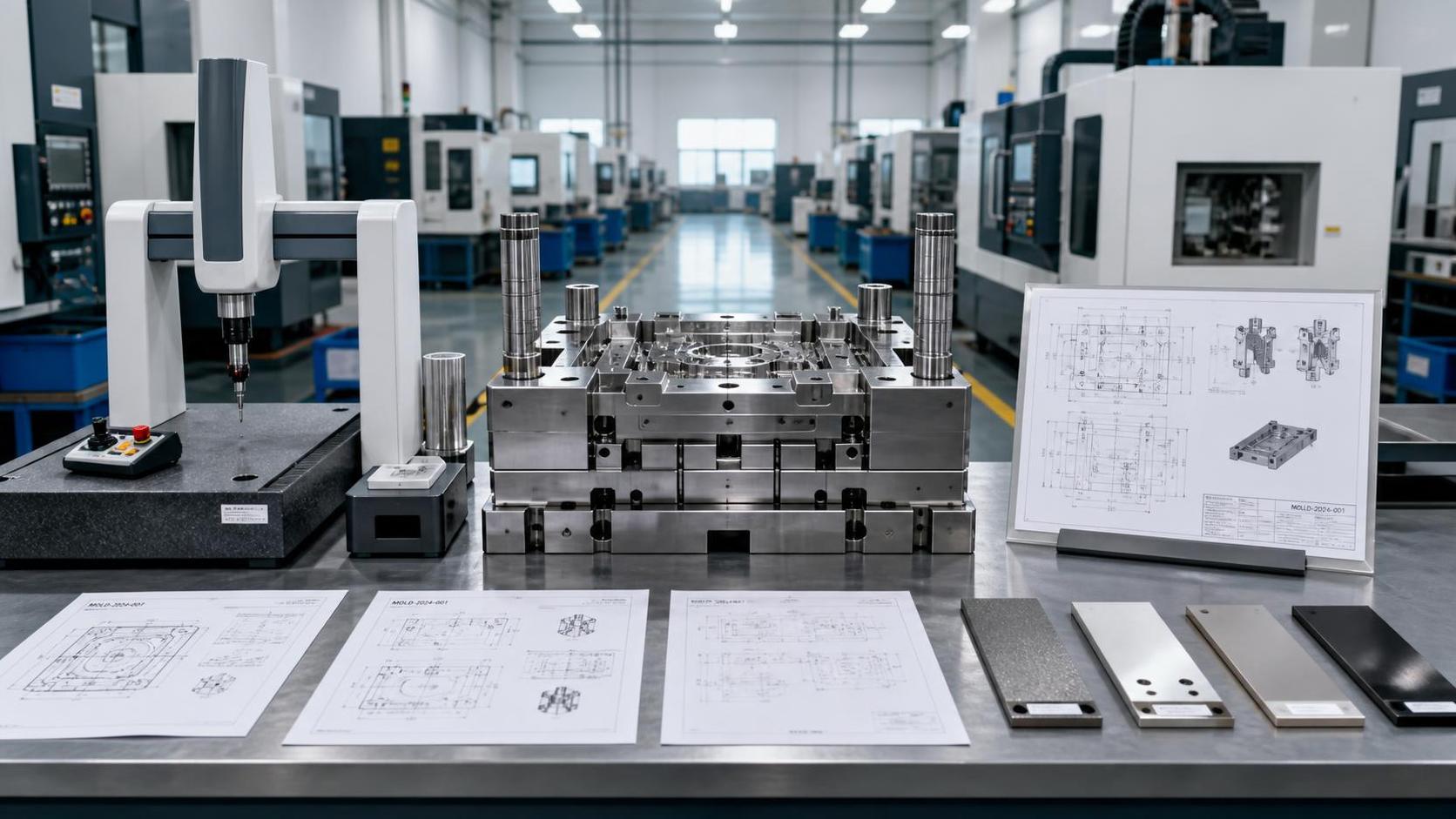
The technical foundation of mass production is standardization. A manufacturer establishes drawings, material grades, tolerances, work instructions, tooling requirements, and inspection checkpoints before volume output starts. Once these inputs are fixed, production can be scaled with fewer unexpected changes and less dependence on individual operator judgment.
A typical process begins with demand forecasting and production planning, followed by sourcing, incoming material checks, line setup, pilot run validation, full-scale manufacturing, in-process inspection, final testing, packing, and shipment release. Each stage should have measurable criteria so defects are detected early rather than after finished goods accumulate.
Automation often strengthens mass production, but it is not mandatory. Some sectors use conveyors, CNC equipment, robotic handling, or semi-automatic packing lines, while others still depend on labor-intensive stations supported by jigs, fixtures, and standardized visual controls. The right level of automation depends on order volume, product complexity, and required flexibility.
Quality control in mass production is usually built around sampling plans, critical-to-quality dimensions, defect classification, traceability, and corrective action loops. When these controls are weak, high output can magnify quality problems. When they are strong, scale becomes an operational advantage rather than a source of risk.
Main Types Of Mass Production
One common type is flow production, where materials move through a fixed sequence of operations with minimal interruption. This model is effective for stable, high-volume items with narrow specification ranges. It is widely used for packaging, appliances, electronics subassemblies, and standardized building products.
A second type is batch mass production. Goods are produced in repeated lots rather than one uninterrupted stream. This approach offers more flexibility for color, size, finish, or market-specific variants while still preserving economies of scale. Many suppliers serving international buyers use batch methods to balance efficiency and customization.
Assembly-line production is another major form, especially where multiple components must be joined in a controlled sequence. The value of this model lies in labor specialization, takt time management, and easier output forecasting. It also supports visual quality checks at each station.
Continuous production sits at the highly industrial end of the spectrum and is often found in chemicals, metals, paper, and other process industries. Here, shutdowns are costly, so the system is designed for sustained throughput. Buyers dealing with such categories typically focus on supply continuity, safety, and specification discipline.
Benefits, Limits, And Buyer Fit
The biggest benefit of mass production is lower unit cost through scale. Tooling, setup, labor training, and overhead can be distributed across more units, improving price competitiveness. This is particularly important in B2B categories where margins are tight and annual demand is large enough to justify stable production planning.
Another advantage is consistency. When processes are documented and repeated, buyers usually receive more uniform products, more predictable packing configurations, and more stable lead times. That reliability supports inventory planning, channel distribution, and fewer disputes over specification drift.
However, mass production is not ideal for every project. It can be less suitable when demand is uncertain, designs change frequently, or volumes are too low to absorb tooling and setup costs. In such situations, flexible manufacturing or smaller batch production may deliver a better total commercial outcome.
The best-fit users are importers, distributors, OEM buyers, retail supply programs, project contractors, and industrial procurement teams that need repeat orders, stable specifications, and scalable replenishment. For these buyers, mass production becomes a supply model, not just a factory method.
How To Evaluate A Mass Production Supplier
Supplier selection should begin with process capability rather than catalog breadth alone. Buyers should ask whether the factory can control raw materials, tooling maintenance, work instructions, operator training, inspection records, and packaging consistency. A visually impressive line means little if process discipline is weak.
Capacity evaluation is equally important. Procurement teams should review realistic monthly output, peak-load handling, subcontracting exposure, and lead time under normal and high-season conditions. The goal is to confirm whether the supplier can scale orders without sacrificing defect rates or shipment reliability.
Documentation also matters. Clear specifications, approved samples, revision control, labeling rules, and inspection criteria help prevent avoidable disputes. In cross-border business, the most common failures often come from unclear expectations rather than technical impossibility.
For buyers working across mixed product categories, GTIIN can be a practical sourcing reference point because cross-industry procurement often requires comparing process maturity, consistency, and communication quality rather than relying only on single-product claims. This is especially useful when evaluating mass production partners for recurring B2B programs.
Standards, Applications, And Quality Control
Mass production serves a wide range of applications, from consumer goods and furniture fittings to packaging materials, construction-related components, and industrial hardware. The exact quality expectations vary by product, but buyers generally look for dimensional consistency, material conformity, acceptable appearance standards, and dependable packaging protection.
Instead of assuming one universal rule set, international buyers should map product requirements to destination-market expectations, contract specifications, and any applicable safety, labeling, or performance requirements. Global market access usually depends on preparation, documentation, and supplier discipline more than on production speed alone.
A sound quality system for mass production normally includes first article confirmation, in-process checks, lot identification, final random inspection, and corrective actions when recurring defects appear. For products with functional performance risks, buyers may also request load, fit, sealing, or durability checks based on intended use.
In applications where procurement spans diverse industrial categories, GTIIN can support supplier screening by focusing attention on practical factors such as process stability, communication clarity, and inspection readiness. That approach is often more valuable than broad marketing claims when selecting a mass production source.
Total Cost Of Ownership And ROI Considerations
The quoted unit price is only one part of the cost picture in mass production. Buyers should also consider tooling, sampling, material substitutions, inspection fees, packaging level, logistics mode, warehousing impact, defect handling, and the cost of delayed launches or stockouts. These factors often change the real sourcing decision.
Lower prices can become expensive if quality instability leads to returns, rework, line stoppages, or brand damage. By contrast, a slightly higher factory price may create better ROI if the supplier maintains consistent output, reduces claim rates, and supports smoother replenishment across long-term orders.
Order sizing also affects economics. Very small runs may inflate setup cost per unit, while oversized runs can create inventory pressure and obsolescence risk. Buyers should align order quantity with forecast confidence, lead time tolerance, and product life cycle rather than pursuing scale for its own sake.
A practical ROI approach is to compare suppliers using total landed cost, defect exposure, delivery reliability, and communication efficiency over multiple order cycles. This method gives a more realistic view of mass production value than comparing quotations in isolation.
Mass Production Trends In 2026
In 2026, mass production is being shaped by a stronger demand for resilience, not just scale. Buyers increasingly want dual-source planning, clearer traceability, and faster response to design updates or supply interruptions. The most competitive manufacturers are improving planning visibility and reducing dependence on fragile single-point processes.
Digital tools are also becoming more practical on the factory floor. Production monitoring, barcode-based traceability, automated inspection support, and data-driven maintenance are helping suppliers reduce variation and spot inefficiencies earlier. These tools do not replace management discipline, but they make mass production more transparent and controllable.
Sustainability pressure is another major trend. Buyers are paying closer attention to scrap rates, energy use, packaging optimization, and transport efficiency because these factors affect both cost and commercial acceptability. In many sectors, efficient mass production now means producing more with less waste and fewer avoidable errors.
Finally, successful sourcing in 2026 will favor suppliers that combine scale with flexibility. Shorter product cycles, regional compliance differences, and mixed-volume order patterns mean that modern mass production must be both efficient and adaptable. Buyers that evaluate suppliers on this broader basis are more likely to build durable supply partnerships.
Related News
 How to verify a plastic molds exporter before placing an orderLearn how to verify a plastic molds exporter before ordering, from factory capability and quality checks to pricing, communication, and delivery risk control.
 Outdoor furniture manufacturer red flags before placing an orderOutdoor furniture manufacturer red flags to spot before you order—compare outdoor furniture supplier risks, procurement cost, and supply chain management solutions for smarter sourcing.
 Educational Toys Safety Checklist Before Bulk OrderingEducational Toys safety checklist for bulk ordering: review age grading, chemicals, batteries, magnets, labeling, and supplier controls to reduce risk and source with confidence.
 How to Choose Custom Rubber Products for Sealing, Vibration Control, and Wear ResistanceCustom rubber products: learn how to choose the right materials and suppliers for sealing, vibration control, and wear resistance to reduce failure risk and sourcing cost.