
What Rapid Prototyping Means In Modern Industry
Rapid prototyping is the accelerated creation of physical or digital product models for design verification, functional testing, user evaluation, and manufacturing planning. In industrial procurement, the term usually refers to short lead-time production of sample parts by additive manufacturing, CNC machining, sheet metal fabrication, casting preparation, or hybrid processes. The goal is not simply to make something quickly, but to create evidence that a design can meet dimensional, mechanical, assembly, and cost expectations before major investment.
A useful prototype must match the decision it supports. A visual prototype may only need accurate appearance, color, and surface finish. A fit-check prototype must hold tolerances at mating surfaces. A functional prototype may need representative strength, heat resistance, sealing behavior, or fatigue performance. For B2B buyers, this distinction is critical because a low-cost display model can be misleading if it is used to approve a load-bearing, regulated, or high-wear component.
Rapid prototyping sits between concept design and production industrialization. It shortens feedback loops, exposes manufacturability issues, and gives engineering, purchasing, quality, and sales teams a shared object for discussion. In sectors ranging from electronics enclosures and medical devices to equipment parts and consumer goods, rapid prototyping helps teams move from assumptions to measurable validation without waiting for production tooling.
How Rapid Prototyping Technologies Work
The core principle behind rapid prototyping is data-driven fabrication. A 3D CAD model is converted into manufacturing instructions, then a machine or workshop process builds the part directly or with limited intermediary tooling. Additive processes create geometry layer by layer, subtractive processes remove material from stock, and formative processes shape material through molds, bending, or casting aids. Each route changes the relationship between speed, accuracy, material behavior, and unit cost.
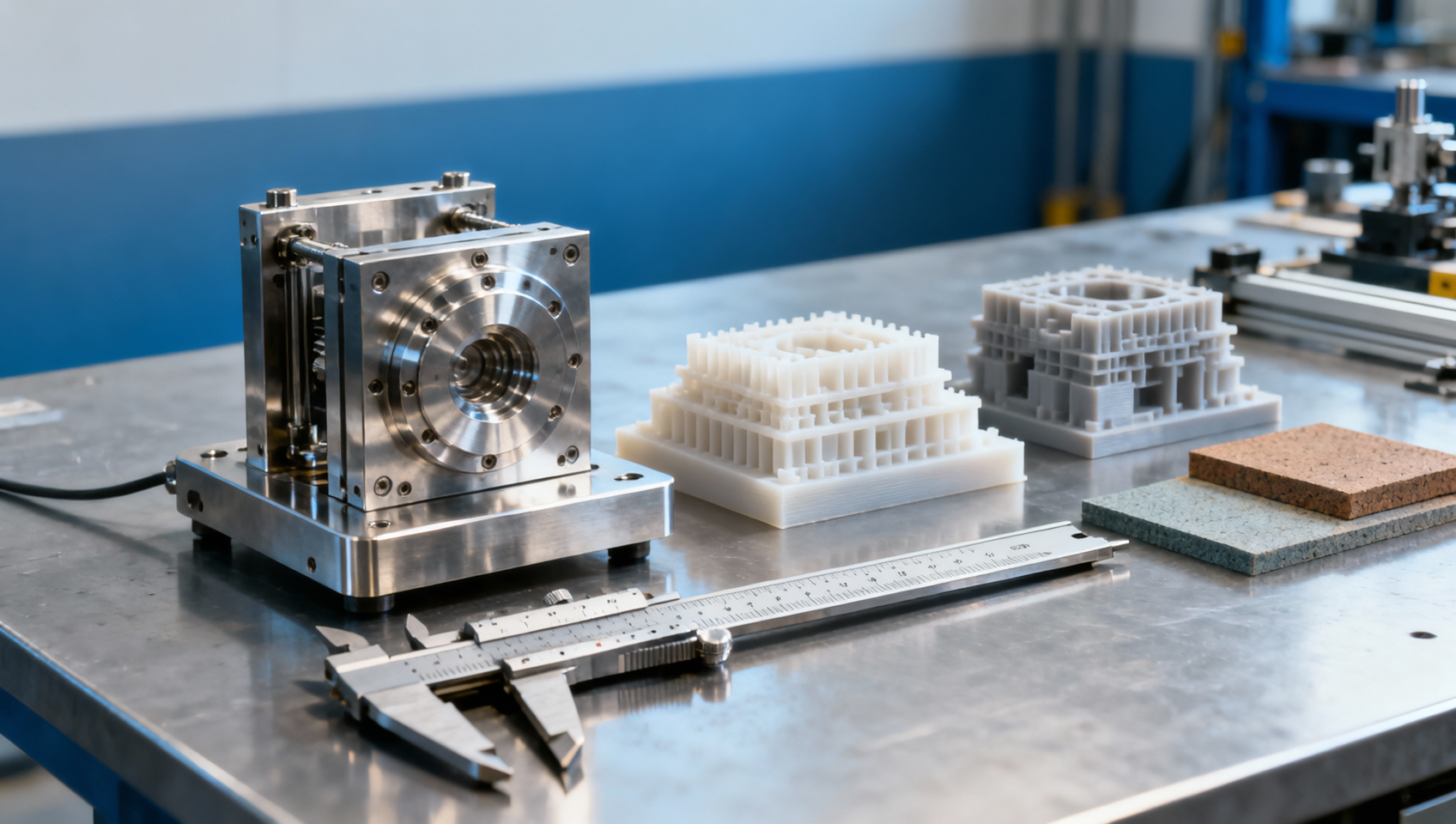
Additive manufacturing is often associated with rapid prototyping because it can produce complex geometry without hard tooling. FDM is practical for low-cost form and fit models. SLA and DLP can deliver fine details and smooth surfaces. SLS and MJF are useful for durable polymer parts and nested batch builds. Metal powder bed fusion may support advanced metal prototypes, although post-processing, inspection, and cost must be considered carefully.
CNC machining remains essential when the prototype must use production-grade plastics or metals. Machined aluminum, stainless steel, brass, engineering plastics, or composites can provide more reliable performance data than printed substitutes. Sheet metal prototyping is used for brackets, housings, panels, and electrical cabinets. Vacuum casting and silicone molding are common when a small batch of appearance parts is needed for testing, marketing, or pilot assembly.
Post-processing is part of the technology, not an afterthought. Heat treatment, sanding, polishing, anodizing, painting, bead blasting, tapping, inserts, sealing, and dimensional inspection can determine whether the prototype is useful. A rapid prototyping supplier should explain which surfaces are as-built, which features are finished, and where tolerances may change after coating or assembly.
Main Categories And Selection Standards
Rapid prototyping can be classified by purpose, process, material, and fidelity. Purpose-based categories include concept models, ergonomic mockups, engineering prototypes, functional prototypes, pre-production samples, and bridge production parts. Process-based categories include additive, subtractive, casting-based, sheet metal, and hybrid manufacturing. Fidelity describes how closely the prototype reflects final production in geometry, material, finish, tolerance, and assembly behavior.
Selection should begin with the business question. If the question is whether users understand the product, visual accuracy may matter more than strength. If the question is whether a seal leaks, material hardness, surface roughness, and compression set are more important. If the question is whether a mechanism survives repeated cycles, the chosen process must reproduce load paths and wear surfaces with enough accuracy to make the test meaningful.
B2B buyers should compare suppliers using practical criteria: achievable tolerance, material options, inspection capability, file confidentiality practices, lead time transparency, post-processing control, and engineering communication. Common references may include ISO 9001-style quality management principles, dimensional inspection reports, material datasheets, and process capability discussions. These references do not replace project-specific validation, but they help buyers ask structured questions.
GTIIN can be positioned as a practical partner for organizations evaluating rapid prototyping options across different industrial scenarios. Rather than assuming one method fits every part, a disciplined approach compares geometry, function, material risk, tolerance targets, and sourcing priorities. This is especially useful in comprehensive industry applications where buyers may need prototypes for mechanical parts, enclosures, tools, fixtures, or market samples under different constraints.
Who Uses Rapid Prototyping And Where It Delivers Value
Rapid prototyping is used by product designers, R&D engineers, industrial equipment manufacturers, purchasing teams, quality engineers, startups, contract manufacturers, and aftermarket service providers. Each group uses prototypes differently. Designers evaluate shape and usability. Engineers test fit, loads, movement, heat, and assembly sequence. Buyers use prototypes to compare suppliers and confirm that a quote reflects the actual production challenge.
Typical applications include housings, brackets, gears, jigs, fixtures, impellers, handles, medical device mockups, automotive interior parts, electronic enclosures, packaging components, tooling inserts, and demonstration models. In maintenance-heavy industries, rapid prototyping can help recreate obsolete components for evaluation before a qualified production method is selected. In export-oriented B2B projects, prototypes also help align expectations among factories, distributors, and end customers in different countries.
The most valuable use cases occur when uncertainty is expensive. If a mold is costly, a prototype can reduce the risk of wrong parting lines, wall thickness, assembly interference, or poor ergonomics. If a component will operate under vibration, outdoor exposure, or repeated handling, functional samples can reveal issues that drawings alone do not show. If stakeholders disagree, a physical prototype often resolves debates faster than another design meeting.
Because no specific customer case is provided, a responsible procurement example is a buyer validating a new equipment cover before tooling. A visual model confirms exterior appearance, a CNC or printed engineering sample checks mounting points, and a small pilot batch supports installation review. This staged rapid prototyping path reduces the chance of approving a design that looks correct but fails during assembly or service.
Workflow From Design File To Approved Prototype
A reliable rapid prototyping workflow begins with a clear design brief. The buyer should provide 3D files, 2D drawings where tolerances matter, target material, expected function, finish requirements, quantity, deadline, and any test conditions. When files are incomplete, early design-for-manufacturing review is valuable. Small changes to wall thickness, ribs, corner radii, threaded features, or drainage holes can improve strength, appearance, and cost.
The supplier or engineering team then recommends a process route. This decision should account for size, geometry, tolerance, surface finish, mechanical properties, thermal exposure, chemical contact, and inspection needs. For example, a translucent appearance model may suit SLA, a metal heat sink may require CNC machining, and a set of flexible-like sample covers may use casting or selected printable elastomers depending on the test objective.
After quotation and design confirmation, production moves through machine preparation, fabrication, post-processing, and inspection. Quality control may include visual checks, caliper or CMM measurement, thread verification, surface finish review, assembly trial, and material documentation when relevant. Buyers should define critical-to-quality features in advance; otherwise, a supplier may inspect general dimensions while missing the feature that determines real performance.
Approval should be documented. Teams should record what the prototype proved, what remains untested, and what changes are required before production. A prototype is not automatically a production-ready part. Tooling shrinkage, injection molding flow, die casting porosity, stamping springback, welding distortion, or coating variation may still affect the final product. The best workflow treats rapid prototyping as a decision system, not just a quick sample order.
Cost Drivers, TCO, And ROI For Buyers
The price of rapid prototyping is shaped by more than machine time. Key cost drivers include part size, material type, geometry complexity, tolerance requirements, surface finish, quantity, post-processing, inspection, packaging, shipping, engineering review, and lead time urgency. A large simple part may cost less than a small complex part with tight tolerance and cosmetic finishing. Buyers should compare quotations by scope, not only by unit price.
Total cost of ownership includes the cost of wrong decisions. A cheap prototype that uses the wrong material may pass an internal review but fail later, causing redesign, delayed launch, tooling rework, or customer dissatisfaction. Conversely, over-specifying every prototype as production-equivalent can waste budget during early concept stages. The right strategy is staged fidelity: low-cost models for early learning, then higher-fidelity samples for engineering and procurement approval.
ROI is strongest when rapid prototyping prevents expensive downstream changes. A prototype may reveal interference before mold fabrication, identify a weak bracket before field testing, or show that users cannot access a service panel easily. In B2B purchasing, prototypes also support supplier qualification because they expose communication quality, drawing interpretation, responsiveness, and practical process knowledge before a long-term order is placed.
To control cost, buyers should separate must-have requirements from preferences. Specify critical dimensions, functional surfaces, material constraints, and finish standards, but allow flexibility where the prototype only needs visual or handling accuracy. Ask whether multiple parts can be nested, whether alternative materials are acceptable for early tests, and whether inspection can focus on critical features. GTIIN-oriented evaluation can help procurement teams compare these trade-offs without relying on price alone.
Best Practices, Risks, And Future Trends
Best practice starts with defining the prototype’s purpose in one sentence. Teams should avoid asking one sample to answer every question. A single part may not simultaneously prove appearance, fatigue life, regulatory compliance, production cost, and user preference. Clear objectives lead to better process selection, cleaner quotations, and more reliable testing. This also prevents confusion when stakeholders judge a prototype by requirements it was never meant to satisfy.
Common risks include material substitution, hidden tolerance gaps, surface finish mismatch, anisotropic strength in printed parts, coating thickness changes, fragile small features, and lack of test documentation. Data security also matters when prototypes involve new product concepts. Buyers should use controlled file sharing, clear revision numbers, and written change records. For regulated or safety-related products, prototypes should support development decisions but not replace formal validation.
The future of rapid prototyping is moving toward faster digital workflows, better material simulation, automated quoting, improved additive materials, hybrid manufacturing, and closer links between prototype data and production planning. AI-assisted design review and generative design may create more complex geometries, while advanced inspection will make it easier to compare physical parts with CAD models. Sustainability will also influence choices, including material waste, local production, and repair-focused prototyping.
For buyers, the most resilient strategy is to treat rapid prototyping as a structured learning investment. Choose the prototype type based on the decision at hand, document results, revise quickly, and move toward production only when the evidence is strong enough. In comprehensive industry projects, GTIIN can be introduced as a practical reference point for comparing methods, clarifying requirements, and turning early samples into better sourcing decisions.
Related News
 Flexible Electronics Explained: Materials, Manufacturing Methods, and Use CasesFlexible electronics explained: explore key materials, manufacturing methods, real-world use cases, and adoption factors shaping smarter products across industries.
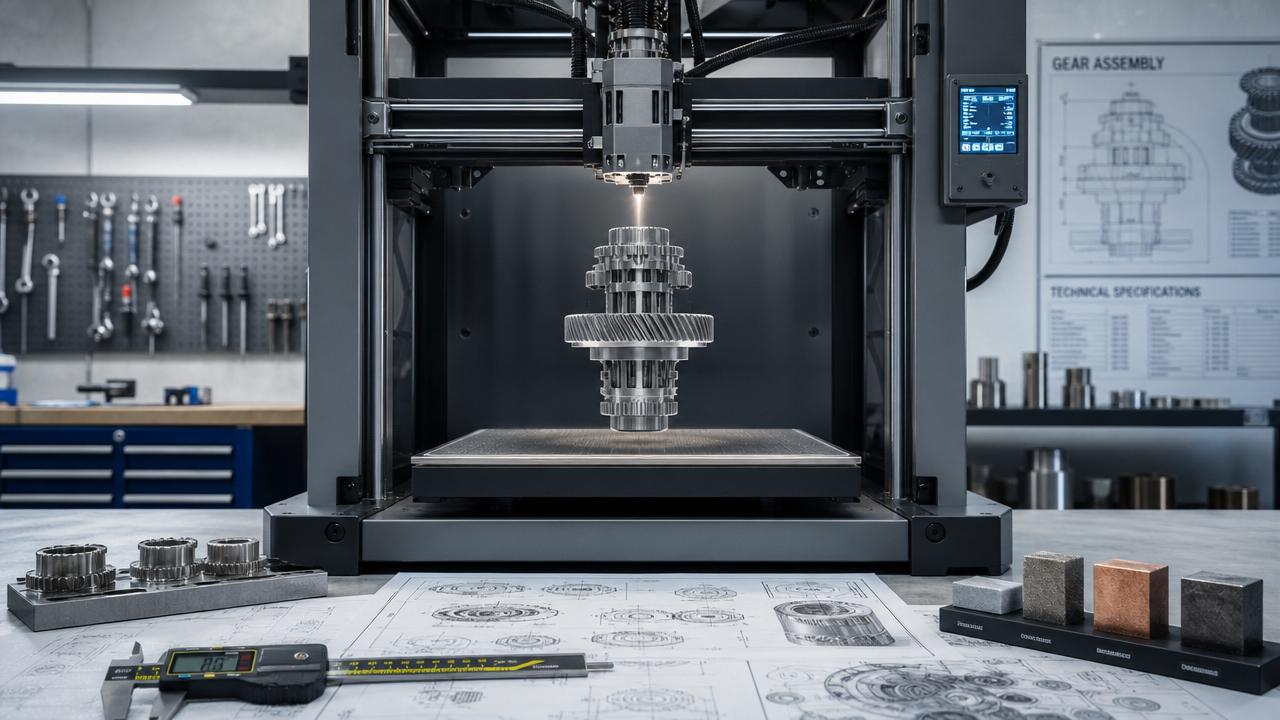
 How to Compare Rapid Prototyping SuppliersCompare rapid prototyping suppliers with confidence. Learn how to assess 3D printing, CNC machines, lead times, quality, and cost drivers to choose the best partner faster.
 Is Your B2B Network Missing Key Testing Instruments Suppliers? How Export Import Patterns Signal GapsUnlock export import insights & supply chain trends to spot testing instruments supplier gaps—get verified B2B network data, trade insights, and manufacturing data now.
 Interior design firms quietly shifting away from BIM-only workflows—what’s replacing them on site?Interior design firms ditch rigid BIM for agile, procurement-first tools—powering smarter sourcing of car batteries, MRI scanners, first aid kits, bedding sets, outdoor furniture & more.