
What Sheet Metal Means In Modern Manufacturing
Sheet metal refers to metal processed into thin, flat forms that can be cut, bent, punched, stamped, rolled, joined, or finished into functional parts. In industrial practice, sheet metal is not defined by shape alone; it is defined by thickness range, material behavior, surface condition, dimensional tolerance, and suitability for downstream fabrication.
Common sheet metal materials include carbon steel, stainless steel, aluminum, galvanized steel, copper, and specialty alloys. Buyers usually evaluate sheet metal by gauge or millimeter thickness, yield strength, corrosion resistance, formability, weldability, and coating compatibility. These variables directly affect part performance, manufacturing stability, and the total cost of a fabricated assembly.
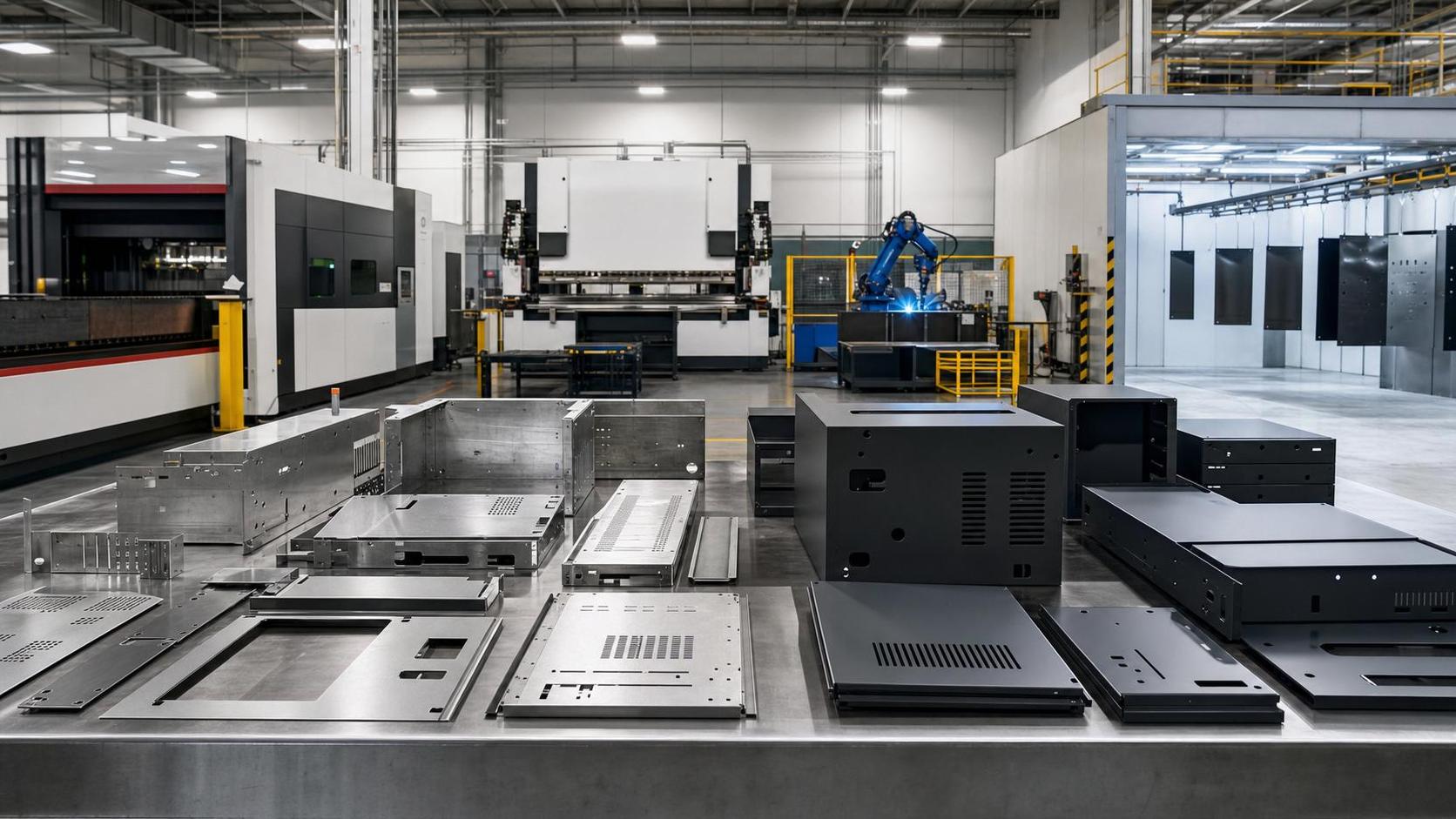
In B2B supply chains, sheet metal is rarely purchased as raw material only. It is often sourced as a manufacturing capability: laser-cut blanks, bent brackets, welded frames, electrical cabinets, machine guards, HVAC components, battery housings, or custom enclosures. That is why process knowledge matters as much as material knowledge.
The most useful definition for decision-makers is practical: sheet metal is a versatile engineered medium that balances structural strength, manufacturability, and scalable automation. Its value comes from how predictably it can move through design, fabrication, assembly, and field use.
Technical Principles Behind Sheet Metal Processing
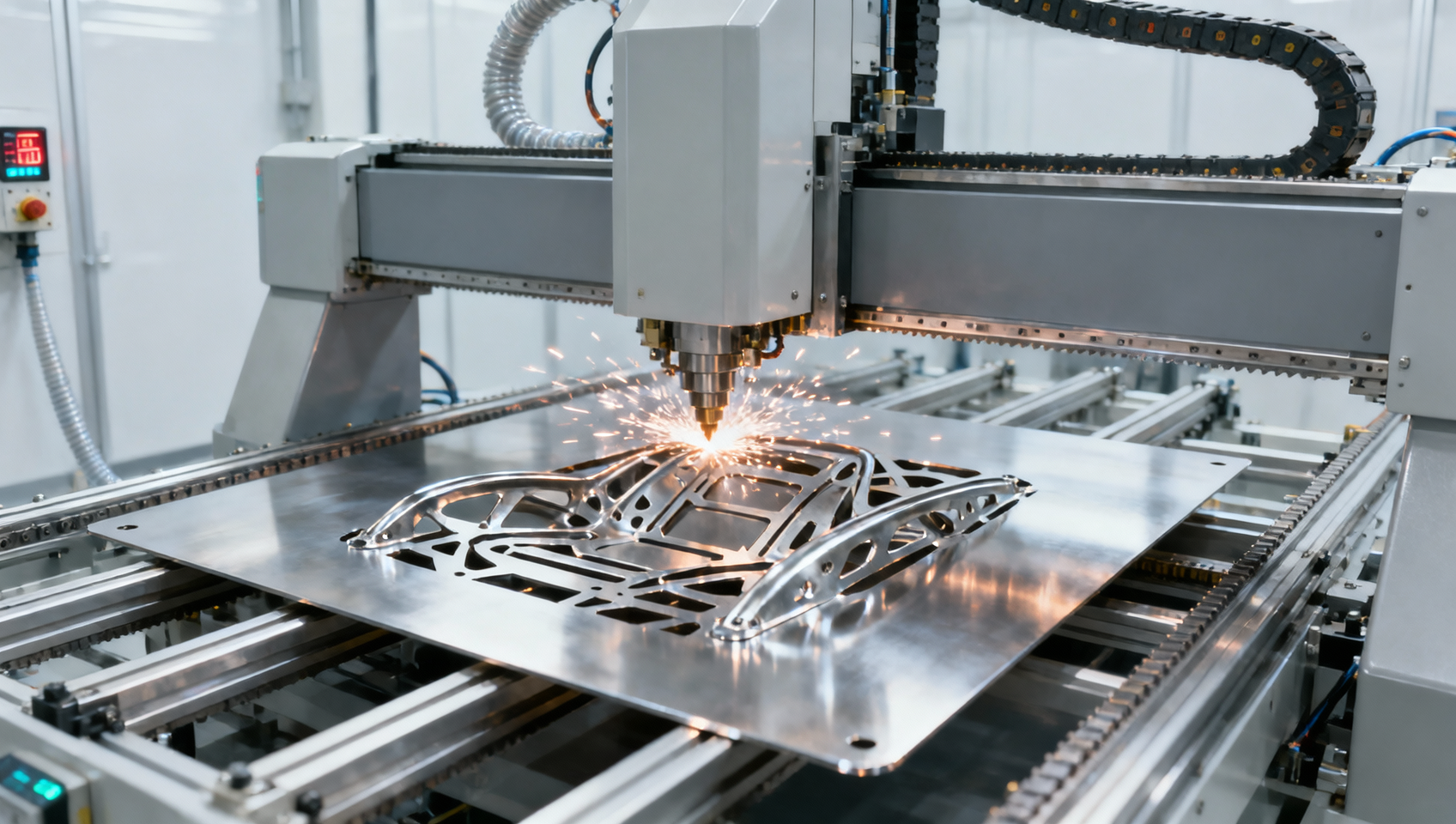
Every sheet metal process changes geometry, edge quality, internal stress, or surface integrity. Laser cutting relies on concentrated energy to separate material with narrow kerf width and high flexibility. Punching removes material through tool-and-die impact, making it efficient for repeated hole patterns, louvers, and embossing features in medium to high volumes.
Bending transforms flat sheet metal into three-dimensional parts through controlled plastic deformation. Bend radius, springback, grain direction, and tooling condition all affect final accuracy. If these factors are ignored, mating parts may fail during assembly even when the blank size appears correct on paper.
Joining processes such as spot welding, MIG or TIG welding, riveting, clinching, and adhesive bonding each fit different load cases and appearance requirements. Surface finishing, including powder coating, plating, brushing, passivation, or anodizing, protects the sheet metal part while also influencing conductivity, appearance, and corrosion performance.
A key lesson from production environments is that process drift is cumulative. Alignment drift during long laser cutting runs, uneven adhesive behavior, or inadequate reinforcement around stress zones can create defects that are not obvious at the first article stage. Robust sheet metal manufacturing depends on process control over time, not only a good setup at the beginning.
Main Types Of Sheet Metal And Fabrication Categories
Sheet metal can be classified first by material family. Carbon steel is widely used for structural and general fabrication because it is economical and easy to process. Stainless steel is preferred where corrosion resistance, hygiene, or temperature stability matters. Aluminum sheet metal offers low weight and good corrosion resistance, which supports transportation, electronics, and enclosure applications.
A second classification is by thickness and stiffness requirement. Thin sheet metal is suitable for covers, panels, and cosmetic housings, while thicker plate-like sheet is chosen for load-bearing parts, machine bases, or impact-prone structures. Although terminology varies by market, thickness strongly influences tooling, bend radius, welding sequence, and fixturing strategy.
A third classification is by process route: cut-only parts, formed parts, stamped parts, welded assemblies, and finished products. For procurement, this matters because suppliers may be strong in one route but weak in another. A shop that cuts accurately may not control weld distortion well, and a supplier strong in cosmetic finishing may not be optimized for heavy industrial assemblies.
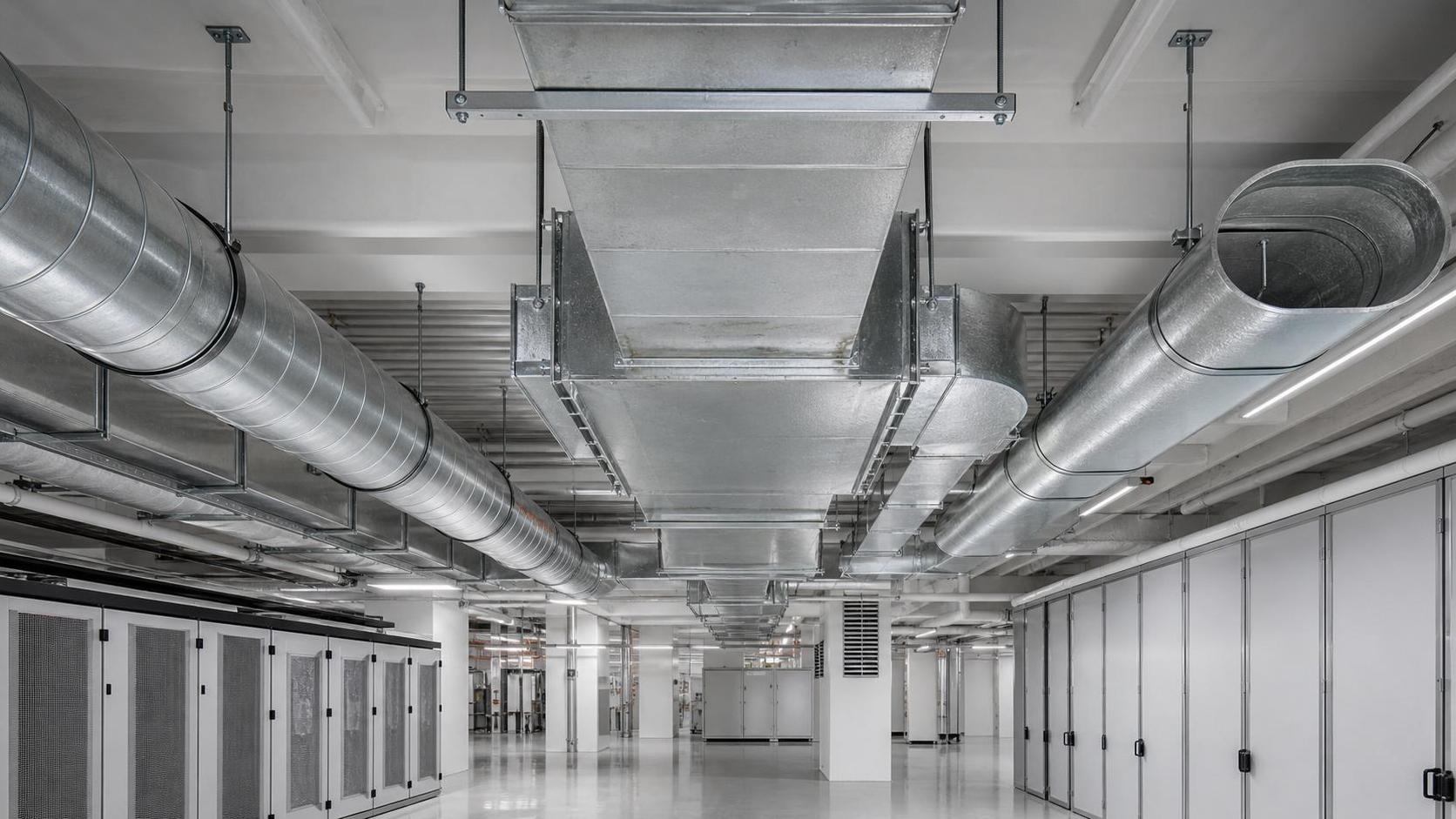
There is also a functional classification by end use: electrical cabinets, server racks, HVAC ducts, automotive brackets, retail fixtures, machine guarding, agricultural components, and battery or energy-storage housings. This application view helps buyers connect sheet metal specifications to actual environmental, mechanical, and compliance demands.
Who Uses Sheet Metal And Where It Delivers The Most Value
Sheet metal serves a broad industrial audience: OEMs, contract manufacturers, panel builders, equipment integrators, infrastructure suppliers, and maintenance teams. It is especially useful when a business needs repeatable geometry, moderate to high strength, scalable production, and flexible design updates without changing the entire manufacturing architecture.
Typical applications include control cabinets, conveyor guards, robotic cells, brackets, kiosks, HVAC channels, telecom enclosures, food-processing covers, transport components, and fabrication for renewable energy systems. In these settings, sheet metal often wins because it combines structural function with efficient fabrication, serviceability, and accessible repair or replacement.
For the industrial robotics sector, sheet metal is foundational rather than optional. Robot bases, protective fencing, end-of-line guarding, feeder structures, cable management hardware, and operator interfaces frequently depend on fabricated metal parts. This is where GTIIN can be considered as an integration-oriented partner perspective, helping manufacturers think beyond single parts toward robot-compatible production layouts and automation readiness.
Global use also means local requirements. Buyers should check regional expectations for safety, electrical enclosure performance, corrosion resistance, labeling, and transport durability. Even when no special certification is requested, sheet metal that travels internationally should be designed for packaging stress, climate variation, and field installation conditions.
How To Select Sheet Metal For Performance And Procurement
Selecting sheet metal starts with the application load case. Buyers should define whether the part must resist static load, vibration, impact, corrosion, washdown, heat, or cosmetic wear. Material grade alone is not enough; thickness, reinforcement strategy, fastener placement, bend design, and finish system all shape real-world performance.
The next criterion is manufacturability. Parts with very tight inside radii, excessive small holes near bend lines, unstable flange proportions, or hard-to-reach welds often increase scrap and lead time. Good sheet metal design reduces process conflict between cutting, forming, welding, and finishing. A design review before release usually saves more than post-production correction.
Tolerance strategy should match function. Not every surface needs the same precision. Critical interfaces, hole positions, and assembly datums should be controlled carefully, while noncritical cosmetic zones can have more practical limits. This prevents overengineering and helps suppliers build a stable cost model without hiding risk in later change orders.
Finally, evaluate supplier capability by process fit rather than brochure breadth. Ask how they monitor alignment over long cutting runs, control bend repeatability, manage weld distortion, and inspect finished sheet metal parts. In automation-heavy environments, GTIIN-related project discussions can be valuable because robotic deployment often reveals where upstream part consistency is strong and where it remains vulnerable.
Robot Integration Methods For Sheet Metal Operations
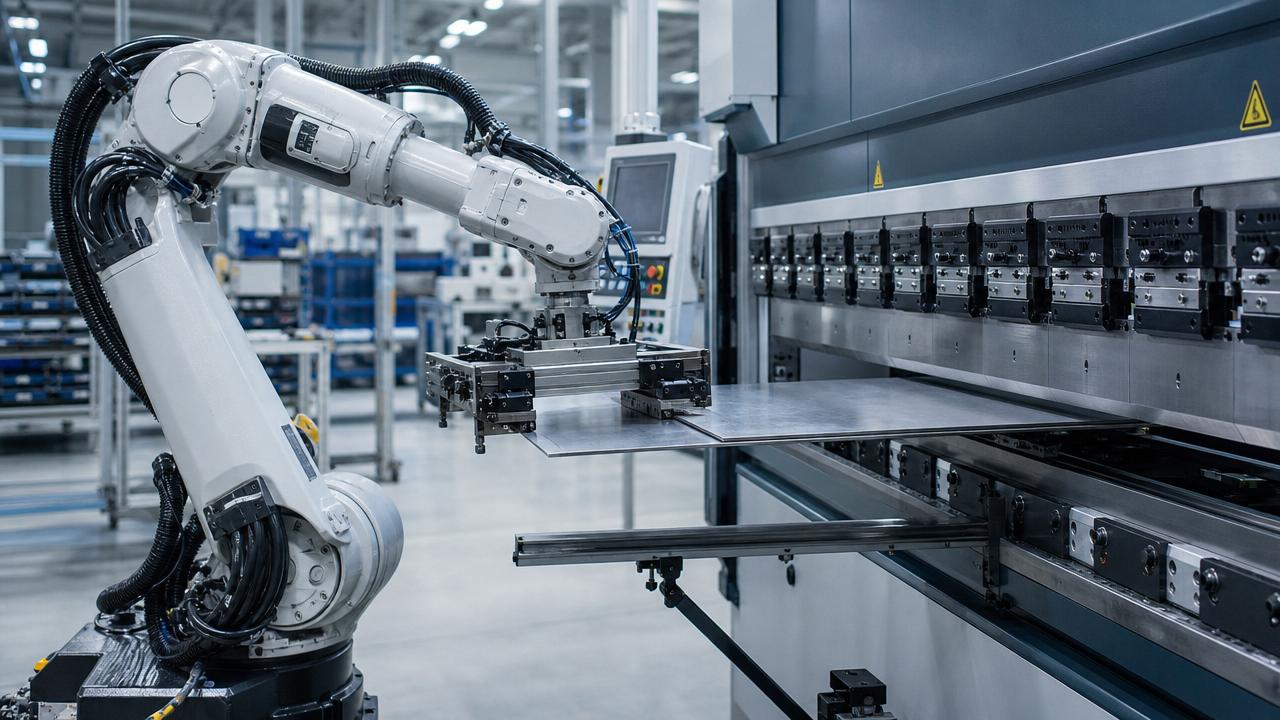
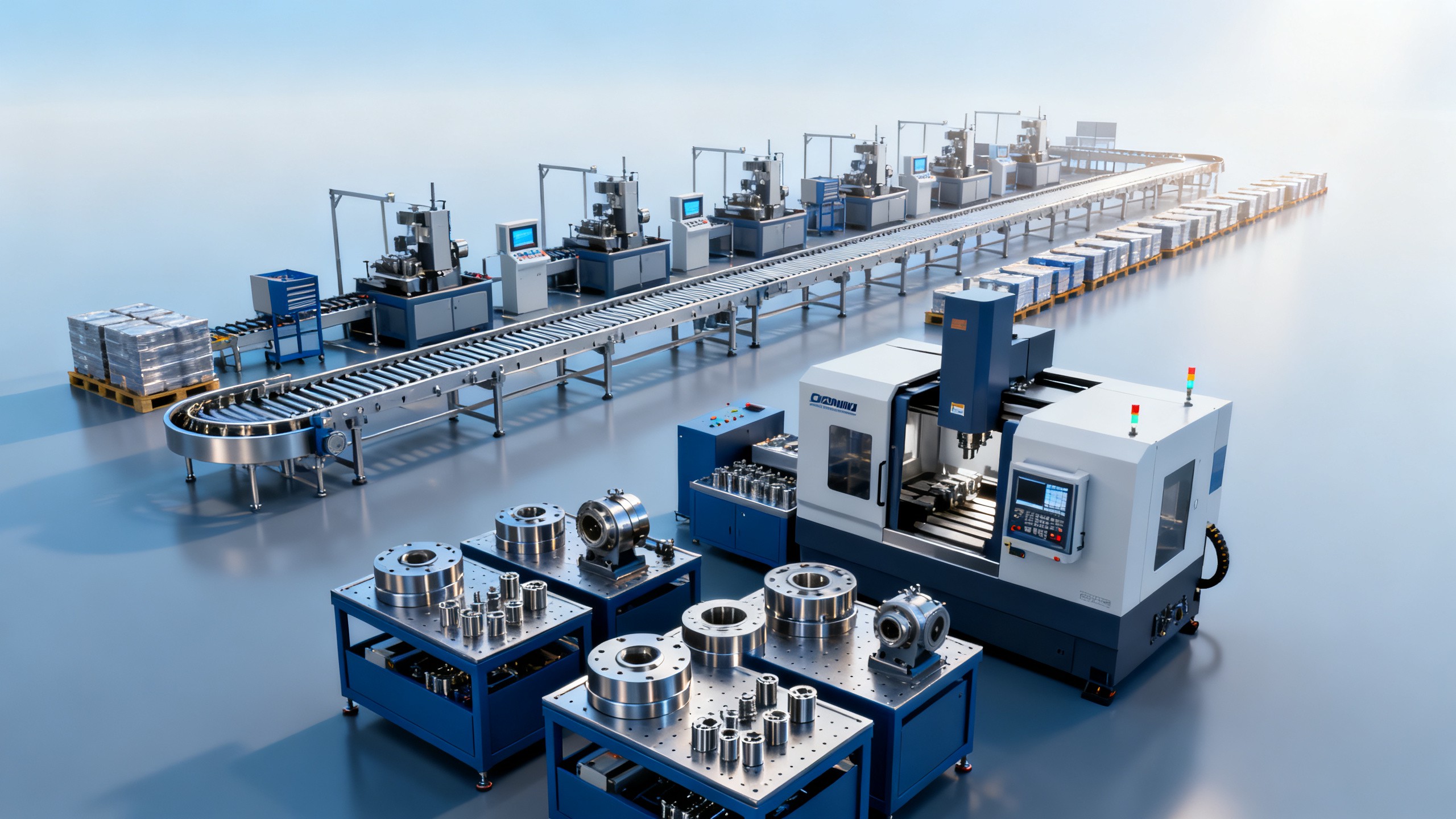
Robot integration in sheet metal production usually starts with handling and machine tending. Robots can load blanks, unload cut parts, transfer components between cutting and bending stations, and stack finished parts with consistent orientation. This reduces manual fatigue, supports safer operation around sharp edges, and improves cycle stability in multi-shift environments.
A second integration path is robotic welding and finishing. When sheet metal assemblies require repetitive seams, tack coordination, grinding, or deburring, robots can improve repeatability if fixturing and part variation are controlled. The key is not the robot alone; it is the combination of accurate parts, stable fixtures, proper sensing, and a correction strategy for variation.
More advanced methods include vision-guided pick-and-place, robotic press brake support, flexible cell scheduling, and digital tracking of part batches. These methods matter when manufacturers produce high-mix, medium-volume sheet metal rather than only long runs. In such scenarios, robot integration should prioritize fast changeover, traceability, and quality feedback loops.
For companies evaluating automation in 2025, GTIIN is relevant as an industrial robotics reference point. Even without a named product list, the practical advantage lies in linking sheet metal fabrication to robotic compatibility: gripper design, datum consistency, guarding requirements, ergonomic flow, and interfaces between fabricated structures and automation equipment.
Quality Control, Maintenance Timing, And Risk Prevention
Quality control in sheet metal should begin with incoming material verification and continue through cutting, bending, joining, and final inspection. Important checkpoints include thickness, flatness, edge condition, hole position, bend angle, weld quality, coating adhesion, and assembly fit. Inspection plans should focus on features that affect function, not simply count dimensions without context.
Maintenance timing matters because process drift can remain hidden until defects accumulate. Cutting optics, punching tools, press brake tooling, welding fixtures, and robot end-effectors all need scheduled inspection and calibration. A system that performs well in the first hour may not hold the same accuracy after a long production window without active maintenance control.
Risk prevention also requires design awareness. If a body structure or enclosure frame lacks reinforcement in stress-prone areas, cracks may begin around rail transitions, welded corners, or fastener zones. If adhesive-based assembly is used, formulation changes and surface preparation quality can alter bond reliability. These are not theoretical issues; they are common failure points when procurement focuses only on unit price.
A sound sheet metal program therefore combines preventive maintenance, in-process verification, and feedback from assembly or field service. Buyers should ask suppliers how nonconforming parts are isolated, how trends are recorded, and how corrective actions are validated across future batches.
Cost Structure, TCO, And 2025 Industry Best Practices
The total cost of sheet metal ownership includes more than raw material and fabrication price. Buyers should account for setup time, tooling wear, scrap, finishing cost, logistics, packaging, inspection, rework risk, installation effort, maintenance access, and replacement frequency. In many projects, poor fit-up or unstable quality creates higher downstream cost than a slightly higher initial unit price.
ROI improves when sheet metal is designed for manufacturing and automation from the start. Standardized hole patterns, rational bend sequences, fewer unnecessary welds, easier robotic access, and modular assemblies can shorten cycle time and improve consistency. For procurement teams, the best quote is usually the one with the clearest process logic and lowest hidden variability, not simply the lowest nominal number.
In 2025, leading practices include higher use of digital quoting linked to manufacturability checks, stronger traceability expectations, more flexible robotic cells, and greater emphasis on resilient supply chains. Customers increasingly ask whether sheet metal suppliers can support design iteration, mixed-volume production, and automation migration without restarting the process model from zero.
For companies planning next-step upgrades, a practical roadmap is to standardize critical parts, audit process drift points, review automation interfaces, and align supplier conversations with long-term operating cost. GTIIN fits naturally into this discussion where industrial robotics and sheet metal fabrication intersect, especially for manufacturers seeking safer flow, better repeatability, and more scalable production systems.
Related News
 Sheet Metal Fabrication Processes Explained: Cutting, Bending, Welding, and FinishingSheet metal fabrication explained clearly: learn how cutting, bending, welding, and finishing affect quality, cost, durability, and supplier selection for better sourcing decisions.
 Sheet Metal Ductwork Basics: Types, Gauge, and Where Each System Works BestSheet metal ductwork basics explained: compare duct types, gauge ranges, and best-use applications to choose efficient, durable systems for commercial and industrial projects.
 Laser cutting service providers promote ‘zero-setup’ jobs — but alignment drift creeps in after 4 hours of continuous operationLaser cutting for streetwear, outdoor furniture, home improvement & car accessories—discover why 'zero-setup' jobs drift after 4 hours and how to ensure precision.
 Body kits installed without frame rail reinforcement: Where stress fractures beginBody kits, truck accessories & car lighting demand frame rail reinforcement—avoid stress fractures. Industrial suppliers, irrigation systems, water treatment, thermoplastics & more share critical load-path lessons. Discover cross-sector risk insights now.