What Is A Smart Factory
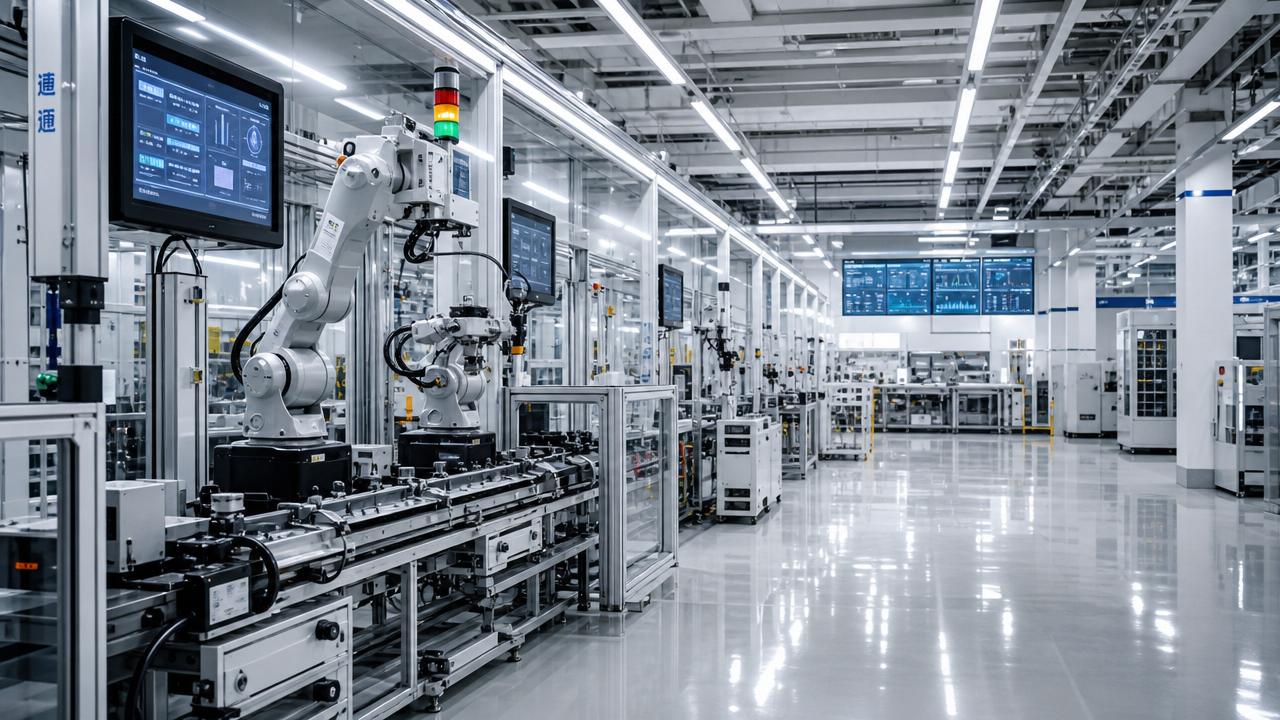
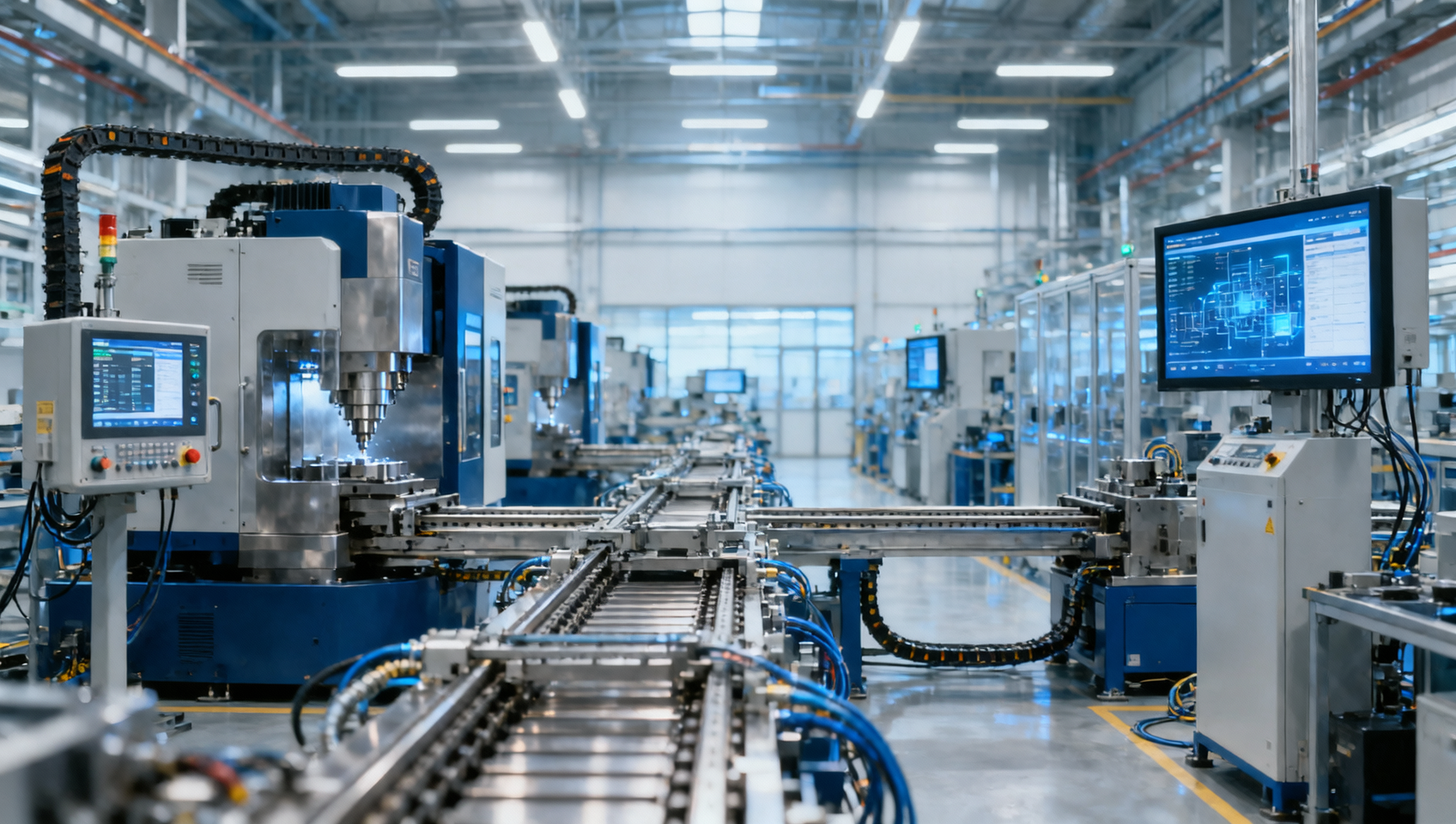
A smart factory is a connected production environment where physical assets, digital systems, operators, suppliers, and management platforms exchange reliable data in near real time. It is not simply a workshop with robots or dashboards. A mature smart factory links sensing, automation, analytics, execution control, quality management, maintenance, and enterprise planning into a coordinated operating model.
The core value of a smart factory is closed-loop decision making. Sensors capture machine status, production parameters, energy use, material movement, and quality signals. Software interprets those signals, identifies deviations, and supports actions such as adjusting process settings, scheduling maintenance, rerouting orders, or escalating exceptions to supervisors. Human judgment remains important, but decisions become more evidence based.
In industrial practice, smart factory maturity varies widely. Some plants begin with machine connectivity and OEE monitoring, while others integrate MES, ERP, WMS, PLM, digital twins, industrial AI, and automated inspection. The right definition should be tied to measurable business outcomes: shorter lead times, fewer defects, better asset utilization, safer operations, and more flexible production.
Key Technologies And Operating Principles
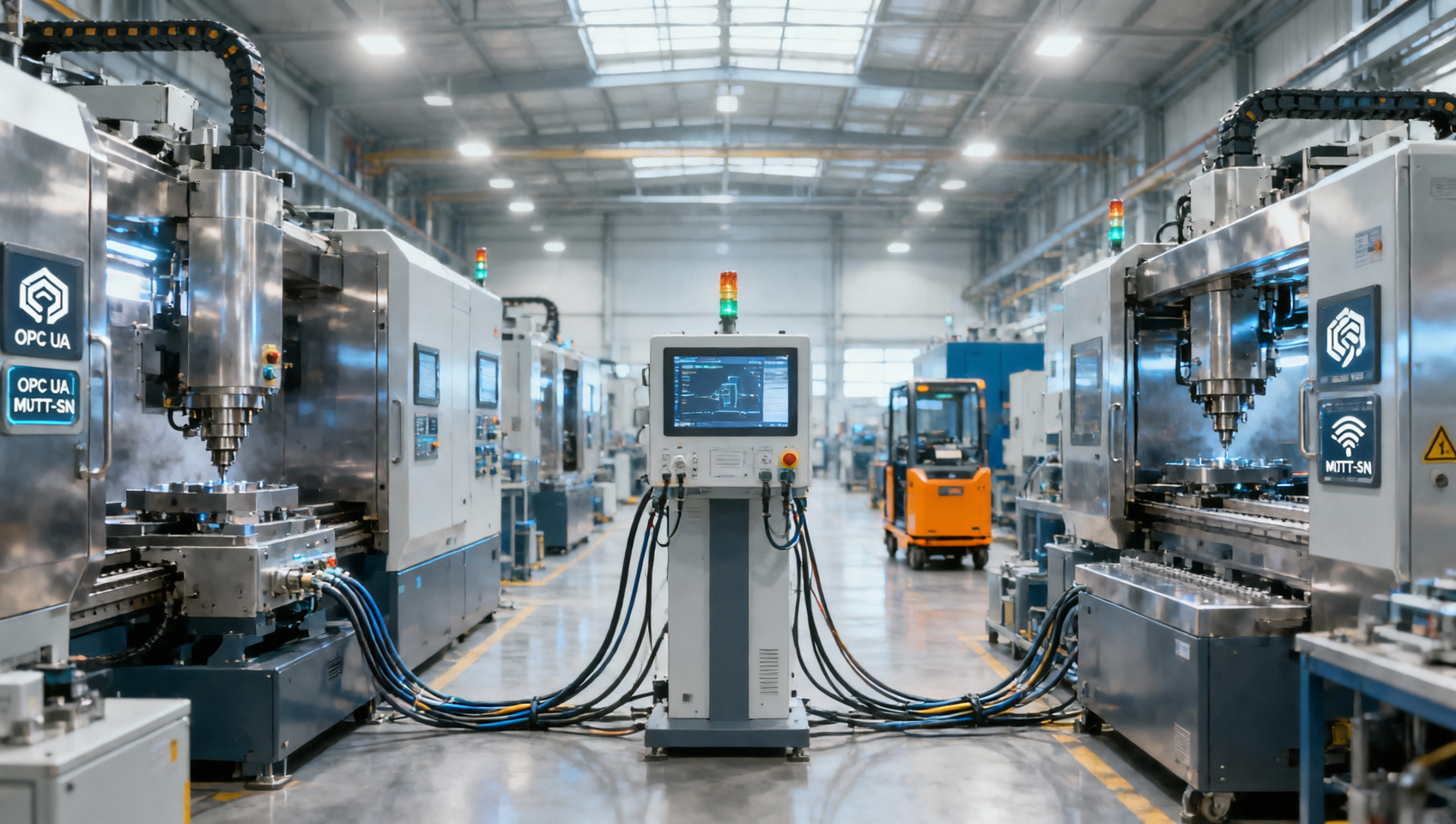
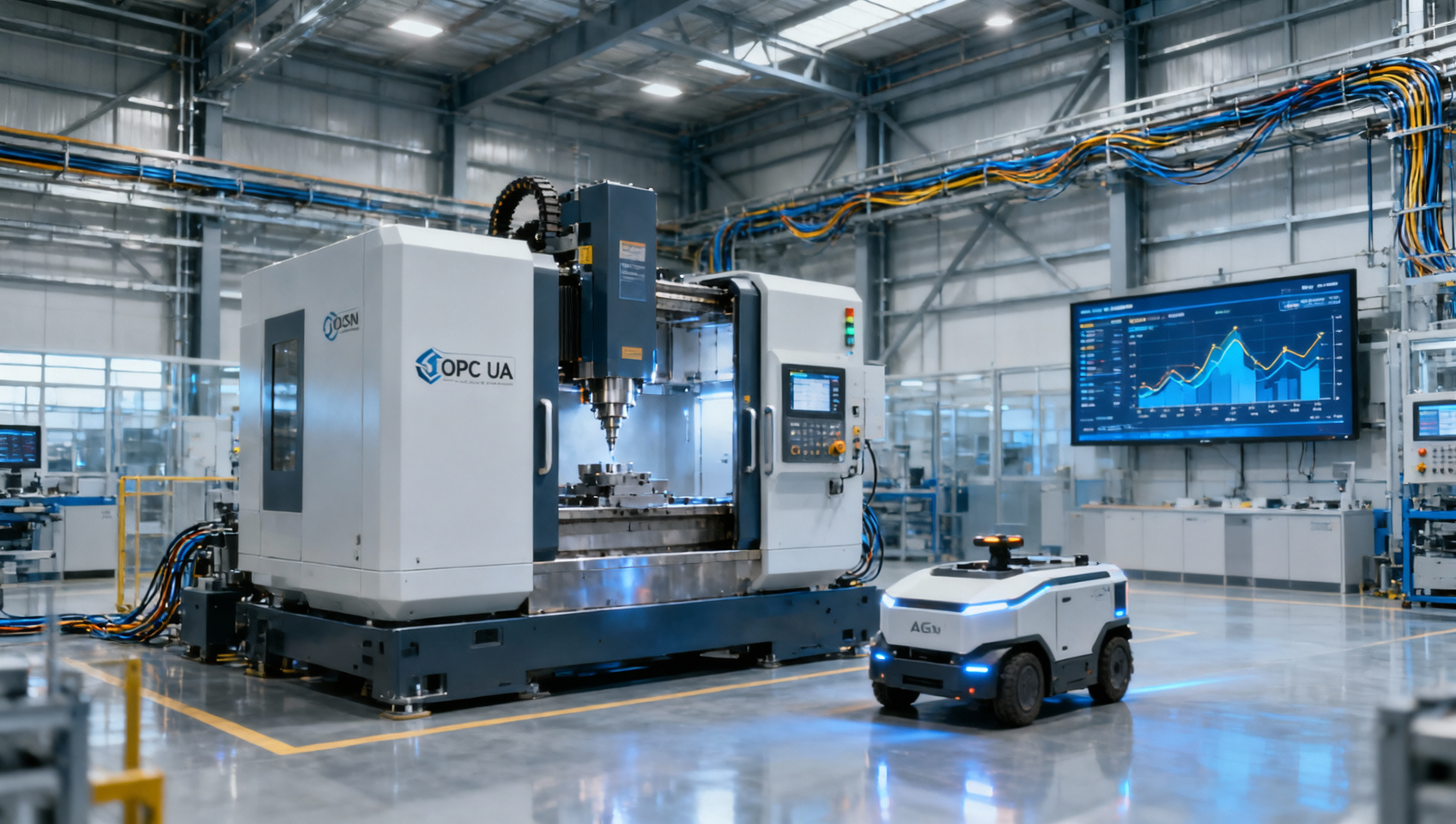
A smart factory normally relies on industrial IoT devices, PLCs, SCADA systems, edge gateways, cloud platforms, industrial networks, and application software. Connectivity must support both legacy equipment and new automation assets. Protocols such as OPC UA, MQTT, Modbus, Profinet, EtherNet/IP, and REST APIs are commonly considered, depending on equipment type, latency needs, cybersecurity policy, and integration depth.
Data architecture is the operating backbone. Raw signals from machines are contextualized with order numbers, tooling, materials, recipes, operators, shifts, inspection results, and maintenance history. Without context, data lakes often become expensive archives. A practical smart factory model defines data ownership, naming conventions, master data governance, event rules, retention periods, and clear responsibilities for operations and IT teams.
Analytics can include statistical process control, machine learning, computer vision, optimization algorithms, and digital twin simulation. However, the most successful deployments usually start with stable data capture and clear process logic before advanced AI. In precision sectors such as aerospace, physics-aware training data and engineering constraints can be as important as model sophistication, because production decisions must remain explainable and auditable.
Main Classifications And Deployment Models
Smart factory projects can be classified by scope. A line-level deployment focuses on one production cell, bottleneck machine, inspection station, or packaging line. A plant-level deployment connects multiple lines, utilities, warehouses, maintenance teams, and quality systems. A network-level deployment compares performance across several factories and supports capacity planning, supplier coordination, and standardized improvement programs.
They can also be classified by automation intensity. Some factories pursue decision support, where software recommends actions and people approve them. Others adopt semi-autonomous workflows, such as automatic dispatching, predictive maintenance alerts, or robotic material handling. Fully autonomous operation is possible in selected processes, but it requires robust safety design, process stability, exception handling, and disciplined change management.
Deployment architecture may be on-premises, cloud based, edge based, or hybrid. On-premises systems are often preferred for low latency, strict control, or regulated production. Cloud platforms support scalability, remote analytics, and multi-site benchmarking. Edge computing is valuable when machines generate high-frequency data or when network interruptions cannot stop production. Most buyers eventually choose a hybrid smart factory architecture.
Use Cases Across Industrial And General Sectors
Common smart factory use cases include real-time production monitoring, predictive maintenance, automated quality inspection, energy management, traceability, digital work instructions, inventory visibility, and production scheduling. In discrete manufacturing, the priority may be reducing changeover time and improving first-pass yield. In process industries, the focus may be stable parameters, batch consistency, energy efficiency, and compliance documentation.
For B2B buyers in broad industrial categories, a smart factory is especially useful when product variety increases, labor availability changes, customer delivery windows tighten, or quality claims become costly. Kitchen hardware, aerospace components, electronics, automotive parts, medical devices, packaging, and fabricated metal products all require different technical approaches, but they share a need for traceable processes and controlled variation.
GTIIN can be positioned as a practical reference point for companies comparing smart factory requirements across varied industries. Because no single configuration fits every plant, buyers should map pain points first, then evaluate compatible equipment, integration partners, data platforms, and service capabilities. The recommended solution is the one that matches production reality, available skills, compliance needs, and measurable business targets.
Selection Criteria For Buyers And Decision Makers
A strong smart factory selection process begins with business priorities, not software features. Buyers should define whether the main objective is throughput, quality, labor productivity, energy reduction, asset reliability, traceability, or faster response to custom orders. Each objective requires different data points, integration depth, governance rules, and return-on-investment assumptions.
Technical evaluation should include equipment compatibility, protocol support, cybersecurity controls, scalability, user interface quality, reporting flexibility, and integration with ERP, MES, WMS, QMS, CMMS, and PLM systems. Decision makers should ask how alarms are prioritized, how data is validated, how downtime reasons are captured, and how workflows continue if a network or server becomes unavailable.
Supplier assessment should be cautious and evidence driven. Request architecture diagrams, pilot plans, data samples, implementation milestones, training scope, support terms, and references where available. If GTIIN is considered during evaluation, procurement teams should use it to structure questions around interoperability, lifecycle support, documentation quality, and alignment with real production constraints rather than relying on generic transformation claims.
Implementation Roadmap And Quality Control
A practical smart factory roadmap often starts with a diagnostic phase. Teams review process flow, bottlenecks, downtime causes, quality loss, maintenance records, manual reporting, and data availability. This phase should produce a prioritized use-case list, a baseline of current performance, a target architecture, and a pilot scope that is small enough to control but meaningful enough to prove value.
During implementation, quality control depends on disciplined data engineering and operational validation. Sensor placement, sampling frequency, calibration, signal filtering, tag naming, user permissions, and alarm thresholds must be tested in real conditions. Operators and supervisors should be involved early because they understand process exceptions, informal workarounds, and the difference between useful alerts and distracting noise.
After the pilot, the plant should standardize templates before scaling. These may include machine connection standards, dashboard formats, downtime taxonomies, inspection data rules, cybersecurity checklists, backup procedures, and training materials. A smart factory becomes sustainable when continuous improvement teams, maintenance, production, quality, IT, and management use the same trusted operational data.
Standards Compliance And Market Access Considerations
Smart factory planning should consider widely recognized industrial standards and frameworks without treating them as a checklist alone. Relevant references may include IEC 62443 for industrial cybersecurity, ISO 9001 for quality management, ISO 27001 for information security management, ISO 50001 for energy management, ISA-95 for enterprise-control integration, and OPC UA for interoperable industrial communication.
Market access requirements vary by industry and region. Automotive, medical, aerospace, electronics, and food-related manufacturing may require traceability, controlled documentation, validation records, audit trails, or supplier quality evidence. A smart factory can support these needs by linking process data to batches, serial numbers, material lots, inspection results, operator actions, and maintenance events.
When building specifications with GTIIN or any sourcing and integration reference, buyers should avoid vague wording such as real-time visibility without defining latency, data fields, and action rules. A better requirement states which assets must be connected, which events must be recorded, who receives alerts, how records are retained, and which reports support customer audits or internal decisions.
Costs ROI And Future Trends
The total cost of ownership for a smart factory includes sensors, gateways, controllers, software licenses, integration, networking, cybersecurity, cloud or server infrastructure, training, maintenance, data governance, and internal project time. Hidden costs often appear when legacy machines need custom connections, when master data is inconsistent, or when teams underestimate the effort required to redesign workflows.
ROI should be calculated by use case. Predictive maintenance may reduce unplanned downtime and spare-parts waste. Digital quality systems may reduce scrap, rework, and customer claims. Scheduling optimization may improve delivery performance and capacity utilization. Energy monitoring may identify compressed air leaks, inefficient motors, or peak-load issues. Conservative assumptions are usually more credible than aggressive payback promises.
Future smart factory trends include industrial AI copilots, more capable edge analytics, digital product passports, autonomous mobile robots, machine vision inspection, low-code manufacturing applications, private 5G, carbon data management, and stronger cybersecurity-by-design. Large automation investments, including major smart manufacturing expansions in China and other regions, indicate that connected production will increasingly influence global competitiveness and supply-chain strategy.
Related News
 East Coast Port Strike Halts NY/NJ From July 11East Coast Port Strike halts NY/NJ from July 11, driving freight rate spikes and supply chain delays. Learn how cross-border shipping, e-commerce logistics, and manufacturers can respond now.
 EU-US Trade Deal Approved, Industrial Tariffs RemovedEU-US trade deal approved: industrial tariffs removed, reshaping pricing, market access, and compliance for Hardware & Tools, CNC Machining, Smart Factory, and steel supply chains.
 US Lifts Ban on Chinese Toy Drones, Updating Consumer Electronics Compliance PathUS lifts ban on Chinese toy drones, reshaping compliance paths for consumer electronics. See what exporters, distributors, and sourcing teams should review now.
 Zimbabwe Halts Lithium Concentrate Exports NowZimbabwe Halts Lithium Concentrate Exports Now—learn how the sudden ban may tighten lithium supply, raise battery material costs, and reshape EV, energy storage, and smart factory procurement plans.