

East Coast Port Strike Halts NY/NJ From July 11
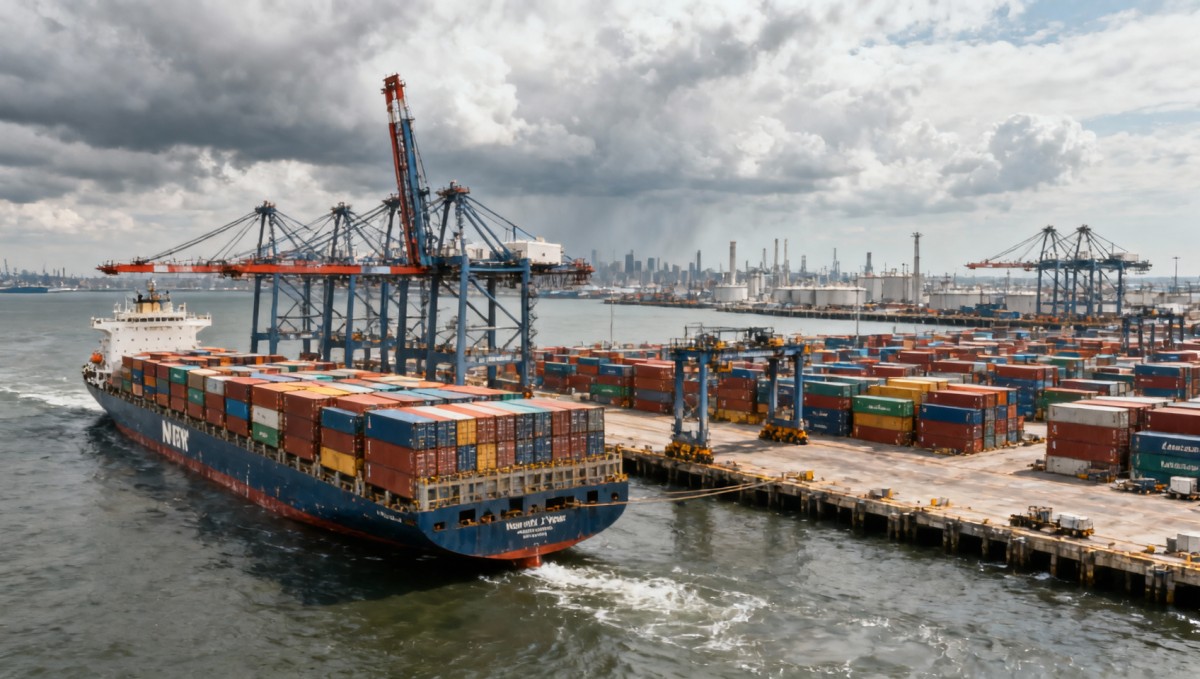
An indefinite strike across major U.S. East Coast ports began at 00:00 on July 11, 2026 after talks between the International Longshoremen’s Association (ILA) and the United States Maritime Alliance (USMX) broke down. With the Port of New York and New Jersey joining other key gateways including Savannah and Baltimore, the disruption is already being reflected in freight market pressure: spot rates on the Shanghai-New York route have risen 41%, while empty container repositioning has fallen below 35%. For cross-border freight operators, e-commerce logistics providers, and manufacturers relying on East Coast customs clearance for categories such as smart factory equipment and solar photovoltaic products, this is not just a port labor story but a direct test of delivery stability.
What Has Been Confirmed So Far
The confirmed event is clear: negotiations between the ILA and USMX failed, and major U.S. East Coast ports, including New York/New Jersey, Savannah, and Baltimore, entered an indefinite strike from 00:00 on July 11, 2026.
The input information also confirms two immediate market signals. First, spot freight rates on the Shanghai-New York route have jumped by 41%. Second, the empty container return rate has fallen below 35%.
The affected business scope identified in the available information includes Cross-border Freight, E-commerce Logistics, and delivery flows tied to East Coast customs clearance, especially for Smart Factory and Solar Photovoltaic-related cargo.
Where the Disruption Is Likely to Be Felt First
Freight forwarding and cross-border shipping face immediate schedule risk
From an industry perspective, cross-border freight businesses are among the first to feel the impact because port shutdowns directly affect vessel handling, container circulation, and planned transit timing. The main pressure points are likely to appear in shipment scheduling, route commitments, and customer delivery expectations. What deserves closer attention is whether delay estimates of 12-18 days begin to reshape booking decisions and contract execution.
E-commerce logistics may see pressure shift from transit time to fulfillment stability
Analysis shows that for e-commerce logistics, the issue is not only slower ocean movement but also the knock-on effect on order fulfillment rhythm. Where supply chains depend on East Coast entry and customs processing, the disruption may affect inventory arrival timing, downstream dispatch coordination, and customer-facing delivery promises. The key variable to watch is whether logistics providers need to rebalance cargo flow away from the affected gateways.
Manufacturing-linked cargo is exposed through customs-dependent delivery chains
Observably, sectors such as smart factory equipment and solar photovoltaic products may be affected less by headline freight volatility alone and more by the reliability of customs-linked delivery chains. If cargo plans are built around East Coast clearance, disruption at those ports can affect inbound equipment, component delivery windows, and project-linked shipment sequencing. For manufacturing and project-based buyers, the operational risk sits in timing certainty rather than in transport cost alone.
What Companies Should Watch Now
Separate confirmed port disruption from later policy or operational changes
Analysis shows that companies should treat the strike itself as a confirmed operational event, while keeping any later rule changes, official notices, or execution details under ongoing review. The practical question is not only whether the strike continues, but how port handling, customs procedures, and shipment acceptance evolve after the initial stoppage.
Review cargo tied to East Coast clearance paths
What deserves closer attention is cargo that has already been booked, loaded, or planned around East Coast customs entry. Businesses in cross-border freight, e-commerce logistics, smart factory supply, and solar photovoltaic delivery should identify which shipments are structurally exposed because their routing and clearance plans rely on the affected ports.
Recheck documents, lead times, and delivery commitments
Observably, this event makes document readiness and execution timing more sensitive. Enterprises should review whether shipment documentation, customs-related materials, and contractual delivery timelines still match current operating conditions. For customer-facing teams, communication discipline matters because promised delivery windows may no longer reflect actual port conditions.
Focus on supplier and service-provider coordination
From an industry perspective, the most immediate operational value may come from tighter coordination with carriers, freight partners, customs-related service providers, and buyers. The issue is less about broad management principles and more about verifying who is responsible for timing updates, shipment status confirmation, and contingency handling under current disruption.
Why This Matters Beyond a Single Port Event
Analysis shows that this development should be read first as a confirmed short-term logistics shock, because the strike has already started and measurable market reactions are already visible in freight rates and empty container movement. At the same time, it is more appropriate to understand it as an industry dynamic that still requires observation, since the duration of an indefinite strike and the extent of downstream delivery disruption are not confirmed in the provided information.
Observably, the broader significance lies in how quickly port labor disruption can move beyond terminals and into freight pricing, container circulation, and delivery reliability for specific cargo categories. That is why the event deserves continued attention from both logistics operators and cargo owners rather than being treated as a one-day headline.
How This Event Is Best Understood for Now
At this stage, the strike is best understood as an immediate disruption with confirmed operational consequences, especially for East Coast-dependent shipping and customs-linked delivery chains. The available facts support caution, but they do not yet support a fixed conclusion about longer-term market restructuring or the final scale of impact.
A neutral reading is more appropriate: this is a real short-term shock to transit stability, a direct warning signal for exposed supply chains, and an event that still needs ongoing verification as conditions develop.
Basis of This Article and What Still Needs Verification
This article is based on the user-provided news title, event date, and event summary concerning the U.S. East Coast port strike beginning on July 11, 2026. No specific official source link was provided in the input, so the exact official source link remains unconfirmed and should continue to be verified.
For this type of industry development, commonly relevant source categories include official announcements, company notices, industry association updates, authoritative media coverage, and standard-setting or regulatory documents where applicable. The points that still require continued observation include any updated official statements, operational implementation details at the affected ports, and whether the current delivery delay pressure continues to widen across the listed sectors.
 When dual sourcing makes sense in a sourcing strategy for manufacturersSourcing strategy for manufacturers: learn when dual sourcing strengthens supply continuity, reduces disruption risk, and protects production without adding unnecessary complexity.
 How bulk commodities pricing affects long-term supply contractsBulk commodities pricing shapes long-term supply contracts through index rules, freight, quality, volume, and currency risk. Explore strategies for resilient costs and supply security.
 Which global manufacturing trends by sector matter most for sourcing plans?Global manufacturing trends by sector: identify sourcing risks, supplier resilience, compliance demands, and cost drivers to build smarter, more reliable procurement plans.
 What industrial trade intelligence pricing should include before you subscribeIndustrial trade intelligence pricing explained: compare coverage, data quality, access rights, and workflow value before choosing a subscription that supports smarter trade decisions.
 How an industrial trade intelligence dashboard can identify new supplier marketsDiscover how an industrial trade intelligence dashboard helps identify new supplier markets by comparing capacity, landed cost, logistics resilience, and compliance risk.
 Which global market entry barriers should exporters assess first?Global market entry barriers exporters should assess first: tariffs, compliance, buyer qualification, logistics, and payment risk. Build a practical strategy for confident market entry.
 How trade data aggregation analytics can reveal emerging supplier marketsTrade data aggregation analytics reveals emerging supplier markets by connecting trade flows, capacity signals, logistics, and compliance insights for smarter sourcing decisions.
 When an export market analysis platform can validate demand in a new marketExport market analysis platform insights help validate new-market demand through buyer fit, regulations, logistics, competition, and profitable entry conditions.
 What is driving the beauty and personal care market in the USA?Beauty and personal care in USA is driven by targeted solutions, selective premiumization, digital discovery, clean-label trust, diverse needs, and compliance. Explore key growth opportunities.
 How trade flow monitoring reports reveal changing regional demandTrade flow monitoring reports reveal changing regional demand through import volumes, sourcing shifts, product mix, logistics signals, and regulatory trends. Explore actionable market insights.
 How international market intelligence for investors reduces market-entry riskInternational market intelligence for investors reduces market-entry risk by validating demand, regulations, logistics, and competition before capital is committed.
 How international sourcing intelligence helps identify supplier risk earlyInternational sourcing intelligence helps businesses spot supplier risks early, protect supply continuity, and make smarter global procurement decisions.
 How trade data aggregation analytics reveals emerging supplier marketsTrade data aggregation analytics reveals emerging supplier markets through export trends, input flows, logistics, and regulatory signals. Discover smarter sourcing insights.
 What industrial cluster monitoring in Vietnam reveals about site riskIndustrial cluster monitoring Vietnam reveals hidden site risks across labor, utilities, logistics, compliance, and supplier dependencies. Make smarter sourcing and expansion decisions.
 Food Technology Trends Reshaping Shelf Life, Safety, and Product InnovationFood technology is reshaping shelf life, safety, and innovation. Discover the trends helping food businesses cut risk, improve compliance, and unlock stronger global market growth.
 How electronics manufacturing services are changing with low-volume demandElectronics manufacturing services are evolving fast with low-volume demand. Learn how agile EMS partners improve flexibility, compliance, sourcing resilience, and speed to market.
 How Can Buyers Reduce Procurement Risks for Electronic Components?How to reduce procurement risks for electronic components: learn how buyers assess traceability, lead times, compliance, and supplier types to avoid costly sourcing mistakes.
 What Sourcing Intelligence India Reveals About Supplier Risk and Cost ShiftsSourcing intelligence India reveals hidden supplier risk, compliance gaps, logistics pressure, and real cost shifts—helping buyers compare vendors smarter and source with more confidence.
 Fashion Trends 2026: Which Materials, Colors, and Silhouettes Are Gaining Ground?Fashion trends 2026 spotlight tactile fabrics, mineral colors, and controlled volume. Explore the materials, shades, and silhouettes shaping smarter, more wearable style.
 Smart Device Market Outlook: Key Growth Drivers, Segments, and Business OpportunitiesSmart device market trends are shifting toward system value, industrial demand, and resilient supply chains. Explore key growth drivers, high-potential segments, and business opportunities.
 How Global Trade Intelligence Services Help B2B Firms Evaluate Markets and SuppliersGlobal trade intelligence services help B2B firms compare suppliers, assess market potential, and uncover compliance, logistics, and pricing risks before costly decisions are made.





















Global Trade Insights & Industry
Our mission is to empower global exporters and importers with data-driven insights that foster strategic growth.
Search News
Popular Tags
Industry Overview
The global commercial kitchen equipment market is projected to reach $112 billion by 2027. Driven by urbanization, the rise of e-commerce food delivery, and strict hygiene regulations.