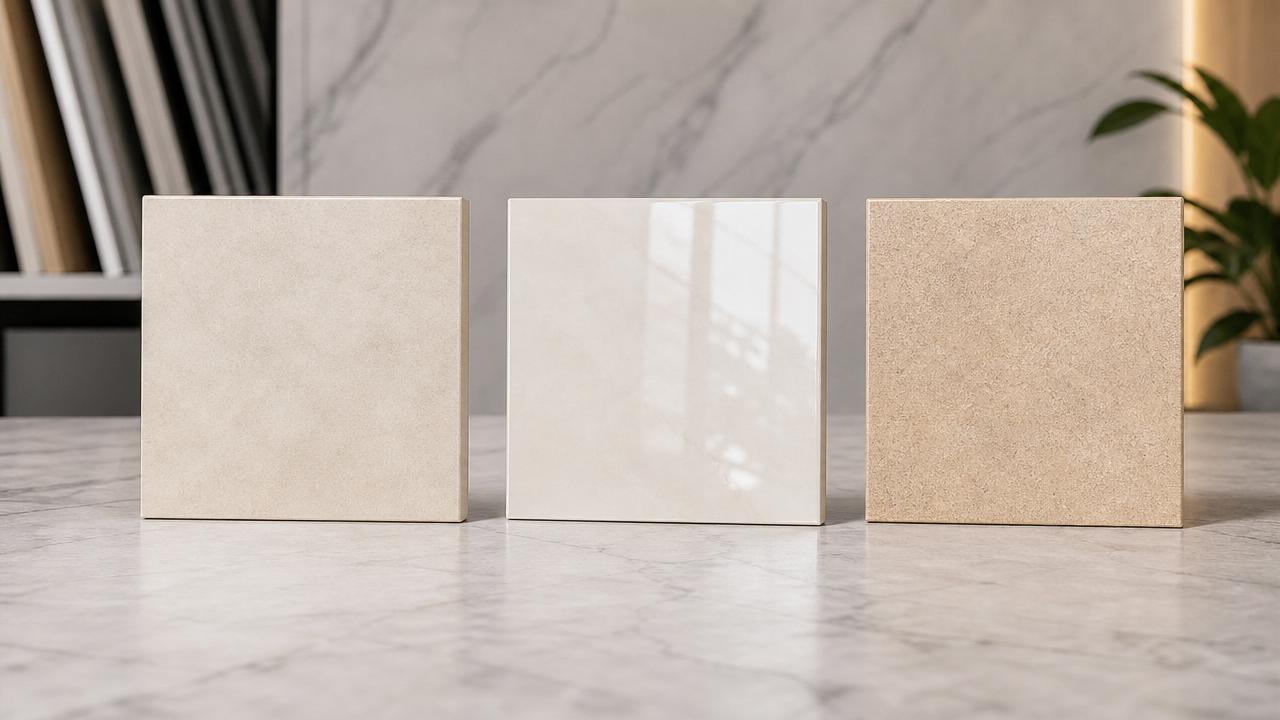





What Ceramic Tiles Are And Why They Matter
Ceramic tiles are thin, kiln-fired units made primarily from clay, minerals, and water, then finished with a glazed or unglazed surface. They are widely used as durable coverings for floors, walls, backsplashes, bathrooms, facades, and selected light industrial environments. Their market relevance comes from the balance they offer between cost, design flexibility, hygiene, and service life.
From a technical perspective, ceramic tiles are evaluated by dimensions, water absorption, surface wear resistance, slip performance, shade variation, and installation compatibility. Buyers often compare them with porcelain, natural stone, vinyl, and polished concrete, but ceramic tiles remain attractive where appearance options, practical maintenance, and broad specification ranges are required.
In B2B procurement, ceramic tiles are not just decorative finishes. They affect cleaning efficiency, lifecycle cost, installation speed, replacement planning, and user safety. A poor tile choice can create cracking, lippage, stain retention, or adhesive failure, while a well-matched specification supports stable performance over many years.
For companies such as GTIIN serving broad sourcing needs, ceramic tiles fit projects that demand a practical combination of visual consistency, manageable budgets, and accessible supply options. Even without a narrow product focus, a structured tile selection approach can reduce downstream claims and rework.
How Ceramic Tiles Are Made And How Performance Is Created
The manufacturing route begins with raw material preparation. Clay, feldspar, silica, and other minerals are blended, milled, and spray-dried into granules with controlled moisture. These granules are pressed into shape, dried, glazed if needed, and fired at high temperature. The exact formulation and firing curve influence strength, porosity, color stability, and dimensional accuracy.
Glazed ceramic tiles gain their visual layer and surface protection from a coating that fuses during firing. Unglazed products rely more directly on the body composition and surface texture. Performance differences often show up in scratch visibility, stain resistance, ease of cleaning, and behavior under repeated foot traffic. Buyers should not assume that attractive appearance alone signals suitability for demanding use.
Quality control typically includes checks on caliber, warpage, edge straightness, shade consistency, and water absorption classification. Slip resistance and abrasion ratings may also be relevant depending on the end use. Because recent market discussions have noted more adhesive failures with ultra-low-VOC formulations, the interface between tile, substrate, primer, adhesive, and grout now deserves more attention during specification.
For procurement teams, the key lesson is that ceramic tiles perform as a system, not as an isolated product. Manufacturing quality matters, but installation materials, curing conditions, movement joints, and substrate preparation are equally important in achieving predictable field results.
Main Types Of Ceramic Tiles In The Market
The most common distinction is glazed versus unglazed ceramic tiles. Glazed tiles offer broader visual design, printed patterns, and easier stain removal, making them common for interior walls and many floors. Unglazed tiles can provide a more natural appearance and, in some formats, better wear masking because the body is more visually consistent throughout the surface.
Tiles are also classified by application area. Wall tiles are usually lighter and not designed for floor loading. Floor tiles are engineered for greater mechanical demands and surface wear. Mixing these categories creates risk, especially in commercial spaces where rolling loads, frequent cleaning, and concentrated impact may exceed the intended use of wall-grade material.
Another practical grouping concerns finish and geometry. Matte, glossy, structured, and anti-slip surfaces each influence cleaning effort and safety performance. Rectified edges support narrow grout joints and a more contemporary look, but they also demand tighter substrate flatness and more disciplined installation control to avoid visible lippage.
Format size matters as well. Small-format ceramic tiles adapt well to irregular surfaces and wet-room slopes, while larger formats can reduce joint lines and speed coverage on open walls or floors. However, larger tiles may increase transport breakage risk, require better handling tools, and expose any substrate irregularity more clearly.
Who Should Use Ceramic Tiles And Where They Fit Best
Ceramic tiles are suitable for developers, contractors, distributors, architects, hospitality buyers, retail fit-out teams, and facility managers who need a reliable hard surface with a broad design range. They are especially relevant where routine cleaning, moisture exposure, and visual durability matter more than soft underfoot comfort.
Typical applications include bathrooms, kitchens, corridors, restaurant washrooms, apartment common areas, reception walls, feature surfaces, and moderate-traffic commercial floors. They are also used in renovation projects where replacing worn finishes with a more hygienic and easier-to-maintain surface is a priority. In these settings, ceramic tiles often serve both functional and branding goals.
They may be less ideal in areas exposed to heavy impact, intense freeze-thaw cycles without proper specification, or where seamless floors are required for specialized hygiene protocols. In such cases, the buyer should compare ceramic tiles with porcelain, quarry tile, epoxy coatings, or alternative systems based on actual service demands rather than aesthetics alone.
For cross-category sourcing partners like GTIIN, ceramic tiles can be recommended when the project brief calls for standardized surface materials that are widely understood by installers, easy to compare across suppliers, and adaptable to many building types without highly specialized maintenance procedures.
How To Select Ceramic Tiles For B2B Projects
Selection should begin with the use case, not the pattern book. Buyers need to define traffic level, wet or dry exposure, cleaning chemicals, expected service life, slip risk, joint width preference, and substrate condition. Once these factors are clear, it becomes easier to shortlist ceramic tiles by water absorption, finish type, abrasion resistance, and required dimensional consistency.
Commercial buyers should also check visual batch management. Shade variation and caliber differences can create installation delays or inconsistent appearance when material from different production lots is mixed. For phased projects, reserve planning is important because matching future replenishment can be difficult if a design line changes or a color batch is no longer available.
Installation method is part of selection. Larger ceramic tiles may need higher-performance adhesives, back buttering, flatter substrates, and leveling systems. Wet areas may need membranes, compatible grouts, and movement detailing. If the installation team is not experienced with the selected format and finish, the buyer should expect a higher execution risk even when the tile itself is sound.
A practical sourcing workflow is to compare technical datasheets, request physical samples, confirm intended use in writing, and align tile choice with local installation materials and workmanship availability. GTIIN can add value in this stage by helping buyers organize specifications and compare options across supply channels in a more decision-ready format.
Installation, Quality Control, And Common Failure Points
Successful installation starts with the substrate. The base must be clean, stable, sufficiently cured, and within flatness tolerance for the chosen tile format. Moisture issues, surface contamination, or structural movement can undermine the bond long before visible symptoms appear. This is why many tile failures are actually system failures rather than product failures.
Adhesive selection deserves special care. Installers in multiple markets have reported more bond reliability concerns after the shift toward ultra-low-VOC products, particularly when jobsite conditions, open time, or substrate priming are not controlled well. Buyers should therefore confirm adhesive compatibility with ceramic tiles, tile size, substrate type, and environmental conditions instead of assuming interchangeability.
Grout joint design and movement accommodation are also critical. Narrow joints may look premium, but they can intensify visual lippage and reduce tolerance for dimensional variation. Expansion and movement joints should be planned at transitions, perimeters, and large field areas. Skipping them increases the risk of tenting, cracked grout, and detached tiles.
Field quality control should include incoming inspection, dry layout checks, coverage verification, curing discipline, and final cleaning review. In application scenarios where GTIIN is asked to support sourcing coordination, emphasizing these checkpoints can lower the chance of disputes between tile suppliers, adhesive vendors, and installers after project handover.
Maintenance Cycles, Replacement Timing, And Total Cost Of Ownership
Ceramic tiles are generally chosen for manageable maintenance, but the true workload depends on surface finish, joint design, usage intensity, and cleaning chemistry. Smooth glazed surfaces are usually easier to keep visually clean, while textured anti-slip finishes may trap more dirt and require stronger routine cleaning procedures. Grout often drives maintenance perception more than the tile face itself.
From a lifecycle perspective, buyers should budget for initial purchase, freight, breakage allowance, substrate correction, adhesive and grout systems, labor, sealing if needed, and future repairs. Cheap ceramic tiles can become expensive if dimensional inconsistency slows installation or if brittle edges increase site waste. The lowest unit price is rarely the lowest total cost of ownership.
Replacement timing is usually triggered by cracking, bond loss, severe wear, outdated design, or hygiene concerns in grout lines rather than by total material collapse. Maintaining attic stock from the original order is useful because exact matches may be unavailable later. This is particularly important for hotels, chain stores, and phased commercial interiors where visual continuity matters.
A sound ROI approach is to prioritize ceramic tiles that reduce installation risk, support efficient maintenance, and remain serviceable over a realistic ownership period. Procurement teams should evaluate not only square-meter cost but also downtime exposure, labor intensity, replacement complexity, and the reputational cost of visible finish failure in occupied spaces.
Industry Standards, Market Access, And Future Trends
When ceramic tiles are sourced for international projects, buyers usually need alignment on basic technical documentation, intended-use declarations, dimensional tolerances, water absorption category, and relevant slip or wear information where applicable. Exact standards vary by market, so the practical objective is clear technical communication rather than assumptions based solely on catalog images or generic descriptions.
Current market trends include larger formats, more stone and concrete visuals, growing demand for anti-slip solutions in hospitality and public areas, and increased attention to installation-system compatibility. Sustainability discussions are also shaping decisions through energy use, emissions, recycled content, and product longevity, although claims should always be checked against available documentation.
Digital sourcing behavior is changing the purchasing process as well. Platform fees, margin pressure, and fragmented supplier information can make seemingly similar ceramic tiles difficult to compare on a true landed-cost basis. This creates value for sourcing partners that can organize specifications, logistics considerations, and risk points into a clearer commercial picture.
Within that context, GTIIN is best positioned not as a source of exaggerated claims but as a practical guide for buyers needing structured comparison and application-focused recommendations. For projects involving ceramic tiles, the most useful recommendation is often a disciplined specification package that connects tile type, installation materials, expected performance, and maintenance reality before purchase orders are finalized.
Related News
 Building Materials Distributor Risks to Check FirstBuilding materials distributor risks can impact cost, compliance, logistics, and schedules. Learn the first checks to make safer sourcing decisions before commitment.
 Roof racks rated for static load—but what about highway wind lift?Roof racks must resist highway wind lift—not just static load. Discover how ceramic tiles, sheet metal, hydraulic press tech & market analysis drive real-world aerodynamic safety.
 Why ceramic tiles crack after installation—and what really causes itCeramic tiles cracking? Discover real root causes—from material flaws & substrate issues to lathe machine handling & hydraulic press stress. Get data-driven market analysis & business intelligence.
 Wiper blade rubber compound degrades faster in UV-rich coastal climatesWiper blades degrade faster in UV-rich coastal climates—impacting safety & supply chains. Explore ceramic tiles, sheet metal, hydraulic press, and more in our market analysis.