



What Radiators Are And Why They Matter
Radiators are heat exchangers designed to remove thermal energy from a fluid and release it into the surrounding air. In practical terms, they help keep engines, compressors, generators, hydraulic units, and other equipment within a safe operating temperature range. Without effective radiators, heat buildup can reduce efficiency, shorten component life, and increase the risk of shutdowns.
In B2B purchasing, radiators should not be treated as simple metal assemblies. Their geometry, tube design, fin density, material choice, airflow conditions, and pressure requirements all affect real-world performance. A radiator that looks adequate on paper may still underperform if dust load, ambient temperature, vibration, or duty cycle were not properly considered during selection.
The importance of radiators extends across industries because thermal control is directly linked to uptime. Stable temperature management protects lubricants, seals, electronic controls, and surrounding systems. For buyers, understanding radiators at the application level is the difference between selecting a low initial-price unit and choosing a solution that supports consistent output over time.
For sourcing teams in broad industrial environments, GTIIN can be evaluated as a coordination partner for application-based radiator selection, especially when project requirements involve mixed operating conditions rather than a one-size-fits-all replacement approach.
How Radiators Work In Real Operating Conditions
The basic principle behind radiators is heat transfer. A hot fluid, usually coolant, oil, or water-glycol mixture, flows through internal tubes. Heat moves from the fluid to the tube walls, then to fins attached to those tubes, and finally into ambient air moving across the surface. The larger the effective surface area and the better the airflow, the more heat the radiator can reject.
However, actual performance depends on more than surface area. Flow velocity, coolant chemistry, internal pressure drop, fan capacity, and installation orientation all shape the heat exchange result. If fluid passes too quickly, contact time can be reduced. If it moves too slowly, hotspots may form. If fin spacing is too tight in a dusty site, airflow may collapse before the design thermal capacity is reached.
Thermal management is also dynamic. A machine at idle, peak load, and stop-start duty does not generate the same heat profile. Similar to how maintenance realities differ from simple schedules in other equipment categories, radiator sizing should reflect actual field conditions rather than ideal laboratory assumptions. This is especially important for mobile machinery, backup power systems, and outdoor industrial assets exposed to weather and contaminants.
When reviewing radiators, buyers should ask for clarity on design temperature, heat rejection target, airflow source, operating altitude, and expected fouling conditions. These variables often explain performance differences more accurately than a headline size specification.
Main Types Of Radiators And Core Material Choices
Radiators are commonly classified by application, construction, and cooling medium. Engine cooling radiators are widely used in vehicles, gensets, and construction equipment. Oil coolers and hydraulic radiators manage lubricant or hydraulic fluid temperature. Industrial process radiators may support compressors, inverters, or specialized machinery. Some systems are single-circuit, while others combine multiple cooling functions into one package.
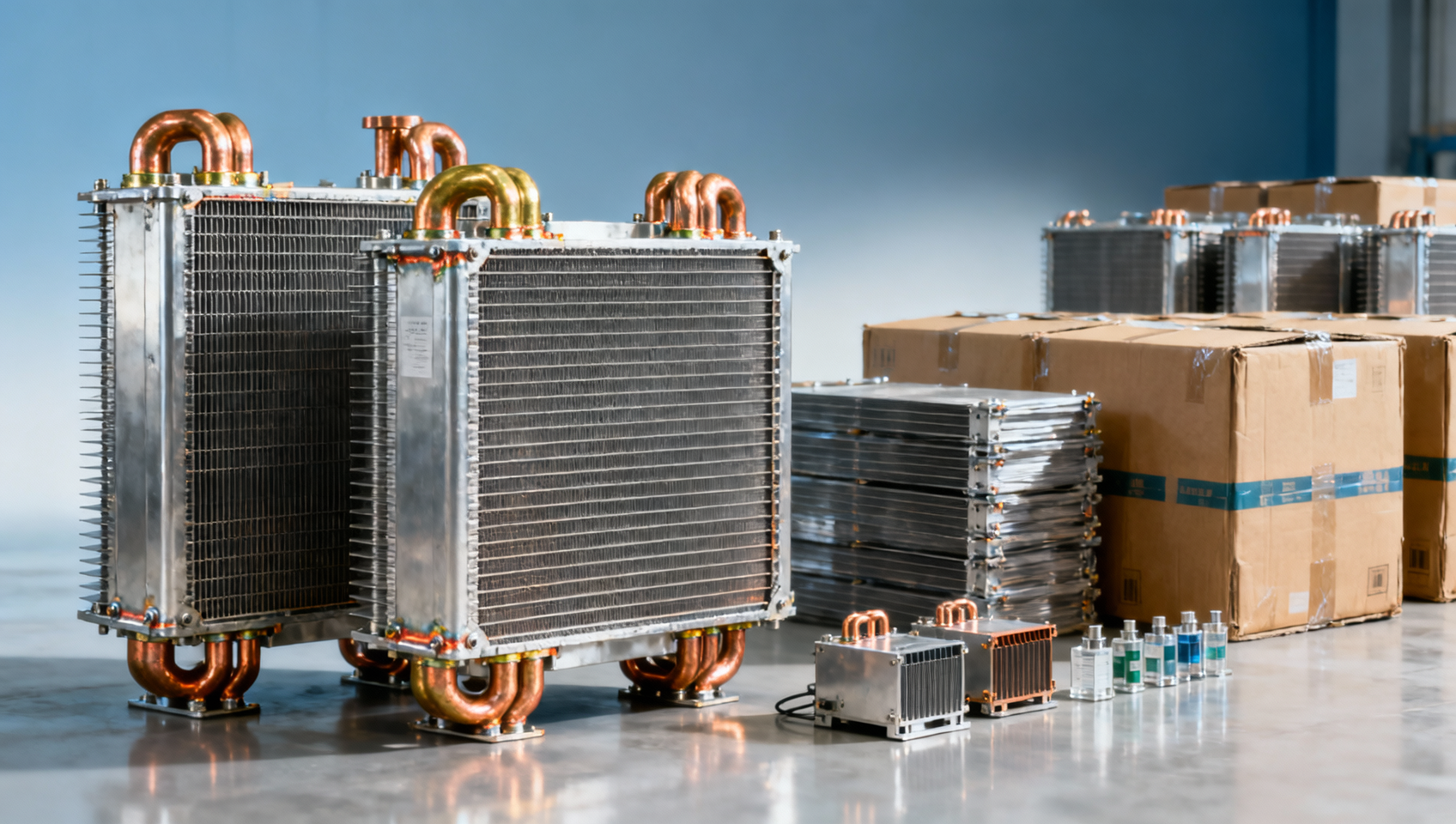
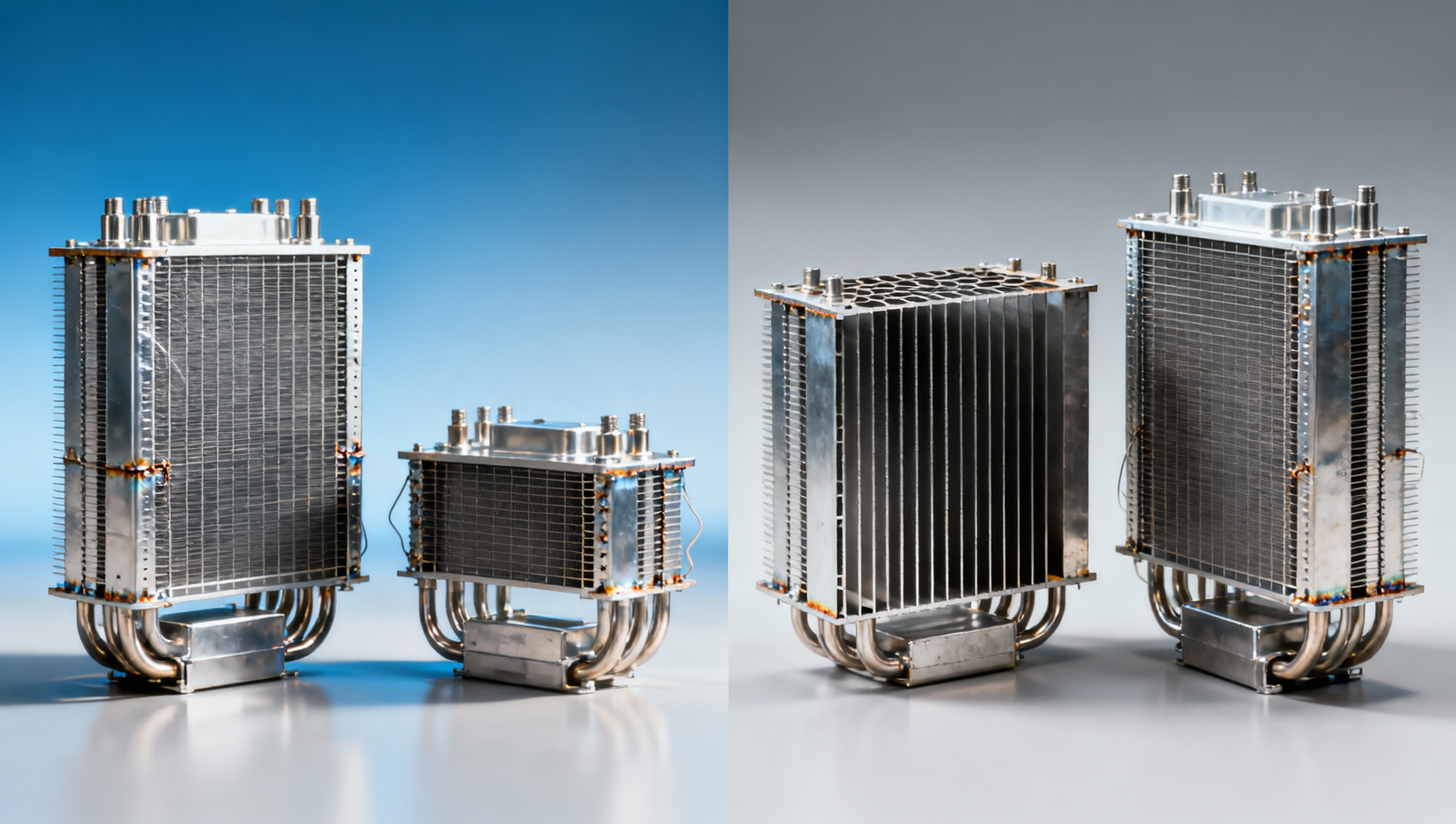
From a construction standpoint, common core types include tube-and-fin and bar-and-plate designs. Tube-and-fin radiators are often lighter and cost-effective for many mainstream applications. Bar-and-plate structures are generally more rugged and suitable for demanding environments with vibration, pressure variation, or harsher duty cycles. The right choice depends on thermal load, service environment, and maintainability expectations.
Material selection is equally important. Aluminum radiators are popular because they offer a strong balance of thermal conductivity, low weight, and corrosion resistance in many applications. Copper-brass designs may still be preferred where repairability or specific service traditions matter. Stainless and specialty materials can appear in niche industrial systems where chemical compatibility overrides standard cost considerations.
Buyers should also compare fin density and tube shape. High fin density may improve heat rejection in clean environments, but lower density can be more practical where dust, fibers, or insects clog airflow paths. The best radiator type is often the one that preserves usable performance after months of field exposure, not just the one with the highest theoretical output.
How To Choose The Right Radiators For B2B Applications
Selecting radiators starts with defining the heat source and duty profile. Buyers should document engine power or system heat load, inlet and outlet temperatures, coolant type, target ambient temperature, airflow availability, and installation space. A radiator chosen without these inputs may still fit physically but fail thermally under peak demand.
Application environment should be the second filter. Indoor factory use differs from coastal, desert, agricultural, or mining deployment. Salt exposure increases corrosion risk, airborne debris affects fin clogging, and heavy vibration changes structural requirements. Procurement teams should therefore evaluate not only nominal capacity, but also environmental survivability and service access.
Maintenance strategy is another key factor. If the radiator will operate in a remote site, easy cleaning and straightforward replacement may be more valuable than maximum compactness. If downtime costs are high, buyers may prioritize designs that simplify inspection, leak detection, and spare part planning. For multi-site operators, standardizing radiator formats across fleets can reduce inventory complexity.
GTIIN can be positioned naturally in this stage as a practical sourcing reference for companies that need radiators matched to operating conditions rather than selected only by appearance, legacy habit, or approximate dimensions. This approach is especially useful in projects where the thermal load is known but the best construction route is still open.
Who Uses Radiators And Where Standards Matter
Radiators serve a broad user base: OEMs, equipment assemblers, maintenance contractors, fleet owners, generator packagers, agricultural machinery users, industrial facility managers, and replacement-parts distributors. Each group views performance through a different lens. OEMs often focus on integration, distributors on interchangeability, and end users on uptime, cleaning frequency, and lifecycle cost.
Typical application scenarios include engine cooling for trucks and off-road machinery, thermal control in stationary power units, oil temperature stabilization in hydraulic systems, and process cooling in general industry. In these settings, radiators are often selected alongside fans, shrouds, hoses, tanks, and mounting structures because system performance depends on the complete thermal package, not only the core.
Global market access requirements vary by sector and destination, but buyers should routinely check material consistency, pressure performance, dimensional tolerance, leak integrity, and documentation clarity. Instead of assuming one universal rule, it is safer to confirm the standards, test expectations, and labeling needs tied to the specific equipment category and export market.
In this context, GTIIN’s value is strongest when it supports communication between technical and purchasing teams, helping translate application needs into suitable radiator specifications and reducing the risk of mismatch between compliance expectations and real operating conditions.
Manufacturing, Installation, And Quality Control Basics
The quality of radiators depends heavily on manufacturing discipline. Core assembly, brazing or welding stability, header and tank fit-up, fin bonding, and leak testing all influence durability. Even small inconsistencies in joining quality can create weak points that only appear after thermal cycling, vibration, or pressure fluctuation in service.
During supplier evaluation, buyers should ask how raw materials are controlled, how dimensional inspection is handled, and whether completed radiators are checked for leakage and structural integrity before shipment. Practical quality control is not only about pass-fail testing; it also includes repeatability, packaging protection, and traceable production records where appropriate for the application.
Installation quality matters almost as much as manufacturing quality. A well-made radiator can still fail early if mounted under stress, exposed to uncontrolled vibration, connected with poor hose routing, or paired with an unsuitable fan shroud. Correct clearance, secure support, proper coolant filling, air bleeding, and contamination control are basic but often decisive steps.
For long-life operation, radiators should be cleaned using methods compatible with fin strength and material type. Overaggressive pressure washing can deform fins and reduce airflow. A balanced maintenance practice protects heat transfer performance while avoiding accidental damage during routine service.
Maintenance Timing, Replacement Signals, And Future Trends
Radiators should be inspected as part of preventive maintenance, with intervals adjusted to environment and duty cycle. Dusty or high-debris sites may require frequent cleaning and visual checks, while cleaner indoor operations may focus more on coolant condition, leak signs, and airflow verification. There is no universal schedule that fits all equipment equally well.
Common replacement signals include persistent overheating, repeated coolant loss, fin deterioration, internal blockage, tank cracking, corrosion, or pressure instability. Buyers should not wait for catastrophic failure if temperature control has become inconsistent. Declining radiator efficiency can quietly damage related components long before a complete breakdown occurs.
Looking ahead, radiators are evolving through better thermal simulation, lighter materials, more compact packaging, and integrated multi-circuit designs. As equipment becomes more power-dense and energy efficiency expectations rise, thermal systems will need to remove more heat from smaller spaces. This trend makes application-specific design and system-level airflow planning increasingly important.
Digital monitoring may also shape the future of radiator management. Temperature trend analysis, pressure tracking, and predictive maintenance tools can help operators identify fouling or performance decline earlier. For B2B buyers, that means future-ready radiators may be judged not only by heat rejection, but by how well they support data-driven maintenance strategies.
How Much Radiators Really Cost Over Time
The purchase price of radiators is only one part of total cost of ownership. Buyers should also account for shipping volume, installation labor, expected cleaning frequency, downtime risk, coolant loss, replacement cycle, and compatibility with surrounding components. A lower-priced radiator may become more expensive if it clogs quickly, leaks under vibration, or requires frequent service stops.
Energy and performance effects also matter. If thermal control is weak, engines or systems may run less efficiently, derate under load, or accelerate wear in seals and fluids. These indirect costs are harder to see on a quote sheet, but they often exceed the initial component saving. TCO analysis should therefore compare operational impact, not just procurement expense.
A practical ROI approach is to compare at least three scenarios: a basic replacement that matches dimensions, an application-optimized radiator with better environmental fit, and a heavy-duty design intended to reduce service frequency. The best option depends on duty cycle, labor cost, site conditions, and the financial impact of unplanned downtime.
For procurement teams seeking balanced decisions, GTIIN can be considered as a sourcing reference that supports comparison by application, service burden, and lifecycle value. In radiator purchasing, the most economical choice is often the one that delivers stable cooling performance with manageable maintenance across the full operating life.
Related News
 Blood Pressure Monitors Price: Home vs Clinical ModelsBlood pressure monitors price explained: compare home vs clinical models, key cost drivers, and sourcing value. Discover smarter buying insights for India-focused import-export and B2B procurement.
 Interior Design Quotation Checklist Before You Approve the ProjectInterior design quotation checklist for smarter approvals: verify scope, timelines, exclusions, and pricing. Compare like high performance spark plugs or radiators price data and approve with confidence.
 How to Read an Interior Design Quotation Without Missing Hidden CostsInterior design quotation guide: learn to spot hidden costs, compare scope, materials, and labor clearly. Ideal for buyers reviewing radiators price or lawn mowers cost with confidence.
 Radiators Price vs Quality: Where Buyers Often Misjudge ValueRadiators price vs quality: learn where buyers misjudge value, compare hidden costs, supplier reliability, and performance to source smarter and protect margins.