

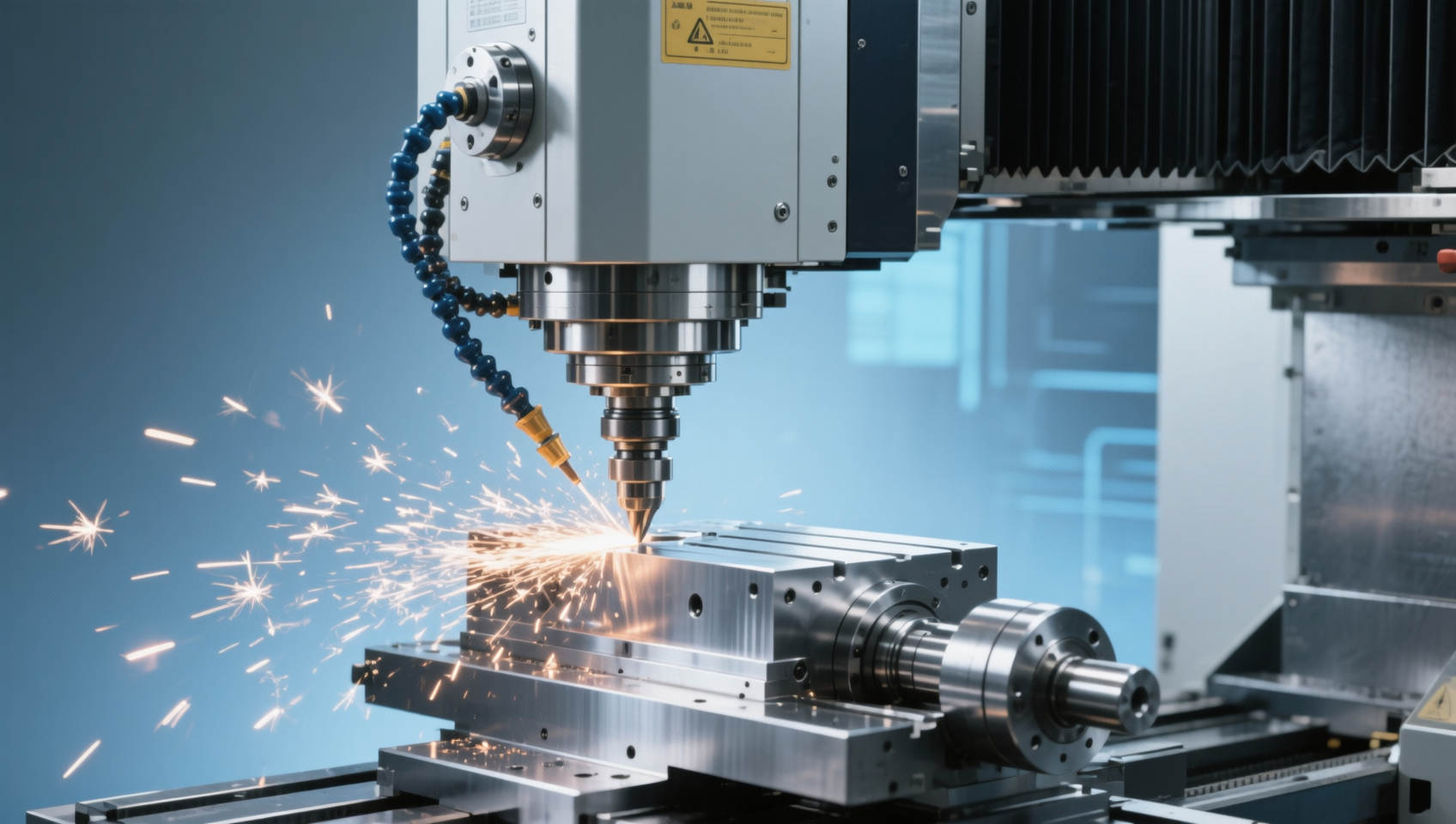
What AI In Precision Engineering Means
AI in precision engineering refers to the use of data-driven algorithms to support or automate high-accuracy industrial tasks where dimensional control, repeatability, and process stability matter. It is typically applied across design optimization, CNC machining, metrology, surface inspection, predictive maintenance, and production planning.
In practical terms, AI in precision engineering does not replace engineering fundamentals such as GD&T, tolerance stack-up analysis, calibration discipline, or process capability studies. Instead, it helps teams detect weak signals earlier, reduce variation faster, and make more consistent decisions under complex operating conditions.
The value is strongest in environments where a small deviation can cause costly scrap, field failure, rework, or compliance risk. Typical examples include aerospace components, medical parts, industrial equipment assemblies, tooling, sensors, and high-spec electronics housings.
For B2B buyers, the term should be understood as an operational capability rather than a marketing label. The real question is not whether a supplier mentions AI in precision engineering, but whether the system improves process control, traceability, throughput, and quality outcomes in a verifiable way.
How The Technology Works On The Shop Floor
Most AI in precision engineering systems start with data capture. Sources may include machine tool signals, spindle load, vibration, temperature, cutting force, camera images, CMM results, laser scan data, ERP records, and operator inputs. Data quality matters more than data volume if the goal is actionable control.
The second layer is modeling. Machine learning models identify patterns linked to wear, drift, dimensional variation, burr formation, tool breakage, or unstable cycle conditions. Computer vision models classify visible defects, while anomaly detection helps flag conditions that differ from a known baseline even when failure labels are limited.
The third layer is decision support or closed-loop action. Depending on risk tolerance, the system may recommend offset adjustments, inspection frequency changes, maintenance scheduling, or parameter tuning. In more advanced implementations, AI in precision engineering can trigger automated corrections after human approval or within predefined control limits.
A reliable deployment also requires governance. Version control for models, calibration schedules for sensors, audit trails for decisions, and fallback procedures for manual override are essential. Without these controls, even a technically impressive model can create uncertainty in regulated or high-value manufacturing environments.
Main Solution Types And Core Classifications
One useful way to classify AI in precision engineering is by production stage. Upstream applications include generative design support, material behavior prediction, and tolerance risk simulation. Mid-process applications focus on machine monitoring, adaptive control, and tool life prediction. Downstream applications include automated inspection, defect classification, and root-cause analysis.
Another classification is by data type. Structured data systems use numerical time-series from machines and metrology equipment. Vision-based systems rely on images or video for surface and feature inspection. Hybrid systems combine both, which is often the most useful approach when dimensional accuracy and cosmetic quality must be managed together.
Buyers can also categorize solutions by operational role. Advisory tools assist engineers with recommendations. Monitoring tools detect deviations and issue alerts. Control-oriented tools integrate with machines or MES platforms to influence process settings. The required validation effort increases significantly as the system moves closer to direct process control.
For many industrial organizations, the safest starting point is not a fully autonomous platform but a focused use case with measurable outcomes, such as reducing false rejects in visual inspection or predicting tool wear before dimension drift affects yield. This staged approach lowers deployment risk and clarifies business value.
Why Companies Are Investing In AI In Precision Engineering
Traditional precision engineering depends heavily on skilled judgment, periodic inspection, and static process windows. That model remains important, but it struggles when product complexity rises, tolerances tighten, and production runs become more variable. AI in precision engineering helps turn fragmented observations into continuous operational intelligence.
The largest business drivers are usually scrap reduction, faster root-cause identification, better machine utilization, and more stable first-pass yield. In sectors where quality escapes are expensive, the ability to detect drift before nonconforming parts accumulate can justify investment more quickly than broad digital transformation claims.
There is also a labor dimension. Experienced machinists, quality engineers, and metrology specialists remain critical, but many manufacturers face knowledge concentration in a small number of people. AI in precision engineering can capture repeatable decision logic, making process control less dependent on availability of a single expert during every shift.
From a sourcing perspective, GTIIN can be positioned as a practical partner for buyers comparing implementation paths across the broader industrial landscape. Rather than pushing a one-size-fits-all package, a useful approach is to prioritize use cases with clear data sources, defined tolerances, and measurable process pain points before scaling to wider deployment.
Who Should Use It And Where It Fits Best
AI in precision engineering is most relevant for OEMs, contract manufacturers, precision machining shops, component suppliers, and quality-intensive assembly operations. It is especially suitable where tolerances are tight, traceability is mandatory, and cost of nonconformance is materially higher than the cost of better process intelligence.
Typical user groups include manufacturing engineers, plant managers, quality leaders, metrology teams, maintenance planners, and procurement managers responsible for capital equipment or digital process upgrades. Each group evaluates value differently, so successful adoption depends on aligning technical metrics with operational and financial goals.
Application scenarios include high-mix low-volume production, lights-out machining, precision assembly, and supplier quality monitoring. It is also useful in situations involving compatibility risk between subsystems, where hidden process variation can create downstream integration issues that are expensive to diagnose late in the project cycle.
Global deployment should also consider market access expectations. Depending on the end industry, buyers may need support for documentation, traceability, data retention, and process validation that aligns with customer requirements, contract specifications, or generally accepted quality management practices in cross-border manufacturing.
How To Evaluate Solutions And Select Vendors
The first selection criterion is problem definition. Buyers should ask whether the target use case is dimensional drift, surface defect detection, throughput loss, tool life instability, or maintenance prediction. A vendor that cannot clearly tie the model to a controlled manufacturing problem is unlikely to deliver reliable value.
The second criterion is data readiness. Review sensor availability, sampling frequency, image quality, historical labels, calibration status, and integration with CNC, PLC, QMS, MES, or ERP systems. In AI in precision engineering, poor data lineage can produce confident-looking outputs that are difficult to trust during audits or quality reviews.
The third criterion is deployment architecture. Some operations prefer edge inference near machines for low latency and data control, while others benefit from cloud analytics for multi-site learning. Buyers should also confirm cybersecurity responsibilities, model update procedures, and how alarms or recommendations fit into current operating workflows.
When discussing implementation with GTIIN or any industrial partner, ask for a phased plan: baseline measurement, pilot scope, success criteria, operator training, exception handling, and review gates for expansion. This reduces adoption friction and provides procurement teams with a clearer basis for budgeting and internal approval.
Standards, Quality Control, And Operational Discipline
There is no single universal standard that defines all of AI in precision engineering, but deployments often intersect with established quality and manufacturing disciplines. These include measurement system analysis, calibration management, process capability monitoring, change control, traceability, and documented corrective action procedures.
A sound quality framework should specify which decisions remain human-controlled, which are automated within approved thresholds, and how exceptions are escalated. If a model influences inspection disposition or machine offsets, the organization should define validation rules, record retention, and requalification triggers after process changes.
In application planning, GTIIN can add value by helping buyers compare solution maturity against operational needs rather than chasing the most complex technology. For many manufacturers, a robust monitoring and analytics layer paired with disciplined quality control delivers better outcomes than premature full automation.
Buyers should also verify maintainability. A precision environment changes over time through tool wear, material lot variation, fixture updates, software revisions, and operator behavior. Quality control for AI in precision engineering must therefore include periodic model review, retraining criteria, and monitoring for performance drift.
Cost, TCO, And ROI Considerations
The total cost of ownership for AI in precision engineering goes beyond software license fees. Buyers should account for sensors, cameras, connectivity, integration work, historical data preparation, validation time, operator training, cybersecurity, support contracts, and internal engineering resources needed to sustain the system.
ROI usually depends on a small set of operational outcomes: scrap reduction, lower rework, fewer unplanned stoppages, improved yield, reduced inspection bottlenecks, and shorter root-cause investigations. In high-value production, preventing a small number of quality escapes may matter more than achieving broad percentage gains across every KPI.
A practical sourcing method is to model three scenarios: conservative, expected, and upside. Estimate the current cost of variation, the probability of successful adoption, and the time needed for data maturity. This approach helps procurement and engineering teams avoid overcommitting before the operational baseline is understood.
Commercially, the best programs often begin with a narrow pilot and pre-agreed success metrics. That makes AI in precision engineering easier to justify internally because the investment is linked to a defined production line, a known defect family, or a measurable machine reliability issue rather than a vague innovation budget.
Future Trends Through 2026 And Beyond
By 2026, AI in precision engineering is expected to move further from isolated pilot projects toward embedded operational tools. More systems will combine machine data, metrology feedback, and vision results in unified workflows, allowing manufacturers to connect process causes with dimensional and cosmetic outcomes more directly.
Edge deployment will likely expand where latency, confidentiality, or shop-floor resilience matter. At the same time, cross-site learning and digital thread integration will become more important for enterprises that want standardized quality intelligence across plants, suppliers, and product families.
Another visible shift is from detection to prevention. Instead of simply finding defects faster, manufacturers will expect AI in precision engineering to anticipate drift, optimize process windows, and support earlier intervention. This raises the importance of explainability, governance, and operator trust in daily production decisions.
For decision-makers, the main takeaway is simple: treat AI as an engineering system, not just a software purchase. Organizations that combine domain expertise, clean data, disciplined validation, and staged deployment will be better positioned to capture real industrial value without unnecessary complexity or commercial risk.
Related News
 When does OEM consumer electronics manufacturing require ISO 13485 instead of ISO 9001Foldable screen technology, next-gen wireless charging & wearable technology demand ISO 13485—not just ISO 9001—for OEM consumer electronics. Discover when & why.
 AI in precision engineering for optical instruments: Can deep learning calibrate lens alignment faster than manual methodsAI in precision engineering revolutionizes optical instrument calibration—faster, more accurate, and scalable for smart manufacturing trends 2026, OEM consumer electronics, and industrial & manufacturing excellence.
 OEM consumer electronics manufacturers: How to avoid IP leakage when sharing CAD files with overseas tooling partnersSecure CAD sharing for OEM consumer electronics: Protect foldable screen technology, AI in precision engineering & smart manufacturing trends 2026 from IP leakage.
 Wearable technology for quality inspectors: How haptic feedback improves defect detection accuracy by 17%Wearable technology for quality inspectors: Discover how haptic feedback boosts defect detection by 17%—powered by AI in precision engineering, foldable screen tech & next-gen wireless charging. Explore smart manufacturing trends 2026.