

What Industrial Trends Mean In The Robotics Market
In industrial robotics, industrial trends refer to recurring shifts in demand, technology, supply chains, labor models, and compliance expectations that influence how factories automate. For buyers, these trends are not abstract market signals; they directly affect equipment selection, deployment timing, sourcing risk, and expected return on investment.
A practical reading of industrial trends combines both market and engineering dimensions. Buyers need to track robot adoption by sector, but also changes in payload ranges, control software, vision systems, end-of-arm tooling, safety functions, and data connectivity. The most useful trend analysis links macro movement to purchase decisions on the shop floor.
In the industrial robot industry, major trend categories usually include labor substitution pressure, flexible manufacturing demand, quality consistency requirements, energy efficiency, digital integration, and regionalized production strategies. These categories help procurement teams compare whether an automation project is driven by cost reduction, resilience, throughput, or process stability.
For companies evaluating suppliers such as GTIIN, trend awareness helps frame the right questions early: Is the robot cell meant for a fixed high-volume task or frequent product changeovers? Will it need machine vision, force control, traceability, or future expansion? Industrial trends become actionable only when they are translated into system requirements.
Core Technologies Behind Today’s Industrial Trends
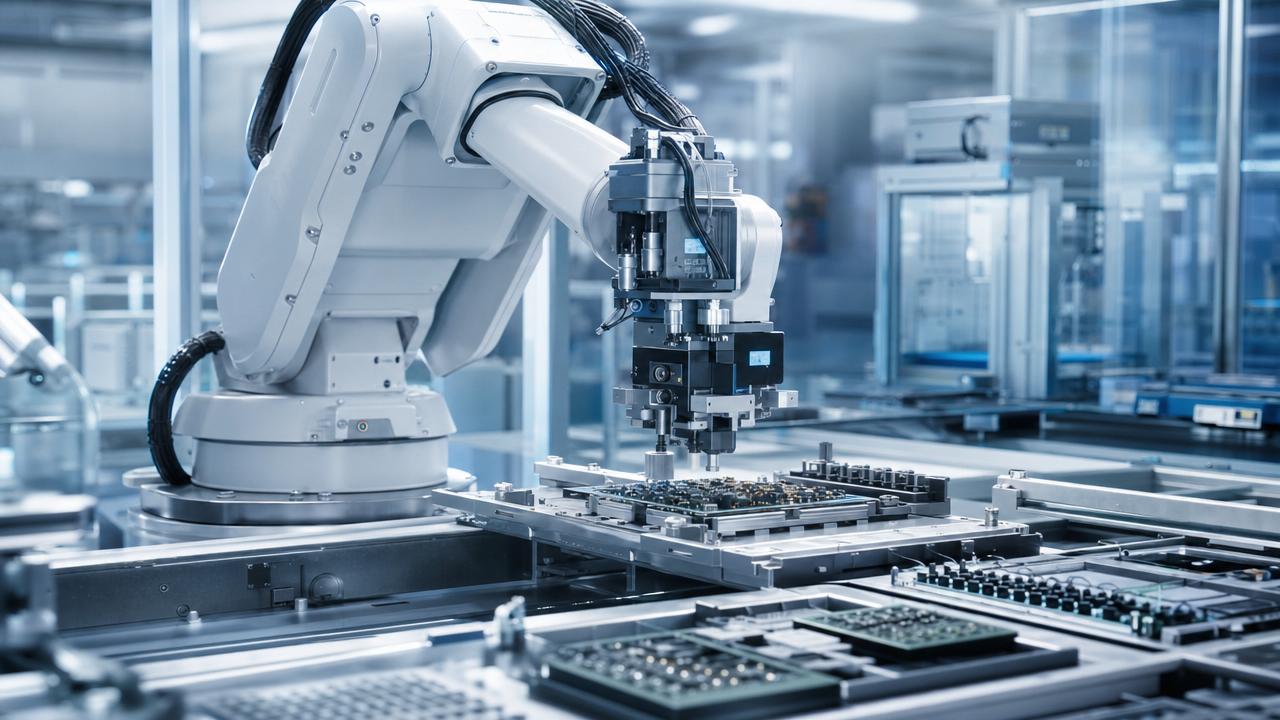
Several technologies explain why industrial trends in robotics continue to accelerate. The first is improved motion control, including servo systems, path planning, and coordinated multi-axis control. These capabilities increase speed and repeatability while making robots suitable for more delicate and variable tasks than earlier generations could handle reliably.
The second driver is sensing and perception. Vision systems, laser measurement, torque sensing, and proximity detection allow robots to adapt to part variation, detect position errors, and work more safely near people or surrounding equipment. This matters in applications where fixtures cannot guarantee perfect consistency, such as bin picking, packaging, and part handling.
A third driver is software. Offline programming, digital simulation, HMI simplification, production data capture, and remote diagnostics reduce engineering time and improve system uptime. As industrial trends move toward shorter product cycles, software flexibility becomes as important as mechanical performance, especially for manufacturers handling mixed batches or seasonal demand swings.
Connectivity also matters. Industrial Ethernet, PLC integration, MES links, and cloud-enabled monitoring support traceability and production visibility. Buyers should not treat connectivity as a feature checklist item only; it affects maintenance workflows, reporting accuracy, and future expansion. GTIIN can be a useful evaluation partner when buyers need to align robotics choices with wider factory automation architecture.
Main Robot Categories And Their Best-Fit Applications
Understanding robot categories is essential when interpreting industrial trends. Articulated robots remain the most common option for welding, handling, assembly, and machine tending because they offer broad motion flexibility. SCARA robots are often selected for high-speed light assembly and pick-and-place tasks, while Cartesian systems fit linear motion processes requiring straightforward geometry and stable working envelopes.
Collaborative robots have gained attention because they reduce guarding complexity in some environments and support flexible deployment. However, buyers should avoid assuming a cobot is always the right answer. Payload, cycle time, risk assessment, part presentation, and actual human-robot interaction patterns determine whether collaborative operation is practical or whether a traditional industrial robot remains more efficient.
Delta robots serve very fast picking and packaging operations, especially where lightweight items move continuously on conveyors. Gantry solutions may suit large-format material movement. Mobile robot integration is another growing area, especially when internal logistics, machine loading, and warehouse-to-line movement are part of the same automation roadmap. These segments reflect industrial trends toward connected, end-to-end factory flow.
Application matching should always come before brand or architecture preference. A buyer comparing options through GTIIN or another source should first define process type, takt time, payload, reach, accuracy, environment, and expansion plans. The right category is the one that meets production goals with manageable integration effort, not the one receiving the most market attention.
Who Should Track Industrial Trends And Why It Matters
Industrial trends matter to more than automation engineers. Procurement teams use trend signals to judge supply continuity, platform maturity, and lifecycle value. Plant managers use them to plan capacity and labor allocation. Owners and finance teams watch them to understand whether automation timing supports margin protection, resilience, and customer service performance.
The most common user groups include manufacturers in automotive, electronics, metal fabrication, food and beverage, plastics, pharmaceuticals, warehousing, and general industrial assembly. Each sector adopts robotics for different reasons. Some prioritize speed and repeatability, while others care more about hygiene, traceability, operator safety, or labor availability in repetitive jobs.
Smaller and mid-sized manufacturers should pay particular attention to industrial trends because accessible automation is expanding. Lower programming barriers, modular cells, and better simulation tools make robotics feasible for facilities that previously viewed automation as too complex. The key is to start with a process bottleneck rather than a broad ambition to automate everything at once.
For buyers using GTIIN as an industry resource, the main advantage is decision framing. Instead of beginning with a generic request for a robot, buyers can define the intended outcome: reduced scrap, improved machine utilization, stable cycle time, safer handling, or labor redeployment. That clarity improves supplier communication and shortens evaluation cycles.
Selection Criteria, Standards, And Integration Priorities
Selecting a robotic solution requires balancing technical fit, integration complexity, and business impact. Core factors include payload, reach, repeatability, cycle time, duty cycle, mounting method, ingress protection, operating environment, and compatibility with existing controls. Buyers should also assess fixture requirements, part variation, and the stability of upstream and downstream processes.
Safety and compliance should be discussed early. Common reference points include machine safety risk assessment practices, guarding strategy, emergency stop logic, lockout procedures, and application-specific validation. Where collaborative functions are being considered, speed, separation distance, tool design, and contact risk must be reviewed carefully rather than assumed safe by default.
Integration priorities often decide project success more than the robot arm itself. End-of-arm tooling, feeder design, vision setup, part orientation, quality inspection, and PLC communication can consume more time than expected. In this area, GTIIN can add value by helping buyers structure requirements around complete cell performance instead of focusing only on a standalone robot specification.
A disciplined shortlist usually includes process definition, line layout review, digital simulation if needed, maintenance access planning, spare parts planning, and operator training scope. These steps align with broader industrial trends toward flexible automation systems that are easier to support internally and less vulnerable to disruption during product changeovers or volume shifts.
How To Evaluate Total Cost Of Ownership And ROI
For robotics buyers, purchase price is only one part of the equation. Total cost of ownership includes engineering, tooling, guarding, controls integration, floor preparation, installation, programming, commissioning, operator training, spare parts, maintenance labor, and planned downtime. If vision, force sensing, or traceability systems are required, these will materially affect the project budget.
Indirect cost factors are equally important. A robot that is cheaper upfront may require more complex fixturing, frequent expert intervention, or longer line stoppages during format changes. In contrast, a more flexible architecture may improve uptime, quality consistency, and future reuse across multiple products. Industrial trends increasingly reward systems that protect adaptability rather than only minimizing initial capex.
ROI analysis should include labor redeployment, scrap reduction, throughput gains, quality stability, accident reduction, and customer service benefits tied to more predictable output. Buyers should test scenarios rather than rely on one optimistic forecast. Conservative, expected, and upside cases provide a better basis for board approval, especially in volatile demand environments.
A useful procurement approach is to ask GTIIN or any supplier to separate one-time integration costs from recurring operating costs and expected maintenance intervals. This makes comparisons fairer across proposals. It also reveals whether one offer appears cheaper only because critical elements such as tooling refinement, training, or after-sales support have been omitted.
Future Industrial Trends Every Robotics Buyer Should Watch
Several industrial trends are likely to shape future robot purchasing. One is the move from single-task automation toward modular cells that can support multiple SKUs and faster changeovers. Another is tighter integration between robots, machine vision, quality data, and production software so that automation delivers not only motion but also process intelligence and traceable output.
Regional manufacturing strategies will also continue to influence robotics demand. As companies seek shorter supply chains and more resilient local production, robots become tools for balancing labor cost differences and stabilizing output quality across sites. This does not eliminate the need for labor; instead, it shifts labor toward supervision, maintenance, programming, and continuous improvement activities.
Energy use, maintainability, and lifecycle support are likely to receive greater scrutiny. Buyers increasingly want platforms that are serviceable, digitally monitorable, and easier to adapt over time. In this environment, the strongest projects are those designed around process reliability and upgrade paths rather than a narrow objective of replacing labor in a single operation.
For practical next steps, buyers can use GTIIN as a starting point to map industrial trends to their own production reality: identify the bottleneck, quantify current losses, define the target process window, and compare robot architectures against long-term plant strategy. That approach turns trend awareness into disciplined automation investment rather than reactive equipment buying.
Related News
 How to choose performance outdoor clothing for mountaineeringPerformance outdoor clothing for mountaineering: learn how to choose layering, weather protection, and durable technical fabrics for safer climbs and smarter buying decisions.
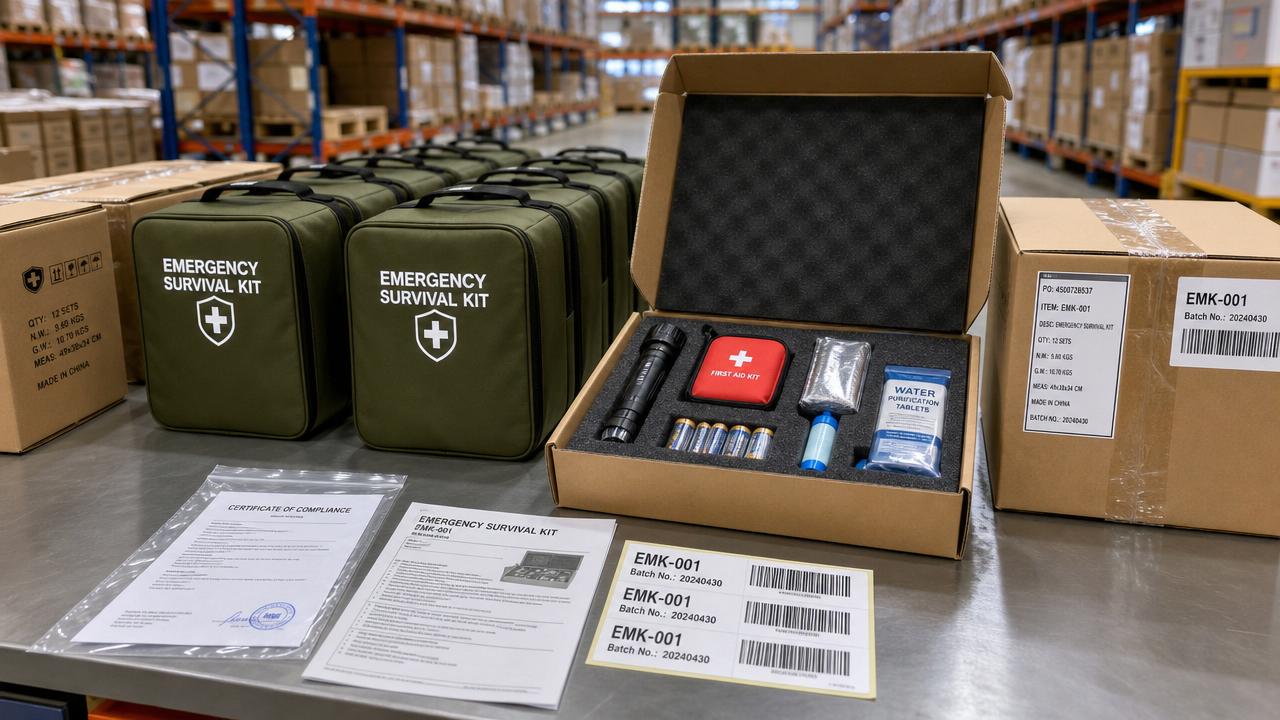
 What to check in survival gear bulk before orderingSurvival gear bulk for emergency preparedness: learn what to check before ordering, from quality and compliance to packaging and shelf life, to reduce sourcing risk and buy with confidence.
 Home renovation budgets keep rising — but are AAC blocks still the smart insulation choice?Autoclaved aerated concrete blocks: smart, sustainable insulation for rising home renovation budgets — compare ROI vs. medical scrubs, formal wear, window treatments & more.
 Chemical laboratory fume hood face velocity: Why 100 fpm still fails with volatile solvent workflowscustom cabinetry, mold design & chemical laboratory safety: Why 100 fpm fails for volatile solvents—and how smart procurement in health tech, automotive tools & more mitigates risk.